

Welsh nationalist protest inspires new opera 90 years on
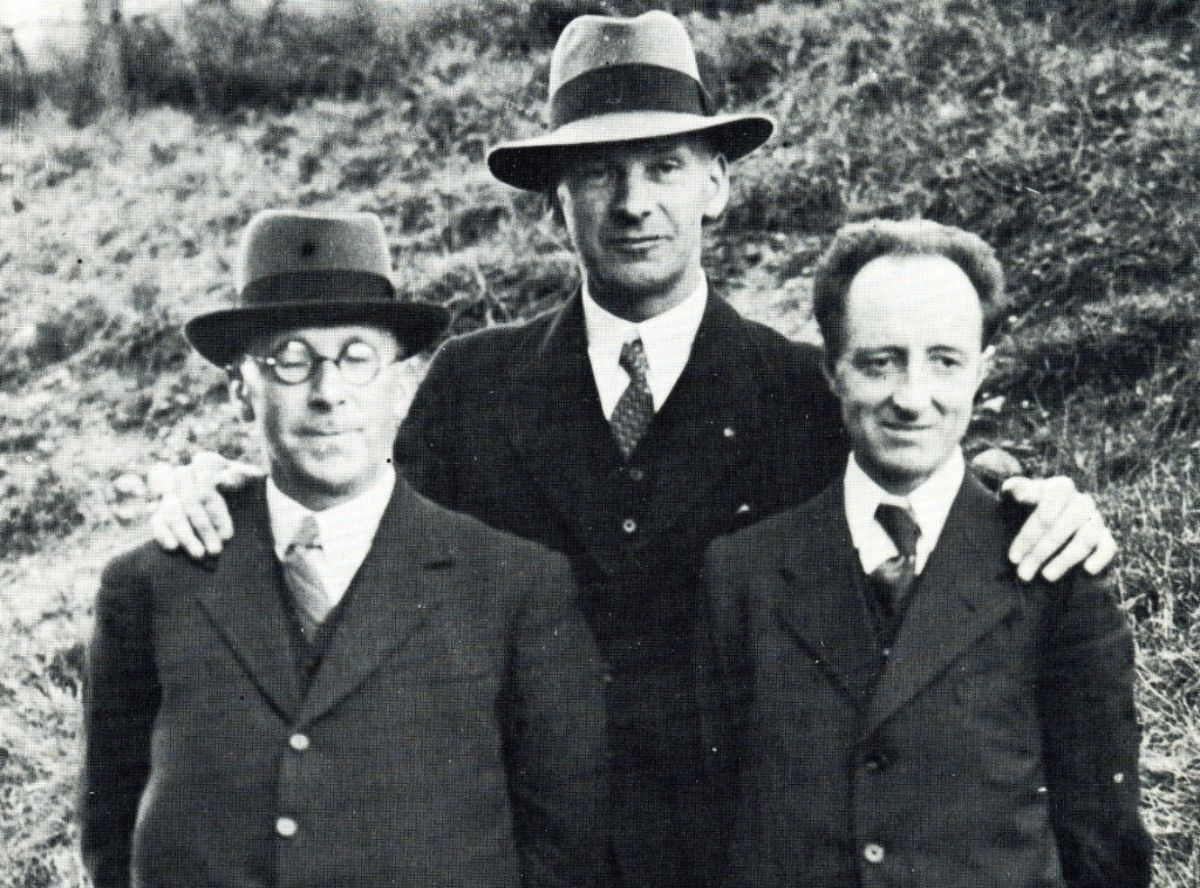
A new Welsh-language opera telling the story of three Welsh nationalists who set fire to an RAF base in protest is set to tour Wales, 90 years after the historic events.
On 8 September 1936 three prominent Plaid Cymru members, Saunders Lewis, Lewis Valentine and DJ Williams, set fire to several buildings at RAF Penrhos near Pwllheli.
The trio later drove to a nearby police station to hand themselves in and were eventually sentenced to nine months in prison by a judge at London’s Old Bailey.
Following their release, the three men were welcomed back to Wales as heroes with a crowd of 15,000 turning out to greet them in Caernarfon.
Now, 90 years later, Welsh-language opera company OPRA Cymru, has commissioned acclaimed Ynys Môn composer Gareth Glyn to write the music for the new opera, telling the story that energised the fledgling Welsh nationalist movement.
The libretto for Fflamau Penyberth (Flames of Penyberth) was written by OPRA Cymru founder, Patrick Young, from Llan Ffestiniog, in conjunction with author and historian Arwel Vittle, from Caernarfon.
The new opera will be premiered at Neuadd Dwyfor, Pwllheli on Thursday, November 19, and later visit Rhosllannerchrugog, Bangor, Aberystwyth, Barry, Brecon and Aberystwyth before returning to Pwllheli for the final performance of the tour.
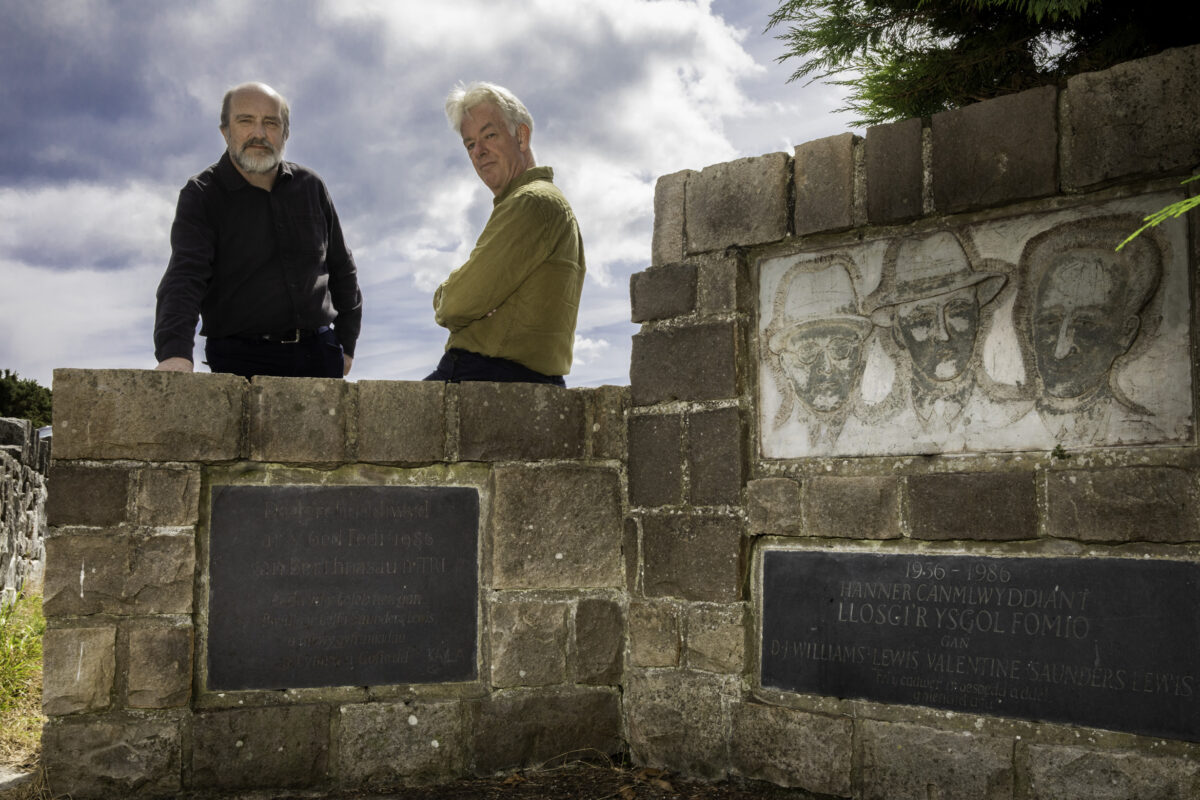
Standing alongside a memorial to the incident, Patrick said: “To mark the 90th anniversary of an event which made an historic difference to the future of the Welsh language, the new opera is set to tour Wales with a stellar cast who have all worked with OPRA Cymru in the past.
“Gareth Glyn returns to work with OPRA Cymru to retell the extraordinary story of three God-fearing men who set fire to an airbase before they hand themselves in to police.”
Arwel Vittle, who wrote the book, “Cythral o Dân” (Devil of Fire) recounting the events and turbulence of the time, said: “There were protests and meticulous planning before the act itself and the subsequent court cases in Caernarfon and the Old Bailey and their imprisonment.”
Penyberth was a farmhouse which had been the home to generations of patrons of poets, as well as being a way-station for generations of pilgrims to Bardsey Island.
Its destruction in 1936 in order to build RAF Penrhos, an airfield which would also function as an air observer, gunnery and bombing school, caused uproar at the time.
There were widespread protests in Wales about the proposals that helped define Plaid Genedlaethol Cymru, the forerunner to the present day Plaid Cymru.
A jury at Caernarfon Assizes in October 1936 failed to agree on a verdict and the case was sent to the Old Bailey where they were sentenced to nine months in Wormwood Scrubs Prison.
Arwel Vittle said: “Without giving too much away the opera begins with Lewis Valentine in a prison cell and the story is told in a series of flashbacks. Some artistic licence has been taken and events shortened but the premise of the story remains historically accurate.”
According to Arwel, who has also written a biography of Lewis Valentine, the three men played a totemic role in Welsh political history that night in September 1936.
Lewis Valentine was born in Llanddulas near Colwyn Bay and was a Baptist minister, politician, author, editor and language activist.
He began studying theology at Bangor but his studies were curtailed by the First World War.
His war-time experiences and his sympathy for the cause of Irish independence, brought him to Welsh nationalism.
In 1925 he met with Saunders Lewis and others at the National Eisteddfod in Pwllheli, and he subsequently became the first leader of Plaid Cymru.
Saunders Lewis was born into a Welsh-speaking family in Wallasey on Merseyside and was a politician, poet, dramatist and literary critic.
Lewis rediscovered the importance of both his heritage language and cultural roots while serving as a lieutenant in the British Army during the First World War.
As a vocal supporter of Welsh nationalism, Lewis believed, however, that political action to safeguard the language needed to precede Welsh devolution or independence.
In 1962 Lewis gave a radio speech entitled Tynged yr Iaith (The Fate of the Language) in which he predicted the complete extinction of the Welsh language by 2000 unless immediate action was taken.
While Lewis had wished to shame Plaid Cymru into more direct action promoting a Welsh language revival, his speech instead led to the formation of Cymdeithas yr Iaith Gymraeg (Welsh Language Society).
The other man involved, DJ (David John) Williams, from Rhydcymerau, near Llanybydder, Carmarthenshire, was one of the foremost Welsh-language writers of the 20th century and a prominent Welsh nationalist.
After graduating from Aberystwyth and Oxford Universities he spent most of his career teaching English at the grammar school in Fishguard.
A socialist, he was one of the founders of Plaid Cymru in 1925 and endeavoured all his life to campaign for a Free Christian Wales.
He wrote dozens of short stories and put on record some of the early history of Plaid Cymru in Codi’r Faner (1968).
Fflamau Penyberth features prominent singers in the leading roles supported by a cast of six others.
“We have secured the services of tenor Robyn Lyn Evans, and baritones Emyr Wyn Jones and Robin Gruffudd Hughes.
“They are all accomplished opera singers and they will give fine voice to the production,” added Patrick Young.
Fflamau Penyberth will be performed at:
- Neuadd Dwyfor, Pwllheli, on 19 November
- Theatr y Stiwt, Rhosllanerchrugog, on November 20;
- Pontio, Bangor on 24 November
- Taliesin Arts Centre, Swansea on 26 November
- Memo Arts Centre, Barry on 27 November
- Theatr Brycheiniog in Brecon on 28 November
- Theatr y Werin, Aberystwyth on 3 December
- Neuadd Dwyfor, Pwllheli on 5 December
More details about the tour online at www.opra.cymru and tickets can be obtained from the various theatre box offices.
Support our Nation today
For the price of a cup of coffee a month you can help us create an independent, not-for-profit, national news service for the people of Wales, by the people of Wales.
Get more trusted Welsh news
Choose Nation.Cymru as a preferred source in Google News to see more of our journalism.


