

Welsh publisher brings Tolkien classic in Celtic languages together

Stephen Price
A Wales-based publisher responsible for the Welsh translation of the Hobbit has brought together versions of the Tolkien classic in all its current Celtic language editions.
The move follows the publication of the first Scottish Gaelic translation of JRR Tolkien’s timeless classic, The Hobbit, which has been completed by a University of Aberdeen professor, hot on the heels of the Welsh version, Yr Hobyd which was released in 2024, and the Irish, Breton and Cornish versions.
Sharing the news of the books being available to purchase from Welsh publishing house, Melin Bapur, its founder and Editor, Adam Pearce wrote on social media: “One Hobyd not enough? Here’s another four!
“Now available from our website are four additional translations of the Hobbit into different Celtic languages, alongside our Welsh edition.
“That’s all the Celtic languages, in fact, except Manx.”
Moray Watson, a professor of Gaelic and translation at the University of Aberdeen, began working on a Gaelic draft of JRR Tolkien’s The Hobbit prior to the first Covid-19 lockdown.
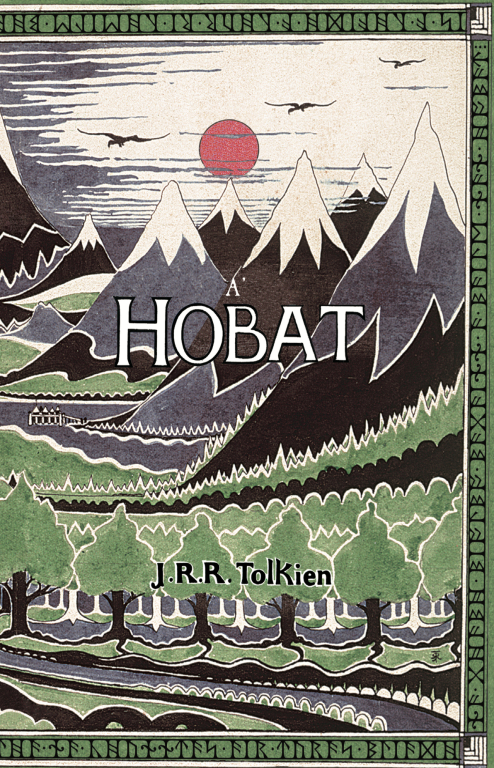
After a number of delays and fitting the project around his teaching commitments, Prof Watson has revealed he has now completed A’ Hobat.
After several phases of editing, the book is now available to order at Melin Books, complete with an afterword explaining some of his creative decisions throughout the novel.
Importance
Prof Watson is director of Ionad Eeghainn MhicLachlainn: the National Centre for Gaelic Translation (NCGT), which exists specifically to support the translation of literature into Gaelic, as well as Manx and Irish.
He said: “Enjoyment of reading is of tremendous importance on many levels when it comes to the esteem and status of a language.
“Being able to select from a wide range of engaging texts is also extremely important when learning a language or when making the decision to dig in and make that long, sustained extra effort necessary to go from competence in a language to mastery.”
He added: “I’ve read the book in at least nine languages so far. Whenever I learn a new language now, I always check to see if there is a translation of The Hobbit. If there is, I buy it. That way, I can read a novel early on in the learning process, because I already know the story very well at this point.
“Every single time I read it, in every single language, I get to experience the deep, rich joy of discovering Tolkien’s world.
“It’s no wonder people fell in love with this book, and continue to do so nearly 90 years after it was first published.
“I’m very lucky to have had the chance to work with it and I hope that people enjoy it.”
Yr Hobyd
While the Breton, Cornish, Irish and Scottish Gaelic versions are published by Evertype, the Welsh version of the Hobbit was published last year by Melin Bapur Books, in order to take on similar projects as well as re-publishing classic Welsh-language literature of the past.
Melin Bapur obtained a licence from the Tolkien Estate to publish the new translation by Adam Pearce, who has previously translated H.G. Wells into Welsh and works by Daniel Owen and T. Gwynn Jones from Welsh into English.
The Welsh translation also includes Welsh versions of both the maps featured in the original and includes J.R.R. Tolkien’s original illustrations.
“I started working on this translation back during the Covid-19 Pandemic,” explains translator Adam Pearce, who is also the owner of Melin Bapur, “and it’s fantastic to be able to finally bring this project to the public!
“Not much for adults is translated into Welsh because our native publishing industry is so strong and active, but translations of books they already know can be a great way to encourage people who wouldn’t otherwise read in Welsh to give it a go, as well as being absolutely invaluable to those learning the language.
“I actually began this translation long before establishing Melin Bapur, but this is exactly the sort of thing we wanted to do when establishing ourselves as a publisher.”
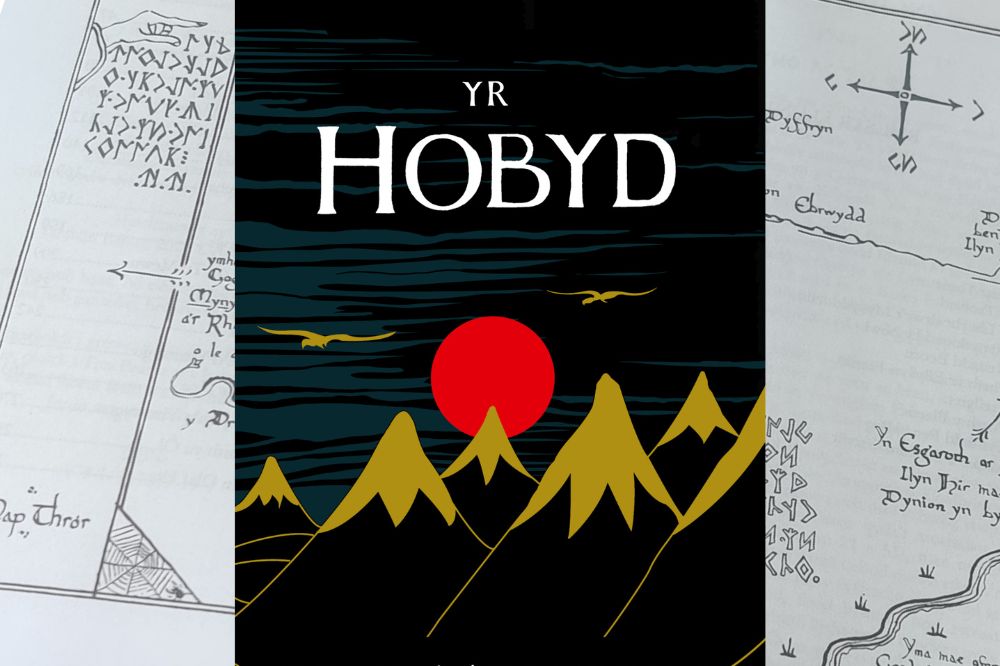
The original English version of The Hobbit uses Anglo-Saxon runes to represent the written language of the Dwarves.
In Yr Hobyd these have been replaced by the 18th century Welsh Coelbren y Beirdd, widely believed to have been invented by Iolo Morgannwg, originator of many of the traditions around the Eisteddfod.
Pearce explains the rationale: “Using Anglo-Saxon—that is English—runes for Welsh never seemed right; fortunately we have Coelbren which was once fashionable for things like engraving on gravestones in Welsh.
“The letters are extremely rune-like so in keeping with the original, but in a way that helps give the translation a uniquely ‘Welsh’ feel.
“As it’s basically a fantasy alphabet, it’s very appropriate for a fantasy story!
“I have tried to make this translation as ‘Welsh’ as a translation could ever be, and natural and appealing as possible to readers in Welsh, as well as to anyone else who might be interested, and little touches like this are really important.”
While we wait for a Manx version, Yr Hobyd, and the Breton, Cornish, Irish and Scottish Gaelic versions of the Hobbit are available from www.melinbapur.cymru
Support our Nation today
For the price of a cup of coffee a month you can help us create an independent, not-for-profit, national news service for the people of Wales, by the people of Wales.



Great to see those translations of JRR Tolkien’s the Hobbit, especially in our language the original tongue spoken throughout these isles that influence not only British , European, but mythology around the world. Coincidentally, it’s well known that Tolkien used Welsh as the foundation to his Elfish language Sindarin, including many stories from Welsh mythology, especially Cad Goddeu or Battle of the Trees , a dark age poem preserved in the Book of Taliesin used in Lord of The Rings Trilogy. As a child said he heard Welsh being spoken by farmers where he lived as a boy which influenced… Read more »