

Welsh wellbeing: Why one author says the answer lies close to home
Wellness has become a trillion-dollar global industry, and while some practices like mindfulness and meditation are commonplace, there are several quick-fixes that end up passing fads.
Trends continue to dominate in the world of wellness, however, leading many to look to more grounded, credible methods to connect to their inner worlds.
For Cal Jones, a wellbeing practitioner from Wales, the answer lies in his home country and its landscape, language and traditions.
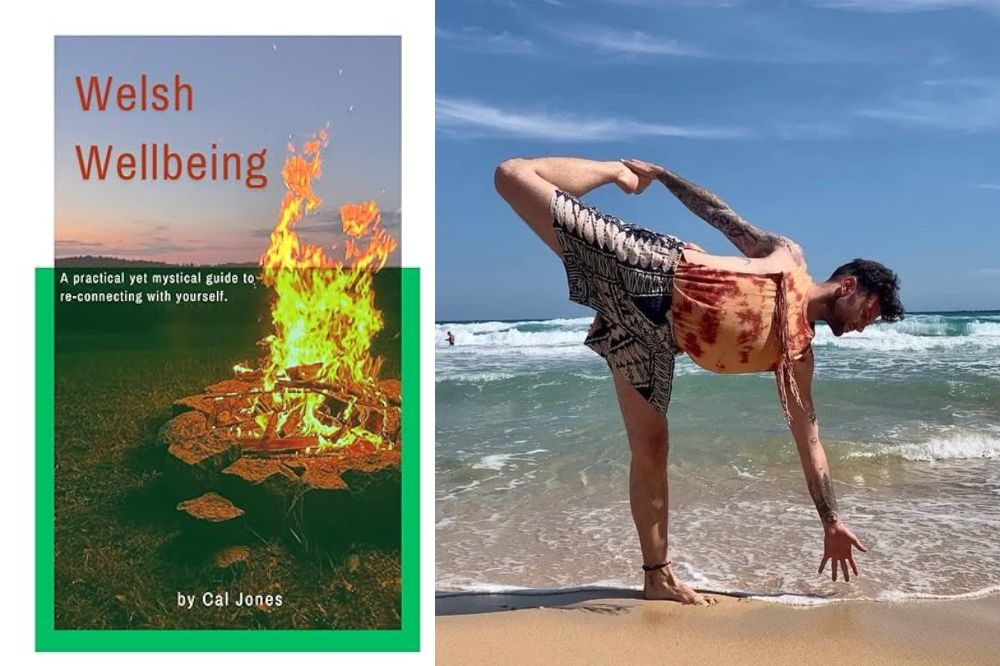
The yoga therapist has recently released his book, ‘Welsh Wellbeing: A Practical Yet Mystical Guide to Re-Connecting to Yourself’, which he describes as “The Little Book of Hygge, but for Wales.”
Here, Cal speaks to Nation.Cymru about reconnecting with his “cynefin”, finding small moments of calm in everyday life, and why Wales offers a powerful blueprint for wellbeing.
What inspired you to start writing Welsh Wellbeing, and how did you know you were at a point in your own wellness journey where you wanted to share what you’d learned with others?
I have always felt that I had a lot to say, but was never sure exactly what I wanted to say. I (half) joke and say that I have a “graveyard” of unfinished books in my Google Drive because, as I study and learn, the message I want to convey evolves and changes.
My first experience with wellbeing was yoga. It was a practice that I had from childhood as my Mam would teach me what she knew, so I have always had a deep fascination with its wonderful philosophies.
Though my practice and studies did not stop there. Basically, if you can google it, I’ve studied it. Friends joke that I am like Nessa from Gavin & Stacey when I talk about all the different jobs and qualifications I’ve done over the years.
Whilst working and studying, I ventured through Europe, Asia, and Australia, but eventually returned to Wales. I was already practicing many old Celtic methods and studying our mythology which helped me feel connected to my home.
I took a job working in exercise rehabilitation in Leeds. Removing myself from Wales again, I often thought about the little things in our culture that I felt I were missing, and how Wales’ magic was entangled in my DNA. That was the moment I knew that I had found my message. I had to share it with as many people as I could.
Your book is very outward-facing, focused on land and culture rather than your personal story. How do your own experiences and work shape the perspective in Welsh Wellness?
One of my favourite things I discuss in Welsh Wellbeing is the concept of “cynefin” and a deep connection to the land that raised you.
For example, my relationship to the sea is something incredibly sacred to me. When I have a bad day I have to take a walk along the beach. On the other side, it is one of my favourite places to take the dog for a walk, or skate along the prom.
Rain or shine, it is a place of deep reflection and contemplation for me.
When working with clients and students in one-on-one or group settings, I always aim to incorporate these things into our work. Once you understand the landscapes that shaped you, you can better understand how you fit into this big, beautiful world.
The book centres distinctly Welsh concepts. Is that connection something you grew up with, or did you come to these realisations about Welsh culture and wellbeing later in life?
Growing up in Port Talbot, I studied music, dance and the performing arts. It was ingrained in us from a young age that one day we were going to audition to study somewhere with more opportunities.
It was as though we had this big dangling carrot in front of us and blinkers on the sides.
It was only when I left to study at music college that I began to realise something was missing. It was deeper than homesickness — it was Hiraeth.
View this post on Instagram
As my lifestyle and studies turned toward wellbeing, spirituality and happiness, I learned that you can take the lessons of the landscape, language, communities, and traditions with you wherever you go.
This brought a deep sense of freedom for me. As I wandered I didn’t have to be lost, because I was carrying home with me.
Regarding concepts like hiraeth, cynefin and cwtch, is it fair to say that many people experience these feelings but just don’t have the language for them? If so, what changes when we finally name them?
These concepts are uniquely Welsh in wording, but I do believe that they are universally felt.
Cultures and traditions from around the world believe that naming something is the most powerful thing you can do. Even therapists today may get you to name the negative voice in your head. Naming provides a source of identification.
This is actually the first step in my Hapus Yogi method I use when working with people one-on-one. We start with Identify, move into Simplify, and eventually into Rectify. This allows people to find clear direction and work with intent when it comes to their wellbeing.
Yoga is such a vast practice that covers so much. There’s no wonder people get spooked and don’t know where to begin. It all starts with identifying.
So if people outside of Wales were to adopt these names for these concepts, they would be able to better understand the feelings and energy at play. Then they can work to simplify their solution and rectify with the correct practices.
Speaking of people from outside of Wales, it has been suggested that Wales could position itself as a place of spirituality and wellness for tourism. How do you feel about that idea?
You only have to stand at the clifftops of Pembroke, breathe in the sea air at Rhossili, or feel the stillness of Anglesey to notice the immense magic that Wales has to offer. These are just a few of the unique spots that bring joy and a sense of wellbeing to locals and tourists alike.
In Wales we have been overlooked, underestimated, and taught to think less of ourselves. I believe with every fibre of my being that Wales could and should begin to embrace the spirituality and wellbeing our land has to offer and position ourselves globally as a hub.
My only concern with this would be protection of what is sacred. That being said, there are many places I have visited around the world that have done amazing jobs at protecting their cultural heritage whilst leveraging for economic gain.
Without getting too political, I believe this all comes down to who is running the country at the time. We would need a government in place that truly believes in and focuses on Wales to protect the authenticity of what we’re lucky to have on our doorsteps.
What are some simple things people can do to start bringing these concepts into their daily life?
My advice for anyone who wants to start is, first, to pay close attention to your inner landscapes. Begin by noticing how things make you feel. Notice when you start to feel anxiety in the body. Notice what makes you feel good and safe. Notice things on both ends of the spectrum to better understand where you are at emotionally and energetically. Meditation can be great for this.
Now, meditation doesn’t have to be cross-legged at the top of a mountain after not eating for four months. I tell most clients that my favourite meditation is taking myself with a journal to my favourite pub by the river, sitting out back with a large glass of wine — it’s purely reflective.
View this post on Instagram
Once we have an idea of where we are, we can begin to decide where we want to be and what needs to change, with much more clarity. Then we can work on designing moments. Create a space, maybe with a light activity that you can do daily as a routine to help you feel grounded.
Then we start to look at our working life, social life, and look to incorporate these safe and comfortable things into everything we do. You should always start small to avoid getting overwhelmed and obsessed with change. Piece by piece, you can reconstruct your life to reflect those inner landscapes.
Is there one idea or concept in the book that feels most personally important to you?
The final chapter: Bringing Welsh Wisdom Into Modern Life. Here we discuss themes around carrying home with you, community, and song. A big part of Welsh spirituality is the concept of Awen.
This is the creative inspiration and energy that we try to conjure in our daily activities and practices. When you sit by the fire and read a good book, when you meet with friends at the local pub after work to laugh and share stories, these are moments where you can sit back and feel the Awen being shared amongst you.
If you can create space for Awen and share it with those that you love, then the magic of Wales will become present throughout your life.
What’s next for you? Do you feel you still have more to learn within your own practice?
I would need multiple lifetimes to cover everything that I want to when it comes to my personal practice. For now, I am studying under The OBOD (Order of Bards, Ovates, and Druids), deepening my knowledge in Celtic lore and connecting with other inspiring practitioners.
With regard to the book, there are talks happening about workshops and signings at multiple sites across Wales. I hope that these will be released in the not too distant future, so keep those eyes peeled for them!
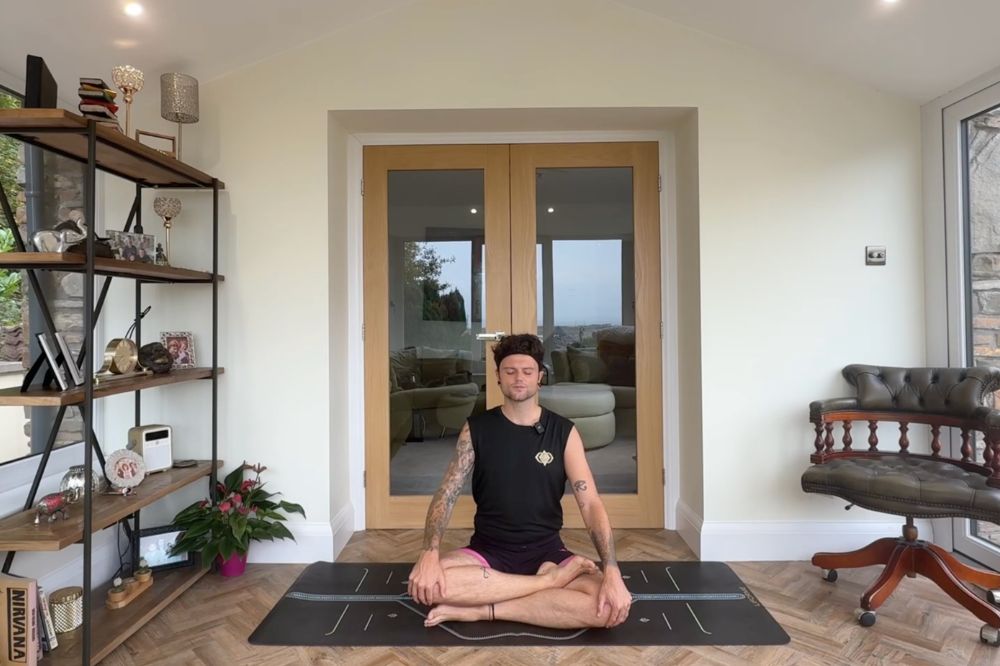
This year I launched the Hapus Hub for Hapus Yogi; an online platform where people can take themselves through my process of Identify, Simplify, and Rectify, to help them put these practices into place and bring a sense of balance, calm and clarity to their lives.
I will also be running a Yoga Teacher Training starting this June in south Wales and hosting three beautiful wellbeing retreats in Greece, Sardinia, and France. If learning Celtic and Welsh wisdom is something you want to discover more about, then I recommend joining us in France over the festival of Samhain, where Celtic druids will take us on tours to visit the legendary Welsh King Arthur’s castles and landmarks and leave offerings at Merlin’s tomb in the mystical Broceliande Forest.
Welsh Wellbeing: A Practical Yet Mystical Guide to Re-Connecting to Yourself is available to purchase now. For more information, visit the Hapus Yogi site here and follow Cal on Instagram.
Support our Nation today
For the price of a cup of coffee a month you can help us create an independent, not-for-profit, national news service for the people of Wales, by the people of Wales.


