

Young composer awarded top music honour at Urdd Eisteddfod
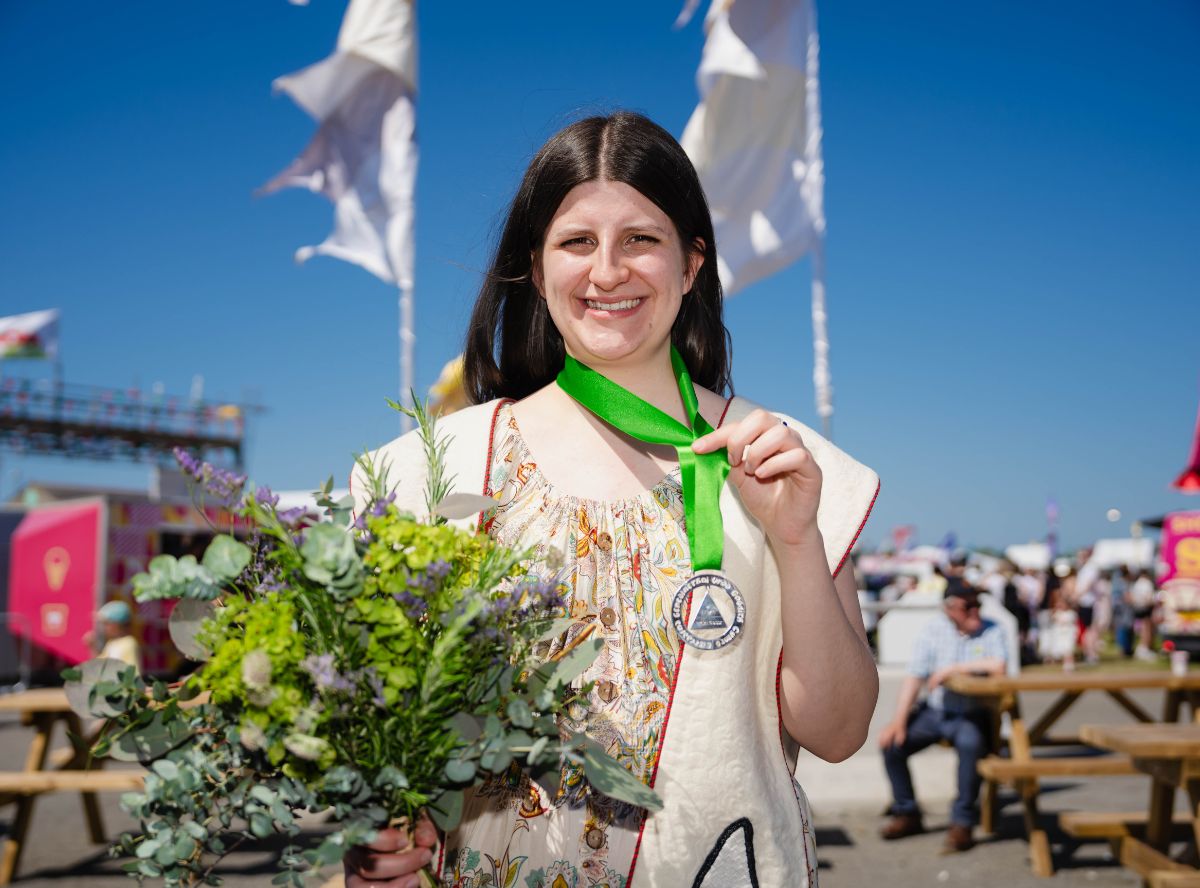
A music student has won one of the top composition prizes at this year’s Urdd Eisteddfod for a contemporary choral work inspired by medieval Welsh poetry.
On Tuesday (26 May), 21-year-old Heledd Wynn Newton from Cardiff has been announced as the winner of the Main Composer Medal at Eisteddfod yr Urdd Ynys Môn.
This year, the Medal was presented by Rheinallt and Rowenna Thomas, Cardiff (formerly of Llanfairpwll and Porthaethwy), and the Glynne Jones prize is given by Cronfa Ymddiriedolaeth Pendyrus (£400).
A former pupil of Ysgol Pwll Coch and Ysgol Gyfun Glantaf, Heledd is studying for a degree in Music at Oxford University.
Under the guidance of her harp teacher, Catrin Finch, Heledd has won a scholarship to study for a Master’s degree at the Royal Academy of Music this September, where she will continue her composition work.
Judges Gareth Glyn and Owain Llwyd noted that the ten entries showed “diversity in terms of style, instrumentation and genre” which “reflects the depth of the young compositional talent that we have in Wales today.”
Heledd has reached the top three in the Composition Medal twice before, in 2020 and last year at Eisteddfod Dur a Môr, Parc Margam.
Heledd said: “I began composing at the age of 7. As a member of Côr Heol y March coached by Eleri Roberts, and the National Youth Choir of Wales coach by Tim Rhys Evans, I have been introduced to a wide range of choral works of very different styles, which have influenced my composition work.
“I am a keen member of the experimental composition community in Oxford, and recently I had the opportunity to take part in a composition workshop with BBC Singers.”
The judges were unanimous in awarding the four‑movement SATB choral song cycle based on an awdl from Y Gododdin by Aneirin the prize.
They said: “The composer has immersed themselves in Early Welsh poetry and responds to it in a musical language that is thoroughly contemporary, including extended tonality, the use of glissandi and whispering, and dividing the choir into as many as eight independent parts.
“This is a professional, contemporary and important voice for the future of Welsh music.”
Second in the competition was Iestyn Seiriol from Llanddaniel, Ynys Môn with Rhydian Llŷr Williams from Llanrug in third place.
The week’s highlights from the Maes and Llwyfan can be watched on S4C Clic, with the full competition results on S4C’s site here.
Support our Nation today
For the price of a cup of coffee a month you can help us create an independent, not-for-profit, national news service for the people of Wales, by the people of Wales.
Get more trusted Welsh news
Choose Nation.Cymru as a preferred source in Google News to see more of our journalism.



