


Youngest ever New Welsh Review editor wants to broaden the definition of Welshness
Gareth James
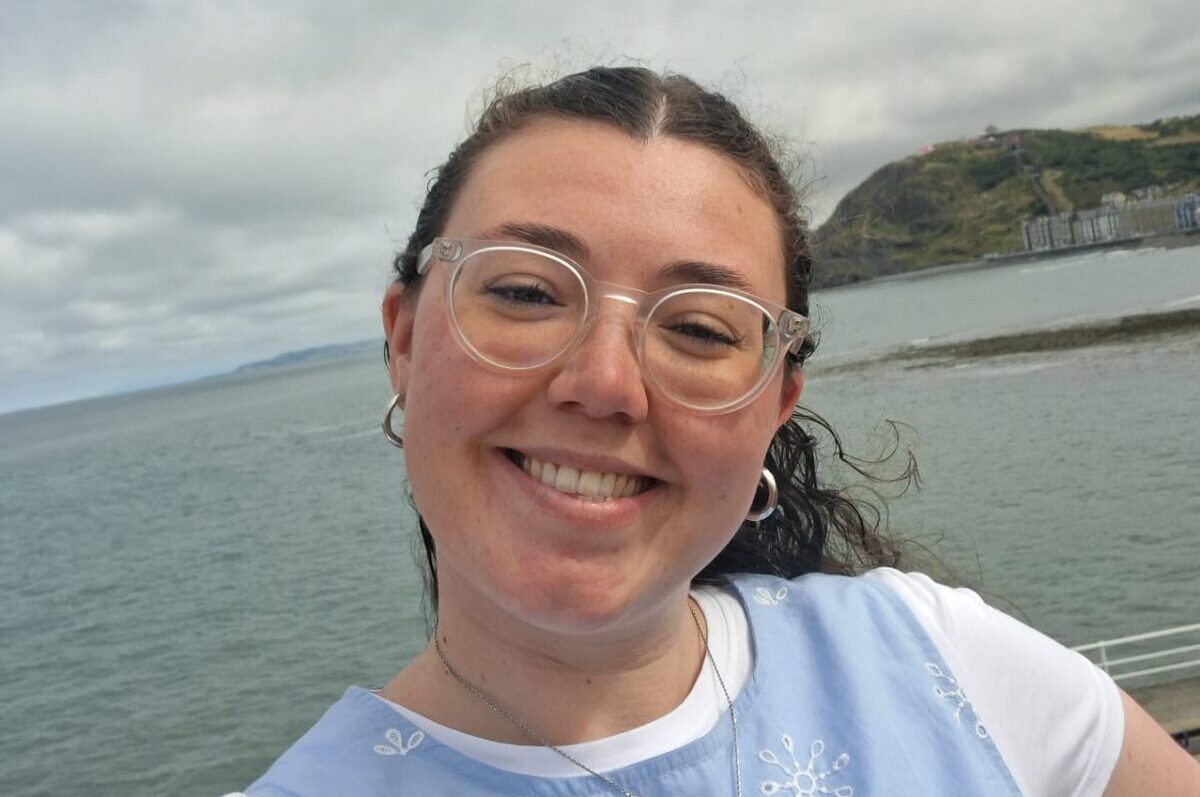
At 25, Imogen Davies has become the youngest editor in the history of New Welsh Review – and she wants to broaden what it means to be Welsh.
As she prepares to publish her first issue of Wales’ leading English-language literary magazine, Davies says she wants to modernise the publication while preserving the qualities that have made it a cornerstone of Welsh literary life for almost 40 years.
“Putting this edition together, creating it, holding the issue in my hand finally, the physicality of the copy and releasing it into the world, for people to have conversations about it, to engage with. It’s my first one, so it’s been hard but rewarding,” she says.
Books have always been part of her life. Her grandmother was a bookbinder at the National Library of Wales, and Davies arrived in the role in May with both a love of publishing and experience of doing it herself.
She first came to wider attention after independently writing, illustrating and publishing her debut poetry collection, Distances, an achievement that helped establish her as one of a new generation of Welsh literary voices.
Even so, Davies acknowledges the responsibility that comes with editing a magazine that has published Welsh fiction, poetry, creative non-fiction and literary criticism for nearly four decades.
“My first issue has been a big learning curve,” she says. “Deciding what content and approach I’d like to take. There’s been a lot of thinking, looking back to previous issues, while also trying to gauge the political temperature of Wales today, given how much has changed.”
Her debut issue, Gwlad! Gwlad!, will be launched during this year’s National Eisteddfod at Garreg Las in north Pembrokeshire.
One of the most noticeable changes is the introduction of QR codes linking readers directly to audio performances.
“I’d like to modernise New Welsh Review,” she says. “This is the first issue to use QR codes. You can scan at the bottom of the page to listen to a reading.
“For example, we have a bilingual Welsh and English piece. If you can’t understand Welsh well, or would like to hear it, you can read along and experience the piece as audio, as another piece of art.”
The issue also introduces new regular features, including archive pieces from earlier editions and a New Yorker-inspired cartoon page featuring Welsh cartoonist Corb Davies, winner of the Guardian Under-18 Cartoonist of the Year.
But Davies says the biggest change is editorial rather than technological.
“My main aim is to broaden the definition of what it means to be Welsh.
“So my first issue celebrates the nuance and diversity of Welsh identity, from Cymru’s Muslim community, to queer Welsh poets, cultural connections between Cymru and Japan, and bilingual creative pieces written by those who speak Cymraeg as well as those who don’t.
“All equally Welsh, celebrating Welsh identity, but not saying Welshness is this or that – showing that Welshness can be all of these things. I believe that is important.”
Minority languages
Davies has studied in Durham, Barcelona, Biarritz and Edinburgh, learning French, Catalan and Spanish along the way.
Experiencing other minority languages shaped her thinking.
“I realised that my experience as a minority language speaker is mirrored across Europe, is felt as passionately by Catalan speakers, for example.”
Although New Welsh Review is published in English, Davies believes it still has an important role in supporting Welsh.
“This does sound contradictory. But I do believe there’s a link — opening up, letting more people explore their Welshness beyond the confines of language.”
Linguistically uniform
She worries that society is becoming increasingly linguistically uniform.
“I don’t think that’s natural,” she says.
“Nature is full of different species, different trees, for example. Languages and cultures work in the same way — they are living, evolving things. Losing one would be a kind of extinction. A loss of biodiversity in culture and language, for everyone.”
Davies also believes Welsh writing in English has matured.
“Before the sixties, before we had a publisher producing Welsh writing in English, writers had to write for England, make Welshness palatable for an English audience to get published.
“Now we have our own publishers, able to express the nuances of Welshness more truly, without leaning on tropes and stereotypes.
“I think we’re starting to publish for Wales. It doesn’t always need a leek or a daffodil in it to be taken seriously as Welsh writing.”
TED talk
The forthcoming issue also includes the TED talk Davies recorded earlier this year.
“I talk about loving in minority languages — that Welshness isn’t, and speaking Welsh isn’t, a prerequisite of being Welsh, and you don’t need to be fluent to love in Welsh.
“For minority languages to survive, you need to love in the language, not just live in it — have an emotional connection, not just use it in a shop or learn it at school.
“Saying ‘I love you’ in Welsh, for me, is more powerful and emotional than saying it in English — it speaks to the part of the brain that holds memory.”
Davies also speaks candidly about her own relationship with Welsh.
“I can’t speak Welsh as well as I once could,” she says. “I recognise that.
“So I’ve experienced not feeling Welsh enough, despite being first-language Welsh, born in Aberystwyth and having all my schooling in Welsh.”
Judged
She argues that too often people who are learning Welsh fear being judged for getting it wrong.
“The recent history of the Welsh language means I understand why this generation places so much importance on it,” she says.
“I’m not saying get rid of standardisation altogether, but times are changing.”
Gareth James is publisher of Margin to Margin Books.
Issue 140 of New Welsh Review, Gwlad! Gwlad!, is published next week and will launch during this year’s National Eisteddfod.
Support our Nation today
For the price of a cup of coffee a month you can help us create an independent, not-for-profit, national news service for the people of Wales, by the people of Wales.
Get more trusted Welsh news
Choose Nation.Cymru as a preferred source in Google News to see more of our journalism.


