

Yr Hen Iaith part 73: Lewis Morris, his brothers and their literary circle
Jerry Hunter
We sat down to record this episode of Yr Hen Iaith. Our producer, Richard Martin, gave us the word to begin and we started with the usual intro.
When Richard Wyn Jones asked me what we’d be talking about this time, I answered Morrisiaid Môn, ‘the Morrises of Anglesley’. He exclaimed, saying that, even though he is from Anglesey and had heard the name before, he didn’t know anything about them.
Richard added emotionally that he wasn’t told un sill, ‘one single syllable’, about Morrisiaid Môn in school. It was a potent illustration of the reason why we started creating Yr Hen Iaith in the first place.
Literary history, like all history, inevitably takes narrative form. We identify protagonists, developments and milestones which can be worked into a coherent story. As this series moves on through the early modern period, we have an ever-increasing volume of Welsh-language literature to treat, making it a challenge to pick and choose and create a story based on over-arching trends.
The way in which we’ve approached eighteenth-century Welsh literature so far has been broadly structured in terms of oppositions and conflicting ideologies, the Methodist reformers and their hymns on one side and the conservative Anglican poets given to producing broadsheet ballads and anterliwt plays on the other side.
A consideration of the Morris brothers of Anglesey and their friends and associates disrupts that overly neat narrative in many ways.
Anglicans
Religiously conservative, they were Anglicans bitterly opposed to those whom one of the Morris brothers labelled ‘the mad Methodists’. However, their literary interests were wide-ranging and they were often disparaging of the work of more conservative poets who only worked in traditional modes and populist veins. And, for the multi-faceted Morrisiaid Môn, literature was one of many intellectual pursuits which ranged from the scientific to the artistic.
The Morrisiaid and their circle have left a staggeringly large body of letters – a great many of them macaronic, playfully mixing English and Welsh – which provide a great amount of information about their lives, interests and ambitions.
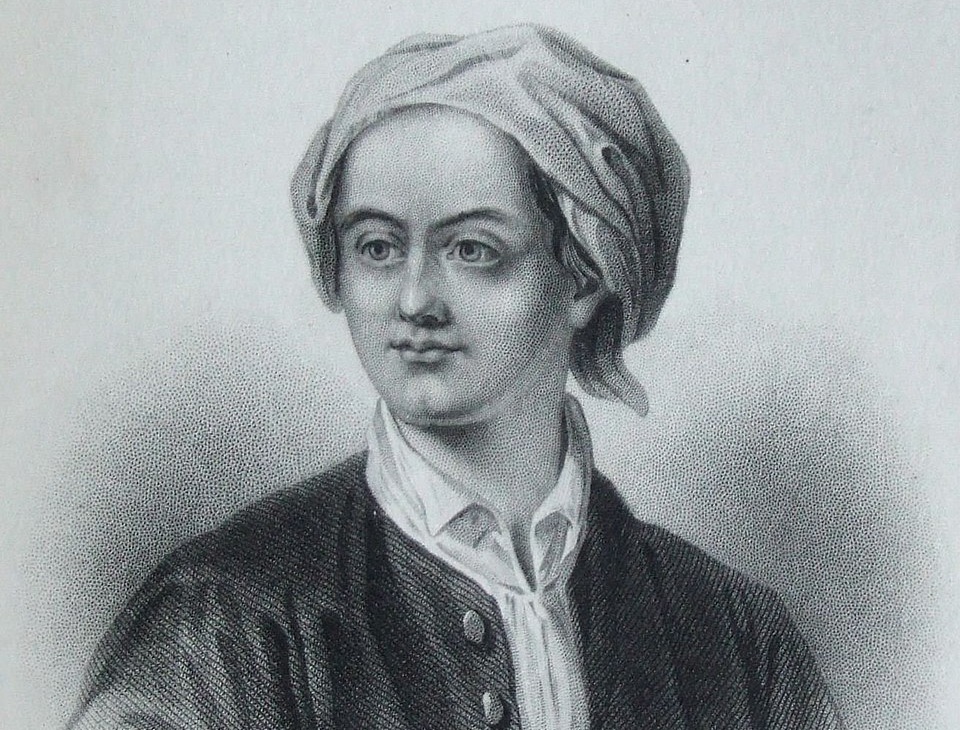
Lewis Morris (1701-65) was the oldest of the four brothers from the parish of Llanfihangel Tre’r Beirdd. He was given to scholarly pursuits, and sought out Welsh literature from previous ages contained in manuscripts.
He was a poet in his own right as well, and an extremely versatile one at that, composing free-metre poetry as well as work in the traditional strict metres, and he treated a wide range of subjects as well.
He was a pioneering cartographer and hydrographer and he charted the Welsh coast from Llandudno to Milford Haven. He was also a pioneering printer, establishing one of the first presses in north-west Wales after the London-centric laws restricting the trade were relaxed at the end of the seventeenth century.
Tlysau yr Hen Oesoedd
Originally setting up shop in Llannerch-y-medd in Anglesey in the early 1730s, he soon relocated to Holyhead where, in 1735, he published Tlysau yr Hen Oesoedd, a title which we can translated as the ‘Jewels’ or the ‘Treasures’ of ‘the Old Ages’.
Apparently intended as a journal, only one issue was produced, however it served to signpost a big part of Lewis Morris’s cultural agenda; the publication presented specimens of Welsh literature from previous ages and was aimed at inspiring others to take advantage of the linguistic and literary riches of the past.
The second of the brothers, Richard Morris (1703-79), had similar literary interests, both studying the older poetic produce of his country and producing his own original verse. During his youth in Anglesey, he made an important collection of folk verse.
He went to London as a young man and would remain there for the rest of his life, working as a clerk and struggling financially before eventually securing a good job in the Navy Office. He was a founding member of the Cymmrodorion Society, the first of several such organisations which would channel the energies and wealth of the London Welsh in the service of their native language and culture.
He was also involved in publishing, serving as a press-corrector for Welsh-language religious publications and working on a new edition of the Welsh Bible.
Custom house
William Morris (1705-63), worked in the Holyhead customs house, while also making money with sidelines in medicine and legal work. He was a pioneering botanist, and his studies of local plants would be used for later studies. And, like his two older brothers, he was interested in the old literature of his country, and collected Welsh manuscripts.
Siôn (or John) Morris (1713-40), the youngest brother, was a sailor and died on board a British warship. He was also a poet, and some of his letters survive.
The wider circle of the Morris brothers included the strict-metre poet Goronwy Owen (1723-1769), to whom the next instalment in this series will be devoted, and Evan Evans (1731-88). Raised in the parish of Lledrod in Cardiganshire, Evans attended school at Ystrad Meurig, and came under the influence of one of Lewis Morris’s friends, Edward Richard (an interesting figure in his own right who deserves more attention that space affords here).
Evan Evans thus came to know Lewis Morris himself, and the eldest of the Morris brothers became his mentor, instructing him in the traditional Welsh strict metres. Earning the name Ieuan Fardd (‘Ieuan the Bard’), Evans produced a number of original compositions which display his mastery of the complex traditional forms.
However, it was in the realm of scholarship that he would make his greatest contribution, for Lewis Morris also inspired him to search out manuscripts containing the ‘jewels’ of medieval Welsh literature.
Analysis
Ieuan Fardd studied at Oxford, but left without graduating, following a career in the Church. Devoting a great deal of time to the study of manuscripts, Evans produced a coherent analysis of the history of medieval Welsh poetry and helped laid the foundations for modern scholarship in the field. His 1764 publication, Some Specimens of the Poetry of the Ancient Welsh Bards Translated into English With Explanatory Notes, was enthusiastically welcomed by English poets and antiquarians as well.
Returning to that narrative impulse and a desire to describe over-arching trends, we can conclude that, in terms of Welsh literary history, the great contribution of the Morris brothers and their circle lies in the many ways in which they made the virtues of older Welsh literature fresh and relevant in a new age.
In the next instalment we’ll look at some very serious poetry by Goronwy Owen which exemplifies what we might call the classical Welsh aesthetic of the Morris circle. We’ll end here with a poem by Lewis Morris which uses that intense knowledge of older Welsh forms, themes and standards to produce a frivolously playful piece.
Dafydd ap Gwilym and other poets of the later medieval period used the strict-metre cywydd form to send a llatai or love messenger to women, real or imagined. The cywydd llatai became adapted during the sixteenth and seventeenth centuries and employed as a medium of addressing friends and family members who were separated geographically from the poet.
Playful spin
Lewis Morris put his own playful spin on the tradition with his poem ‘Sending the Snail as a Messenger to Mr. Wiliam Bulkley of Brynddu’ (‘Gyrru’r Falwen yn Gennad at Mr. Wiliam Bwlclai, Brynddu).
Unlike the swift birds commissioned within the imaginative frameworks of earlier cywyddau llatai, Lewis Morris choses a creature patently unsuited for the task. It was a short trip across north-west Anglesey from the poet’s home in Holyhead to his friend’s home, Brynddu, near Llanfechell, but the snail will obviously take some time to complete it.
The humour is made more intense by its packaging it in the serious trappings of the bardic convention. Like some many cywyddau llatai composed during previous centuries, Lewis Morris begins by addressing his chosen messenger, flattering it with flowery turns of phrase in order to persuade it to accept the mission.
Y falwen, dorfelen fau,
Mawrwych, frenhines muriau,
Pa fodd yr wyd, ferch lwydfrech,
Y globen â’r gragen grech?
The snail, my yellow-bellied one,
Majestic, queen of the walls,
How are you, grey-speckled girl,
Plump woman with a curly shell?
In turns stately, funny and descriptively accurate, what better way of bringing these modes together than by describing the snail as ‘queen of the walls’?!
Lewis Morris then describes the journey in detailed terms, naming places which the snail will pass as it travels to his friend’s home. Also in keeping with the cywydd llatai convention, the poet both praises the messenger’s qualities and warns it of possible dangers along the way.
Gwrando, y falwen groendew,
Er na’th friwa’r haf na rhew,
Dos nesnes i’r cynhesrwydd
I’r adail gled rhed yn rhwydd;
Gwilia’r garddwr (gwr y gôd)
Milwr, a gelyn malwod . . . .
Listen, thick-skinned snail,
Although neither summer nor ice hurts you,
Go ever closer to the warmth
[and go] to the cosy building ably;
Be ware of the gardener (man of the bag),
A soldier, and the enemy of snails . . . .
Succinctly creating the image, we see the gardener as an enemy soldier, prowling the grounds as he fills his ‘bag’ with snails. The brave snail has been sent on a dangerous mission indeed, however this humorous conceit is grounded in reality.
The uchelwr William Bulkley was a horticultural pioneer, and the great variety of plants in his garden at Brynddu were protected by the extremes of weather which the snail braves by walls. Addressed intially as ‘queen of the walls’, the snail is then imagined by the knowing reader as climbing very specific walls as it comes to its journey’s end.
Further Reading:
Saunders Lewis, A School of Welsh Augustans (Wrexham, 1924).
Coastal charts made by Lewis and William Morris can be seen the digital collections of the National Library of Wales: https://www.library.wales/discover-learn/digital-exhibitions/maps/nautical-maps
Evan Evans, Some Specimens of the Poetry of the Ancient Welsh Bards (1764), available digitally on the website of the National Library of Wales: https://viewer.library.wales/4788816#?xywh=-92%2C5%2C3922%2C2151&cv=4
Alun R. Jones, Dawn Dweud: Lewis Morris (Cardiff, 2004).
John H. Davies (gol.), The letters of Lewis, Richard, William, and John Morris, of Anglesey (Morrisiaid Môn), 1728-1765 , two volumes (Aberystwyth, 1907-09).
Support our Nation today
For the price of a cup of coffee a month you can help us create an independent, not-for-profit, national news service for the people of Wales, by the people of Wales.


