


15 beautiful hidden gems in Wales that are seriously worth exploring
Amelia Jones
Wales is full of places that reward you for going a little further, taking the quieter road or stepping away from the obvious tourist trail.
Drawing on a lifetime of exploring Wales, David Angel has rounded up 30 of his favourite hidden gems across the country. From secret beaches and mountain lakes to ancient ruins and remote valleys, his list shows just how much there is to discover beyond the better-known sights.
Nation.Cymru have taken those 30 and handpicked 15 that particularly caught our eye. Our selection leans towards places with a strong sense of character, picking out spectacular landscapes, fascinating history and locations that make you feel as though you’ve stumbled upon something rather special.
There are wild stretches of coastline, atmospheric churches and abbeys, prehistoric remains, and mountains that offer a quieter alternative to some of Wales’ best-known peaks.
Llanthony Priory
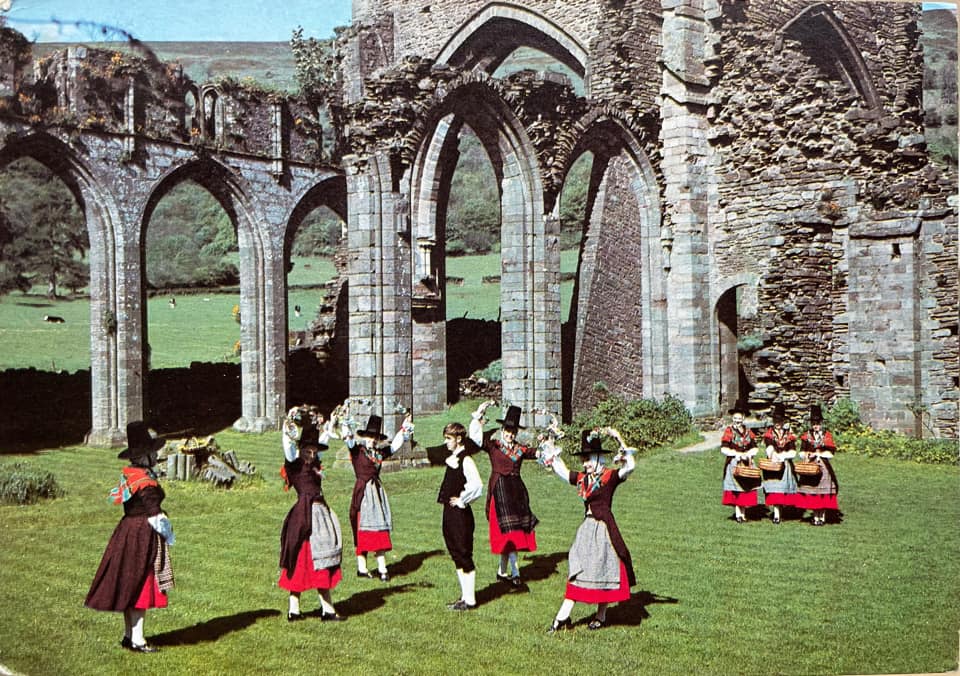
Llanthony Priory is a partly ruined former Augustinian priory in the secluded Vale of Ewyas, a steep-sided once-glaciated valley within the Black Mountains area of the Bannau Brycheiniog National Park.
The priory dates back to around the year 1100, when one of Hugh de Lacy’s knights called William reputedly came upon a ruined chapel of St. David at this location; he was inspired to devote himself to solitary prayer and study.
He was joined by Ersinius, a former chaplain to Queen Matilda, the wife of King Henry I, and then by a band of followers. A church was built on the site, dedicated to St John the Baptist, and consecrated in 1108.
The ruins have attracted artists over the years, including J. M. W. Turner who painted them from the opposite hillside. The priory was acquired by the Knight family in the 20th century.
Wood’s house later became the Abbey Hotel. The remaining ruins are protected by Cadw and entrance to the ruins is free of charge to visitors.
Llyn Crafnant
A scenic 63-acre reservoir and natural lake nestled in a valley where the Gwydir Forest Park meets the Carneddau mountains in Eryri National Park, north Wales.
The Forest Park guide (2002) states that “the (view along Llyn Crafnant) is one of the most breathtaking views in all Snowdonia”. The summits include Crimpiau 475 metres (1,558 feet), and Craig Wen 548 metres (1,798 feet) which provide views of Moel Siabod and the Ogwen Valley, and Snowdon.
Porth Iago
Porth Iago is a secluded sandy cove on the western coast of the Llŷn Peninsula, tucked away between the larger coastal destinations of Aberdaron and Porthor. The beach sits within the Llŷn Peninsula National Landscape.
The cove is particularly attractive because of its sheltered position. The beach is enclosed by low cliffs and rocky headlands, giving it a wonderfully secluded feel even during the busier summer months.
The surrounding landscape remains largely rural, with fields running down towards the sea and the coastal path providing access to some spectacular views.
Dysynni Valley
The Dysynni Valley is one of the most spectacular and relatively little-known landscapes in southern Eryri, stretching inland from the coast near Tywyn towards the foothills of the Cadair Idris massif.
The valley is dominated by the distinctive peaks of Craig y Dinas and Bird Rock (Craig y Dinas), while the Dysynni River winds through a landscape of mountains, wetlands and farmland.
The Dysynni Valley is also closely associated with the poet and writer Mary Jones, and the landscape has inspired generations of Welsh artists and writers. It is an excellent destination for combining walking, history and dramatic mountain scenery.
Llyn y Fan Fach
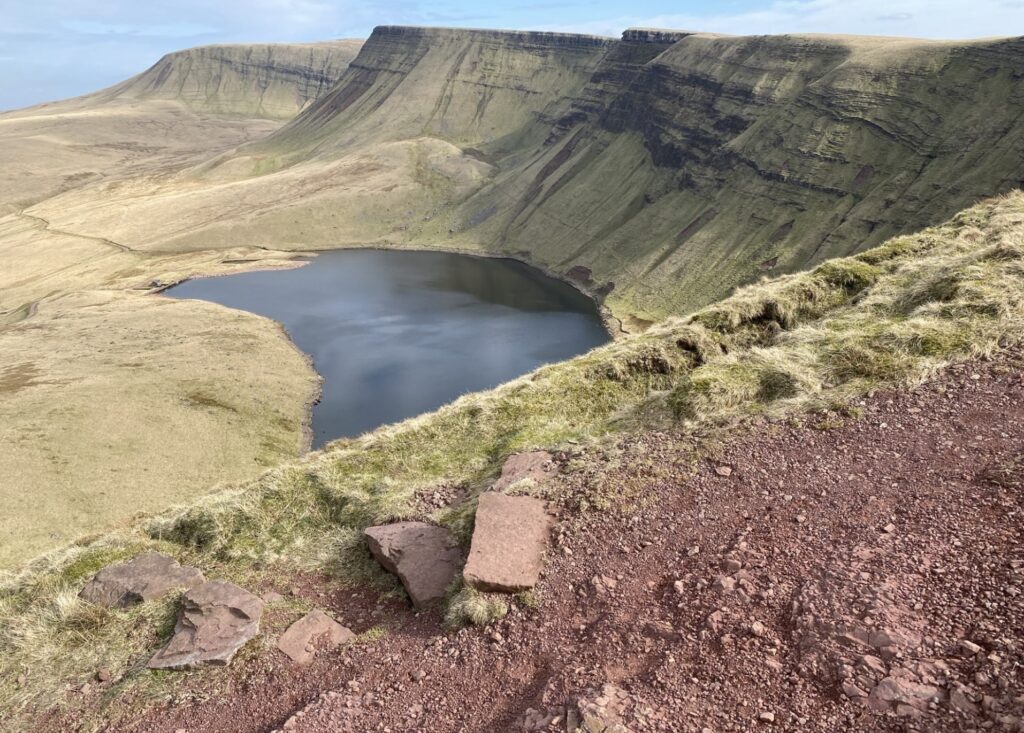
Llyn y Fan Fach is a remote mountain lake situated beneath the dramatic escarpment of the Black Mountain in the western part of Bannau Brycheiniog National Park.
The lake is particularly famous for its connection with the Lady of Llyn y Fan Fach, one of the best-known legends of Welsh folklore.
The lake itself sits in an extraordinary landscape of open moorland, steep mountain slopes and rocky ridges. Reaching it requires a walk across exposed countryside.
Mewslade Bay
Mewslade Bay is a remote beach on the western Gower Peninsula, situated within the Gower National Landscape. It lies below dramatic limestone cliffs and can only be reached on foot, helping it retain a wonderfully wild atmosphere.
The beach is particularly impressive at low tide, when a broad stretch of golden sand and rock pools is revealed. The surrounding cliffs are characteristic of the western Gower, where limestone has been shaped over thousands of years by the sea.
Mewslade is accessed from the nearby village of Pitton via a footpath across farmland and down towards the coast. There are no major tourist facilities at the beach itself, which is precisely what gives it its secluded character.
For those looking for a quieter alternative to some of Gower’s better-known beaches, Mewslade Bay is one of the peninsula’s most rewarding destinations.
Ceibwr Bay
Ceibwr Bay is a small and spectacular inlet on the Ceredigion coast, close to the border with Pembrokeshire. It forms part of the rugged coastline of the Cardigan Bay area and is particularly famous for its dramatic cliffs and unusual coastal geology.
The bay is home to the Ceibwr Blowhole, a natural sea cave and geological feature where waves can force seawater dramatically upwards through the rock under certain conditions.
The surrounding coastline is characterised by steep cliffs, rocky headlands and narrow valleys carved into the landscape. The Pembrokeshire Coast Path passes through the area, providing walkers with exceptional views along this relatively undeveloped section of coast.
Llynnau Cregennen
Llynnau Cregennen are two beautiful mountain lakes situated on the slopes of Cadair Idris, overlooking the Mawddach Estuary in southern Eryri.
The lakes occupy a remote and elevated landscape surrounded by rocky outcrops, heather-covered hills and open moorland. On clear days, there are magnificent views across the Mawddach Estuary towards the mountains and the coast.
The landscape around the lakes also contains evidence of thousands of years of human activity. Bronze Age monuments and prehistoric remains can be found in the surrounding countryside, while later agricultural use has left the area dotted with traditional stone walls and farmsteads.
The lakes can be reached by road and walking routes, although the narrow mountain roads and remote setting help keep visitor numbers relatively low compared with some of the more famous destinations in Eryri.

Tre’r Ceiri
Tre’r Ceiri is one of the most impressive and best-preserved Iron Age hillforts in Wales, occupying the summit of Mynydd Tre’r Ceiri on the Llŷn Peninsula.
The settlement is believed to have been established during the Iron Age, with hundreds of stone-built roundhouses enclosed within substantial defensive walls. The remains provide an extraordinary insight into life in prehistoric Wales.
From the summit there are panoramic views across the Llŷn Peninsula, towards the mountains of Eryri and, on clear days, out across the Irish Sea.
Tre’r Ceiri is reached by a walking route from the surrounding countryside, and the exposed summit can be particularly atmospheric in poor weather.
Garn Fawr
Garn Fawr is a rocky hill and viewpoint near Strumble Head in north Pembrokeshire, offering some of the finest panoramic views in this part of the county.
The summit rises above the surrounding landscape and provides views across the Pembrokeshire coast, with the Irish Sea stretching out beyond the rugged cliffs. On clear days, the views extend considerable distances along the coastline.
The name Garn Fawr means “Great Cairn”, reflecting the rocky and prehistoric character of the landscape. The summit contains evidence of an ancient settlement, while the surrounding area has been occupied and farmed for centuries.
Pennant Melangell Church
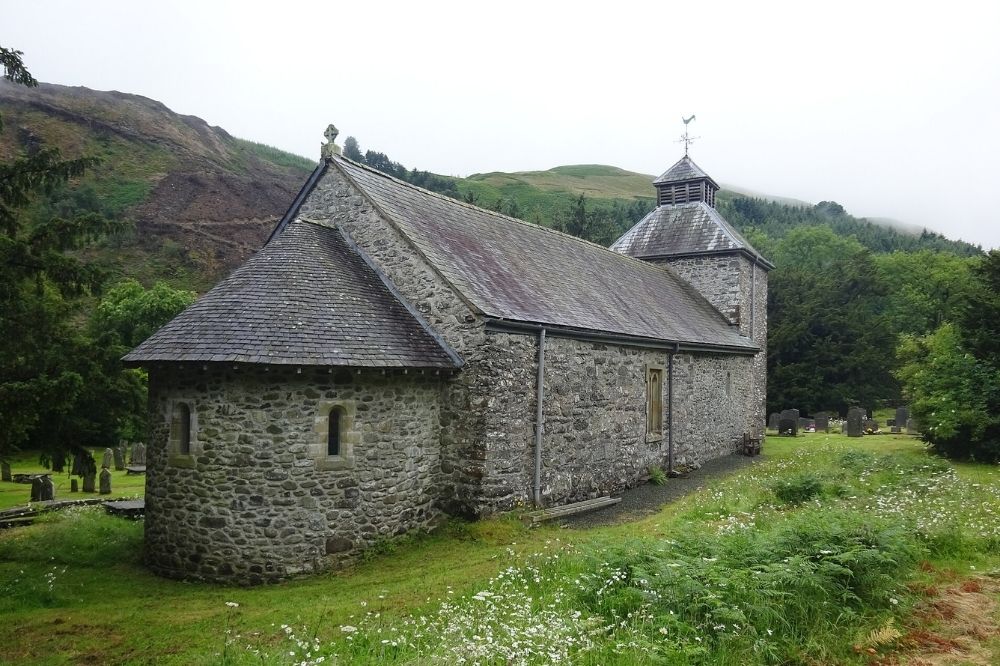
St Melangell’s Church stands in the remote Tanat Valley near Llangynog in Powys and is one of the most remarkable medieval churches in Wales.
The church is dedicated to St Melangell, a 7th-century female saint associated with Ireland and Wales. According to tradition,
Melangell came to the valley seeking a life of solitude and prayer and established a religious community there.
The church contains the remarkable medieval shrine of St Melangell, constructed from intricately carved stone. The shrine is regarded as one of the finest surviving examples of its kind in Wales and remains a focus for visitors and pilgrims.
Strata Florida Abbey
Strata Florida Abbey is a ruined former Cistercian monastery near Pontrhydfendigaid in Ceredigion, founded in the 12th century.
The abbey was established in 1164 by the Cistercians and became an important religious and cultural centre in medieval Wales. Its Welsh name, Ystrad Fflur, is generally translated as “Vale of Flowers.”
The monastery became closely connected with the princes of Deheubarth and later Gwynedd, and the site is traditionally associated with the burial of the medieval Welsh poet Dafydd ap Gwilym.
The surviving ruins include sections of the church, cloister and other monastic buildings. Although much of the medieval complex has disappeared, the remaining stonework gives a strong impression of the abbey’s former scale.
The surrounding landscape is particularly beautiful, with the monastery standing amid the remote countryside of the Cambrian Mountains. The combination of medieval history and isolation makes Strata Florida one of the most atmospheric historic sites in mid-Wales.
Moel Siabod
Moel Siabod is a 872-metre mountain in southern Eryri, situated near the village of Capel Curig.
Although considerably less famous than Yr Wyddfa, Moel Siabod offers one of the finest mountain walks in the region and is particularly renowned for its panoramic summit views.
The mountain has several approaches, including the popular route from Capel Curig. The ascent becomes increasingly rocky towards the summit, with the Daear Ddu ridge providing an enjoyable scrambling option for experienced walkers.
From the summit, the views are exceptional. On a clear day, the panorama includes many of the major peaks of Eryri, including Yr Wyddfa, Glyderau and the Carneddau, as well as the surrounding valleys and lakes..
Ynysypandy Slate Mill
Ynysypandy Slate Mill is a remarkable abandoned 19th-century slate-processing mill situated in the mountains of northern Gwynedd.
The mill was constructed during the height of the Welsh slate industry, when slate quarrying was one of the most important industries in north-west Wales. It was associated with the nearby quarries and formed part of the network of industrial sites that transformed the landscape during the Industrial Revolution.
The surviving building is particularly striking. Constructed from local stone, its large industrial structure stands isolated among the surrounding hills, giving it an almost monumental appearance.
The site is part of the wider industrial heritage of Eryri, an area whose slate landscape was inscribed as a UNESCO World Heritage Site in recognition of the international importance of Welsh slate quarrying.
You can view the full list here.
Support our Nation today
For the price of a cup of coffee a month you can help us create an independent, not-for-profit, national news service for the people of Wales, by the people of Wales.
Get more trusted Welsh news
Choose Nation.Cymru as a preferred source in Google News to see more of our journalism.


