A language I can sing in, but rarely get to speak: An adult learner’s experience
Simon ap Gruffydd
My exposure to Welsh during my school years was limited, and having subsequently spent many years living and working in England, the language hasn’t featured in my everyday life.
As I have grown older, however, I have developed an increasingly strong desire to reconnect with the language, culture and heritage of Wales.
What began as an interest in learning Welsh has become something far more personal: a desire to understand, embrace and help preserve a language that sits at the very heart of our identity.
Learning Welsh as an adult has become as much a journey of cultural rediscovery as a linguistic one. It has also brought into sharp focus the challenges facing the language, particularly in communities along the Welsh border.
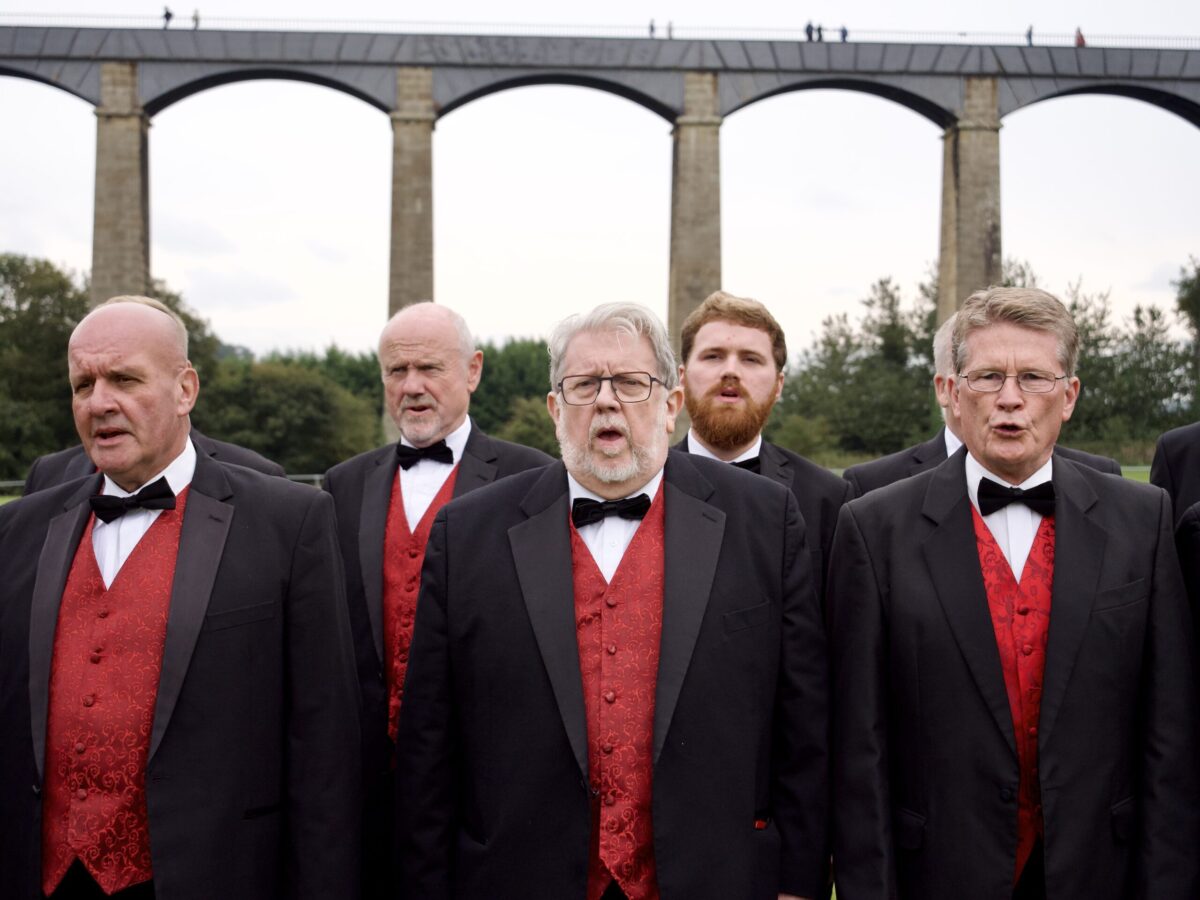
One of my motivations for joining Froncysyllte Male Voice Choir was to increase my exposure to Welsh. Beyond my love of music and Welsh culture, I saw the choir as an opportunity to take my learning beyond textbooks, classrooms and language apps.
Singing introduces me to new vocabulary, improves my pronunciation and helps me appreciate the natural rhythm and melodic qualities of the language.
Understanding the words I sing brings an entirely different emotional dimension to the music. Equally important was the prospect of spending time in the company of Welsh speakers, absorbing colloquialisms, listening to conversations and gradually developing the confidence to participate.
The reality, however, has been somewhat different.
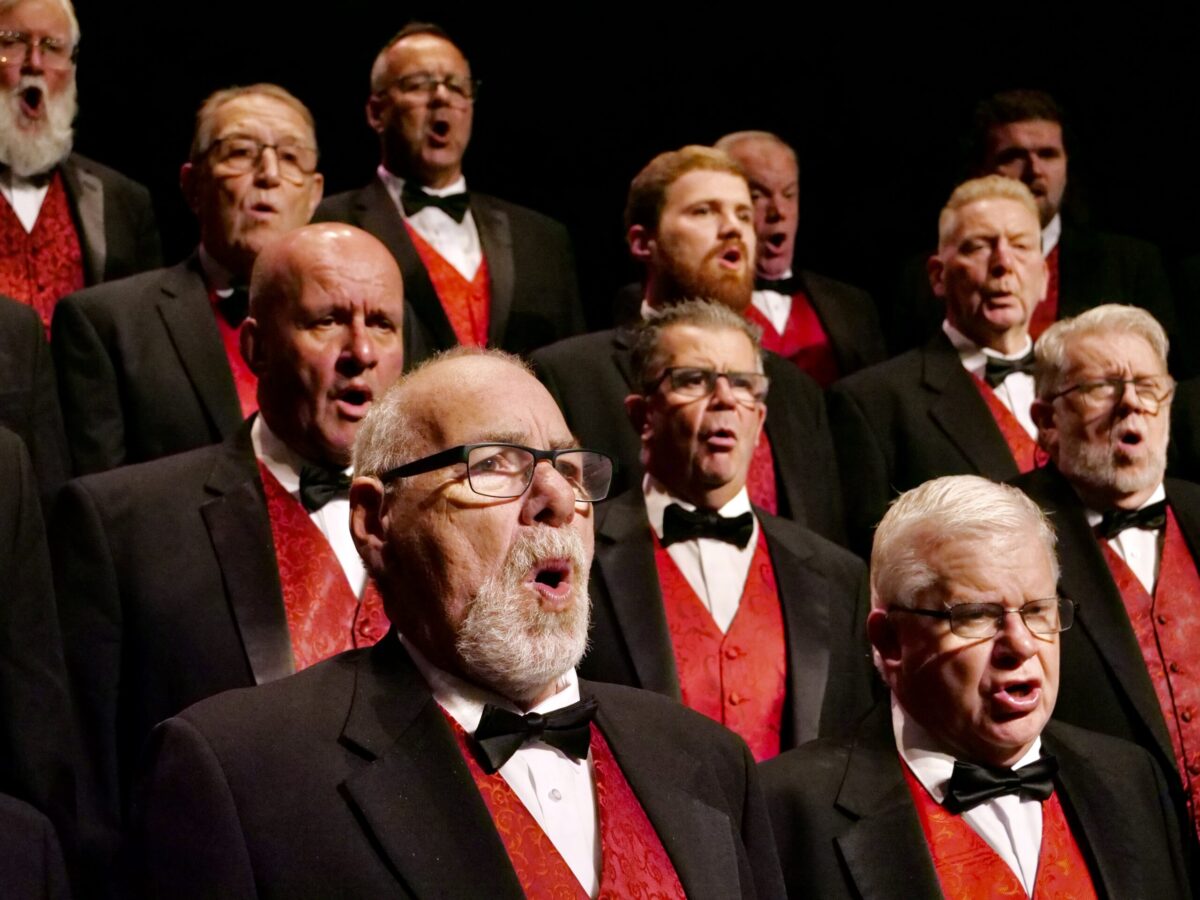
There is a particular irony in being a Welsh learner, singing in a traditional Welsh male voice choir and yet finding relatively few opportunities to hold a conversation in Welsh.
The geography of opportunity
I now live in mid-Wales and attend choir rehearsals in the Wrecsam area. Both communities lie relatively close to the English border, where the linguistic and cultural influence of our much larger neighbour is particularly evident. I often feel that the overbearing presence of the English language has overwhelmed and diluted our gentler, more lyrical native tongue.
The demographic circumstances underlying that experience are statistically documented. According to the 2021 Census, 46.9% of Powys residents were born in England, almost equalling the proportion born in Wales.
Meanwhile, the proportion of residents able to speak Welsh fell by 2.1 percentage points between 2011 and 2021. In Wrecsam, 23.2% of residents were born in England, while the proportion able to speak Welsh fell from 12.9% to 12.2%.
The Commission for Welsh-speaking Communities has itself identified the historical growth of non-Welsh-speaking populations as a contributing factor in the Anglicisation of Welsh-speaking communities. Demographic change is not the sole cause of linguistic decline, but its consequences for the everyday use of Welsh cannot be ignored.
The unintended consequences of courtesy
One of the most significant challenges facing Welsh is the unequal nature of linguistic accommodation. Imagine a group of ten people, nine of whom speak Welsh and one who speaks only English. In all likelihood, the entire conversation will take place in English.
Nine people have surrendered the opportunity to use Welsh in order to accommodate one person who cannot. Individually, that is an entirely understandable act of courtesy. Collectively, repeated across thousands of social interactions, it can have profound consequences for the survival of a minority language.
The Welsh Government’s 2019–20 Welsh Language Use Survey found that although 56% of adult Welsh speakers reported that at least half their friends could speak Welsh, only 21% mainly or always used Welsh with them. Similarly, only 19% mainly or always spoke Welsh with people in their local community. The ability to speak Welsh does not necessarily translate into its use.
The more English becomes established as the default language, the fewer opportunities Welsh speakers have to use their own language and the fewer opportunities learners like me have to hear and practise it. It becomes a self-perpetuating cycle.
As Welsh becomes less visible and less necessary in everyday life, the incentive to learn it diminishes. As fewer people learn or regularly use it, those who do speak it find themselves increasingly having to accommodate those who do not.
What troubles me is that the burden of linguistic accommodation almost invariably falls upon the Welsh speaker. Welsh speakers should not be made to feel that using their language in Wales is somehow discourteous, inconvenient or exclusionary.
Even within a traditional Welsh male voice choir, English is predominantly the language of conversation. That is not a criticism of my fellow choristers, but a reflection of the wider linguistic environment in which we live. There is something quite poignant about a group of men singing passionately in Welsh, expressing the history, identity and emotions of a nation through its native language, before returning almost immediately to speaking English.
It illustrates the distinction between celebrating a language and living through it.
What makes us Welsh?
Every time I sing our national anthem, its closing words carry an increasingly personal significance:
O bydded i’r hen iaith barhau – Oh, may the old language endure.
But what are we actually asking to endure, and why? For me, the survival of Welsh is about far more than preserving an ancient means of communication. It is about preserving one of the defining characteristics of Wales’s national identity.

Our language, music, literature, poetry, traditions and history collectively distinguish Wales as a nation. They are the cultural inheritance that makes it something more than a geographical territory. If we are prepared to allow those distinctive characteristics to gradually disappear, what exactly are we preserving when we speak of Welsh identity?
Speaking Welsh is not a prerequisite for being Welsh. But there is a difference between defining the identity of an individual and safeguarding the cultural identity of an entire nation.
English will survive without Wales; Welsh depends upon people choosing to speak it.
Beyond convenience
My motivation for learning Welsh has nothing to do with convenience. It is not about making life easier for Welsh speakers or more difficult for those who do not speak Welsh. Nor do I feel the need to justify learning it through some practical or economic benefit.
I could quite comfortably spend the remainder of my life speaking English, but that misses the point entirely. I am learning Welsh because it means something to me. Like our tradition of male voice singing, Welsh sits at the cultural core of my sense of identity and belonging.
Both carry something of the collective memory of generations. Both connect us with our past, and both depend upon people continuing to participate in them.
I do not sing merely because singing is useful, any more than I learn Welsh because speaking it is convenient. If convenience were the sole measure of cultural value, much of what makes Wales distinctive would already have disappeared. Indeed, convenience is part of the problem. Every time English is automatically chosen over Welsh because it is easier to accommodate everyone, another small opportunity to sustain the language is lost.
Our heritage should not have to justify its existence against the convenience of abandoning it.
Where the language needs us most
There is, I believe, a particular importance to learning and using Welsh in those parts of Wales where English is so dominant. It is precisely where a language is least visible that every opportunity to use it becomes more significant.
For all the years I spent living in England, I never once had to actively seek out opportunities to speak English. Yet here I am, living in Wales, having to do precisely that with Welsh. There is something fundamentally unsettling about that.
Teaching someone Welsh and enabling someone to live through Welsh are two quite different things. Our choirs, sporting clubs, community organisations and other social institutions could all play a role in reclaiming some of that linguistic space.
Those choosing to make Wales their home should also be encouraged to engage with its native language and culture. Even a willingness to learn a few words, understand familiar expressions or participate in simple exchanges can help create an environment in which Welsh speakers feel more comfortable using their language.
Accommodation should be reciprocal. Cultural integration should not require the host culture to continually diminish itself. I want to hear Welsh in the street, in the pub and in the shops.
I want it to feel ordinary in Wales, rather than something that requires a special occasion or a designated environment. What is the point of passionately singing about the survival of our language if we are unwilling to do anything to secure it?
National pride must surely extend beyond celebrating what previous generations have preserved for us. It must also encompass a responsibility to preserve something for those who follow.
The next generation
Perhaps the most painful aspect of my journey as a Welsh learner is that my own son has little interest in learning the language. His school friends do not speak Welsh outside school. English is the language of his friendships and social life.
Given the linguistic and demographic realities of our border communities, I understand why he feels this way. He is growing up in an environment where Welsh speakers routinely adapt to English speakers, but where English speakers rarely need to adapt to Welsh speakers.
What incentive does that give a child to learn Welsh? What does it tell him about the relevance of the language beyond the classroom? I cannot blame him, but that does little to ease my sadness.
As a father, there is something deeply painful about rediscovering a part of your own cultural identity that means so much to you, yet being unable to inspire that same feeling in your child.
I would love to share this journey with him, to exchange a few words in Welsh at home, to learn alongside him and, perhaps one day, to hold an entire conversation with my son in Welsh.
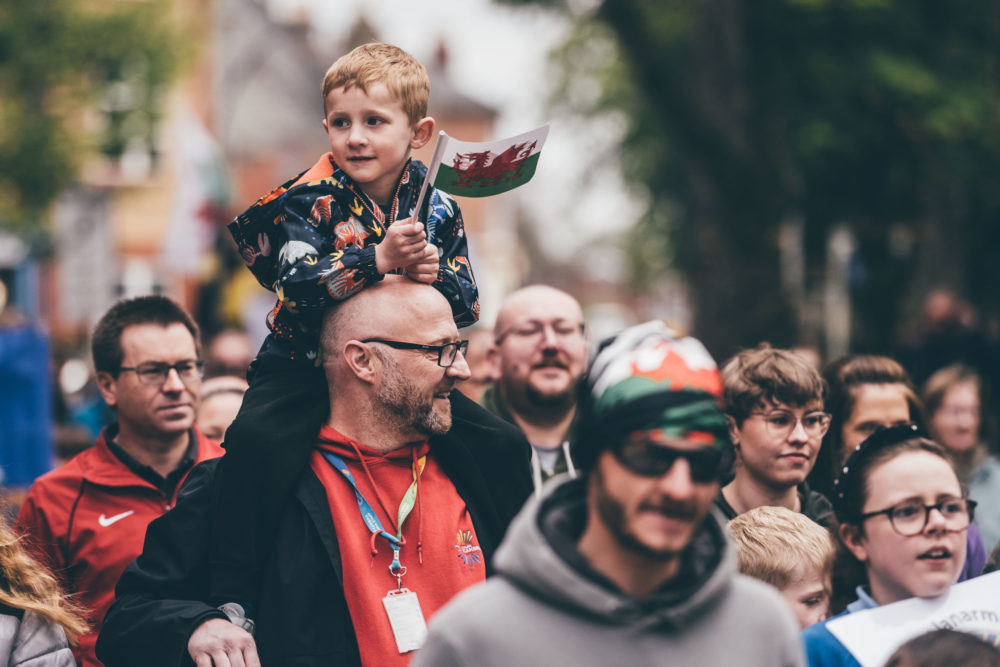
It is not disappointment in my son. It is sadness that the environment in which he is growing up has given him so little reason to develop an emotional connection with something that has become so precious to me.
Perhaps there is also a sense of personal regret. Had I learned Welsh when I was younger, I might have been able to give him something that I am now trying so desperately to acquire for myself.
I cannot recover those years, but I sincerely hope he will not reach my age carrying the same regrets.
As a father, I want to leave my son something more meaningful than material possessions. I want to pass on a sense of who he is, where he comes from and the richness of the culture to which he belongs.
Our language is such an important part of that inheritance. Perhaps one day, when I am no longer here, he will feel the same longing to reconnect with Welsh culture and heritage that I feel today. I can only hope that, should that day come, the language will still be there to welcome him.
When I stand alongside my fellow choristers and sing “O bydded i’r hen iaith barhau”, those words are no longer simply an expression of national pride. They have become a deeply personal plea.
I have an image in my mind of my son and me, sitting together one day, talking, laughing and sharing stories in Welsh.
Nothing particularly remarkable. Just an ordinary conversation between a father and his son. To others, it might seem an insignificant moment. To me, it would mean the world – and when I am gone, I hope he might one day sit with a child of his own, sharing those same words, that same laughter and that same language.
That is what the survival of Welsh means to me. Not a statistic, a government target or simply a line in a national anthem, but a father speaking to his son, and a son one day speaking to his own child.
A language carried from one generation to the next, not through obligation, but through love.
View this post on Instagram
O bydded i’r hen iaith barhau
If you want to know more about learning Welsh or the cultural tradition on a male voice choir, why not take look…
Find out more about fronchoir.com
Click here to find out more about SaySomethingInWelsh.
Click here for more info on DuoLingo.
Click here for information on local Wales-based Welsh classes or London classes (Not exhaustive so please check social media and search engines for what’s on in your area)
Support our Nation today
For the price of a cup of coffee a month you can help us create an independent, not-for-profit, national news service for the people of Wales, by the people of Wales.
Get more trusted Welsh news
Choose Nation.Cymru as a preferred source in Google News to see more of our journalism.