

A manifesto for a new Wales
With the Senedd election approaching and Wales facing mounting pressure on public services, energy costs and the environment, a Welsh think tank is calling for a fundamental rethink of how the country is governed and how success is measured.
The New Wales manifesto argues that incremental change is no longer enough, and instead sets out a broader vision for economic ownership, environmental responsibility and national self-determination. Rather than a traditional list of pledges, it presents a series of reflections on what Wales is — and what it could become.
What follows is not a conventional policy document, but an invitation to debate.
This is not a traditional manifesto. It is not a list of dry promises or a set of polished soundbites designed for an election cycle. Instead, it is a discursive journey – a series of reflections rooted in the lived experience of being Welsh in the twenty-first century. It is an invitation to a national conversation.
We often talk about policy as if it were something that happens in a vacuum, far removed from the rain-slicked streets of Swansea or the quiet classrooms of Gwynedd. But the truth is that every political choice is a story we tell about ourselves. This document is a prompt: a call to every citizen of Cymru to get their teeth into the ideas that will define our future. We are at a crossroads where the old ways of measuring success, teaching our children, and powering our homes are no longer fit for purpose.
Let us debate not just what we want to do, but who we want to be. This is a call to action: read these reflections, challenge them with your own experiences, and help us advance a vision for a New Wales that is implemented not from the top down, but from the heart of our communities outward.
Environment: The gap between duty and passion
It is Wednesday, 5:00 PM, and the rain is relentless. It has been raining for forty days, or so it feels. I am sitting in my SUV, joining the slow, metallic crawl out of Cardiff, heading west toward Swansea to pick up my ninety-one-year-old father for choir practice. The wipers are struggling against the deluge, and I am dodging potholes that seem to multiply with every storm. As I drive, I practice my harmonies for Deus Salutis. The Morriston Orpheus Choir is more than just a hobby for us; it is a lifeline, a shared history, a passion that has sustained my father for forty-five years.
But as I look at the river of rainwater washing off Mynyddbach common, I am struck by a haunting realization. I love the hymns. I love the camaraderie. I am passionate about the culture that Gwyrosydd represents as he rests nearby. But do I have that same passion for the environment that sustains it all? I recycle. I dutifully sort my plastics. But duty is a cold, clinical word. It isn’t passion. Most of us in Cymru are kicking the can down the road, passing the environmental debt to future generations while we continue to drive our SUVs through the rain. For gwlad y gȃn to keep its Calon Lȃn, we must look to the preservation of our world.
We can do better. The Future Generations Report 2025 warns us that without urgent action, we are on track for an unrecognizable future where the choices we have today are stripped away. We need to move beyond “individual action” as a chore and toward a collective enthusiasm for a better, more sustainable, world. This means entrenched devolution where the Senedd can protect our land without outside interference. It means peatland restoration and woodland creation not as “green projects” but as acts of national survival.
The poorest among us are hit hardest—one in four Welsh households are in severe fuel poverty, living in high-risk flood zones. Our environment is not a “special interest” topic; it is the stage upon which our entire lives are played out. We need to stop looking at the environment as a set of rules and start looking at it as our most urgent, shared passion. What would happen if we loved our mountains and rivers as much as we love our choirs?
Energy: The irony of the net exporter
There is a bitter irony that settles in the bones of many people in Cymru. We are a net exporter of energy. Our geography – the wind-swept ridges, the powerful tides, the rain that I just complained about – makes us a renewable powerhouse. Yet, our people struggle to heat their homes. We punch well above our weight in potential per unit area, but we are tethered to a grid system that is a hindering historical hangover from the extractive industries of the eighteenth century.
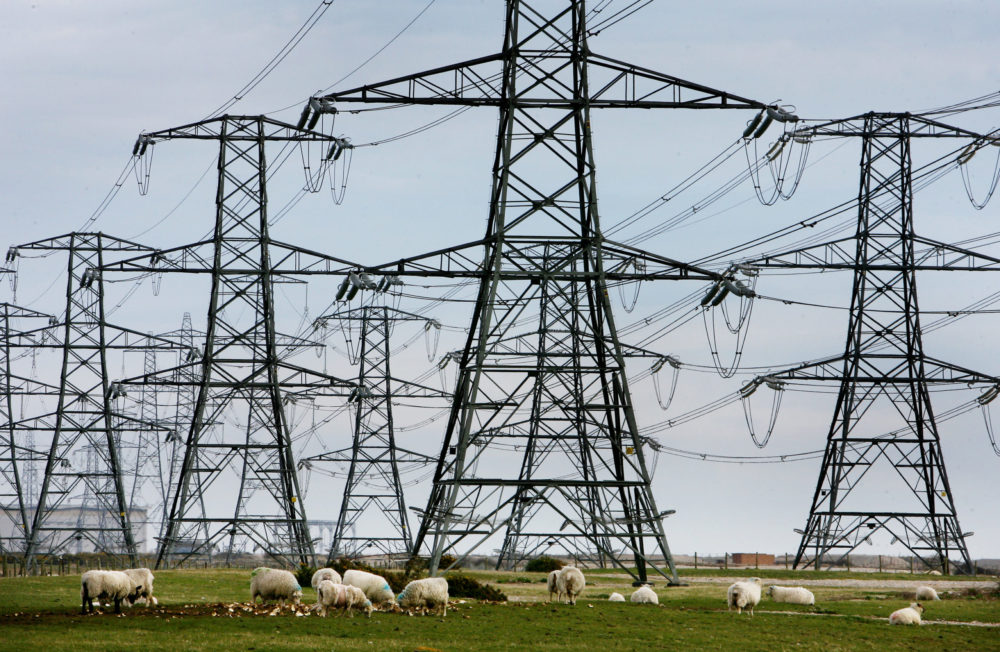
Our transmission system splits the country in two; half is owned by National Grid, the other by Scottish Power. To get energy from the North of Cymru to the South, it often has to pass through England, much like a rail passenger trying to get from Holyhead to Cardiff. This is more than a technical glitch; it is a symbol of a lack of sovereignty. We are providing the resources for our larger neighbour with little reward. We see this in the docks of Aberdaugleddau, integral to UK energy security, and in the proposed nuclear plants at Wylfa.
Our New Wales must insist on renewable sovereignty. We must demand the full devolution of the Crown Estates by 2030, reinvesting those profits into a Cymru Wealth Fund that belongs to the people. We need a Renewable Energies (Cymru) Bill that enables community ownership. Imagine if every wind turbine on a Welsh hillside didn’t just line the pockets of a multinational corporation but directly lowered the bills of the village beneath it.
And then there is water. Our ‘blue gold’. We must assume full responsibility for our water resources, nationalizing the industry to ensure that when we export this vital commodity, Cymru is fairly compensated. We need to commission a feasibility report that finally links our North and South directly, creating a unified energy and transport infrastructure. We have moved from coal to oil; now we must move to integrated energy and resource independence.
Economy: From hosting to owning
For decades, the economic story of Cymru has been one of passive receiving. We wait for the largesse of outside investment, hoping that a global giant will build a factory and save us. We remember the LG mega-factory project in Newport thirty years ago – promised jobs, promised transformation, but it was, to put it bluntly, bullshit. It failed spectacularly because it wasn’t ours. We were just the hosts.
Our private sector remains anaemic and fragile. We have the Development Bank of Wales, yes, but we are still stuck in a cycle where we try to be competitive by being cheaper or more compliant than everyone else. This is a dead end. It suppresses wages, hollows out communities, and leaves us exposed when capital inevitably moves on to the next “cheap” location. Real prosperity comes from control, not courting.
We need to change how we measure success. Gross Domestic Product (GDP) is a broken barometer; it rises when people get sick from pollution because healthcare spending goes up. It ignores unpaid work, social inequality, and environmental degradation. We should be looking at adding the Human Development Index (HDI) or the Genuine Progress Indicator (GPI) to our list of metrics.
Our New Wales must move from hosting economic activity to owning and shaping it. This means using our legislative powers to favour long-term ‘patient capital,’ local equity, and co-operatives. It means a procurement strategy where every pound spent by the government stays in the local economy. We need to ask ourselves: “What is Cymru for?” Every successful small nation that broke out of dependency – like Quebec or Catalonia – started by answering that question and then building economic institutions to match. It is time to stop adjusting the dials on someone else’s machine and design our own. This isn’t just ideology; it’s basic economic self-respect.
Education: The National Cognitive Infrastructure
Our current education system is an industrial relic. It is a factory model built on age-based cohorts, standardized testing, and a uniform calendar that ignores the psychological needs of children. We are ‘othering’ students who don’t fit the mould, pulling neurodiverse learners out of classrooms instead of recognizing that ADHD, dyslexia, and autism are integral parts of the human experience.
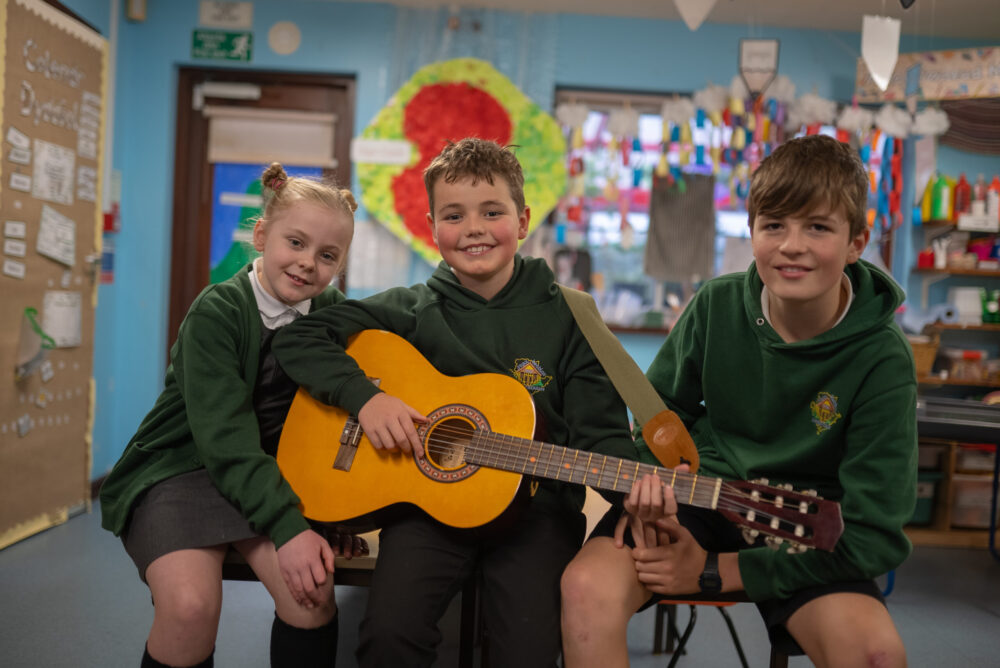
Imagine, instead, a ‘Learning Studio’ model. In our New Wales, we throw away the long summer holiday – a hangover from the agrarian past – and replace it with a “6-2 pattern.” Six weeks of intensive term time followed by two weeks of decompression. This prevents the “summer slide” and protects the mental health of both students and teachers.
We must invert the resource pyramid. Instead of the largest classes being in the foundational years, we move to a 1:8 ratio for children aged four to six. This hyper-focus on language and number sense ensures no child falls behind in silence. As they grow, the teacher transitions from a lecturer to a ‘Socratic Moderator’ and finally to a ‘Project Manager’.
The school day itself must change. The morning (09:00–13:00) is for ‘Deep Work’ – literacy, numeracy, and philosophy. The afternoon is for community-led workshops: gardening, coding, music, or engineering. We replace the stress of high-stakes testing at age eleven with an “Autonomy License.” To graduate to secondary education, a student doesn’t just bubble in a multiple-choice sheet; they must prove they can research, synthesize information, and manage their own time. We are building the cognitive infrastructure of a nation. Education shouldn’t be about sitting in a room for twelve years; it should be about mastery and the freedom to think.
Evolution: The path to embedded authority
We must recognize that the current devolved settlement is not a destination. It is a stage in our national evolution. At the moment, our powers are on loan from Westminster, a precarious arrangement that can be undermined at any time. To truly advance, Cymru must transition toward ‘Sovereign Authority’, in whatever form that takes.
A nation is not just a culture – it is a legal and political entity. This means having a recognized government with the power to make and enforce its own laws across all internal affairs – not just health and education, but justice and taxation. We cannot truly shape our economy or protect our environment if we do not have the levers of power in our own hands.
As part of this evolution Cymru must consider developing a defined citizenship, even if it is within the wider British Union. Moving towards a national passport, perhaps only visually and in name whilst we reside within the current constitutional framework would be relatively easy but powerfully self-identifying. This would be a symbol of belonging recognized on the global stage.
To be clear, this isn’t about isolation but maturity. More widely, it is about having the ability to discuss and define our relationship with other nations, to have a presence on the world stage, and to represent our own interests in ways that the filter of an UK lens, that often prioritizes the South East of England, can never achieve.
Sovereignty and ownership is also about the civic infrastructure that sustains society. It’s about reliable transport, a robust welfare system, and a healthcare service that is truly our own. We must move from a province to a partner, and perhaps eventually, to a peer in every sense. This evolution is a natural process of people coming to realize that in today’s world we are the best people to manage our own affairs, and the only people who will always put the interests of Cymru and the people who live here, front and centre at all times.
It is also a dawning of the understanding that as the global world order evolves and the UK becomes increasingly diminished within that structure, there is no longer anything to be gained from the kind of union that currently exists. This does not mean not having an extraordinary close and cooperative relationship, that goes without saying for a neighbour with whom the ties that bind are vast and myriad, but it does mean leaning into the understanding that small, nimble nations are beautiful.
Existence: A civic nation for all
Who are we? For too long, identity in Cymru has been framed by what we are not, or by narrow definitions of ancestry and language. But identity is not a relic; it is a “living, evolving force.” We are an “imagined community,” a term coined by Benedict Anderson. This means our nation is a social creation, a story we tell each other to bind ourselves together across distance and difference. But we are also bound to our geography and our living culture in ways we often don’t realise until we see them from afar or through the eyes of others.
If it is true that we are imagined then we have a duty to imagine better.
To reject an identity based on bloodlines or ancient myths and embrace the civic nationalism of the Enlightenment. Belonging is not about where your grandparents were born – it is about your commitment to the here and now. It is, and always must be, open, voluntary, and inclusive.
Our New Wales should be a tapestry where every individual can weave their own story. Whether you are a Cymraeg speaker from the heartlands, a descendant of the Windrush generation in Tiger Bay, or someone who moved here yesterday to work in a new tech hub, you are part of Cymru today. We must celebrate the multiplicity of modern identity – you can be Welsh, British, European, and a global citizen all at once. This is a gift to be treasured and into which we should lean as a small beautiful nation.
Let the new Cymru build a nation where everyone can see themselves reflected in the national project. An inclusive belonging which can be our greatest strength. It is what will allow us to face the challenges of the environment, energy, and the economy, not as a fragmented group of individuals, but as a unified, civic society.
The Conversation Begins with You
We have traveled through our sexy “Six E’s” – from the rainy hills of our Environment to the fluid identities of our Existence. These are not separate silos; they are the interconnected nerves and muscles of our New Wales. You cannot have a strong Economy without a world-class Education system – you cannot have Energy security without Sovereign Evolution.
This is a whistlestop thought provoking and very deliberate invitation to discussion and debate. It is for all of Cymru to decide on Cymru’s present and its future.
This paper is not the final word. It is no more than the merest spark.
Our nation has spent too long being supine, passively receiving the decisions made by others. It is time for us to get our teeth into the difficult, exciting work of self-determination. We need to debate these ideas in our pubs, our community centres, our schools, and our homes.
We call on every citizen of Cymru to advance these ideas. Don’t just read this – challenge it. Refine it. How would a learning studio work in your town? How can your community take ownership of its local energy? What does civic identity mean to you?
The path toward a prosperous, sustainable, and empowered Cymru is not a gift that will be granted to us. It is a reality we must imagine, then build. The rain is still falling, but the tide is turning. Let us begin.
Click here to support the work of New Wales
Support our Nation today
For the price of a cup of coffee a month you can help us create an independent, not-for-profit, national news service for the people of Wales, by the people of Wales.



I’d personally love Cymru to be a lot more like Ireland, pro-European, high profiled Celtic language and Identity, de-anglicisation but it would take at least a few decades if not a century to get to where Ireland is right now.