

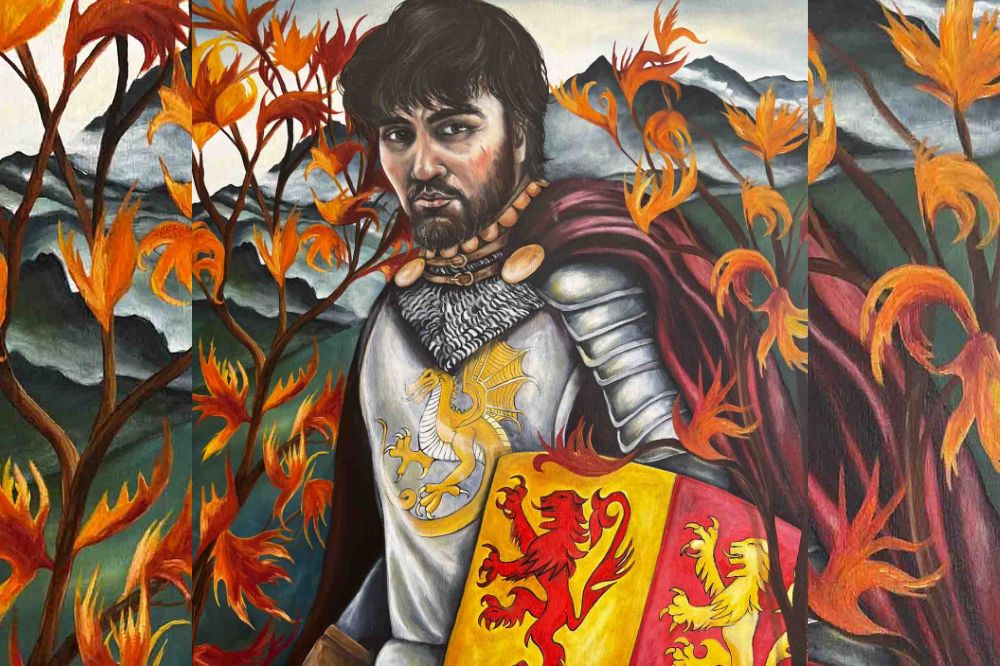
A nation rising: Wales marks Owain Glyndŵr Day
Stephen Price
People across Wales are marking Owain Glyndŵr Day today – a celebration of Owain Glyndŵr, the last native Prince of Wales and founder of the first Welsh parliament.
On 16 September every year, thousands in Wales celebrate the life and legacy of the “rebel” Prince of Wales.
Owain ap Gruffydd (c. 1359 – c. 1415), commonly known as Owain Glyndŵr was a Welsh leader who led a long-running war of independence to end English rule in Wales during the Late Middle Ages. He formed the first Welsh parliament, and he was the last native-born Welshman to hold the title Prince of Wales.
Owain Glyndŵr was a descendant of the Princes of Powys through his father Gruffudd Fychan II. Through his mother, Elen ferch Tomas ap Llywelyn, he was a descendant of the Princes of Deheubarth, also a descendant of Llywelyn the Great of the House of Aberffraw.
On 16 September 1400, Owain Glyndŵr proclaimed himself Prince of Wales and instigated a 15-year Welsh Revolt against the rule of King Henry IV of England.
His troops inflicted a series of defeats on the English forces and captured key castles across Wales, rapidly gaining control of most of the country. Glyndŵr received naval support from Scotland and Brittany and also received the support of King Charles VI of France.
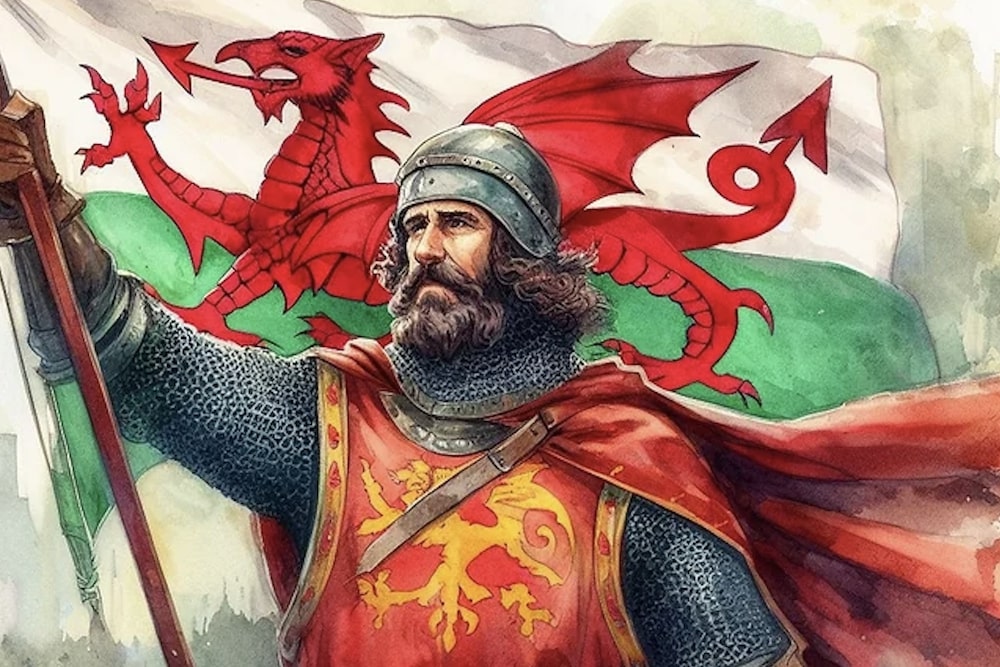
In 1403 a Welsh army including a French contingent, commanded by Owain Glyndŵr, his senior general Rhys Gethin and Cadwgan, Lord of Glyn Rhondda, defeated a large English invasion force reputedly led by King Henry IV himself at the Battle of Stalling Down in Glamorgan.
By 1404 four English military expeditions had been repelled and Owain solidified his control of Wales. He was officially crowned Prince of Wales (Welsh: Tywysog Cymru) and held a parliament at Machynlleth where he outlined his national programme for an independent Wales, which included plans such as building two national universities, re-introducing the traditional Welsh laws of Hywel Dda, and establishing an independent Welsh church. There were envoys from other countries including from France, Scotland and the Kingdom of León (in Spain).
Overpowered
Despite the initial success of the revolt, in 1407 the superior English resources and wealth began to turn the tide; by 1409 the English forces had reconquered most of Wales. Glyndŵr was cornered and besieged at Harlech Castle, but he managed to escape by disguising himself as an elderly man, slipping past the enemy at night.
He retreated to the wilderness with a band of loyal supporters, continuing the war with guerrilla tactics throughout Wales and the English borderlands.
The last documented sighting of him was in 1412 when he ambushed the King’s men in Brecon, capturing a leading supporter of King Henry’s. Owain twice ignored offers of a pardon from the new king Henry V of England. Despite the large rewards offered for his capture, Glyndŵr was never betrayed. Whilst it isn’t known for sure, one theory suggests that he died in the year 1415, at the age of approximately 56.
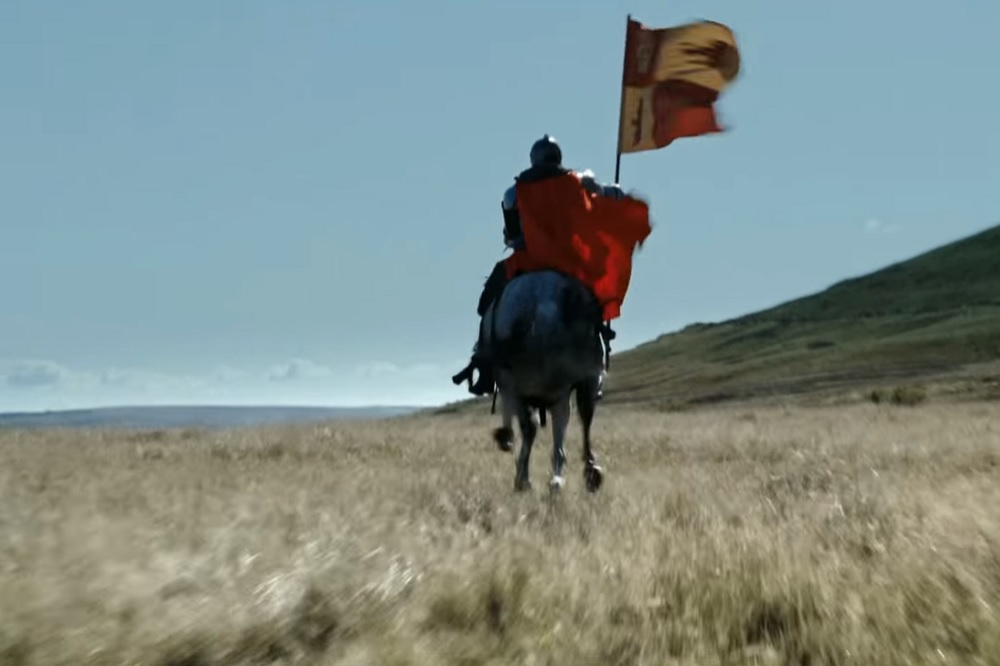
With his death, Owain has acquired mythical status along with Cadwaladr, Cynan and Arthur as a folk hero awaiting the call to return and liberate his people, Y Mab Darogan (The Foretold Son).
Glyndŵr’s legacy
Many schools and organisations commemorate the day, and street parades such as Gŵyl y Fflam (Festival of the flame) are held to celebrate it.
For around 20 years, residents of the town of Corwen in Denbighshire have been celebrating its link to Owain Glyndŵr. Townspeople annually gather at the equestrian statue of Glyndŵr in Corwen town square on the date of his proclamation in 1400. The day’s event includes a procession and wreath-laying ceremony and later a service held at the local church.
The day is also celebrated in Harlech, where an annual procession tales place.
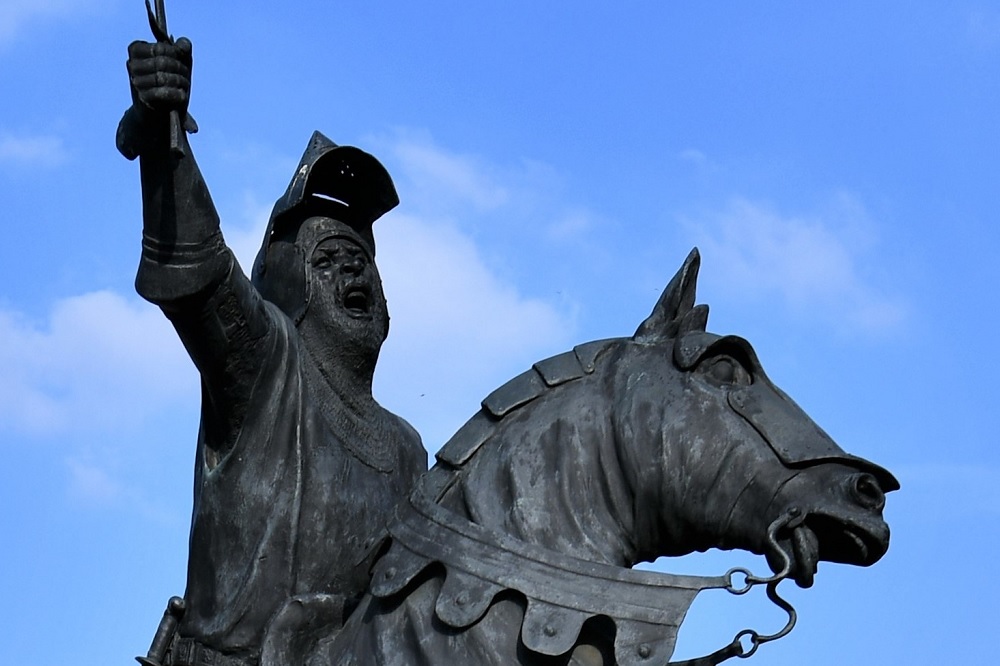
Celebration also takes place in Machynlleth, the town where Glyndŵr held a national parliament of Wales before being crowned Prince of Wales and going into battle against the English to maintain Welsh independence. Children from Betws Gwerfil Goch and Gwyddelwern schools also make presentations, before the Cambrian Band marches onwards to the statue of Glyndŵr. A walking tour starts at Owain Glyndŵr’s Parliament House. Caffi Alys in the town also hosts a night of music.
On screen
Hollywood star Matthew Rhys has lifted the lid on how he has tried to get a film about Owain Glyndŵr off the ground.

Appearing on a recent episode of the Rob Brydon & podcast, the two Welshmen discussed Rhys’ latest projects and how the Cardiff-born actor was busy pitching ideas, but admitted he was currently ‘stuck in development hell’.
“I’m in development for a number a number of things,” he explained. “I suppose the one thing that I’m genuinely excited about that I’ve been trying to get made for so long is a story of Owain Glyndŵr.
“That’s been that’s been the uphill slog that’s been about a 12 year development.”
Owain & Henry
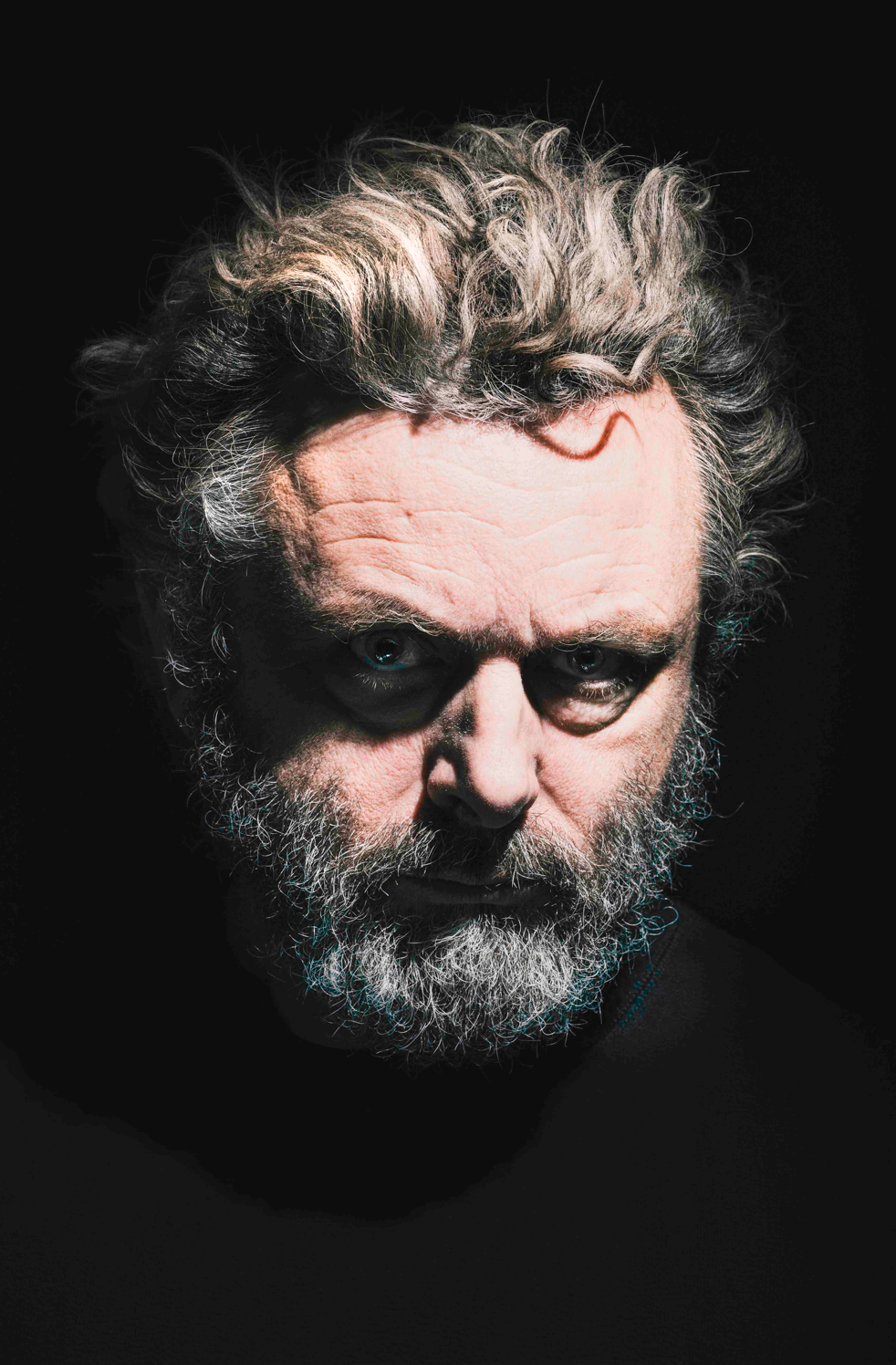
The first image and audio of Michael Sheen as Owain Glyndŵr premiered a year ago today to mark the annual day which commemorates the enduring Welsh prince.
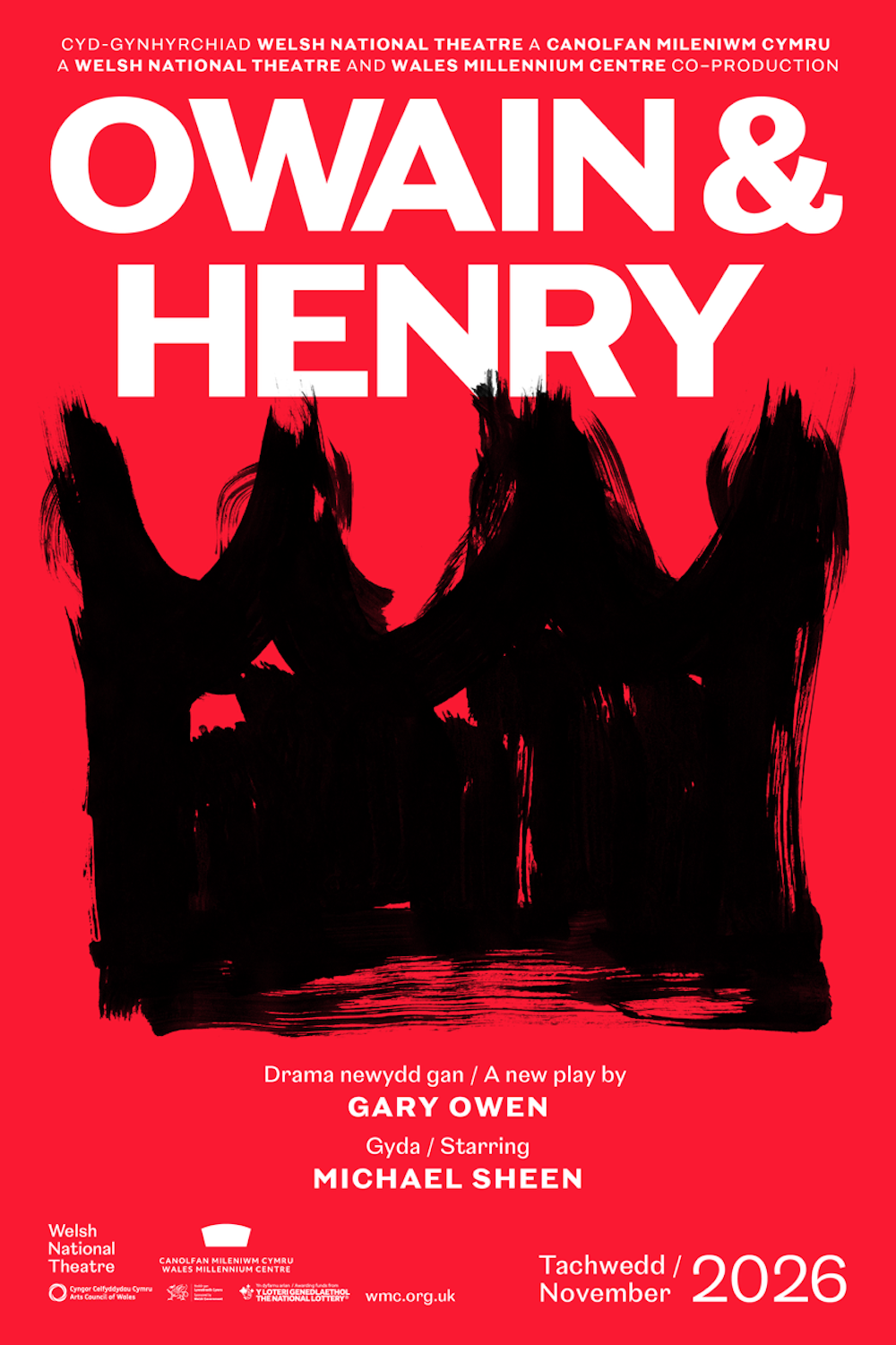
History will be brought to life in Gary Owen’s epic new play Owain & Henry at Wales Millennium Centre in November 2026.
In the photograph, Sheen is seen as Owain through the lens of photographer Kirsten McTernan. In an audio release on social media, we hear the actor and Welsh National Theatre artistic director as Owain for the first time, speaking these words:
This island has been home to many kingdoms.
First my people, the Cymry.
Then came the Romans, the Vikings. The Angles and Saxons. The Flemish. The Normans.
We spoke a dozen languages from a dozen nations.
And then this hotch-potch of peoples became simply England.
Now only Sacson may be spoken at England’s court,
And the oldest tongue of this island is called foreign.
Today, we teach the Sacson that this island
Was only ever theirs to share.
The Welsh National Theatre production of Owain & Henry by Gary Owen, will see the playwright breathing life into the 15th century rebellion against the English crown by the outlaw Owain Glyndŵr. Michael Sheen will play the last Welsh-born Prince of Wales, clashing with King Henry IV in a battle which could lead to freedom for Wales and the end of England.
A Welsh National Theatre co-production with Wales Millennium Centre, Owain & Henry will run in its Donald Gordon Theatre – the second largest stage in Europe-in November 2026, with Pádraig Cusack as executive producer.
Speaking when the production was originally announced, Michael Sheen said: “The vision of Welsh National Theatre is writ large through these first two productions. Owain & Henry is one of the origin stories of our nation, as relevant in today’s complex world as it was when Glyndŵr declared Wales an independent nation six hundred years ago. Gary Owen’s play is one of the most ambitious Welsh plays I’ve read; and is the biggest and boldest of Gary’s career. That’s the creative benchmark and ambition we want to set with Welsh National Theatre.
“Playing the iconic Welsh prince on one of Europe’s biggest stages in our capital city will, I hope, be a defining moment for us as a people, and a culture. This is what Welsh National Theatre is all about.”
Petition
A petition urging the Welsh Government to purchase, Owain Glyndwr’s ancestral home in Montgomeryshire was discussed in the Senedd back in September 2023.
The petition launched by Elfed Wyn ap Elwyn called for the purchase of the site in order to safeguard it for future generations gained over 10,000 signatures – crossing the necessary threshold for a debate in the Senedd.
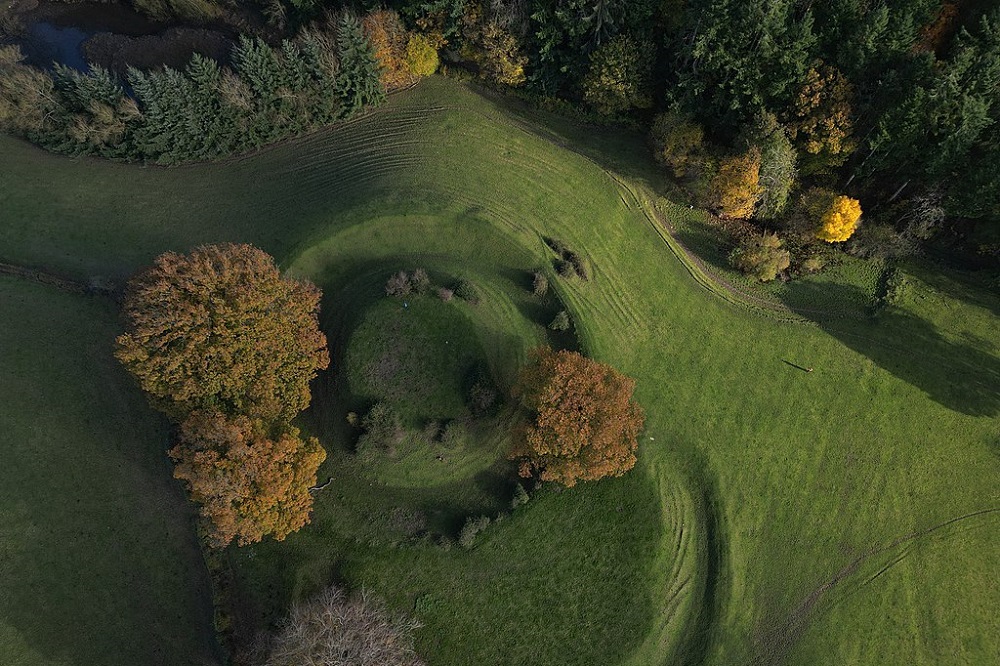
Nestled in countryside of north Montgomeryshire, south of the village of Llansilin, it was the manorial home of the princes of Powys Fadog and the home, and most probably the birthplace, of Owain Glyndŵr – the last native-born Welshman to hold the title Prince of Wales, who led a led a 15 year-long Welsh War of Independence in the late Middle Ages.
The site, featured in Iolo Goch’s poem, ‘Llys Owain Glyndŵr’, was burned to the ground in May 1403 by the English prince, Henry, during Glyndŵr’s Uprising.
Sycharth is a scheduled monument protected under the Ancient Monuments and Archaeological Areas Act 1979, and currently in private ownership with visitor access by agreement with the Llangedwyn Estate. The site has previously received funding from the Welsh Government’s historical environmental service, Cadw.
“We’re doing it!”
Shân Morgain, Author, Editor, Researcher and Mabinogi mentor said: “I love Glyndŵr for the magnificence of his vision which took a long time coming to be but we’re doing it Owain, we’re doing it. A Parliament of our own, two major Universities south and north, plus some others; the National Library at Aberystwyth; National Museum at Cardiff; more and more gaining control of our finances.
“The Glyndŵr Rising began as a rebellion about tax and grew and grew. All Cymreig taxes were then paid to the Glyndŵr government. (I much prefer ‘Glyndŵr Rising’ as a rebellion is a local event, typically about one issue and not as Owain’s movement did a period of a whole generation.)”
“I recommend Breverton’s Owain Glyndŵr: The Story of the Last Prince of Wales (2015) and for further detail and evidence, his Casebook. Breverton argues that Glyndŵr lost in the end because in his Tripartite Indenture, his French allies failed to follow through, manipulated by the English.
“Each time I cross the Severn, I look up to the title of the Pont Tywysog Cymru, such a clever Welsh diplomacy. For us Prince of Wales is Glyndŵr, for those to the east it’s Charlie boy. A public poll voted for Glyndŵr by the way but the authorities thought it might be a tad inflammatory so this was the solution.
“Glyndŵr am byth!”
Support our Nation today
For the price of a cup of coffee a month you can help us create an independent, not-for-profit, national news service for the people of Wales, by the people of Wales.
Get more trusted Welsh news
Choose Nation.Cymru as a preferred source in Google News to see more of our journalism.



And there’s more! Gwyl Glyndwr, tonight in Llanfyllin in the Old New Inn. From 6pm-8pm we have ‘Owain Glyndwr’s People’, featuring book launches and discussions with Paul Hughes, Julie Brominicks, Gruffydd Aled Williams, Rhun Emlyn and Carolyn Hodges. At 8pm this will be followed with music by Gwilym Bowen Rhys and Cor Meibion Penybontfawr. https://www.tickettailor.com/events/gwylglyndwr/2350350
I forgot to list Dan Llywelyn Hall! The founder and organiser of Gwyl Glyndwr, now in its third year. Sorry Dan!
Cymru am byth
Owain Glyndŵr, ef oedd brenin y brenhinoedd. #Cymry 🏴