


A seat on the bench isn’t enough: what Fifa’s new women’s football rule gets right (and wrong)
Kerry Harris, Senior Lecturer in Sport Coaching, Cardiff Metropolitan University
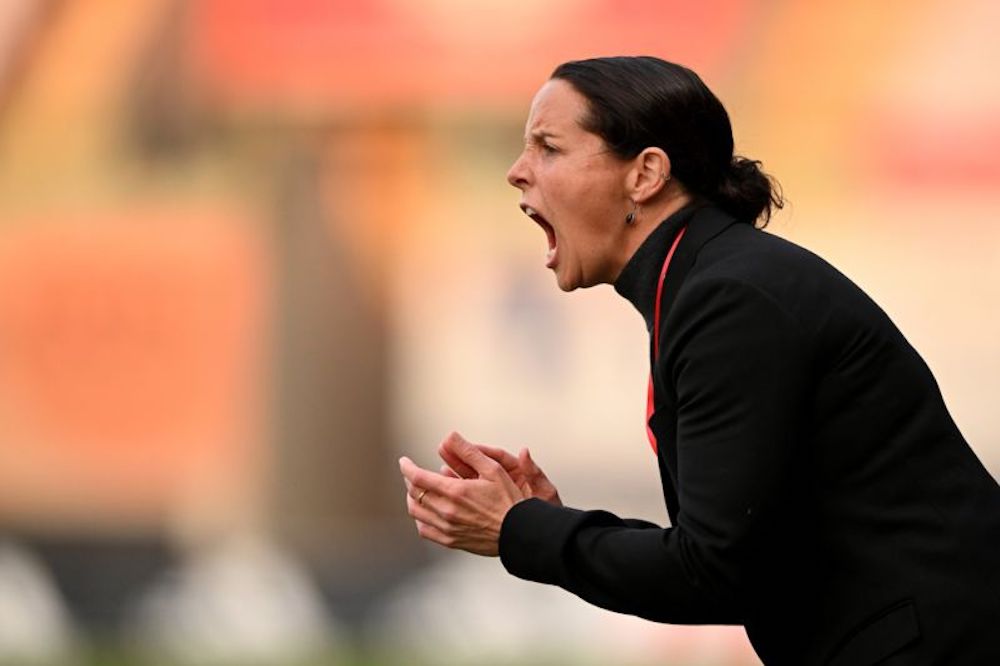
Fifa’s latest decision to require every team in its women’s competitions to include at least one female head coach or assistant is, on the surface, a landmark moment.
The rule will apply across all women’s tournaments, from youth level to senior competition, beginning this year with the U17 and U20 World Cups and the Women’s Champions Cup.
In a sport where the technical area remains overwhelmingly male, the symbolism is powerful. But symbolism in sport is rarely neutral. It can signal progress while exposing how far the structures around it still have to travel.
Women’s football has grown rapidly in visibility and commercial value. Coaching, however, has not kept pace. At the 2023 Women’s World Cup, only 12 of 32 head coaches were women. Across some national associations, women make up as little as 5% of the coaching workforce. Against that backdrop, Fifa’s intervention is both unsurprising and, in many ways, overdue.
It is also an admission that organic change has failed. But there is a deeper issue. Research on coaching cultures consistently shows that underrepresentation is not the root problem but a symptom of more deeply embedded behaviour. Increasing numbers without addressing those issues risks leaving the foundations intact.
The timing, too, invites scrutiny. If the imbalance has been clear for years, why act now? And why only within the women’s game?
A problem contained within a single domain
The policy applies exclusively to women’s competitions. On one level, that makes practical sense. Structurally, however, it reinforces a familiar pattern. Gender inequality is treated as an issue to be solved within women’s sport, rather than across football as a whole.
The men’s game – where coaching pathways are more entrenched, better funded and more resistant to disruption – remains untouched. In effect, the responsibility for reform is placed on the side of the sport with the least power to drive it.
There is also a flawed assumption at play: that appointing more women will, in itself, transform coaching cultures. It may not. Women, like men, can reproduce the same patriarchal structures they have been socialised into. Representation alone does not guarantee change.
Policies like this walk a narrow line. Without intervention, inequality persists. But mandates risk introducing a parallel narrative: that women are present because they are required, not because they are qualified.
Fifa’s chief football officer, Jill Ellis, has framed the rule as an accelerant, designed to “create clearer pathways, expand opportunities, and increase visibility for women on our sidelines”. The logic is compelling.
Yet elite coaching is as much about perceived authority as it is about expertise. If female coaches are seen, however unfairly, as fulfilling a quota, the policy risks undermining its own aims.
There is another trap here too. The expectation that women will bring inherently different, more collaborative or empathetic approaches leans on gender stereotypes. It risks reinforcing the very assumptions that have historically limited women’s progression.
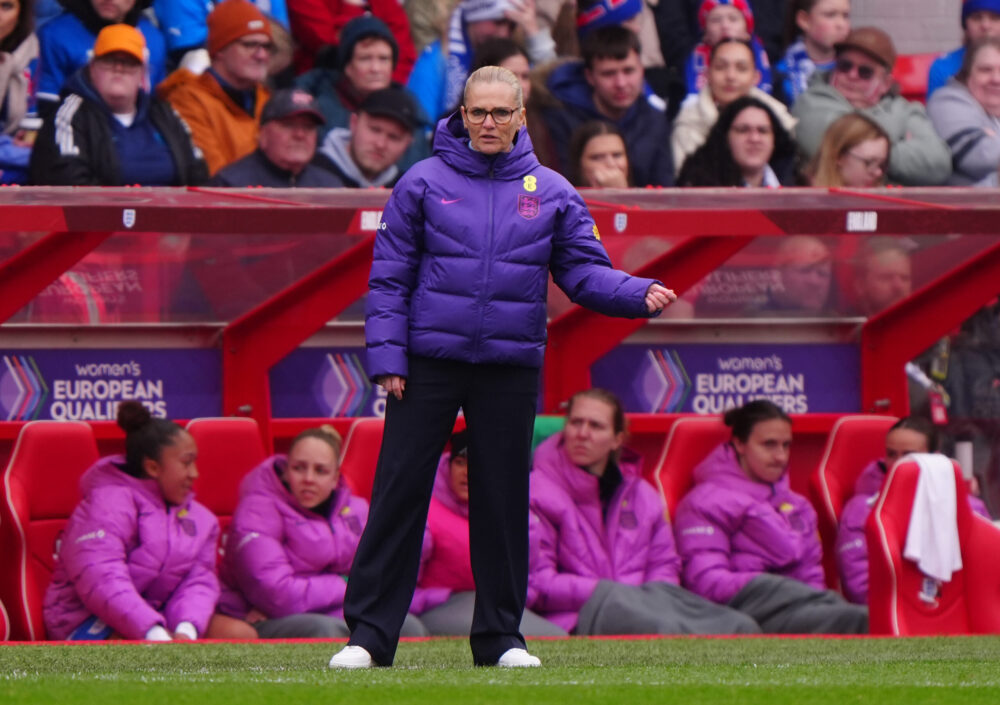
Visibility at the top does not necessarily mean readiness. Fifa has invested in coach development and nearly 800 women have received scholarship support since 2021. But the gap between training and elite international competition remains significant.
If exposure outpaces infrastructure, early difficulties may be interpreted as evidence that the policy itself is flawed. Sport is quick to remember failure and slow to acknowledge context. And if those stepping into these roles have been shaped by the same systems they are expected to change, criticism risks missing the point entirely.
Beyond visibility
None of this is an argument against increasing the number of women in coaching. Representation matters. It shapes expectations, broadens ambition and challenges long-standing assumptions about who leads.
But meaningful change is rarely immediate. It happens in coach education, in hiring practices, in mentoring networks and in grassroots environments where coaching identities first take shape. A mandate can open the door. It cannot, on its own, build the path.
This article was first published on The Conversation

Support our Nation today
For the price of a cup of coffee a month you can help us create an independent, not-for-profit, national news service for the people of Wales, by the people of Wales.


