


A step beyond the Garden: Where South Africa and Wales meet
James Robertson
Gardens, I have always assumed, are populated by plants from far flung places, Hesperantha lilies and Gardenia daisies from South Africa, for example; carefully selected versions with large blooms to decorate flower beds. As a botanist, it is the wild flowers of the Welsh countryside that I value most: give me cliff-top Spring Squills among the Lily tribe, or Oxe-eye Daisies and the rare South Stack Fleawort among the daisies. We have our own distinctive flora which speaks of our oceanic climate, varied geology, mountains, lakes and rivers and extensive, varied coastline.
But there are few places on the planet to rival South Africa’s Flora. After many years promising myself this treat, I finally made it earlier this year; I have returned fired with a desire to tell others about its magnificent flora. There are so many genera which are unfamiliar, and some of those which are familiar have an extraordinary number of species – there are 2,300 members of the Daisy family and over a thousand endemic members of the Pea family. I was overwhelmed. Happily, South Africa is rich in places which provide a bridge between wild and tamed nature – Botanic Gardens. A step into the wild flora, they showcase native species and are surrounded by areas of plant-rich habitat. There is no fence to keep you in and keep the wild out; they encourage you to walk along paths cut through native vegetation so that you can begin to absorb some of the most distinctive and attractive families, such as Proteas, Mesembryanthemums and Irises.
Visiting the Western Cape in September – peak season for bulbs and other flowers in the wake of the winter rains, our journey took us to four National Botanic Gardens. First came Kirstenbosch Botanic Garden below Table Mountain. Near the entrance there are labelled displays of native plants and bulbs; within the gardens themselves many native plants sneak into the beds or across the grass, such as the lipstick-bright Purple Wood Sorrel, adding colour to the native plantings. When we were there, Cape Spurfowl stalked the lawns and Double-collared Sunbirds hovered before the globe artichoke-like heads of King Proteas. Long-tubed red flowers of many different species are all pollinated by nectar-feeding birds, a symbiosis between flower and bird, a time-shaped perfect fit between red nectar-filled tubes and syrup-seeking bills.
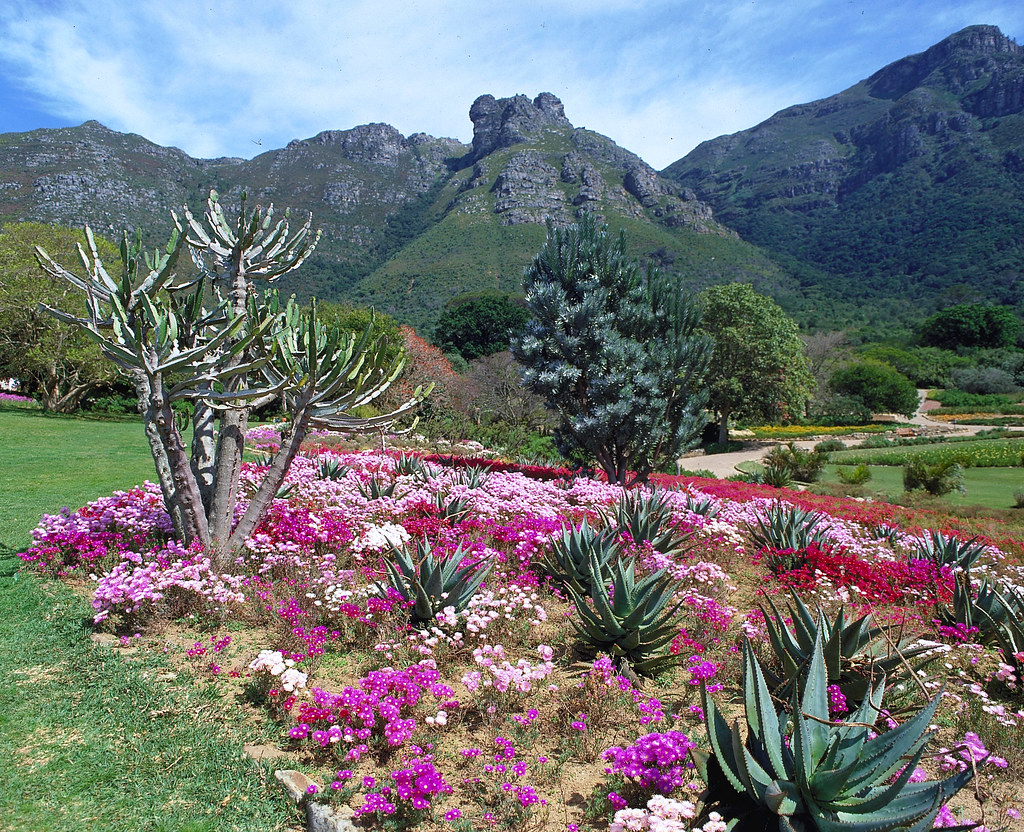
The Garden bleeds into a type of fynbos vegetation on the lower slopes of Table Mountain. Visitors move seamlessly from one to the other, a botanical and educational textbook laid out before them, to be read in its colours, smells and movements: a rainbow of shades, a health food shop of scents, and a hive of pollination activity: Cape Sugarbirds drink from Pincushions while heavyweight Carpenter Bees pollinate flowers by buzzing the pollen loose and a Striped Mouse, a specialist pollinator, twitches through the vegetation looking for nectar.
We visited three more Botanic Gardens, all demonstrating the same deliberate connection between Garden and wild flora, offering a step from one to the other. These Botanic Gardens are all run by SANBI – South African National Biodiversity Institute. Originally the Botanical Research Institute, where a young botanist, Charlie Stirton, got his first job (more of him later), SANBI has the conservation of biodiversity at its heart. It provides leadership in research, conservation, and human development; and promotes the appreciation, sustainable use, and equitable sharing of the benefits of South Africa’s biodiversity. The Gardens educate and entice the visitor into learning more about South Africa’s flora, and all these gardens are ‘conservation gardens’, an international term which indicates that they include both landscaped and natural areas within their boundaries.
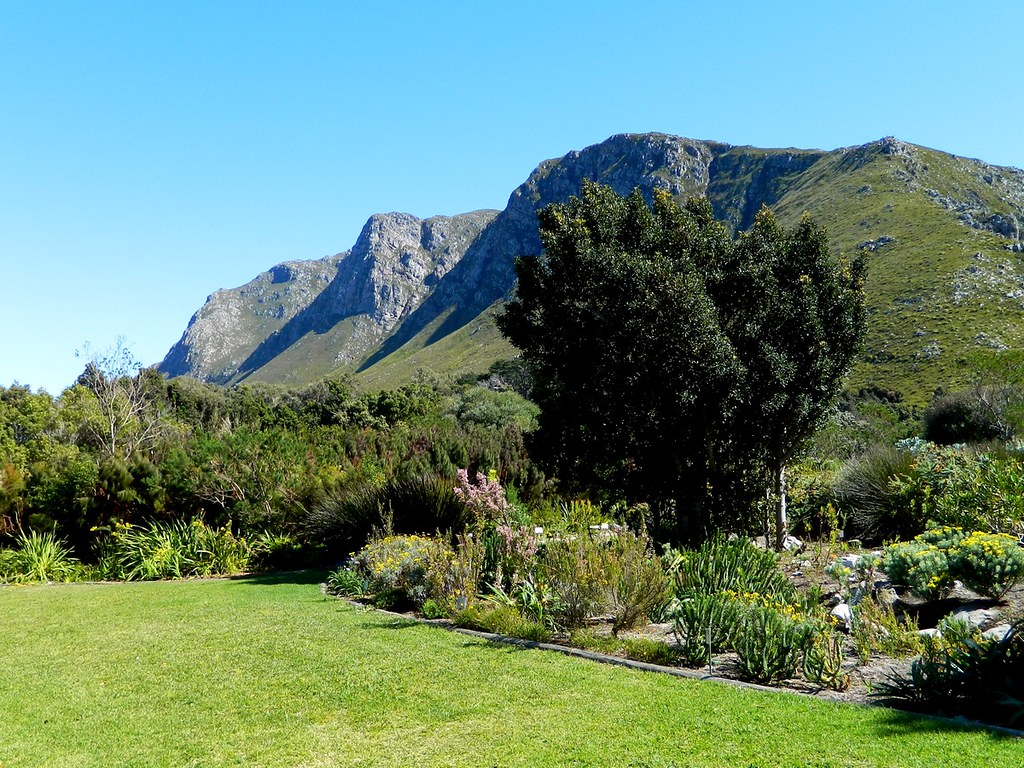
Moving to the coastal fynbos at Betty’s Bay, home to one of the largest surviving colonies of African Penguins, we next visited the Harold Porter Botanic Garden. The long history of South Africa’s exceptional flora is well-interpreted in a series of informative panels around a pool. A restaurant and an excellent, volunteer-staffed bookshop provide further reasons to visit this Garden, if you need any.
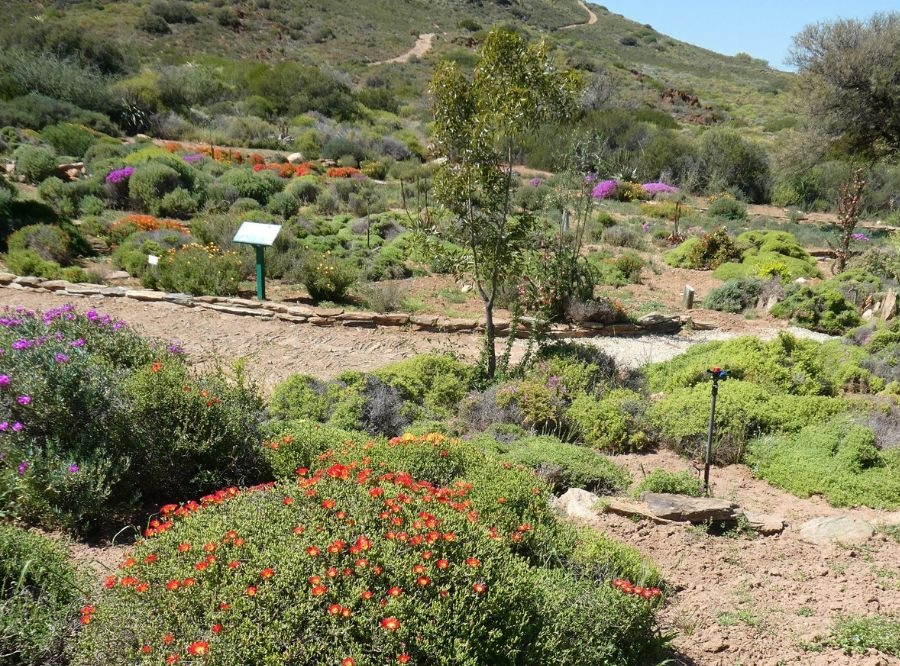
Travel 120km north of Cape Town and you reach the low rainfall Karoo desert, a habitat which comes in several distinct types; one, called Robertson Karoo, made me feel at home. The Karoo Botanic Garden has 11ha of curated gardens, and a further 143ha of floral reserve with trails inviting visitors to explore the wild flora. A section of the Garden is devoted to what are known as ‘mesems’: South Africa has most of the world’s Mesembryanthemums, about 2,000 species of succulent which come in an astonishing variety of shapes and colours. The species which springs to mind here is an overbearing alien of coastal cliffs and margins, often called Ice Plant. It has captured stretches of Welsh cliff top, at the expense of my favourite small Bluebell-like Lily, Spring Squill.
Further north again, in an area billed as the wild bulb capital of the world, is the Hantan Botanic Garden. The picture is the same, though here we were joined by numbers of Blue Cranes, South Africa’s national bird. This elegant blue-grey crane, about a metre tall with a two-metre wingspan, has been declining rapidly due to the loss of its natural grasslands. We were fortunate enough to see it at two other locations where our mutual interest in flower-rich grasslands, bird and hominid, coincided.
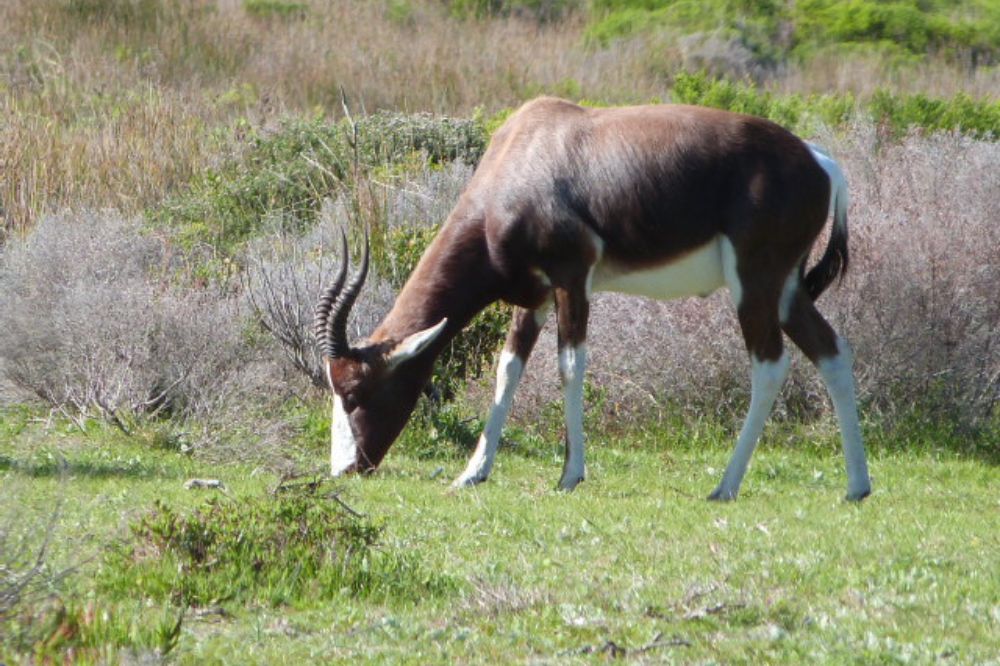
Wildlife is not confined to game parks, and a botanical safari can be a good way of encountering big game as an incidental result of being in plant-rich places. On our first day we came upon a pair of white-faced, white-legged Bonteboc, one of the most handsome of all the bocs, and there were many more antelope to come, Gemsbok, Eland and Duiker. Most memorable were Cape Mountain Zebra, the smallest of zebras, once critically endangered but now recovering – it has just been announced that a further 47,000ha in the Western Cape will be protected, helping this recovery and the general conservation of this remarkable place. Cape Rock Hyrax were never far from rocks. Ostriches were ever present, and as we were leaving, trundling suitcases to our vehicle, we were accosted by an ostrich.
South Africa is a global biodiversity hotspot. Getting to know its immense flora is the challenge of a lifetime. Take the Southern Overberg (meaning beyond the mountains) in the extreme south-western tip of South Africa, an area of 3,600 square kms (less than 3% of the land area of the country). Its native flora of 3,500 species includes 300 endemics found nowhere else in the world. There are also numbers of introduced plants which have found its Mediterranean climate to their liking. This is lowland fynbos, but different soils have given rise to a number of distinct fynbos plant communities such as restioid fynbos and renosterveld. The thatch which roofs many houses consists of the dry sheaths of rush-like restioid species, of which there are many, sometimes forming communities as far as the eye can see. I had never heard of ‘restioids’ before my visit.
Everywhere we went there were flowering bulbs from more than two dozen genera. After a few days, they started to become familiar. Our first bulb, on an area of common land within Cape Town itself, was a rare and threatened species of Moraea. We became familiar with this genus of often exquisite flowers waving gracefully on their stems. Then we got to know Wachendorfias, the clumpy Lachenalias, exotic-looking Ferrarias and delightful Babianas. Orchids came in a variety of shapes, sizes and genera – most were modest, no more glamorous than the two dozen or more species we have in Wales, but some were exquisite. Bulbs were most numerous where the land had been recently burnt, along with fire-adapted species such as Fire Heath.
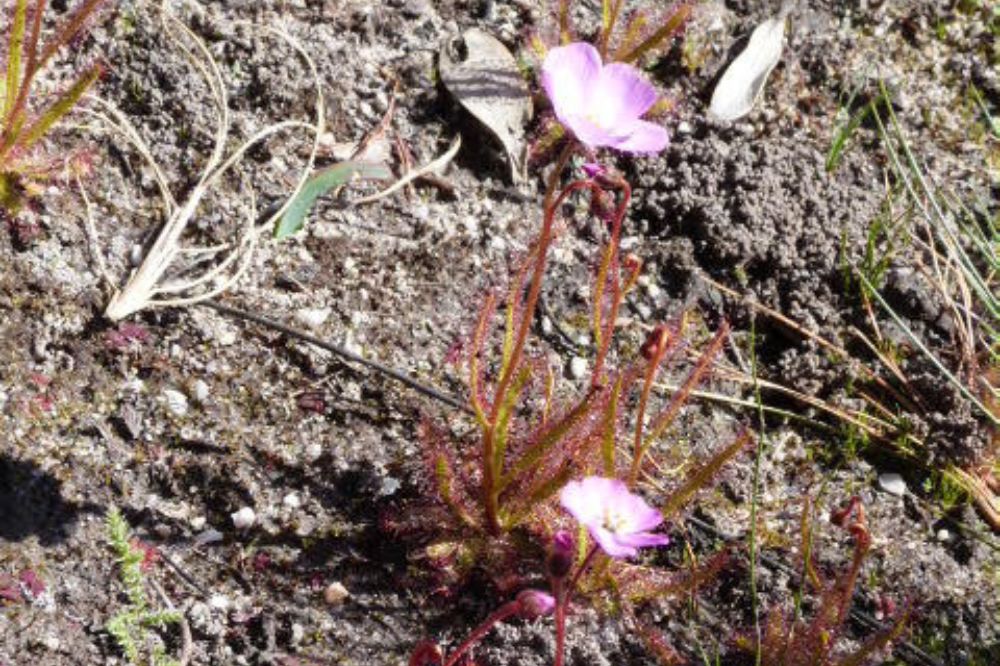
It seemed hardly credible that the large, handsome blooms we found arising from small rosettes were different types of sundew. They were not growing in the kind of acid bogs and seepages I’m used to finding them in at home. South Africa was teaching us to put aside botanical expectations.
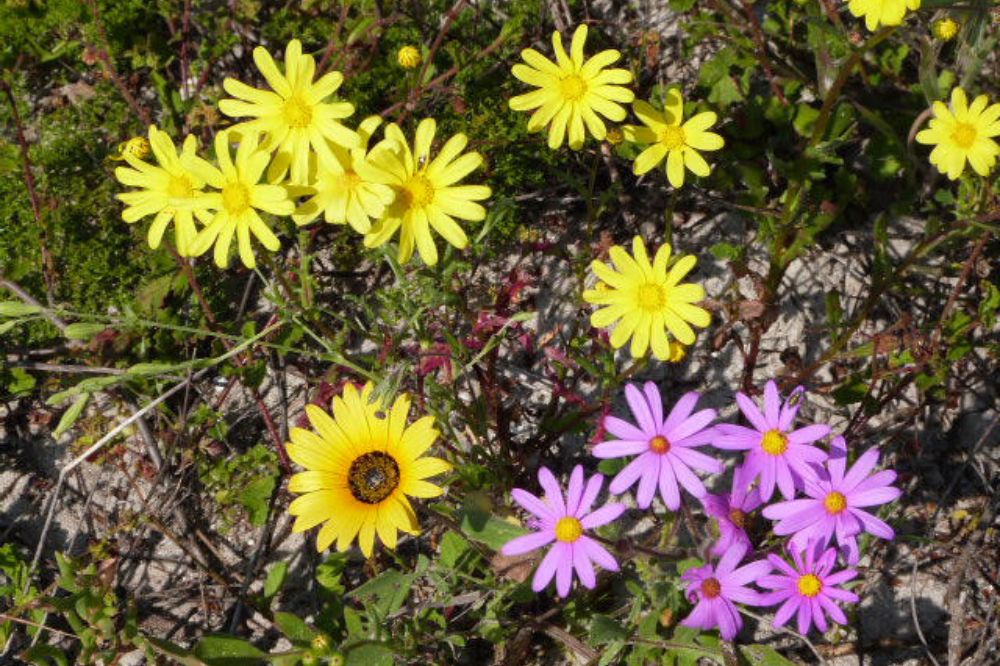
Many flowers belonging to different genera look as if they have been varnished, so bright and glossy are their blooms. Taking them all in was impossible, but occasionally a feature made them stand out. Orange-flowered Arctotis daisies were covered in Monkey Beetles, which pollinate the flowers but also visit them to pick up mates – a sort of club for beetles. The abundance of daisies and other annuals after the winter rains was breathtaking, but the general botanical diversity was brain-numbing. I am thankful that the Welsh Flora is much more manageable.
We have things in common though, not least our own National Botanic Garden of Wales. It is an institution which expresses burgeoning national confidence and ambition. As Jan Morris put it in her Preface to a book all about the Garden, ‘The National Botanic Garden will be the greatest of Welsh pleasure gardens, but it will have profound scientific and educational purposes too: and above all it will be a sort of pledge of Welsh allegiance – beyond pleasure or politics, beyond crass materialism or even science – to Nature itself.’
There is a serendipitous link between the name Paxton and the present Botanic Garden with its great domed glasshouse. In 1789 William Paxton acquired the estate and had perhaps the finest Regency landscaped garden in Wales constructed, much of which has been lovingly restored. But it is Joseph Paxton, a gardener from modest origins, who built great glasshouses, including Crystal Palace. The story of the Garden’s rediscovery, by an elderly botanist who reported her findings to her architect nephew, who lit a fuse, has been told elsewhere. It chimed with a growing awareness of the distinctive identity of Welsh gardens, which gave rise to the Welsh Historic Gardens Trust. It melds nation and history, culture and nature together. I love that the common thread is all about plants.
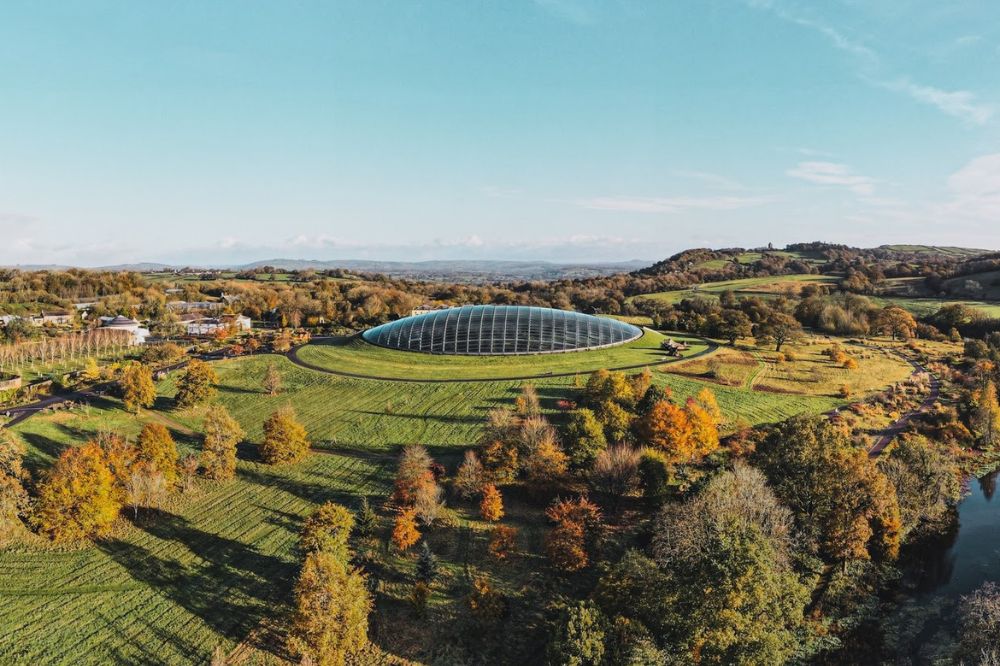
When the Garden was established in 2000, the first new National Botanic Garden in the UK for a century, it was to be a blueprint for an environmentally sustainable Garden for the new Millenium, with biodiversity at its centre, built on sustainable principles, generating its own energy and treating its own effluent. If you cycle or use public transport to reach it, you pay only half the entrance fee. This awareness of what we might call environmental sustainability is deep in the roots of the place. Its founding Director, Professor Charlie Stirton, drawing on his South African background, wanted the Garden’s holistic philosophy to embrace science, education, environment, horticulture and the arts.
The Garden pioneered DNA barcoding, identifying small regions of DNA used internationally, making Wales the first nation to have all its wild plants barcoded. This has huge potential benefits for human health, for example tracking plant pollens responsible for triggering hay fever and identifying the plants which contribute nectars with similar health properties to those found in Manuka honeys. Wild plant conservation can also be a beneficiary.
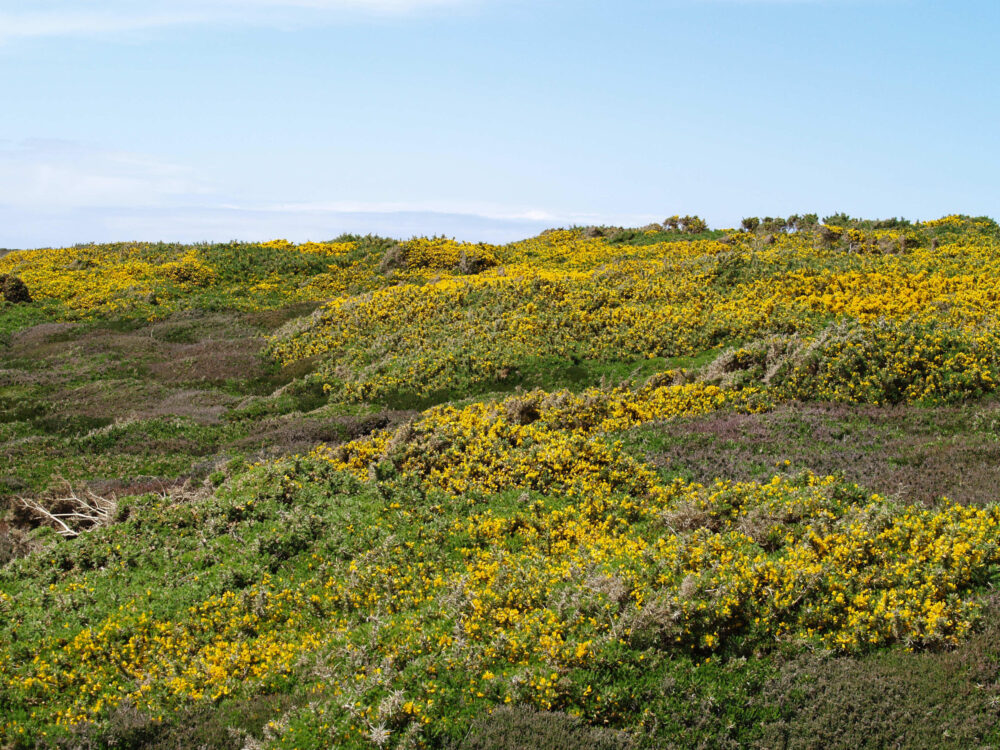
The Garden occupies a site covering 568 acres, including 360 acres of permanent grassland. More than 70% of this area, 400 acres, comes within Waun Las National Nature Reserve. It is a haven of ancient trees, lakes with cascades and a waterfall, and grasslands, an inviting step beyond the Garden.
It is actively farmed, the organic farm serving as a model of sustainable food production and a demonstration of farming and nature working together. Grazing with Welsh Black cattle and Balwen sheep and haymaking maintain the high wildlife value of the reserve, including rare plants such as Whorled Caraway and meadows rich in Greater Butterfly and Marsh Orchids. At any time of year there are wild plants to complement the curated plants in the Garden. It is as if South Africa has a counterpart in Wales. I had to go to South Africa to work that one out.
Support our Nation today
For the price of a cup of coffee a month you can help us create an independent, not-for-profit, national news service for the people of Wales, by the people of Wales.


