


Active Travel – Changing attitudes in 2026

Professor Stuart Cole, CBE. Emeritus Professor of Transport Economics and Policy, Prifysgol de Cymru / University of South Wales
It has been twelve years since the Active Travel Wales Act (2013) was passed by the National Assembly. Over that time government ministers have pushed the benefits of increased walking and cycling.
The legislation required local authorities to provide and extend walking and cycle routes but did not include journeys to/from train or bus services which this column has argued should be a part of active travel. One might therefore question why the Senedd was not advised of this option by ministers and civil servants in 2013.
A Christmas Story
The Minced Piety pre-Christmas concert held at St Elli’s medieval church in Llanelli just before Christmas had an active travel story which illustrates the public’s attitude to the motor car, cycling, walking and public transport.
In September the vicar’s son passed his driving test, so when Christmas was still some months away, he decided to ask his father if there was any chance of him getting a car as a Christmas present.
The Vicar listened thoughtfully and then said, “Look, I’ll tell you what I’ll do. If you push your predicted exam grades up to As and Bs, study your Bible a bit more and get your hair cut, I promise I’ll give your suggestion proper consideration.”
At the start of December, the son thought he’d better broach the subject again so that his father would have the chance to get the car organized.
“Well”, replied his father”, I have been really impressed by the way you’ve worked for your exams. Your grades are excellent. And it’s been good to see how much time you’ve put into your Bible study too. I have to say, though, that I’m disappointed that you’ve not had your hair cut yet”.
Expecting this reaction, the Vicar’s son had his answer ready.
“Well,” he began, “one thing I noticed from the illustrations in my Bible is that Moses, John the Baptist, Samson and even Jesus himself had long hair.”
“I am aware of that”, said his father, “but did you also notice that they walked wherever they went?”
Transport policy objectives to get us out of our cars
Two thousand years ago all but the wealthy (with horses or donkeys) travelled on foot. Mostly were local journeys though the estimated distance between Nazareth and Bethlehem was eighty miles and took four days.
The motor car significantly changed our travel patterns and modal change to cycling/walking is slow despite promotional activities
Welsh, UK and European Union governments have put forward two transport policy objectives – reducing congestion and climate change (where power generation, transport and iron and steel works are the largest contributors).

Air quality in Port Talbot is reported to be significantly improved since the steel works closed. Not so the local economy.
Governments however expect us the consumers to follow and fund these policies. Governments will only:
- examine the use of fiscal measures to achieve more energy efficient transport
- press for a European policy to include road transport and aviation in EU policies
- raise awareness among consumers when selecting the type of car they buy and how they are used
Welsh Government has produced a 420-page Design Guidance to achieve consistency in standards throughout Wales. However, public sector expenditure constraints coincided with the legislation and in consequence insufficient facilities have been constructed to match potential demand.
Cycling confidence
Research has identified different levels of confidence and experience amongst cyclists. Those benefitting from a cycleway as a means of getting to work or play include the ‘new’ commuting cyclists or walkers, for at least part of their journey. The government’s intention in creating easy cycleways is to encourage new inexperienced cyclists and walkers to make purposeful journeys and not only to encourage existing experienced cyclists to make more journeys
Costs and Benefits
Evidence suggests that safety concerns determine new cycling or walking commuters. The evaluation process of supply and cost of facilities and the benefits achieved is not currently as robust as those for road or rail construction. Established travel forecasting techniques should be modified to take potential cycling market benefits into account in the outline evaluation stage of route design including:
- health improvement from more exercise
- reduced congestion on key
- reduced car / cycle accidents
- reduced CO2 emissions
- increased use of public transport
- high street retail outlets benefit more from cyclists / walkers than car users
- safe journey perception for adults as in the ‘Safe Routes to Schools’ programme.
Potential demand criteria for walking and cycling facilities
- Journey time for walking / cycling compared with the car (transport demand research suggests) is a primary factor in determining modal choice while distance considered for walking varies between one and five miles
- Nearness of a cycleway to home or to work / leisure destinations and the Safe Routes to Schools programme applied to other age groups.
- Road surface conditions (especially potholes) are not conducive to cycling.
- Weather conditions – many potential walkers / cyclists are ‘fine weather’ only which may be the starting point in encouraging / promoting active travel. Wet or cold weather conditions can deter many potential active-travel-to work-commuters.
- Bicycle service centre enables an owner, for example en route to work, to leave the bike with the ‘garage’ providing an equivalent to a motor car user.
- Locally suggested cycleway/footpath schemes with research evidence to indicate the demand level.
- Population density.
- Income / socio economic mix in an area can affect the density, type and lifestyle of the local population and the attitude to bicycle ownership and the propensity to cycle or walk to / from work and other activities.
- Ease of land availability and purchase of land and the co-working of government departments (particularly planning, transport and environment) at the county council level.
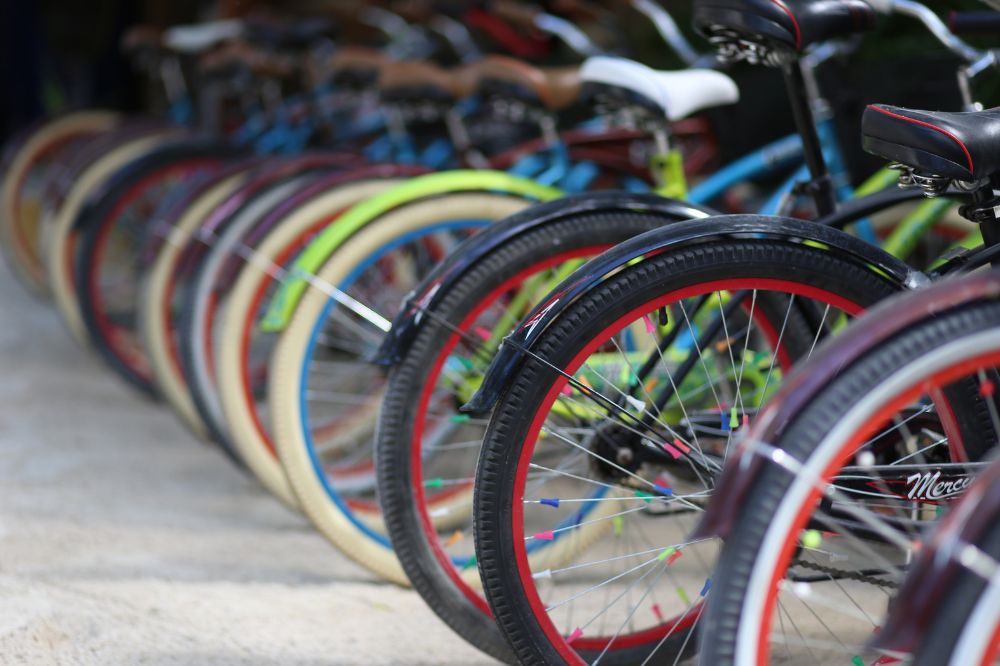
The juxtaposition of this Christmas and New Year has enticed many to take a ten-day holiday. This could provide an opportunity for our transport minister Ken Skates at this time of good cheer to persuade existing car users and the potential market in younger generations to try out walking or cycling over the break.
Surely that’s better and healthier than just sitting around.
Gobeithio cawsoch Nadolig Llawen a bydd y flwyddyn newydd yn iachus ac yn llwyddiannus
I hope you had a happy Christmas and wish you a healthy and successful new year.
Support our Nation today
For the price of a cup of coffee a month you can help us create an independent, not-for-profit, national news service for the people of Wales, by the people of Wales.



If only! If only more people would read this and adopt a common sense & less selfish attitude to transport issues. Road transport kills. Over the years we’ve come to accept as normal, a system that pollutes & kills 1000’s of us yearly! Humanity has chosen a crazy, moronic route to mobility. If we were starting from scratch now, would we really choose a transport method that has, worldwide, literally killed Millions!! I’m not hopeful we would, given the world stands by & allows a colonial genocide?
How can we ever discuss getting a few more people to cycle to work when they aren’t that keen (especially given our winter climate) when faced with histrionic cranky and medieval mindsets starting like that above? You can do it only positively and to be fair most people who can and are happy to do so probably already do. We should therefore be wary of throwing scarce financial resources to satisfy such extreme viewpoints as that held above. Especially as doing so has abjectly failed to date. Read the room… More trains and buses with more regularity and reliability at… Read more »
The “histrionic, cranky and medieval” mindsets actually exist amongst those that object to any measures that challenge motonormativity ( the view that the car is king and everyone not in a car should just get out of the way). A fine example is the histrionic response to the 20 mph. limit, which has proven to be a great success, and would be even more so were it not for entitled idiots who think the law doesn’t apply to them. Why medieval? Well I imagine that a horseman or woman in the middle ages looked down on those on foot with… Read more »
I was banned about 12 months ago for driving (due to medical reasons). My options where to take public transport or to cycle. I’ve found cycling is as quick or even quicker than taking our local buses. I invested in electric bike in autumn and can do just about everything I need eg shopping. Trains aren’t bad for the longer journeys. Only thing I struggle with is moving the kids around town to sports or clubs etc. The UK generally hasn’t developed active transport as much as other countries. I travel regularly Germany and they have seen in a real… Read more »
To get more cyclists we need to reduce car usage. A Fiscal Economist would look at Cardiff and Newport as one region. Newport needs more businesses located within 10 minutes walk of the train station, Cardiff needs more flats in central Cardiff to appeal to under 30s – then less commuters into Cardiff. Cardiff Council triples the land rent charges at all car parks from 1 April 2026 within 10 minutes walk of Cardiff Central train station. Then after the car parks operators close / go bankrupt, the locations are sold to developers for mid-priced accomodation with a large cycle… Read more »
Governments will only:
That more sounds like a campaign organisation or something, not an actual government which could, actually do something.
Bone Shakers, from the Bicycle Corps to the Tank Corps and back again…
Bikes, Pigeons and Mules, post IT war of the future…