

After 160 years of Welsh settlement in Patagonia, Indigenous voices are finally being heard
Geraldine Lublin, Associate Professor in Spanish, Swansea University
The first Welsh settlers landed on the shores of what is today the Province of Chubut, in Argentinean Patagonia, on 28 July 1865. Carried on the ship Mimosa, this was the first of a series of immigrant contingents to create the Welsh settlement known as Y Wladfa.
The many chronicles and accounts about it have imbued the settlement with a mythical sheen. Today, Y Wladfa is home to the most famous Welsh-speaking community outside Wales. It is often touted in Britain as a little Wales across the sea. In fact, “Welsh Patagonia”, as it’s also known, was established precisely with the aim of preserving the language and culture.
A major aspect of the settlement that is celebrated is the unique friendship with the Indigenous Tehuelche that the Welsh immigrants would have struck up. However, with the commemoration of 160 years of that first group of settlers, the story about this connection is being challenged in a recently launched digital exhibition: Problematising History: Indigenous perspectives on Welsh settlement in Patagonia.
Rather than attempting to undo the past, the project aims to address a glaring omission in historical accounts which results in an incomplete understanding of the impacts of the settlement – the lack of indigenous perspectives.
The new trilingual (Spanish, Welsh and English) exhibition challenges romanticised views about the myth of friendship between the Welsh settlers and the Indigenous Tehuelche in Patagonia. Bringing together four Mapuche Tehuelche creative projects, it reflects critically on how the story of Welsh colonisation in Chubut is told by providing a platform for voices previously unheard in Britain.
Little Wales across the sea
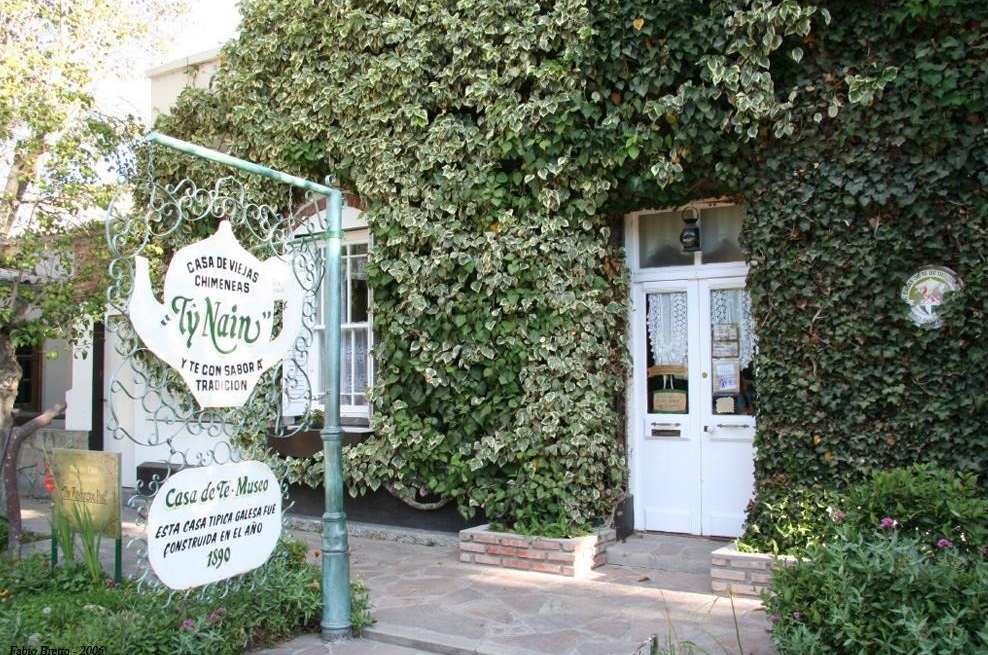
In Welsh Patagonia you can see quaint casas de té gales (Welsh tea houses), the ever-present dragons and strangely familiar Welsh street names. You will also see the Welsh language in towns like Gaiman, Trevelin or Trelew. To find a language that is only spoken by less than 20% in Wales itself be so present in this corner of Latin America can make for an odd experience.
The stories of how this place came to be are typical of settler colonial settings. These rose-tinted tales describe the encounter between the Welsh and the Indigenous Tehuelche as a harmonious meeting of cultures that led to a lasting friendship. The assumption is that the largely peaceful coexistence was due to the inherent Welsh benevolence rather than the result of negotiation and relationship building on both sides.
The overlooking of Indigenous agency and resistance is partly due to virtually all of the historical records available in Welsh or English being created by Welsh or European people. Even those appearing to foreground indigenous voices were recorded by non-Indigenous rapporteurs and often include at least one layer of translation.
As voices in the project Puel Willi Mapu Mew: Taiñ Zungun have said about the “Welsh rifleros” (the first Welsh explorers to “go West”):
“Their arrival is commemorated as an epic legend and they are inscribed as heroes who ‘discovered’ our land, silencing our pre-existence as Tehuelche Mapuche people, and leading to the violence of the successive evictions and removals of our lof (community).”
The incorporation of indigenous perspectives on Welsh settlement to the collections of the National Library of Wales represents a groundbreaking development. It is about time that space has been made for Mapuche Tehuelche memories about forced displacement, territorial dispossession and heritage appropriations.
Changing perceptions
The early pioneers were invited by the Argentinean government to settle in the area around the Chubut river. They were then pretty much left to their own devices to endure in the unforgiving and harsh terrain. The Indigenous Tehuelche would have not only provided them with meat but taught them to hunt and survive in their new environment.
An aspect of that good will can be traced to the Chegüelcho agreement, which the Argentine government drew up with the leaders of local Indigenous communities. The agreement stipulated that, provided the Welsh settlement was left to develop on the lands in question, the central government would send regular rations to the communities and provide animals and clothing.
However, the nuances of the coexistence have been removed, leaving a flattened historical narrative. In reality, the relationship was the result of continuous renegotiation of practical necessities and pursuit of reciprocal benefit – but was also fraught.
The Welsh outpost was beneficial to Patagonian indigenous populations in providing a convenient outlet for trading their animal skins and ostrich feathers. However, Y Wladfa was the first step of a broader Argentine project that actively sought to dispossess indigenous peoples and assert state sovereignty over Patagonia.
“The official history of Chubut silences the stories of the Mapuche and allows words like ‘progress’ and ‘Welsh settlers’ to resonate,” contributor Agustín Pichiñan explains.
“With the support of the State, fences were extended all over our territory bringing us subjugation, harassment and discrimination. Yet, we keep on resisting and fighting to recover our history, using the knowledge of our ancestors and the memories of our lof (community).”
Sustaining a simplified historical narrative and ignoring indigenous perspectives allows convenient stories which simply celebrate Y Wladfa. It prevents us from sitting with uncomfortable truths and learning.
Chief among these truths is that as a colonised people themselves the Welsh were agents of colonialism elsewhere. This is part of the wider history of Patagonian settlement and is key to striving for a better present and future for all involved.
This article was first published on The Conversation

Support our Nation today
For the price of a cup of coffee a month you can help us create an independent, not-for-profit, national news service for the people of Wales, by the people of Wales.



Very few Cymru made this horrendous journey to live in dug out caves on the shoreline before travelling inland through arid deserts. Very strange therefore that anyone wants to compare this with the mass colonisation of over 200 countries around the world over centuries by the evil English Empire. Had Cymru not become the first (and one day) last colony of the English, then even this miniscule escape from them wouldn’t have happened. The bizarre straw clutching against the Cymru is summed up by this hypocritically put at us in English and Spanish – the two largest and worst colonisations… Read more »
We need honesty about how Cymru participated in the British Empire, not just through settlement but also through enabling exploitation of others while being itself exploited. History is complicated.
Listening to indigenous people is a step towards truth, not hypocrisy.
Cymru was not even recognised as a country during the many years that the English (who are not even British) colonised over 200 countries around the world.
The greatest symbol and greatest relief from this is that Cymru has forever been excluded from the flag that flew over this tyranny.
Many English rightly feel a massive amount guilt over their empire, but a few strangely try to ignore it by trying to switch the focus towards anyone else.
The article isn’t about English attitudes to Cymru but about the experience and rights of indigenous people who have been ignored.
We need to understand our history and recognise that, as the article says ‘as a colonised people themselves the Welsh were agents of colonialism elsewhere’.
I visited Argentina November 2008 and spent five nights in Puerto Madryn. Myself and my wife visited Gaiman, and Trelew; plus the amazing Punta Tombo penguin sanctury and lots of other eco-tourism attractions. The cultural links to Wales could be seen and had been commercialised. Tourists were offered day trips to La Colonia Galesa and cruise ship passengers (mainly USA tourists) visit the region. I worked in airline industry in 1990s and in airline economics the focus is on making a region sustainable and not reliant upon seasonal tourism – creates low paid jobs that are often lost in recessions… Read more »
These histories and voices are important and valuable but swapping one distortion for another isn’t helpful. The Argentinian government was responsible for the treatment of indigenous people. If it wasn’t Welsh settlers it would’ve been someone else being unwittingly used in the same way. And colonisation usually refers to exploitation of remote lands and peoples to enrich a motherland, and I assume there’s no suggestion that Wales was being enriched by the settlers sending vast stolen fortunes home.
The Welsh in Patagonia contacted mainly and for 20 years with Tehuelche natives, not with Mapuche peopople. It was beneficial for both groups, and it was a pacific interchange. And the Welsh lifted their voices against the brutal repression and assination of the Aborigins in Patagonia. The only sad event that ended wit the lives of three Welsh who were looking for gold was undertaken by Manzaneros in 1884, and it happened after the so ill-called Conquest of the Desert by the Argentine Government.