


Alun: Mold’s Other Famous Son
Adam Pearce, Editor, Llyfrau Melin Bapur
Who is the most famous name in Welsh literature associated with the town of Yr Wyddgrug (Mold) in Flintshire? Undoubtedly Daniel Owen (1836-1896), the premier Welsh novelist of the Victorian era.
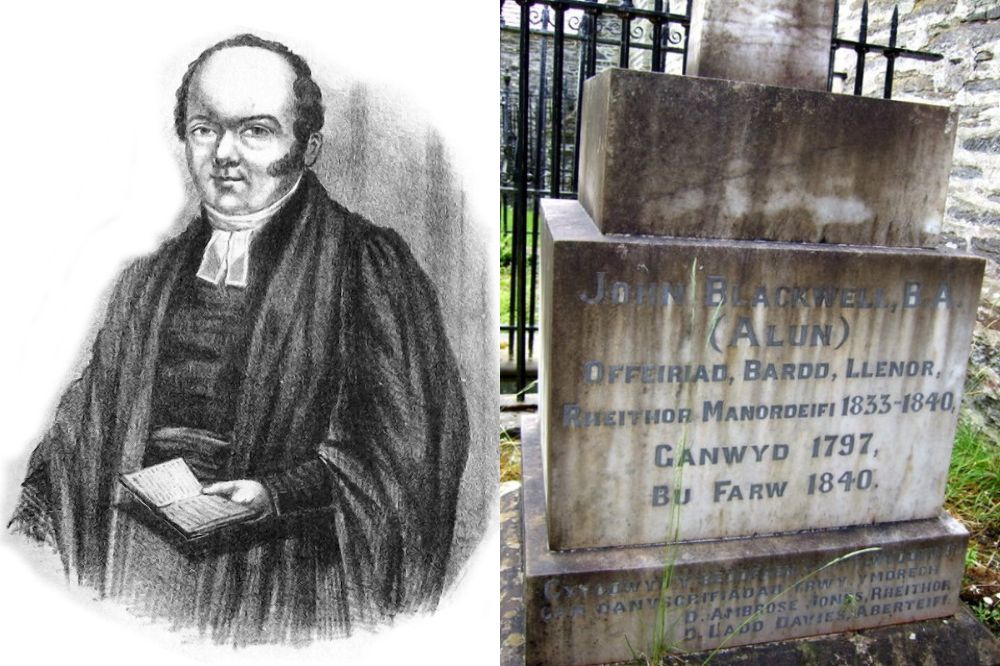
But in his own day, Daniel Owen himself would have answered the question just as easily with the name of John Blackwell (1797-1840), widely known like most Welsh poets of his age by his bardic name, Alun, which he took from the nearby river Alun (or Alyn).
Alun’s family background was representative of many Welsh poets of his age – a working class family (his father was a miner) who worshipped in the non-conformist tradition, who learned to read at Sunday school having received no other formal education.
At age 11 he was apprenticed to a shoemaker who, by happy coincidence, maintained a keen interest in poetry. It is a testament to the strength of the poetic tradition in Wales in this period that such apparently unpromising environments seemed to actively foster creative ambitions; and Alun was an extremely keen learner who evidently showed more interest and ability in scholastic and literary matters than he ever did in shoes.
He read precociously in both English and Welsh and began writing poetry and burst onto the Welsh literary scene in 1823 by producing the victorious awdl in no fewer than three local Eisteddfodau on Genedigaeth Iorwerth II (“the Birth of Edward II;” on the traditions associated with naming of the first English prince of Wales), Maes Garmon (on a famous early battle between the Britons and Saxons) and Llwydd Groeg (“Greece’s Victory”, celebrating the Greek War of Independence.
Alun’s historical sense is typical of the Eisteddfod poets of the period, with explicit expressions of Welsh patriotism sitting easily alongside an establishment Britishness which seems somewhat contradictory to us today, but would not have appeared so at the time.
Whilst perhaps not reaching the standard of Eben Fardd’s contemporary awdl on Dinistr Jerusalem, these early Eisteddfodic awdlau in the classical tradition are remarkably clear and readable compared to the typical Eisteddfod awdl of the late 19th century and one might well have expected Alun to go on to a successful Eisteddfodic career, like Eben Fardd did.
As a young man clearly capable of great things Alun roused the interest of the established Anglican church, who effectively took him under their wing from 1824, sending him to study Greek and Latin first in Aberriw (Berriew), Powys and then from the end of that year in Jesus College, Oxford, training him for the curacy.
Whilst it might be tempting to view this as a betrayal of his non-conformist roots, or even of his Welshness, it cannot be understated the kind of transformational opportunity this would represent to the son of a miner, one that the Methodists simply could not have offered him at the time.
Not least, a career as a vicar was one of the which would leave plenty of opportunity for pursuing literary interests in a way that would have been so much more difficult in almost any other career, and it is not surprising that a great number of Welsh literary figures of the eighteenth and early nineteenth centuries followed a similar path, such as the likes of Goronwy Owen and Ieuan Glan Geirionydd among many others.
Alun remained at Oxford until 1829, devouring everything he could find on Welsh literature. His studies made it more difficult to maintain a profile as an Eisteddfod competitor, though he would win another prize in 1828 for his elegy to the missionary Reginald Heber which would be prove one of his most celebrated poems, though modern readers may feel it has something of a colonialist flavour.
He returned immediately to Wales, taking up a position as a curate first at Holywell and then from 1833 at Manorbier in Pembrokeshire, where he would remain until his unfortunate early death from an illness aged 42 in 1840.
Celebrated works
Whilst Alun’s most productive period was his initial burst of publications during 1823-24, which focused on awdlau in the strict metres firmly within the Welsh tradition; his most celebrated poetry was that which he produced in his last years after returning to Wales from Oxford.
These include a number of short poems in the free metres on proto-romantic subjects which proved enormously popular and influential on what would become the ‘lyrical’ (Welsh: telyneg) tradition as exemplified in the work of poets like Ceiriog and Talhaiarn and then later by poets like John Morris-Jones, Eifion Wyn, W. J. Gruffydd and T. Gwynn Jones.
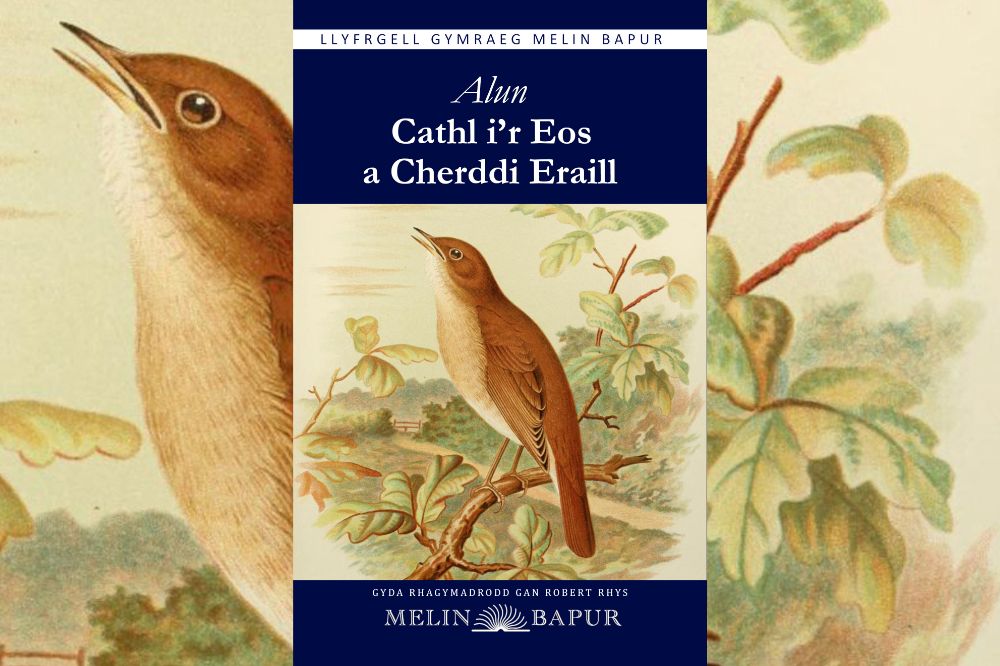
There is Abaty Tyndyrn, a fine translation of an English poem; Cân Gwraig y Pysgotwr (The Fisherman’s Wife’s Song) and the lovely Cathl i’r Eos – Song to the Nightingale – which are easily the equal of the lyrics of later, better-known poets.
These poems were enormously popular during the nineteenth century and whilst perhaps not immediately familiar to many today, they are still regularly anthologised.
Whilst they may not appear particularly radical or innovative today they in fact occupy an important position in the history of Welsh poetry, representing an important phase in the ongoing development of a more romantic aesthetic idiom and a moving away from the classical poetical ideals of the eighteenth century.
What perhaps excludes Alun from the very top echelon of poets of his age is the relatively small amount of his poetry which has survived.
This stands in contrast with his far more prolific contemporaries Ieuan Glan Geirionydd and Eben Fardd, both of whom occupy a similar position in the transition into Romanticism and produced, perhaps, more of real worth; and yet their output was much less even in quality than Alun’s.
His poetry is broadly accessible and well worth exploring.
Cathl yr Eos a Cherddi Eraill is available now from www.melinbapur.cymru for £7.99+P&P, with a short introduction by academic Robert Rhys, one of the foremost experts on the Welsh literature of the nineteenth century.
Support our Nation today
For the price of a cup of coffee a month you can help us create an independent, not-for-profit, national news service for the people of Wales, by the people of Wales.



Erthygl dda iawn. Diolch am roi sylw i fardd sydd wedi cael ei esgeuluso i raddau helaeth iawn.