


Amser paned: How Wales learned to make its own brew
Stephen Price
For a nation that has spent three centuries treating the kettle as a sacred object, Wales is doing something quietly revolutionary. It is learning, with some urgency and considerable flair, to make the drinks it has always consumed.
Tea did not arrive in Wales as something Welsh. Imported from China by the East India Company in the seventeenth century, it remained a luxury for the wealthy for decades, kept in locked caddies, served from fine porcelain.
What changed everything was the chapel. The temperance movement that dominated Welsh life from the early nineteenth century onwards made tea; cheap, comforting and entirely legal on a Sunday; socially and spiritually loaded. By the twentieth century, Wales had become one of the most enthusiastic tea-drinking nations in the world.
In Wrexham, 91% of residents drink tea every day, according to a Tetley survey – a figure that earned the town the title of the UK’s tea-drinking capital. There is a reason that in Welsh, the word for an early-evening meal and the word for the drink are one and the same.
But something shifted. Tea remained more popular than coffee in Britain until around 2016. Since then, coffee has steadily advanced: UK daily consumption rose from around 70 million cups a day in 2008 to 95 million by 2018.
Wales, once a nation that drank tea because tea was affordable and chapel-approved, had become a nation of coffee drinkers too. The question, for a small number of quietly ambitious people, was whether it could become something more.
The New Black Gold
In 2013, a young man named Scott James started roasting coffee in his parents’ garage in Ammanford, a post-industrial town in Carmarthenshire. Ammanford had been built on anthracite coal – the “Black Gold” that once fuelled lives and livelihoods across the valleys.
When the last colliery closed in 2003, the town lost its sense of purpose. James used a barbecue and parts from a Ford Ka to build a DIY roaster, and a loyal circle of wholesale customers. The idea was as simple as it was audacious: coffee as the new black gold.
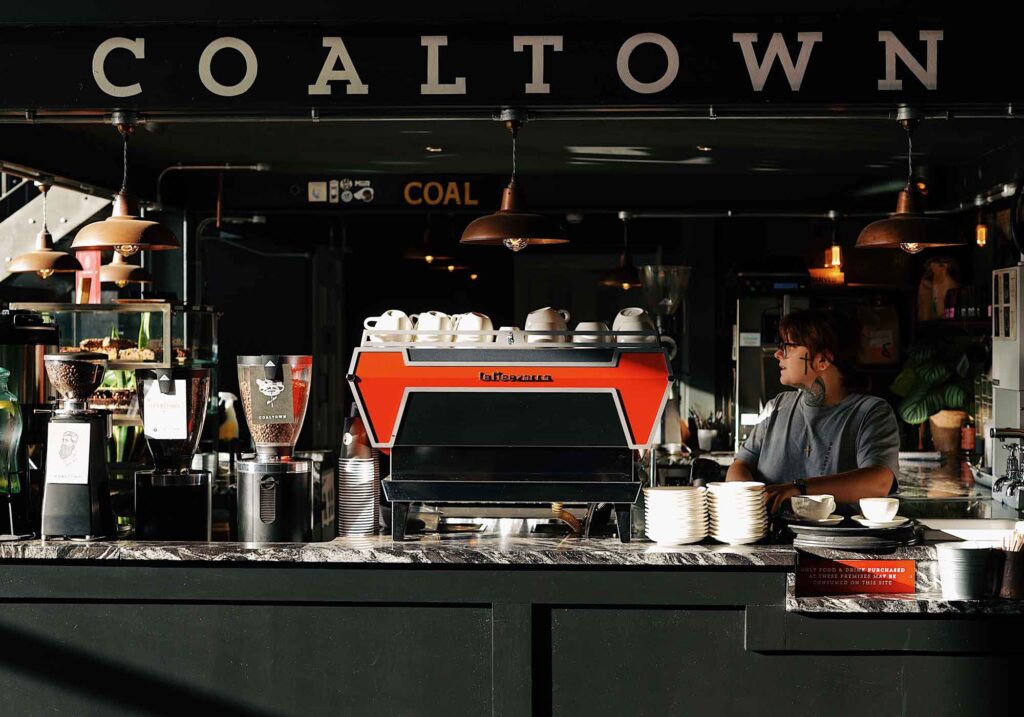
Coaltown Coffee is now a speciality roastery supplying cafes and restaurants across the UK, with beans stocked at Selfridges – and the first speciality coffee roaster in the UK to gain B Corp certification.
A photograph of James’s great-grandfather Ben Addis, who spent his whole working life in the local collieries from the age of fourteen, hangs on the roastery wall. The continuity is not decorative. It is the whole point.
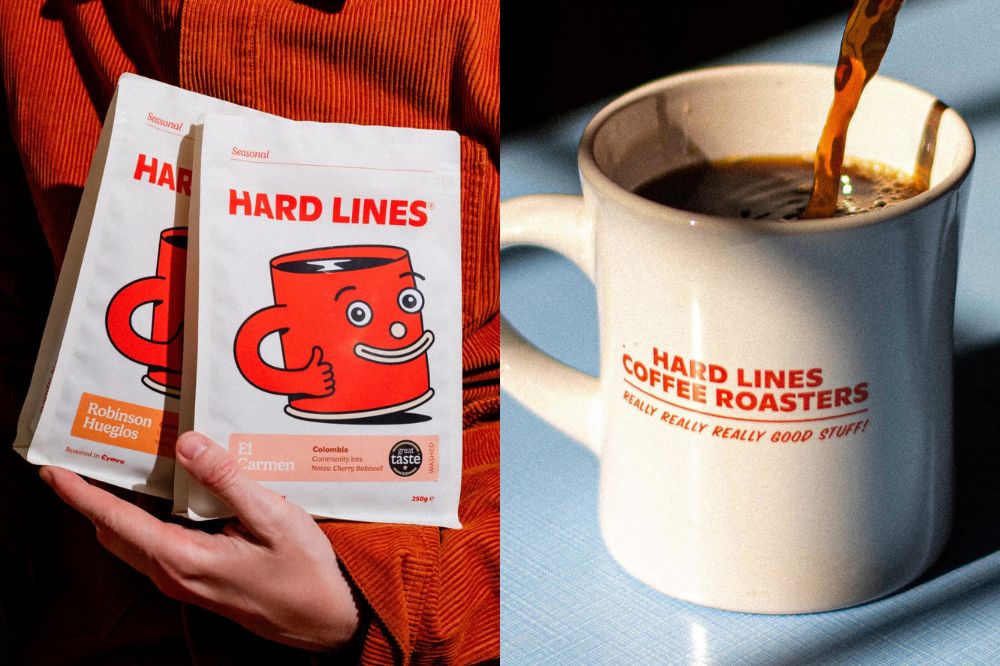
Over in Cardiff, Hard Lines has built something altogether different in character but equally serious in intent.
Roasting on eco-friendly machines with a cafe in Canton and an espresso hatch in the Victorian splendour of Cardiff Central Market, Hard Lines has become one of Wales’s most distinctive coffee brands: great coffee that doesn’t take itself too seriously, even when the sourcing and craft behind it very much does.
Tea with a Slice of Social Conscience
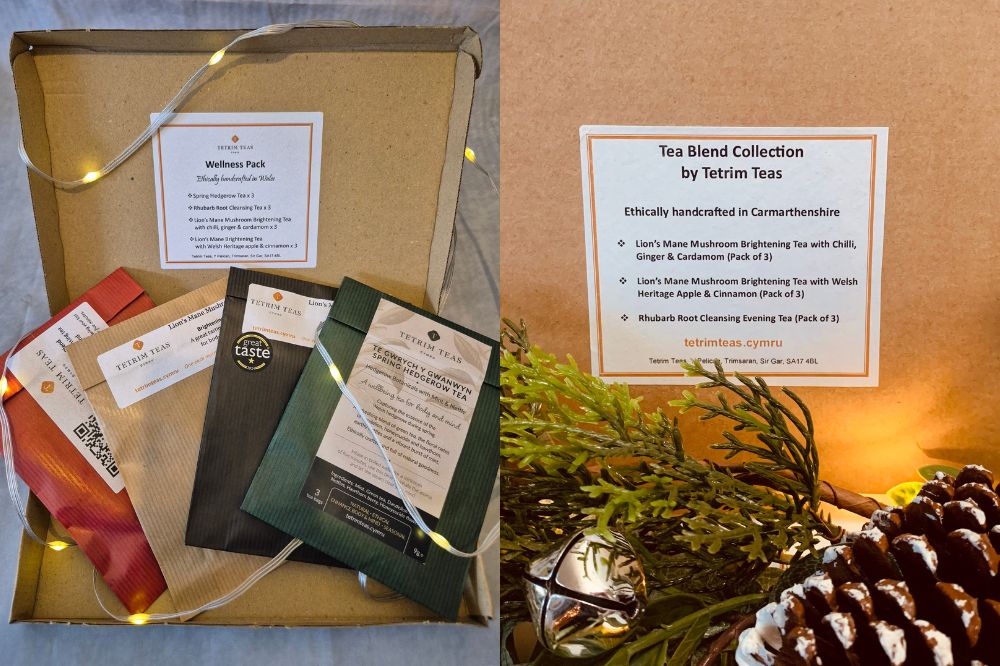
“It’s a genuinely exciting time to be part of Welsh drinks,” says Mari Arthur, founder of Tetrim Teas, a wellness tea company based in Trimsaran, Carmarthenshire – and winner of the 2025 Startup of the Year award at the Carmarthenshire Business Awards. “Local people are building amazing businesses, supporting each other, and producing things that are genuinely world-class. More people should know about it.”
Arthur’s company pairs Welsh botanicals with clinical research conducted in partnership with Aberystwyth University, treating wellness not as a marketing term but as a scientific proposition.
Trial data on their rhubarb root blend (Anglesey rhubarb root combined with green tea, honeysuckle and other ingredients) showed significantly reduced cholesterol in every participant.
Their functional Lion’s Mane mushroom blends, one of which took a Great Taste Award in 2024, use mushrooms grown in Tetrim’s own community unit. A seasonal Spring Hedgerow blend draws on nettles and dandelion flowers from Adam yn yr Ardd’s garden.
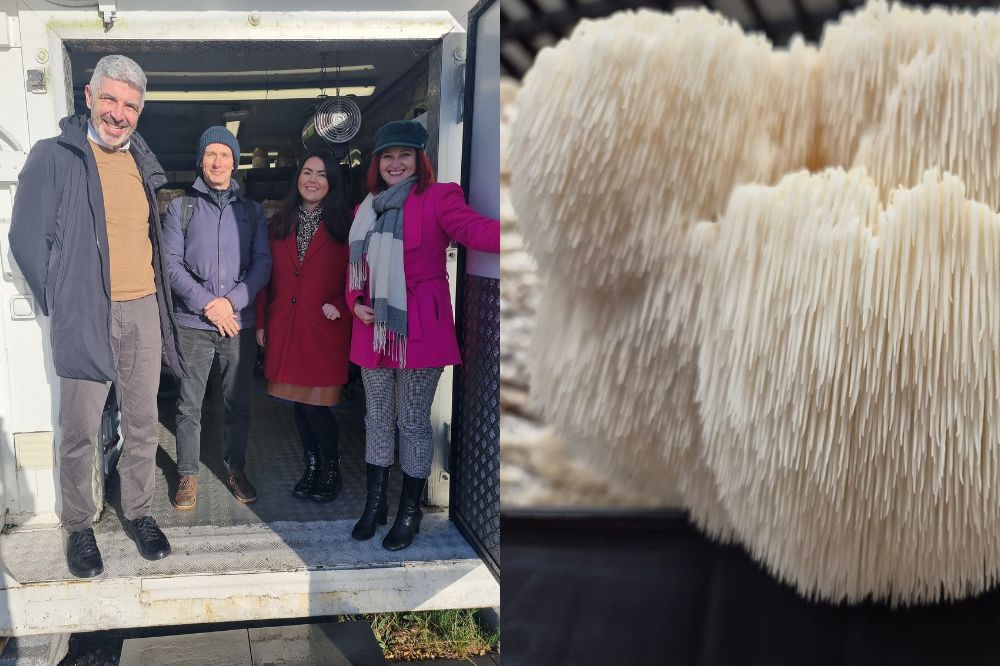
Tetrim is not-for-profit, pays the Real Living Wage, and operates from hempcrete premises powered by Welsh solar panels. It is a company that, in another era, simply would not have existed.
Tea Growing in the Rain
Perhaps the most improbable story in Welsh drinks belongs to Lucy George. In 2014, she began growing tea on her family farm in the Vale of Glamorgan – a committed commercial venture in a country with no tradition of tea cultivation whatsoever.
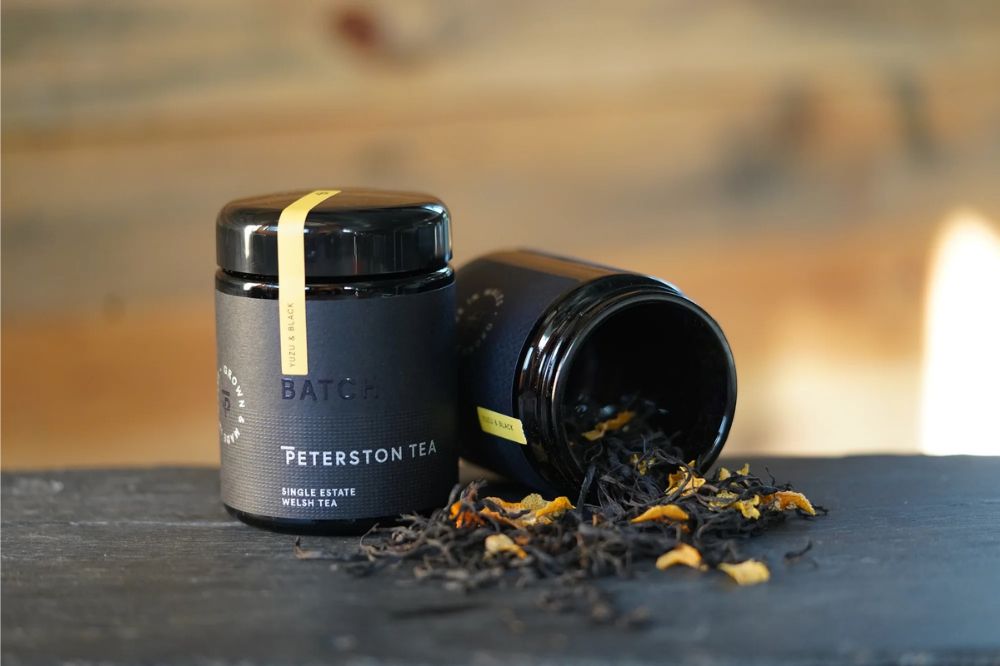
Peterston Tea is now one of the first commercial tea farms in the UK producing 100% single estate tea, with plants shielded by polytunnels against a climate that is, to put it charitably, more Welsh than ideal.
And yet the harsh conditions stress the plants, producing more complex flavours. In 2023, Peterston Tea won the BBC Cymru Wales Best Food and Drink Producer in Wales Award. The teas are now stocked at Fortnum & Mason. Wales, a country most people do not associate with tea cultivation, is producing leaves good enough for Britain’s most famous food hall.
Where the Value Goes
The businesses emerging from Wales share something beyond geography. They are, with unusual consistency, thinking about what kind of companies they want to be – not just what they want to sell.
Wales has a complicated history with this question. For generations, its natural resources – coal, slate, water, were extracted and the value flowed elsewhere. The communities that bore the cost of production did not, in the main, benefit from the profits. This generation of Welsh drinks entrepreneurs seems quietly determined to do something different: to build businesses rooted in specific places that actively invest back into them.
The Coaltown roastery trains and employs local people. Tetrim sources locally, runs community groups, and works with local schools and academic partners. Peterston anchors its identity entirely in a single Welsh valley, farming organically and with biodiversity at its heart.
“It’s not just about the drink,” says Arthur. “It’s about who benefits.”
Put the kettle on. But next time, look at where the leaves came from – and where the money goes
Welsh Tea and Coffee Worth Giving a Go:
Tea
- Tetrim Teas: Trimsaran, Carmarthenshire. Wellness teas combining Welsh botanicals with clinical research from Aberystwyth University.
- Peterston Tea: Vale of Glamorgan. Single estate organic Welsh-grown tea. BBC Best Food and Drink Producer in Wales 2023. Stocked at Fortnum & Mason.
- Tidy Tea: Ceredigion. Playful, quality-led blends.
Coffee
- Coaltown Coffee: Ammanford, Carmarthenshire. B Corp speciality roastery. Founded 2013 in a former mining community. Stocked at Selfridges.
- Hard Lines: Cardiff. Award-winning roaster and cafe with a fiercely independent spirit and a roastery on the edge of the city.
- Dwyfor Coffee: Gwynedd. Artisan speciality coffee roasted with a deep sense of place.
- Welsh Coffee Co: Vale of Glamorgan. Roastery and community coffee shop.
- Grounds for Good: Vale of Glamorgan. Circular economy spirits distilled from spent Welsh coffee grounds. Founded by Dr Rosie Oretti.
- Tired Mums Coffee: Founded by NHS friends Laura and Gemma during maternity leave.
Support our Nation today
For the price of a cup of coffee a month you can help us create an independent, not-for-profit, national news service for the people of Wales, by the people of Wales.
Get more trusted Welsh news
Choose Nation.Cymru as a preferred source in Google News to see more of our journalism.



Can I also give a shoutout to Portablo Coffee in Port Talbot, Up and coming brand and now selling their own roast?
It is not only in Welsh that the drink and tha afternoon or early` evening meal have the same name,the same is true of English and not only in Wales.
I’ve made tea at home from Camellia x williamsii, not as strong as a typical black tea but still a nice mild flavour.
Great that there are these businesses sprouting up all over Cymru and offering employment, but some of the prices are a little eye-watering. I’ll stick to Glengettie! (Though some of the coffees might be in for a try)