


Andean glaciers reveal new clues about climate change
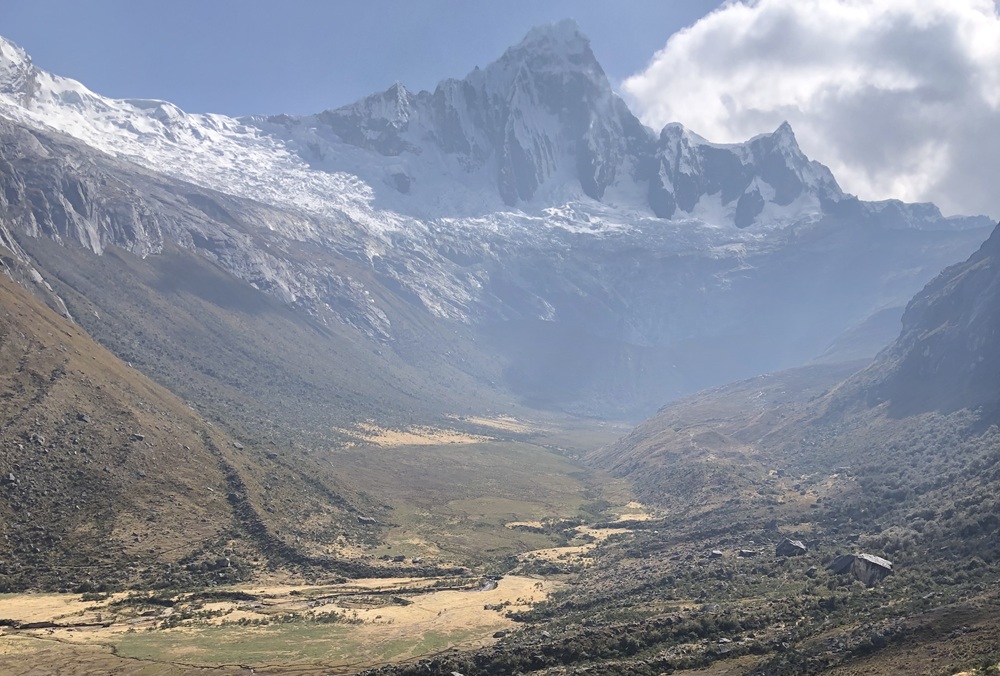
Glaciers in the Peruvian Andes advanced rather than retreated during a period of dramatic climate change at the end of the last Ice Age, new research has revealed.
An international team led by Aberystwyth University has discovered that glaciers in the Santa Cruz Valley of Peru grew during the Younger Dryas period – around 12,900 to 11,700 years ago. The findings, published in Nature Scientific Reports, overturn long-held assumptions that the region’s glaciers shrank during this time.
The Younger Dryas was marked by abrupt global cooling, but scientists had previously believed tropical glaciers responded mainly by retreating. Instead, the researchers found evidence of expansion, driven not by colder temperatures but by increased snowfall.
The team traced this change to shifts in the Intertropical Convergence Zone, a belt of low pressure that moves seasonally between the northern and southern hemispheres and strongly influences tropical weather patterns. The southward shift of the zone likely brought heavier snowfall to the Peruvian Andes, fuelling glacier growth.
To reach their conclusions, researchers examined giant boulders deposited by the glaciers as they advanced. Using dating techniques, they were able to reconstruct when the ice moved and how far it extended.
Lead author Professor Neil Glasser, a glacial geomorphologist at Aberystwyth University, said the study highlights just how sensitive tropical glaciers are to changes in climate.
“Our study suggests that snowfall was a key factor driving glacier growth in the tropical Andes during the Younger Dryas,” he explained. “These glaciers don’t calve icebergs and lack heavy debris cover, so they preserve a particularly clear record of past climate conditions. We were also able to date their advances more precisely than ever before.”
Professor Glasser said the findings are not just of historical interest – they have real relevance today.
“Understanding the history of glacier advance and recession is really important because it helps us anticipate how these glaciers will respond to future warming. This is especially critical in Peru, where glaciers supply fresh water for drinking, sanitation, and irrigating crops.”
The research was carried out by a team from the UK, Italy, Canada and Peru. By piecing together how glaciers behaved in the past, they hope to refine predictions of future water availability and climate impacts across the Andes – a region where millions of people depend on glacial meltwater.
Support our Nation today
For the price of a cup of coffee a month you can help us create an independent, not-for-profit, national news service for the people of Wales, by the people of Wales.


