

Another step towards an inclusive form of Irish constitutional change?
Lila Haines
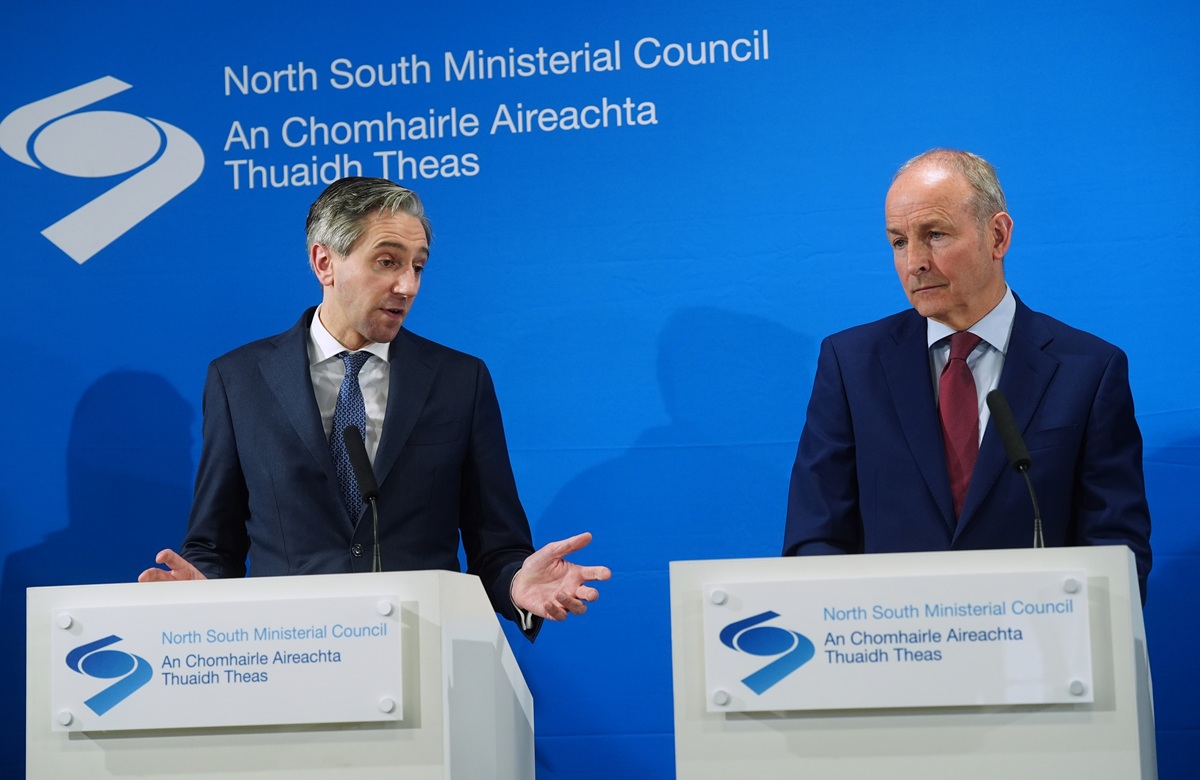
Micheál Martin, Ireland’s Taoiseach and leader of the Fianna Fáil party, has confirmed that he plans to create a new Government body to evaluate the issues relevant to Irish reunification.
In an interview with The Irish Times, the Taoiseach said he would bring proposals to Cabinet before the end of this year to set up the new body, which will operate under the authority of the Department of the Taoiseach, have a Civil Service secretariat and draw on academic and other expertise.
The Taoiseach’s new proposal may be intended as a logical next step from his ‘Shared Island’ initiative, established in 2020 to promote dialogue about a future in which all traditions on the island of Ireland are respected.
With a two-billion-euro budget, the Shared Island Initiative supports cross-border projects from community level to major infrastructural works.
Alternative scenarios
Significantly, the proposed new body will be asked to look beyond the constitutional status quo or the incorporation of Northern Ireland into the Irish state. It will be tasked with exploring three ‘baseline scenarios’: a unitary united Ireland; continuation of the link between Northern Ireland and Britain; and a devolved Northern Ireland within a new united Ireland.
The third scenario would mean that Northern Ireland would continue to have its own parliament, government, civil service, public services etc – becoming a devolved region of Ireland, but with ultimate sovereignty resting with the government in Dublin, rather than with Westminster.
A border vote – then what?
The third scenario chimes, in spirit at least, with my own suggestions in ‘Radicals & Realists’, where I argued that a vote in favour of Irish unification would be just the start, and that constitutional arrangements that could bring people together in adequate harmony would be central to success.
‘Could immediate incorporation of Northern Ireland into a single unitary state with Dublin as its capital achieve those outcomes? Not easily. Would a federal state work better and be more inclusive? Could a confederation with both the Republic and Northern Ireland as independent sovereign states gain majority acceptance in both?’
I went on to suggest a more nuanced approach to any referendum on the Irish border, perhaps with multiple options on the ballot paper, and with a further round of voting in the event of a clear preference failing to emerge from the first. Variants on multi-question and multi-round referendums can be found around the world.
Although such an approach would be more complex than a simple yes or no question, the learning from a well-handled process could achieve a more widely acceptable outcome, which is clearly still very necessary in Northern Ireland.
A duty of care
There’s another point rarely mentioned in public sparring about the Irish border. In the event of reunification, the Irish state would become the guarantor for those in Northern Ireland who identify as British, a duty arising from the 1998 Belfast Agreement. To fulfil that duty, the Irish government needs to act in a spirit of genuine inclusiveness.
Mr Martin’s new proposal comes shortly before his coalition partners, Fine Gael, unveil the results of their own research, led by a Northern Ireland academic, which examined the implications of unity.
The ‘Blueprint for a Unified Island’ is to be launched at the party’s Ard Fheis (annual conference) on 7–8 November. Simon Harris, Fine Gael leader and Tánaiste in the coalition government, said the publication would define what a unified Ireland could mean in practical terms, politically, economically, and societally.
Fine Gael’s ‘Blueprint’ paper, the proposed new Government unit and the Shared Island Initiative established in 2020 suggest the coalition partners may be thinking seriously about their duty of care, even though a border referendum is unlikely for some considerable time.
Welsh lessons?
At some future moment Welsh citizens may be asked to vote on their relationship with the rest of the United Kingdom of Great Britain and Northern Ireland. Their decision may have fundamental implications not just for themselves and their society at that point in time, but also for future generations.
Those wishing for change would be well advised to think deeply and in good time about how best to interact respectfully with citizens about their fears, and to provide adequate information and analyses to support decision-making – and to do so as amicably as possible.
They might consider what Ireland’s Taoiseach said: “What I’m arguing for is that we need to create an objective, independent, rigorous evidence base for the debate on the constitutional future of the island of Ireland, not one that is coloured by a partisan advocacy”.
For Wales see Ireland? Not exactly – the two countries are different in many ways, the complications different though just as real. But learning appropriately from Irish experience and approaches might be useful.
Lila Haines is a Wales-based Irish writer whose publications include ‘Radicals & Realists: Political Parties in Ireland’ (Welsh Academic Press, 2022). She is currently working on an analysis of the ‘Celtic fringe’ phenomenon.
Support our Nation today
For the price of a cup of coffee a month you can help us create an independent, not-for-profit, national news service for the people of Wales, by the people of Wales.
Get more trusted Welsh news
Choose Nation.Cymru as a preferred source in Google News to see more of our journalism.


