


Art Can’t Grow from the Top Down: The Grassroots Revolution of Coracle Europe Fringe
Gemma June Howell
From living plant orchestras to collective acts of creative resistance, Carmarthen’s Coracle Europe Fringe Festival is cultivating something extraordinary. But as Wales considers its cultural future, who’s nurturing the grassroots?
As a skint, geographically challenged Welsh writer, working a low-paid job in publishing while juggling the demands of single parenthood, every October, once the chaos of the summer holidays has subsided and the buzz of the literary festival circuit has finally died down, I find myself craving something altogether more nourishing: the collective sustenance of the Coracle Europe Fringe Festival.
There’s something inherently punk about artists coming together to make things happen without waiting for a long overdue green light or conditional ‘tick-box’ funding approval to come through. With no institutional say-so and no grand commercial ambitions, the Coracle Fringe runs on pure passion, the shared belief that art will save us, and that culture belongs to the people.
Hosted in Carmarthen by Write4Word, Coracle Europe Fringe is an artist-led international festival connecting local Welsh arts communities with writers, poets, musicians and artists from across the globe. Unlike so many cultural events, this isn’t simply about selling books, promoting individualism or fighting for scraps of funding. It’s about a shared conversation, solidarity and the cross-pollination of ideas, practices and lived experiences.
This October was my third Coracle Fringe and I came away feeling something increasingly rare in the current cultural landscape: a genuine sense of optimism, purpose and belonging.
Thriving festival, fragile future
Coracle Europe Fringe has been hosted in Carmarthen since 2018, growing from an international network of artists and writers whose collaborative relationships stretch across Europe and beyond. It has never received significant arts funding. Yet in October 2026, despite having no budget whatsoever, its partners decided to push ahead. The demand among local and international artists and writers was simply too great to ignore.
What emerged was five days of extraordinary creative exchange, with artists with roots in Sweden, Latvia, Nigeria, Cameroon, Ireland, the US and across Wales contributing to a programme of workshops, poetry, experimental music, film screenings and performances.
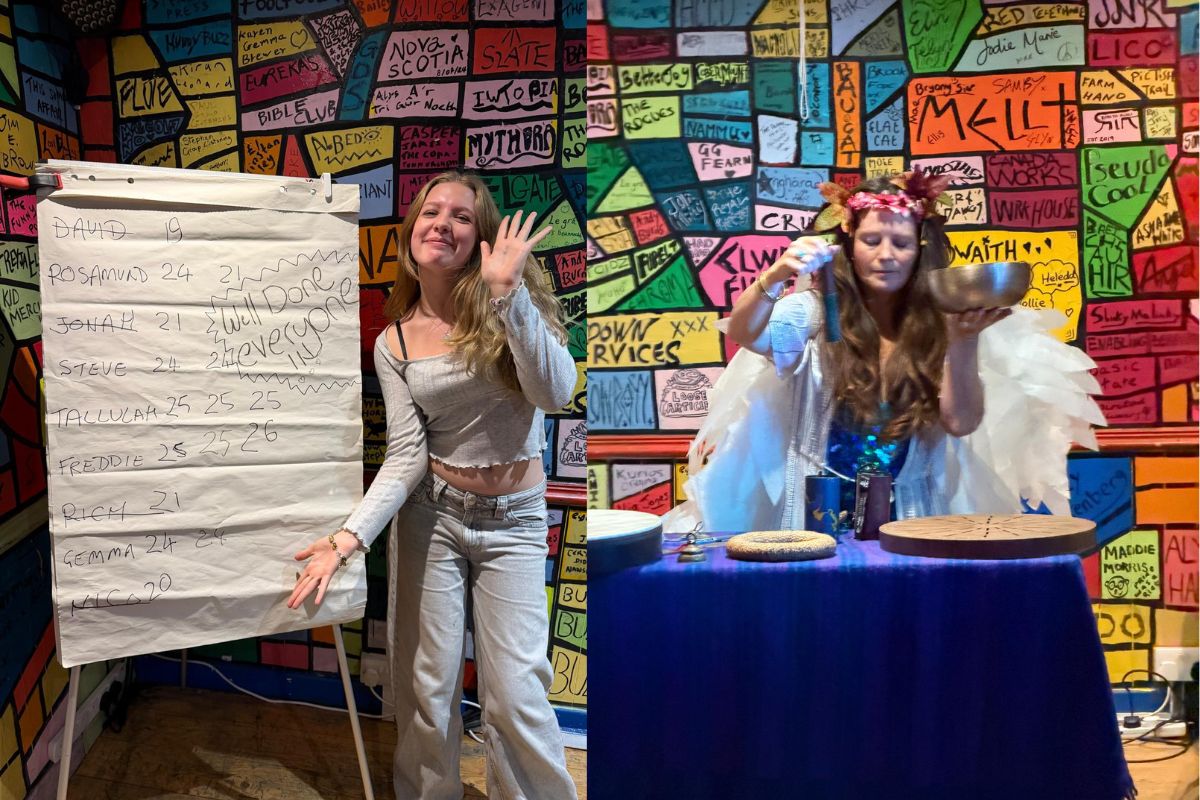
Queer, non-binary, anti-capitalist and environmentally conscious perspectives found space alongside Welsh working-class voices, local histories and international artistic experimentation. This felt like punk in its rawest form. Not as an on-trend aesthetic or marketable ‘rebellion’, but as the living practice of self-organisation and creative independence.
But there’s a danger in romanticising this resilience.
Many of the artists contributing to grassroots culture are themselves struggling financially. Their generosity and commitment might enable the festival to flourish, but goodwill doesn’t pay the bills. And just because artists can make something happen without funding doesn’t mean they should have to.
What is Welsh culture worth?
This question feels particularly urgent as the Welsh Government gathers evidence for a new Culture and Sport Strategy, with submissions closing on 18 December. The Government has acknowledged that culture, heritage and the arts are essential to national life, and its consultation seeks evidence from grassroots organisations alongside established cultural institutions.
That is encouraging, but what will meaningful recognition actually look like for those working at the coalface of Welsh cultural life? Will cultural value continue to be measured primarily through economic impact, bums on seats, book sales and visibility? Or will we recognise the less easily quantifiable work of building relationships, nurturing creative confidence and sustaining eco-systems and communities? For artists already struggling to make ends meet, being told their work is valuable means very little if the resources needed to sustain it remain out of reach.
What I witnessed at the Coracle Fringe was cultural infrastructure at its best.
Not the kind that announces itself through glossy programmes, big names, impressive buildings, expensive websites, social media metrics, unattainable impacts or elaborate funding strategies, but the kind that exists through relationships, shared skills, independent grass-roots spaces and the collective determination of people who believe that creative expression matters. Festival organiser, poet and publisher, Dominic Williams describes it beautifully:
“It truly fills my heart with joy to deliver a diverse arts programme in West Wales and witness how it becomes the infrastructure for deep and genuine global and local community engagement. In an increasingly fractured world, to share in the growth of an international creative family, feeling its commitment and passion for collaboration is an invaluable reward.”
His use of the word infrastructure is particularly poignant here, because surely our cultural infrastructure isn’t simply the institutions we fund. It’s also the people, and the ecosystems that make culture possible. And if those people are struggling to survive, what happens to the culture they’re keeping alive?
Reclaiming Welsh histories
One of the most powerful moments of this year’s Coracle Fringe came during a guided town walk through Carmarthen’s colonial history with artist and doctoral candidate Jasmine Violet and Tom Lewis. We explored the town through the lens of the oppressed, confronting the concealed, or sickening histories hidden behind some of the monuments and heritage sites.
Particularly disturbing was the discussion about Sir Thomas Picton, whose colonial violence and involvement in torture sat uneasily alongside his historic commemoration as a Welsh military hero. The provocative reference to the 80-foot monument, known locally as ‘Picton’s Penis’, prompted some urgent discussion about the relationship between public memorials, instruments of violence (and their depiction in said monuments) and the stories we choose to preserve and ignore. But what struck me most was the contrast. Just yards away stood a small blue plaque commemorating the Rebecca Riots, less than a foot tall.
An enormous monument to a figure associated with colonial oppression, and a tiny marker acknowledging a Welsh uprising against economic injustice. The difference in scale felt like a stark metaphor for whose histories have been magnified, and whose have been kicked to the margins.
The material was harrowing, but our guides were knowledgeable and insightful, and I came away brainstorming how we could collectively honour and elevate the lives of those erased from a history written, financed and published by the so-called victors, heroes and benevolent philanthropists of the past. Who gets to write our histories? Whose voices are preserved? And how might we challenge the dominant narratives that have shaped our understanding of Wales and its place in the world? This is where grassroots cultural spaces become so vital. They allow us to interrogate our past without waiting for permission to ask the difficult questions.
Blacking out the noise
Working with Trump’s braggadocious speeches and redacted Epstein files, that same spirit of reclamation ran through my own contribution to the festival: Rage on the Page, a blackout poetry workshop exploring how toxic narratives can be transformed into activist art. Alongside its sister event, Rage on the Stage, which invited participants to push beyond their comfort zones and reclaim language as a tool of resistance. Hosted at Criwdem Celf Creative Space and Cwrw, the Rage events brought people together through shared anger, frustration and the desire to make something meaningful from imposing toxic narratives.
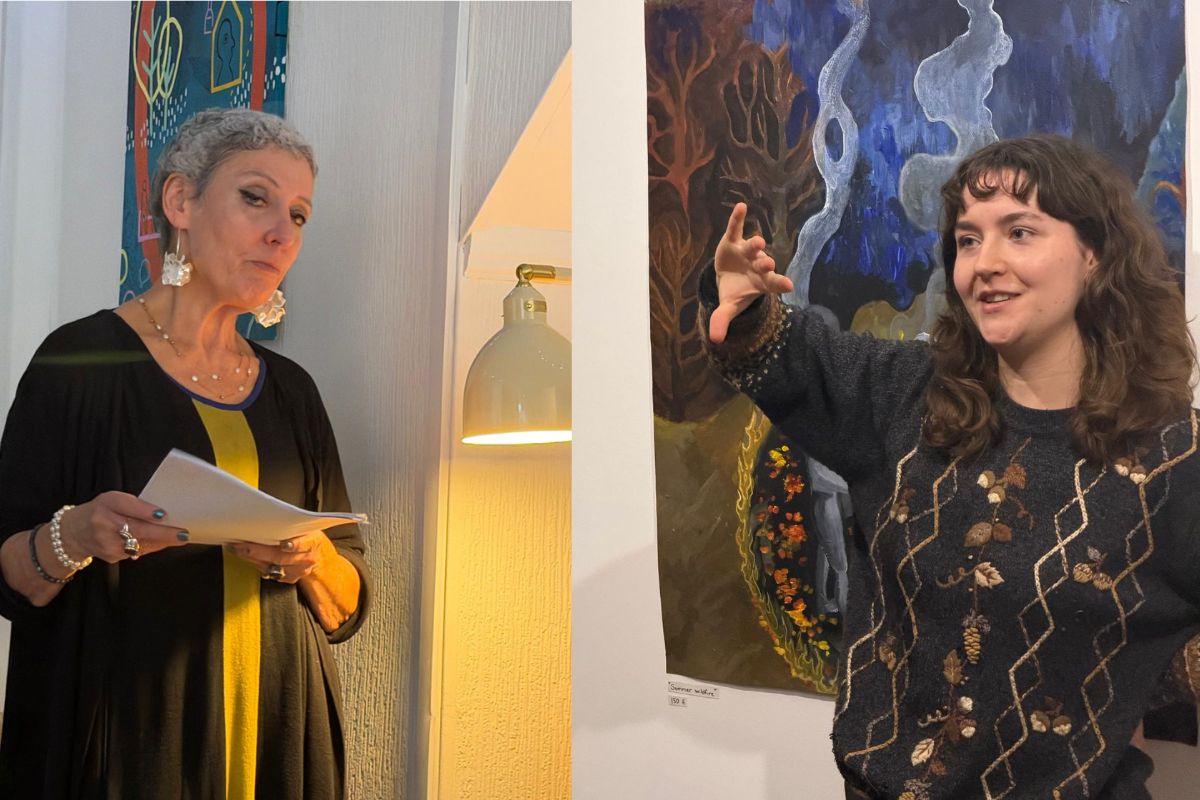
Cwtched up inside Criwdem Celf, we explored our inner child artist selves with Tallulah Drew, whose Person in Place workshop offered a gentle antidote to the pressure of creative perfectionism. She’d even handmade bespoke journals and asked us to take our pick of her childhood collection of pencils to work with. I chose the Little Miss Naughty pencil. There was an exclusive reading from Jayde Collings’ forthcoming collection, Spiritual Cuts, and a fascinating exploration of Swedish artist Unni Vinje’s creative journey, from working as a laboratory milk technician to experimenting with unconventional materials and developing a newfound respect for cows.
DIY zine-making, a 2D textural workshop and experimental readings and film screenings further encouraged creative exploration beyond conventional artistic boundaries. These experiences may seem small in isolation, but collectively they create something extraordinarily valuable: a physical space for people to reconnect with their own creativity and with each other.
The arts as the people’s voice
Saturday night’s Open Mic at Criwdem Celf, an artist-led creative space and wholefood cooperative, offered a glimpse into what happens when cultural participation becomes free from cliques, in-fighting and petty politics; genuinely equal and welcoming. From spontaneous drumming and singing to musical theatre, spoken word, the trumpet, and Earthbound’s soul-soothing soundscapes, the evening unfolded without the entrance fee, data-scraping booking link, hierarchies and cultural capital that so often dominates public performance these days. I also tested out some new work from my forthcoming collection, Hinges, in this wonderfully non-judgemental space.
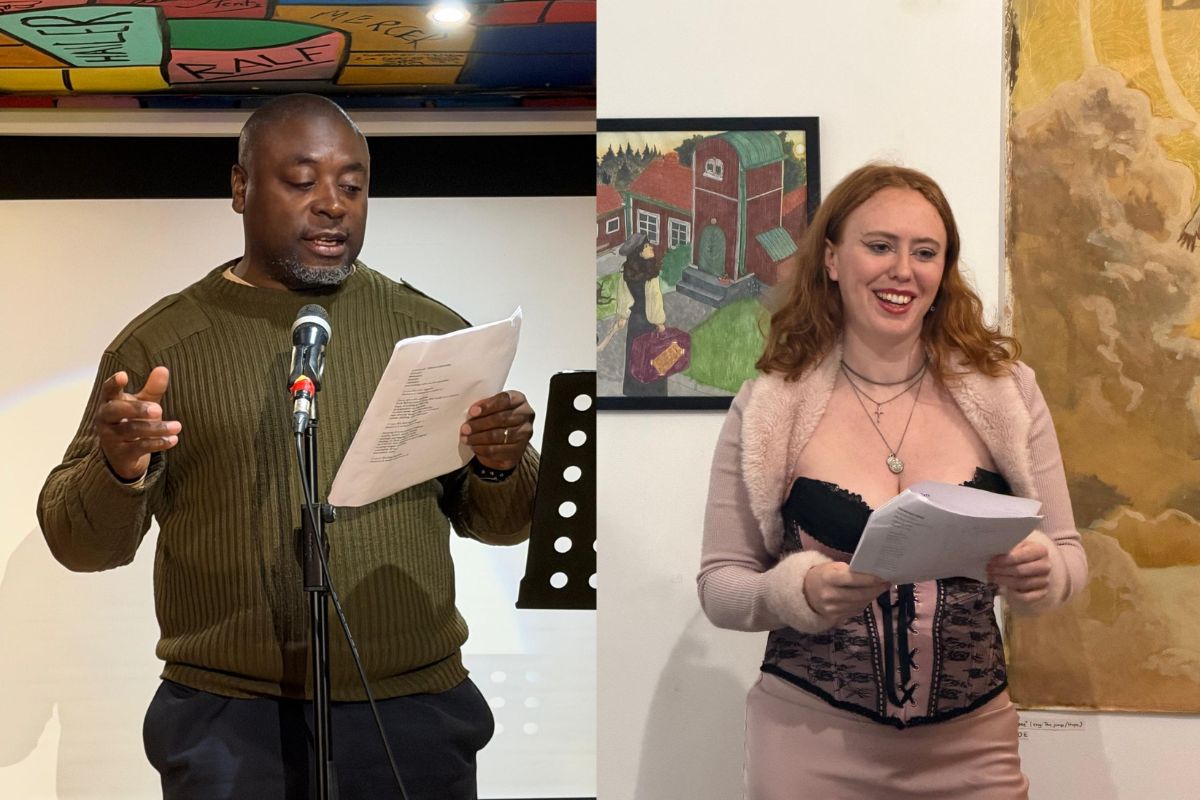
The following afternoon, the Dinefwr Bards gathered in Carmarthen’s old Magistrates’ Court, filling the historic civic space with poems exploring industrial neglect, the reclamation of the wild woman narrative, the Swansea Devil and the absurdities of contemporary life. There was even a robot’s sonnet and a surprising existential lament to a condom. Poet Richard Temple’s line: “guilty until proven guilty” felt particularly apt given the setting. Louise Bretland-Treharne of the Dinefwr Bards described her experience as being “humanely supported to connect with fellow creatives”, witnessing “the arts as the people’s voice” and recognising “the extraordinary within a community reality”.
Louise’s phrase, the arts as the people’s voice, resonates here because what is Welsh culture if not the collective expression of our communities? And how can we claim to value those communities while allowing the spaces that sustain them to become increasingly precarious?
Rooted in Wales, Connected to the world
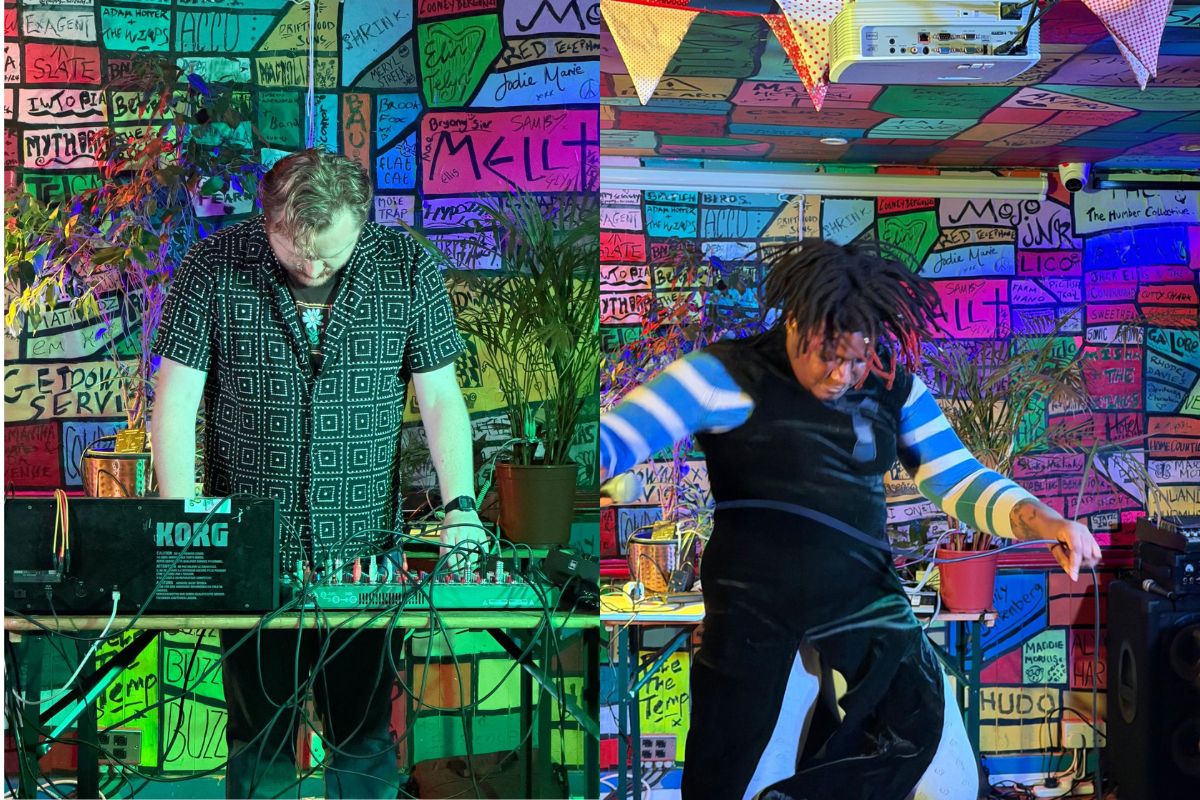
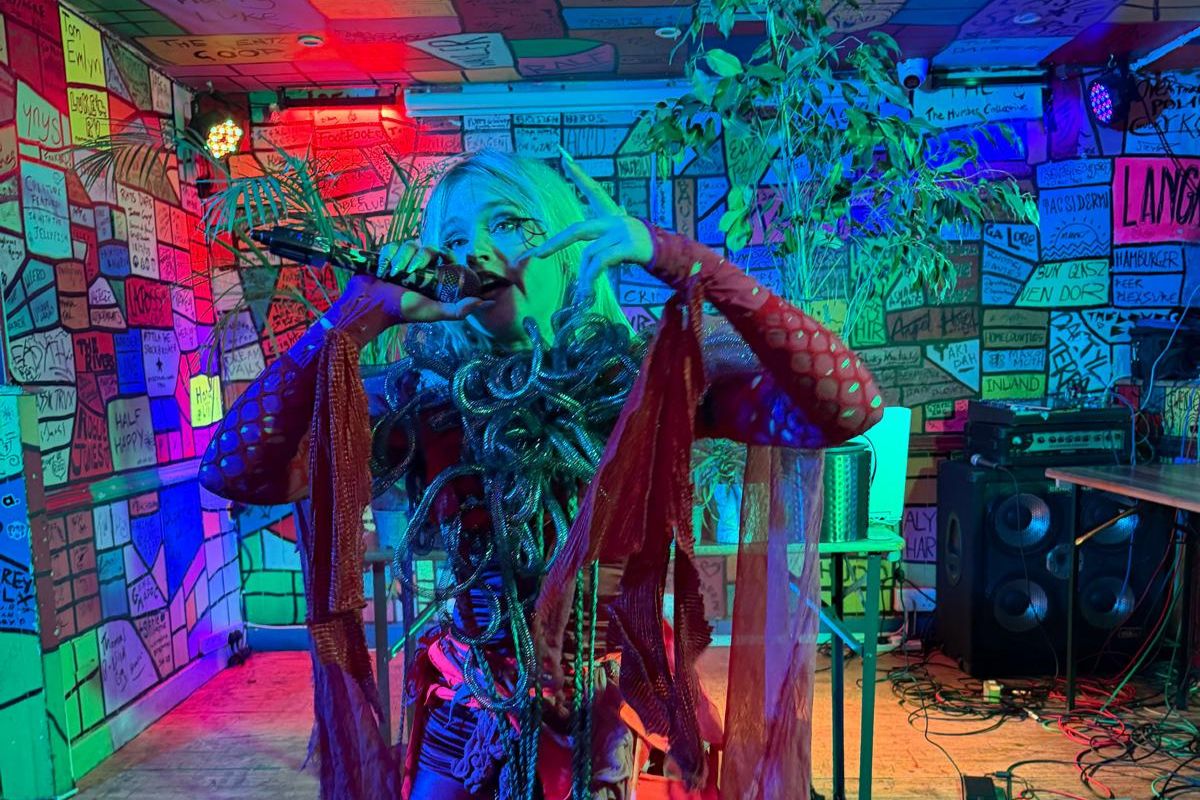
Perhaps the most extraordinary thing about Coracle is how effortlessly it connects Welsh cultural life with international creative experimentation. Latvian eco-futurist Waterflower’s breath-taking performance at Cwrw used bio-data feedback from plants and fungi to create what artist Sabine Moore calls a “living plant orchestra”. Nature is treated not as a passive resource but as a creative collaborator with each plant making its own contribution.
The resulting electronica was visceral, emotive and wholly punk, transforming ecological anxiety into collective expression on the dancefloor. Elsewhere, Nigerian-Welsh producer Neo Ukandu, performing as May Swoon, reflected on the festival’s extraordinary sense of equality: “I felt like I was in the right place with the right people. Everyone felt like equals, and I love that about the Coracle Festival.”
Welsh artist Freddie Cooper, also known as She Elloise, whose work explores gender, wealth, bodily autonomy and ableism, won this year’s Coracle Poetry Slam. “This weekend was so amazing! Seeing thinkers, creatives, artists, and curious minds come together, that’s what it’s all about,” they said. For Irish-American haiku poet Steve Huenneke, Coracle was “a convivial, personally transformational, vital and valuable experience as a poet and as a human being”.
“Horizons expand here each and every year,” he added. “Long may this festival live!”
These are not simply pleasant testimonials. They speak to the human connections that sustain international creative communities, and to the profound value of bringing those communities into conversation with Wales.
Culture grows from the grassroots
As the pressures of commercial homogeny increasingly dictate our cultural landscape here in Wales, there’s a real and present danger that we begin to see art primarily through its capacity to generate profit. But culture is not simply a commodity. It is the means through which we understand ourselves, challenge injustice, connect globally, preserve collective memory and imagine better futures.
The Welsh Government’s forthcoming strategy presents an opportunity to examine how cultural investment might better support this work, particularly where it happens outside established institutions. And there are difficult questions to consider: How do we fund independent creative communities without compromising their autonomy? How do we ensure that grassroots organisations have access to sustainable resources rather than repeatedly relying on unpaid labour and goodwill? And how do we recognise cultural value that cannot always be reduced to economic metrics?
I’m hopeful that Coracle Europe Fringe will return next year. But hope alone won’t keep the roots alive. If we’re serious about nurturing a thriving inclusive and internationally connected Welsh culture, we must recognise that its strength lies not simply in our established institutions, but in the people and communities who create and sustain it every day.
Art can’t grow from the top down. The grassroots deserve more than recognition. They deserve investment.
The Welsh Government’s call for evidence, A Vision for Culture and Sport in Wales, is open until 18 December 2026. More information: https://www.gov.wales/vision-culture-and-sport-wales-call-evidence
Coracle Europe Fringe is organised by Write4Word. For more information visit https://www.write4word.org/projects1/coracle-europe-fringe.
Gemma June Howell is a writer, editor and cultural critic based in Swansea. She is the author of The Crazy Truth and works across publishing, theatre and film. Her work explores class and gender in contemporary Wales — find out more on her website https://www.gemmajunehowell.com/.
Support our Nation today
For the price of a cup of coffee a month you can help us create an independent, not-for-profit, national news service for the people of Wales, by the people of Wales.
Get more trusted Welsh news
Choose Nation.Cymru as a preferred source in Google News to see more of our journalism.


