


Arthurian studies boosted with significant European grant
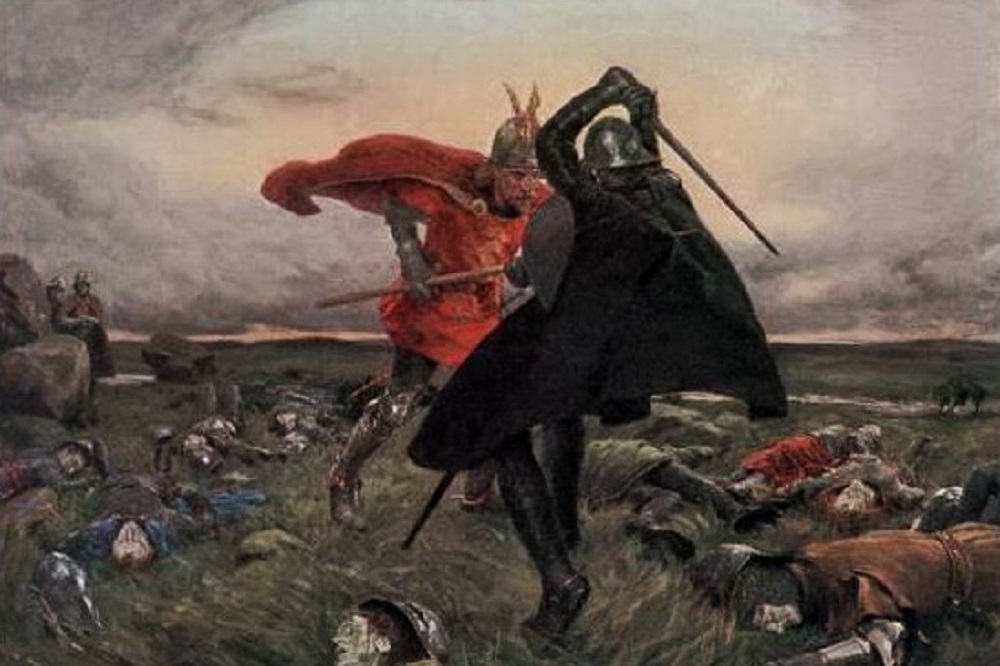
A professor at a Welsh university has received a prestigious €3 million grant to explore manuscripts related to King Arthur alongside scholars from across Europe.
Professor Raluca Radulescu from Bangor University has been awarded the funding under the Marie Skłodowska-Curie Doctoral Training Network for her project ‘EU ARTHURS: European Arthurs, Medieval to Modern’.
This significant award, the first and largest of its kind in Wales and the only Arts and Humanities grant of this type awarded in the UK this year, places Bangor University at the forefront of international Arthurian Studies.
The project will unite scholars from across six European countries – Wales, Iceland, Italy, France, the Netherlands and Switzerland – in a unique consortium dedicated to exploring Arthurian traditions from medieval manuscripts to modern multimedia interpretations.
Research
Beginning in the next year, the funding will enable Professor Radulescu and her collaborators to recruit top doctoral candidates from around the world to research the topics of centre vs peripheries in the medieval and post-medieval manuscript and multi-media Arthurian traditions in European languages.

Professor Radulescu will lead a team of approximately 35 academics, doctoral fellows, and partners from universities, museums, libraries, publishers, and other cultural institutions across Europe.
The project includes both academic research and high-level training, ensuring strong research impact and public engagement.
The EU ARTHURS project builds on Bangor University’s established expertise in Arthurian Studies, led by the Centre for Arthurian Studies.
It will enhance the Centre’s global reputation while contributing to Bangor’s preparations for REF2029 through Open Access publications, academic conferences, and training events. These events will be open to the academic community and the wider public, further reinforcing Bangor’s commitment to inclusive and impactful research.
Vital contribution
Professor Radulescu said: “It is rewarding to receive this international recognition when research funding is hard to secure.
“This award not only recognises our international reputation for Arthurian Studies but also brings immense opportunities to Bangor and our European partners.
“We will be expanding doctoral research capacity significantly and building long-lasting collaborations across the continent.”
Professor Edmund Burke, Vice-Chancellor, said: “Congratulations to Professor Radulescu on securing this €3 million grant from such a highly competitive European funding scheme.
“This is a testament not only to her leadership and scholarship but also to the calibre of research taking place within the Centre for Arthurian Studies.
“This achievement helps to strengthen our position on the international stage and highlights the vital contribution that Arts and Humanities research has to contribute.”
Professor Enlli Thomas, Pro-Vice-Chancellor and Head of College of Arts, Humanities and Social Sciences, said: “As the overall project that this grant will deliver focuses on all aspects, literary, historical, cultural – including multimedia – of Arthurian studies from the medieval period to the present day across all Europe, this grant shows the value of Arts and Humanities to modern society.”
Support our Nation today
For the price of a cup of coffee a month you can help us create an independent, not-for-profit, national news service for the people of Wales, by the people of Wales.



But will they find out where he sleeps and when he will return?
1. Baschurch. 2. No he won’t.
Good to hear of this funding and research. Wales is after all the birthplace and source material of the original Arthurian legend celebrated throughout medieval Europe then the world, although you’d never have guessed it with the Anglocentric establishment & media who have approriated our myths and legends as their own.
It seems most likely that the story of Arthur was originally Celtic in inspiration; Welsh poems of the ninth and tenth centuries already invoke Arthur as a figure of the remote past, and the Black Book of Carmarthen mentions the names of his knights or retinue while mysteriously suggesting that “anoeth bit bed i Arthur,” “the world’s wonder is the grave of Arthur.”1 This is the first surviving reference to the occluded demise of the ancient king. It suggests also the extent to which Celtic elements inform what are believed to be characteristically “English” legends [Peter Ackroyd: Origins of the… Read more »
As someone who has definitively proved Arthur lived in Caerleon, drank at the Priory and played Saturday soccer down the amphitheatre with the lads, I should surely be entitled to some of this cash windfall?
He was the Dennis Waterman of his day, a bit of a jack the lad, and not at all like all the romanticised guff. Believe me, I’ve read his diaries.