


Bank Holiday blues on the election trail
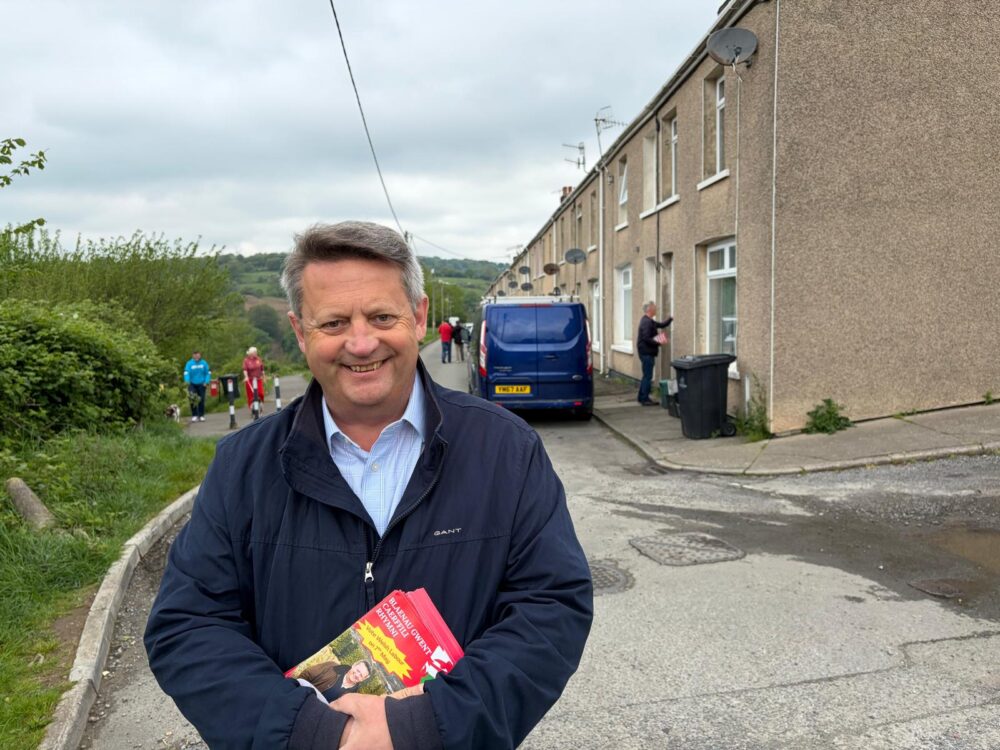
Martin Shipton
The only people who go door-knocking on a Bank Holiday are religious zealots, paid charity fundraisers and political candidates.
My wish to observe what it’s like for a Labour politician fighting to renew his membership of the Senedd this Thursday took me to a place I’d never heard of, let alone visited, before.
Sofrydd, which is unmistakably Welsh even with the English version of its name, is a community at the southern tip of Blaenau Gwent, almost surrounded by Caerphilly county borough.
It’s at a high elevation, and I walked the 1.7 miles from Llanhilleth station, on the Ebbw Vale line.
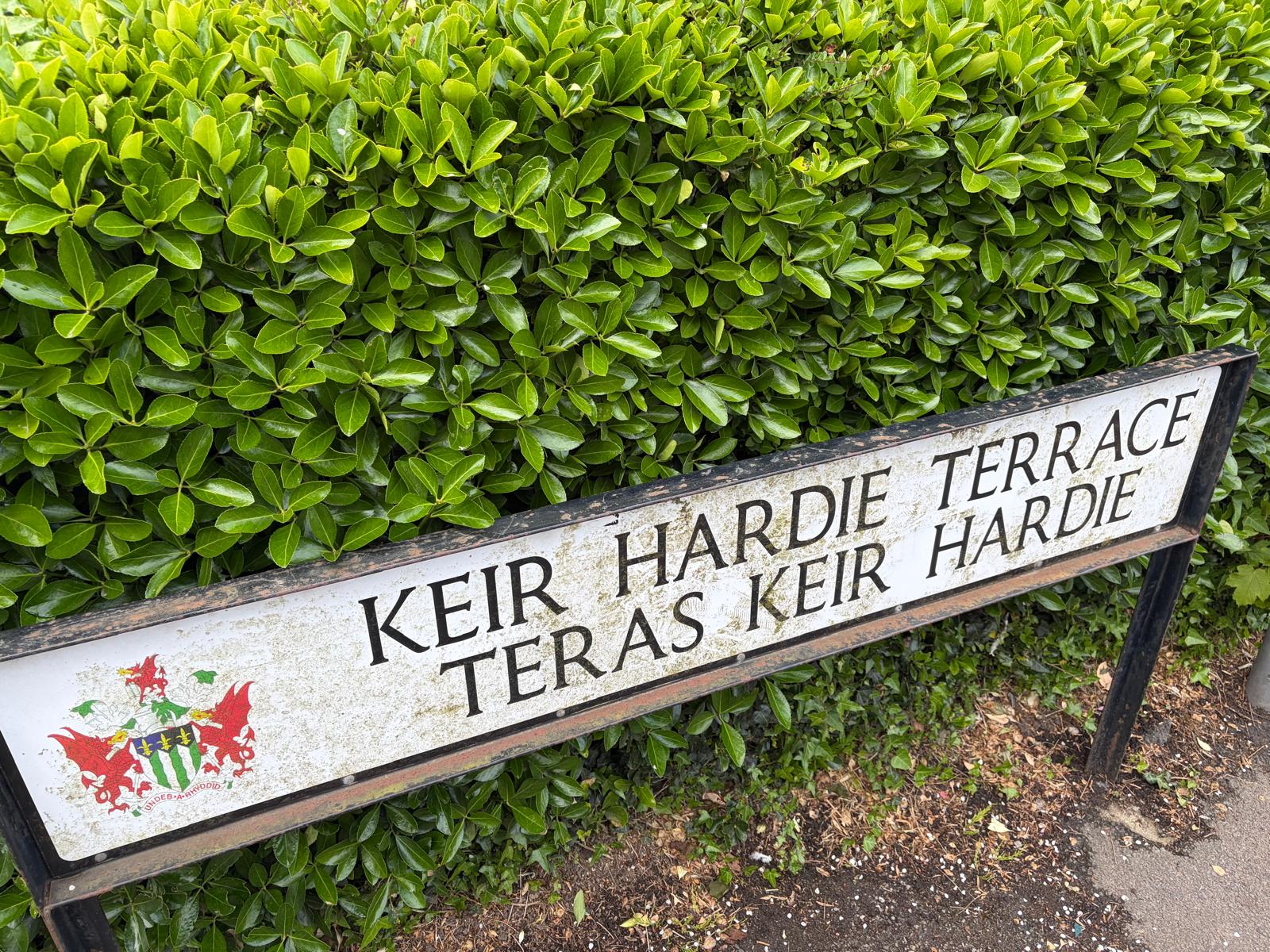
At one time most local men would have worked in the mines, which were based in the valley below. Long-dead Labour politicians are commemorated in street names – I walked past Keir Hardie Terrace and I was told Clement Attlee is name-checked too – but I didn’t observe any wild enthusiasm for the party’s current crop during an hour and a bit of canvassing that I witnessed.
Labour is doing what it can to hold as many Senedd seats as it can in what everyone knows will be a tough election for the party whose century-plus dominance is coming to an end.
At Sofrydd’s Community Hall I met Alun Davies, who until the dissolution was the MS for Blaenau Gwent, and Richard Tunnicliffe, the unsuccessful candidate in last year’s Caerphilly by-election, who are respectively number one and number two on Labour’s list for the new Blaenau Gwent Caerffili Rhymni constituency this Thursday.
Nick Smith, Blaenau Gwent’s MP and Dave Hagendyk, a former General Secretary of Welsh Labour, were also present, as were a couple of local party activists.
As the campaigners embarked on their door-knocking efforts, it quickly became apparent that the all-consuming interest those of us involved in seeking votes or writing about politics have in the Senedd election is not shared by the majority.
‘Nothing changes’
One woman, who was extremely polite, told Alun Davies that she didn’t usually vote and didn’t think she would be doing so this time, either: “You all say you’re going to do things, but nothing changes,” she said. It turned out she was working in a care home nearby and was getting ready for a Bank Holiday shift in what is a notoriously underpaid profession.
Quite a few people on the doorstep said they hadn’t made up their minds – but based on how they said it, there were various interpretations of what that meant. Either they were genuinely unsure, didn’t want to say that they wouldn’t be voting, or didn’t want to say they wouldn’t be voting Labour.
Equally there were different ways of saying they didn’t care. Some were indifferent in a friendly way and others more aggressive. One woman getting out of her car shouted at the canvassers not to knock on her front door or they’d set the dog barking. She wouldn’t even take a leaflet.
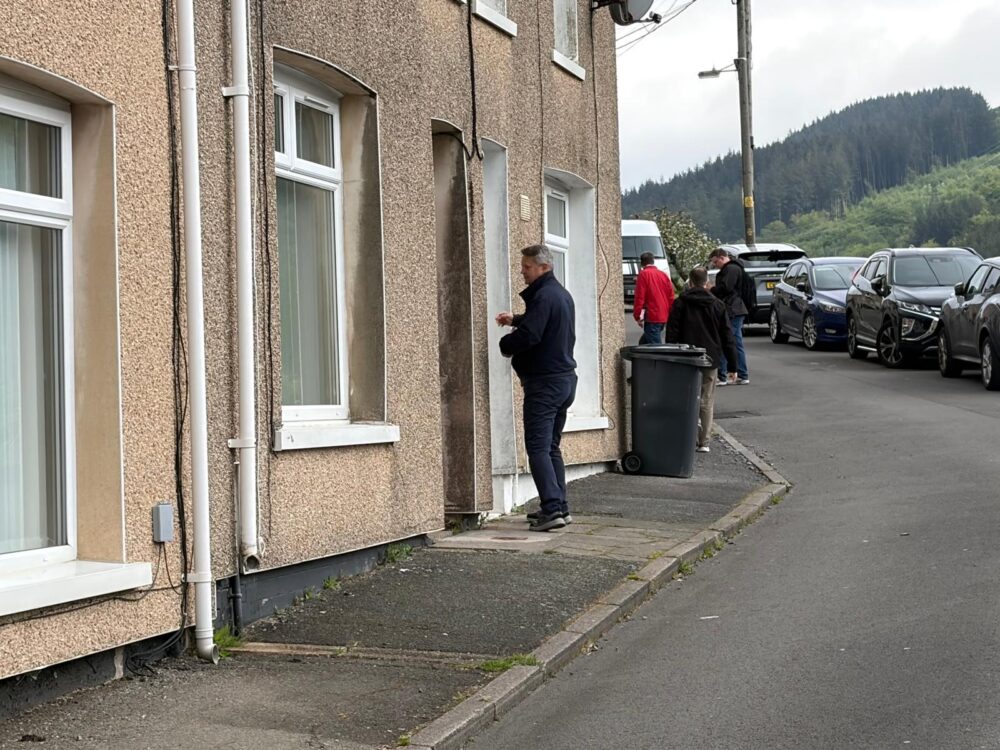
Nick Smith charmed one woman by talking about the time when a crucial scene in the 1966 film Arabesque starring Sophia Loren and Gregory Peck was shot on the now demolished Crumlin Viaduct, within sight of Sofrydd. Whether she was swayed by Labour’s policies or pure cinematic nostalgia, the voter was happy to pledge her support.
When another woman voter opened her door, Smith noticed some clothing that indicated a young person lived in the home. He handed her a leaflet and spoke of Labour’s commitment to a DWP “youth hub” policy aimed at getting young people into work.
Confrontation
There was just one incident involving a confrontation with a Reform voter. It was, to be more accurate, an attempted confrontation, as the Labour team refused to engage and walked on. A late middle-aged man emerged from his house and shouted: “You’ve been in charge for 26 years [27 actually] and done sweet FA. I’m a Reform voter. The NHS is in a mess and so are schools. Look at the pot holes. You should pull yourselves together and think of Wales.”
He didn’t get round to talking about migration [of which I saw no evidence], but one of the Labour canvassers said to me in passing: “To listen to some Reform supporters, you’d think small boats were coming up the Ebbw River.”
Asked how he thought the session had gone, Alun Davies said, as diplomatically as he could: “I’ve enjoyed it. I enjoyed the conversations that we’ve been having. You know, it’s important to listen to what people have got to say.
“I think there’s a sense that people feel they want more from Labour – they hold us to a much higher standard than they do potentially other candidates and other parties. They expect more from us. And I think you’ve heard that in the conversations we’ve had this afternoon.”
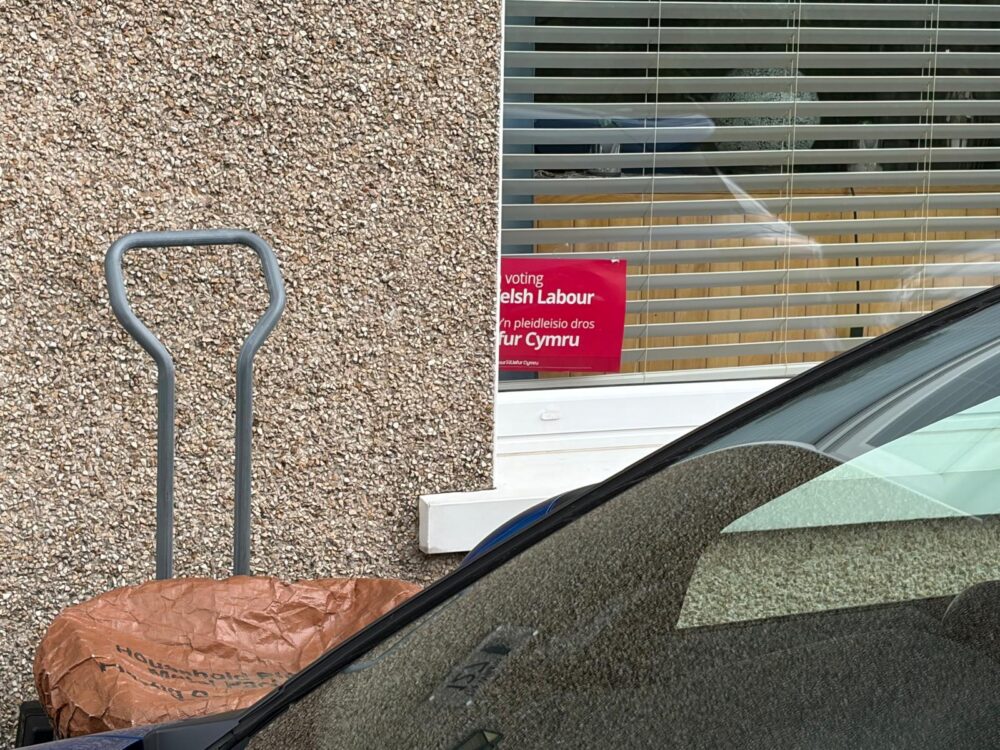
Asked about the level of support Labour had got in the canvassing session, Davies said: “We’ll have to go through the numbers to understand completely, but the retention rate of Labour support is reasonably high.
“This is a traditional South Wales working class community – and these are the people that we are sent to Cardiff to represent. And these are the people who want us to do more today and more again tomorrow.
“We’re very proud of this community. They’re proud of its history. They’re proud of what it’s becoming today. The school here is fantastic. It’s done a really good job in providing opportunities for people. And when you talk to teachers in the school, you talk to people who are really deeply committed to the community. And you can see from the support that the community gives to the school as well that there’s a real sense of belief in this place.
“The council has worked hard to clear up things like litter and the rest of it. And I think that’s having an impact with people. But at the same time, when we talk about austerity, when we talk about the really big economic issues facing the country, these are the people at the sharp end. These are the people who feel the effects of austerity. These are the people who know what it’s like not to have wages increasing. So the academic debates that you might see in a studio in Cardiff are the reality of life for people here.”
Disenchantment
Asked whether the negative comments made by some people represented apathy or disenchantment, Davies said: “I think it’s both. I think there’s a sense of what is voting going to change,
“I think that’s the challenge facing us in this election. For many people there’s a sense of disengagement from politics that goes beyond one electoral cycle.”
I put it to him that what people were really disillusioned with, although they wouldn’t put it this way, was neo-liberal capitalism.
He agreed, and said a new economic model needed to be found.
Support our Nation today
For the price of a cup of coffee a month you can help us create an independent, not-for-profit, national news service for the people of Wales, by the people of Wales.
Get more trusted Welsh news
Choose Nation.Cymru as a preferred source in Google News to see more of our journalism.



“We need to find a new economic model” sic. In my long ago youth, I’m now 79, I once imagined that that might be the specific role or mission (in Starmer speak) of the British Labour party or a version of it. Now as I “sail to Byzantium” the Labour party is the commited abortionist of any change, absolutely not its midwife. Look at it’s funders, hedge funds, backers and prime movers. The obsequience and fealty to bankers, obscene wealth and AI billionaire hucksters. The banality and evil of its “politics” at home and particularly the middle east. The sleaze… Read more »
Sorry Alun Davies, but there’s only so many times you can say on the doorstep the same old same before those voters who believed your past manifesto pledges and promises now stare vacantly into space not trusting a word you say. It’s time for change. #PlaidCymru 🏴
You paint an overly red-rosette onto this constituency.
The Labour Party lost it at both Westminster and Senedd between 2005 and 2010 to Indy/Peoples Voice due to previous Labour betrayals, and Plaid Cymru almost took it in 2016 just 650 votes short.
https://www.youtube.com/watch?v=4dTb62rcU5c
The reason is explained by Alun Davies himself in the video.
An unsurprising tale. There’s nothing more desperate from a politician than extolling what ‘they’ve heard from the doorstep’ in the face of poor polling.
Though it would be interesting to follow another party canvassing there to gauge if there’s any movement.
I imagine even in a decent year. Canvassing in such a town isn’t an uplifting experience. Bearing in mind that probably no more than 40% of people there ever vote at all and of them only around half last voted for labour with probably varying levels of enthusiasm.
I just don’t get the support for Reform in the valleys. It’s the valleys that are going to be wiped out first if reform get in.
Yes there needs to be a protest vote party, but becoming a disgusting traitor to your own country and and shafting your own community is just a an unforgivable thing to do.