

Big lessons from small places: Cymru’s football adventures to European microstates
Iwan Williams
Ahead of Cymru’s visit to Liechtenstein on 15 November, Iwan Williams looks at previous visits to Europe’s smallest nations, and asks what an independent Cymru could learn from these places
Europe is home to some very small nations. They may be hard to pinpoint on a map, they may be historical quirks, and they may be diminutive in terms of geography and population, but these are nations bursting with pride in their identity, culture, language and history, and value the opportunity to play international football on a level playing field with e.g. Germany, France, Italy and Spain. As Colin Leckey mentions in his book Dots on the Map: Visiting Europe’s Accidents of History, “One of the great things about being a small country…is that you get to enter international football tournaments like the World Cup and European Championship at the qualifying stage”. As they are not UEFA/FIFA members, the sovereign states of Monaco and Vatican City are not relevant here.
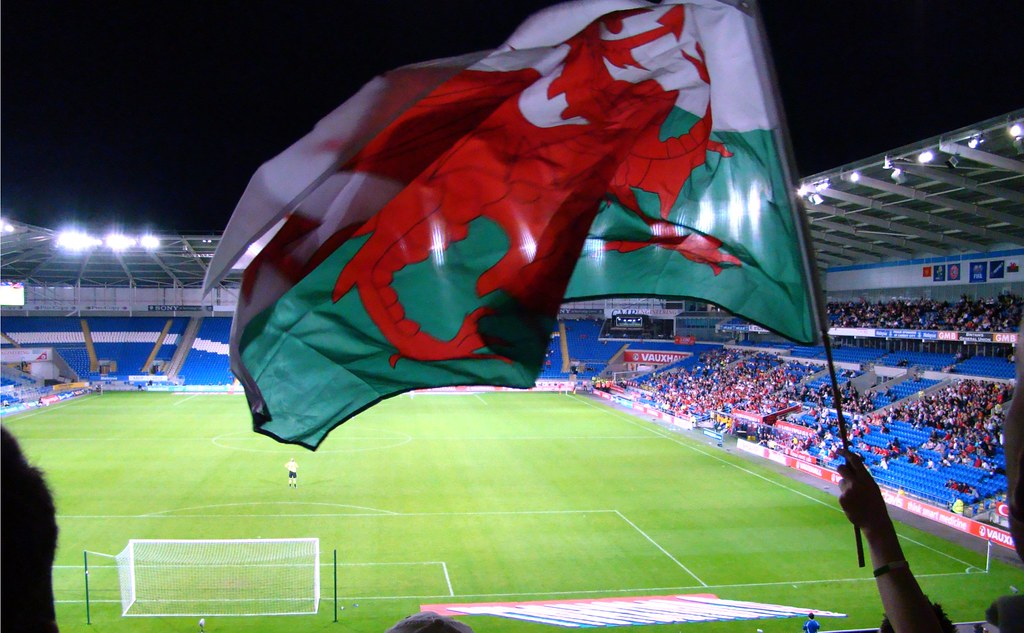
Let’s start with Andorra, tucked away in the Pyrenees between France and Spain. With a population of just under 83k, Andorra has more people than Ceredigion and fewer than Torfaen’s population. Cymru men have only played Andorra twice, on the way to Euro 2016 qualification. The 2-1 win in Andorra la Vella in September 2014 will live long in the memory, a real crossroads in recent Welsh football history. A brilliant Gareth Bale header for the equaliser. And had Bale not scored late on from his retaken free kick, the game could have ended 1-1, Chris Coleman could have resigned or be given the sack, and Welsh football would face another turbulent, tournament-free chapter. Happily, Bale scored on that farcical pitch, the travelling Y Wal Goch/The Red Wall erupted in celebration, and the rest is history.
Moving onto the north Atlantic and the Faroe Islands, population of 56k – roughly the same as Barry. Like Andorra, Cymru men have only played the Faroe Islands twice. The away trip was a 3-0 win in June 1993. Goals from Dean Saunders, Eric Young and Ian Rush were enough for the win in Toftir, an isolated, rustic and windswept location that would be an alien experience for Ryan Giggs and the other Premier League stars in Cymru’s team. Cymru women have played in the Faroes twice – a 1-0 win in Toftir in 1996, and a 6-0 win in Tórshavn in 2019.
Leading onto our next opponents, Liechtenstein, the Alpine microstate on the banks of the Rhein. With a population of 40k, Liechtenstein has roughly the same amount of people as Merthyr or Castell-nedd/Neath. Cymru have played Liechtenstein four times, however the only visit to Vaduz so far was the 2-0 win in October 2009, with David Vaughan and Aaron Ramsey on the scoresheet on a bitterly cold night for Y Wal Goch/The Red Wall.
Gibraltar has a very similar population size to Liechtenstein, and whilst Cymru have played Gibraltar twice, they have yet to play in Gibraltar: the cheeky Rock of Gibraltar monkeys will have to wait. The less said about the 0-0 friendly in the Estadio Algarve in June 2024, the better.
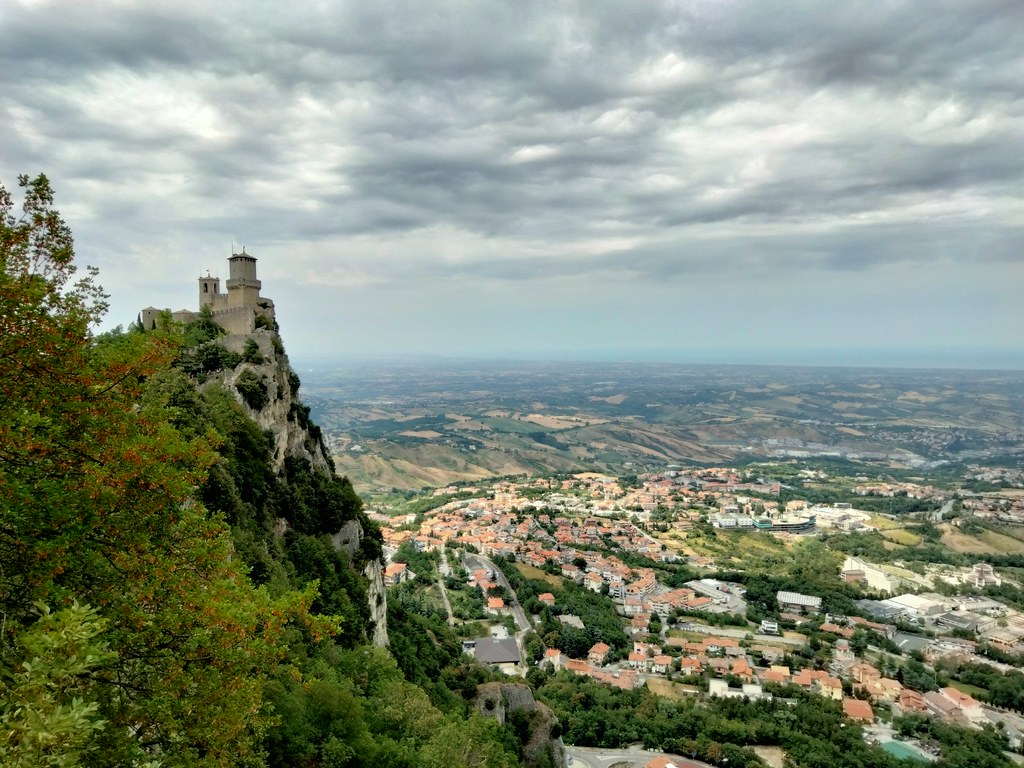
And finally onwards to San Marino, population of just over 33k – similar to Caerffili. Cymru have played San Marino four times, with two visits to the microstate surrounded by Italy. A 5-0 win in June 1996, with Andy Melville, Mark Hughes x2, Ryan Giggs and Mark Pembridge on the scoresheet. A 2-1 win in October 2007, with Robert Earnshaw and Joe Ledley scoring. This was not a convincing win and was a real low-point in John Toshack’s second tenure as Cymru manager. The game is best remembered for Craig Bellamy’s post-match interview, when he really didn’t appreciate the interviewer’s line of questioning and appeared agitated with the whole situation. The interview is probably best described as “short and tense”!
On the pitch, the courage, dedication and perseverance of these national teams is remarkable. Most players are semi-professional and combine work responsibilities with their footballing careers. They understand that scoring goals are rare, and that victories are rarer still. Every so often some of the “big boys” will complain about playing these microstates during qualifying campaigns. They talk of the “inconvenience”, “fixture overload” and “risk of running up a cricket score”. It misses the point entirely. It’s about respecting every nation, ensuring parity and providing the same sporting opportunity regardless of geographic size or population.
In his book Stamping Grounds, Charlie Connelly spent the FIFA World Cup 2002 qualifying campaign following the Liechtenstein team. He found “a national team that has to fit in its training sessions around the players working week. A team whose manager also runs the junior teams and whose selection headaches have included telephoning personal appeals to employers to release players for World Cup duty, and losing his captain for an away World Cup qualifier because the wine he makes for a living was at a crucial stage and couldn’t be left”. Every team has closed the gap and professionalised its setup, but it illustrates some of the significant challenges that these small nations have faced in the past.
The players representing these nations will have memories to treasure forever. They still talk about San Marino’s Davide Gualtieri scoring against England after 8.3 seconds in 1993. San Marino’s Andy Selva and Andorra’s Ildefons Lima’s goals against Cymru meant everything to them, their teammates and supporters. And every team has its day: the Faroe Islands beat Austria 1-0 in 1990 with the “bobble hat goalkeeper” Jens Knudsen the hero.
More recently, Liechtenstein beat Latvia and Iceland in 2007, and the Faroe Islands beat Greece twice in 2014/15, as well as beating Montenegro 4-0 and Czechia 2-1 last month. In 2018, Gibraltar managed to do what Cymru couldn’t: beat Armenia away 1-0. Andorra beat Moldova 1-0 in 2019, whilst San Marino had a 2024 to remember, beating Liechtenstein twice in the Nations League. Worth the years of heavy defeats and bleak outlook? Absolutely. What do Ildefons Lima’s 137 caps for Andorra or Peter Jehle’s 132 caps for Liechtenstein mean to them? Absolutely everything.
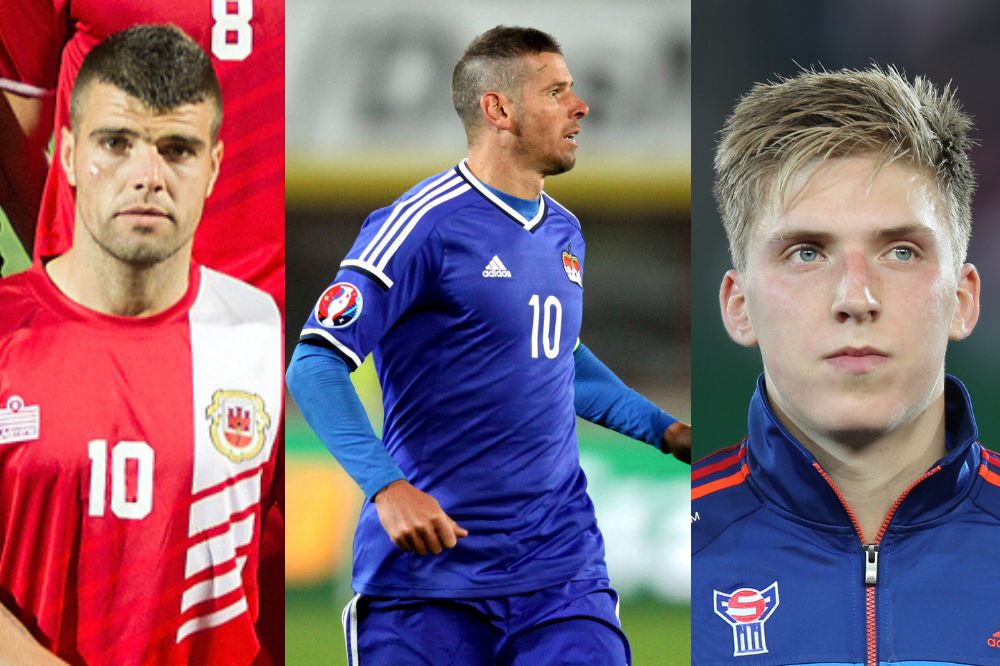
Children growing up in these places will idolise Messi, Ronaldo and Mbappé like anywhere else, but how wonderful that they have their own local heroes. There’s a good chance that San Marino’s Matteo Vitaioli, Liechtenstein’s Mario Frick, the Faroe Islands’ Jóan Edmundsson or Gibraltar’s Liam Walker, for example, are friends of the family.
And off the pitch. What could an independent Cymru learn from these nations? How can they inspire us? As a self-governing republic or monarchy, what good practice could we adopt? It’s all relevant. Compared with these microstates, Cymru’s 3.1m population and £85Bn GDP makes the “too small, too poor” claim redundant. These nations have different political and constitutional setups: Andorra (a diarchy), Liechtenstein (a semi-constitutional monarchy) and San Marino (a diarchy) are sovereign nations. Andorra is a UN member since 1993, Liechtenstein since 1990, and San Marino since 1992. As mentioned in Dots on the Map, these are “tiny nations a mere fraction the size of their mighty neighbours, yet resolutely defending their independence and self-government”.
Distinctiveness
Elisa Bertolini’s Europe’s microstates: the medieval monarchies that survive in our midst article makes the point that their uniqueness is central to their identity: “The distinctiveness of the microstates lies in the survival of institutional arrangements that can no longer be found practically anywhere else in the world…Unlike in most European states with a monarchy, in Liechtenstein…the royal head of state continues to exercise meaningful power. Andorra and San Marino, meanwhile, operate under a dual head of state arrangement. They effectively have two monarchs…preserving the past is a survival mechanism”.
All three are also Council of Europe members: Andorra (since 1994), Liechtenstein (since 1978), and San Marino (since 1988). In addition, Liechtenstein is part of the European Free Trade Association, maximising the advantages of participation in the European single market as a result. All three are part of the international community and work with likeminded nations in a way that Cymru could only dream of, for now.
Independence provides a platform to enact groundbreaking legislation: San Marino, for example, was one of the first countries in the world (and first European country) to abolish the death penalty in 1865. The only other to have ceased capital punishment prior to 1800 is Liechtenstein. And whilst Liechtenstein (German) and San Marino (Italian) speak the language of their larger neighbours, Cymru and Cymraeg can draw similarities with Andorra and Catalan.
All three score well in the Human Development Index: Liechtenstein in 17th place (with New Zealand and the US), San Marino in 29th place (with Czechia and Italy), and Andorra in 32ndplace (with Cyprus). In economic terms, all three also score highly in the GDP per capita list: Liechtenstein in 1st place (ahead of Luxembourg), San Marino in 13th place, and Andorra in 24thplace. Whilst improving, Liechtenstein’s reputation however as a “tax haven” may not be the best model for an independent Cymru to follow.
Achievements
Should an independent Cymru have an army, they could do worse than look at Liechtenstein’s recruitment techniques: the legend goes that an 80-strong Liechtenstein army joined the Austro-Prussian War of 1866 to repel any Italian attacks at the Stelvio Pass, and returned home with 81, having picked up an Austrian officer on the way back to Vaduz.
There are sporting achievements away from football: Liechtenstein have won ten Winter Olympic medals (including two golds), whilst San Marino have won three Summer Olympic medals.
Gibraltar, like Cymru, falls under the UK sovereign state and unlike Cymru, is a British Overseas Territory. With the exception of defence, external affairs and internal security, the Gibraltar Government is responsible for all matters and is self-governing. It is far stronger than the Welsh Government, where the journey towards further devolved powers is incredibly laborious and time-consuming. And for anyone wondering how the border would work between an independent Cymru and England, the ongoing discussions between the UK and Spanish Governments and the move towards the Schengen Agreement to ease movement will be of interest.
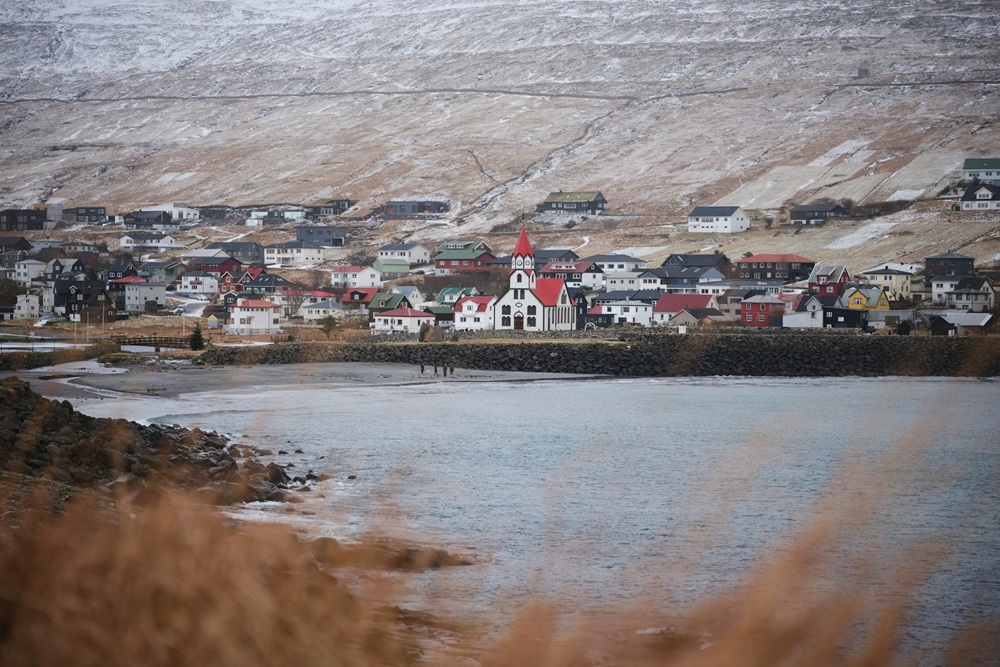
Officially, the Faroe Islands is an autonomous territory in the Kingdom of Denmark. However, the Faroes have extensive autonomy like Gibraltar, with the ability to self-govern apart from e.g. military defence, policing, justice and currency, with partial control over foreign affairs. They have an independent trade policy and are free to negotiate their own trade agreements with other states. The Faroese Government is another example of strong self-government within a wider kingdom.
With a population smaller than Ynys Môn and one of the world’s oldest parliaments in the Løgting (a history dating back over a thousand years), it has powers and freedom to govern that should make the Welsh Government blush with envy or embarrassment. And like Scotland in recent years, the clamour for Faroese independence versus the status quo is roughly 50:50. However, attitudes are shifting – as covered in Martin Shipton’s recent ‘Letter from the Faroe Islands’ article. With fisheries a crucial part of their economy, Faroese attitudes towards whale and dolphin hunts is an ongoing area of concern.
The relationship between the official languages of Faroese and Danish invites comparisons with the relationship between Cymraeg and English. And like Cymru, the Faroes cannot represent themselves in the Olympics, and must compete as Danish athletes. Unlike Cymru – and confusingly – the Faroes can compete as themselves in the Paralympics, and have won thirteen medals to date including one gold.
Courage
With plenty of courage and determination on the pitch, with players who relish the ‘David vs Goliath’ dynamic, and with national teams working hard to dispel the “hopeless minnows” tag, there is much to learn from these small nations in sporting terms. And in a political, constitutional, judicial, economic and governance context, there is much that an independent Cymru could learn from these places. As Yoda once said in a galaxy far, far away “Size matters not…Judge me by my size, do you?”.
Long live the microstates of Europe, and Pob Lwc / Good Luck Cymru.
Support our Nation today
For the price of a cup of coffee a month you can help us create an independent, not-for-profit, national news service for the people of Wales, by the people of Wales.



Excellent piece. Always remember some Wales fans who went to Andorra in 2014 meeting one of their midfielders the following morning because he was working as a waiter in the hotel they were staying in! Amazing these tiny countries are able to compete as much as they do really.