


Biography of Dafydd Elis-Thomas published seven months after his death
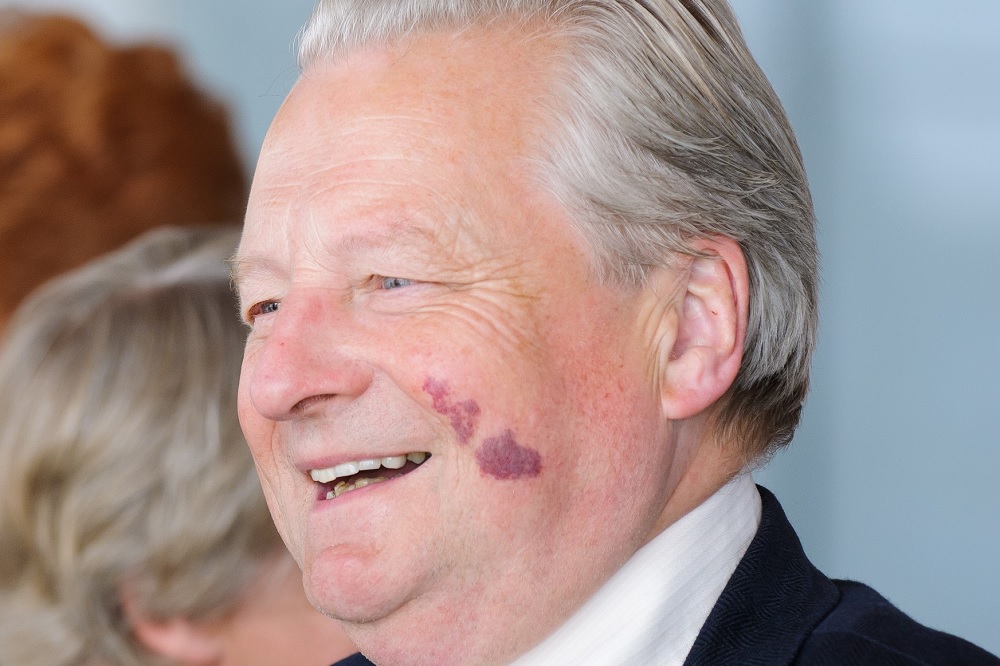
When former Plaid Cymru President and Senedd Presiding officer Lord Dafydd Elis-Thomas died in February 2025, Aled Eirug’s biography of him was almost complete.
The book – Dafydd Elis-Thomas Nation Builder – will be launched on Tuesday September 23.
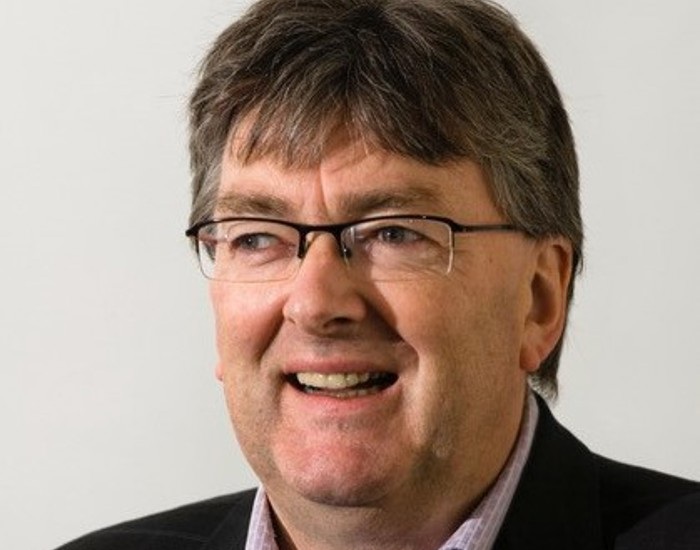
Martin Shipton spoke to Aled Eirug about Elis’Thomas’ impact on Welsh politics.
MS How would you sum up the significance of Dafydd-El’s contribution to Welsh politics, and what was his greatest achievement?
AE I think his greatest achievement was as Presiding Officer of the Assembly as was, and making sure that it lasted more than the first year or two of devolution, because I think devolution was very precarious at that time. And I think if you’d had a Presiding Officer other than Dafydd, it would have been very, very difficult to see the place surviving, really. I think his great success, therefore, was as a Presiding Officer and also in not only ensuring the continuation of the Assembly as was, but also the creation of the building, the Senedd, which I think he more than anybody else was responsible for. And I think if it had been left to the government or perhaps anybody else in his shoes as Presiding Officer, it wouldn’t have happened.
MS There are a number of contradictions or possibly complexities that make him unique. One being that he was a nationalist who expressed a dislike for nationalism. What was that about?
AE Well, I think he disliked the term nationalist. He didn’t think it was an adequate way of describing how he felt politically. And he felt that from within the first months of being elected an MP in 1974 – which was in itself quite a shock for him. He was more a Home Ruler and understood that in a UK context. So if he had heroes, he would point to Tom Ellis, the Liberal MP who’d been MP for Meirionnydd and who was a Home Ruler with Lloyd George and some other Liberal MPs at the end of the 19th century. And he would say that he owed his politics more to that than to the early founders of Plaid Cymru.
MS He used to see himself as part of two political traditions, one through Plaid Cymru and the other a socialist tradition through which he had sympathy for the Labour Party. Some people didn’t approve of that, particularly in Plaid. Is it possible to reconcile those two traditions, and did he do so successfully?
AE I think it’s totally possible to bring those traditions together. And I think Tom Ellis, for example, would have considered himself a socialist within the Liberal Party. And what people tend to forget about is that, yes, Plaid Cymru was set up by people who wanted an independent voice for Wales through a national party. But there was a very important element of the people who set it up who came from a socialist tradition of the Independent Labour Party.
You don’t hear that so much from conventional Plaid Cymru historiography, but that was indeed the case. And of the two groups that came together to form Plaid Cymru, Saunders Lewis and his people in south Wales and HR Jones in north Wales, in north Wales it tended to be more the ILP people from that tradition. So I think it’s totally consistent and Dafydd would have said it was totally consistent.
MS He’s been described as everything from a maverick to an establishment stooge. How fair are such descriptions and how do you think he saw himself?
AE I would say that he saw himself as somebody who was quite consistent in his views. And he would say that it wasn’t so much that he’d changed, but everybody else had. You can take that with a pinch of salt! He did vary a bit in his philosophy, depending on what period of his life you’re looking at. He believed there was nothing wrong with going to the Lords because you needed to use all the instruments of the state, to influence them in favour of Wales.
He joined the Lords in spite of a lot of people in Plaid being very opposed to it. But many people were also privately very supportive within Plaid, although they didn’t feel they could say that publicly. Very often the accusation of inconsistency is understandable. But I think you’ve also got to look at the political conditions and context of the time. So, for example his intervention in ensuring the Fermanagh and South Tyrone by election was very important in 1981. That was a crucial intervention.
He was critical of Sinn Fein then in the late 80s, because he felt that the IRA’s campaign wasn’t helping the peace process in Northern Ireland. And people accused him of being inconsistent over that. Well I don’t think that was inconsistent. And he also as Plaid Cymru President by the mid to late 80s changed his views in order to make them more appealing to people from a Liberal or Conservative background as well. You can see that in his attempt to win the European Parliament seat in North Wales in 1989, but that was very much in the political context of the time.
MS In addition to his acceptance of a peerage, some saw him as unreliable and a traitor when he left Plaid and became a minister in a Welsh Labour government. Why did he do that?
AE I think it was a total disillusionment with Leanne Wood as leader. He thought that Plaid Cymru wasn’t serious at all in their attempt to put Leanne forward as the First Minister after the election in 2016, knowing that they didn’t have the numbers. He thought that was irresponsible. He’d fallen out with and he’d consistently disagreed with Leanne from 2012 onwards to 2016. I think by 2016, after the election he came to a decision that because of the way Plaid, as he thought, were behaving immaturely that he couldn’t see a future for him in the party. He didn’t join the Labour Party and he had to wait a year or 18 months to join the government. I think there was an understanding that he would be joining the government – after he left Plaid he had discussions with the government about that. I can understand why Plaid members were very disappointed at that. But I think he felt that at that stage of life and where he was politically, he had little choice.
MS Did he have such discussions before he left Plaid?
AE: Yes. Absolutely. There was nothing categorically promised. But I think there was an understanding between him and Carwyn [Jones] that they would find a role for him. And you know, they’d have been stupid not to really. He was in a position where he could have demanded a bigger role, a more important job. For example, [Lib Dem leader] Kirsty Williams became Minister of Education. Dafydd loved being Minister of Culture, but if he had been personally ambitious, he could have gone for a higher job, as it were. But he didn’t. And culture – he was delighted with the role.
MS Some hold the belief that he and Dafydd Wigley couldn’t stand each other. To what extent is that true? And what was the real nature of their relationship?
AE I think that’s putting it a bit strongly. I’d use the word frenemy to describe the relationship between the two of them. And when they started in Parliament, they were very, very close. In the book, I describe how they became more and more distanced from each other, partly because of Gwynfor [Evans’] presence. But there were some other factors involved. There were important political differences, and we shouldn’t shy away from that. That was always there. And at times they had deep disagreements, perhaps exemplified best by the fact that both of them went for the Plaid presidency in 1981, in a really hot tempered and quite fiery way. But I wouldn’t say they hated each other. And interestingly, neither of them liked conflict and neither really wanted face to face conflict, even though they worked together in Parliament, just the two of them, for quite a length of time. So in a way, they tried to avoid it. But inevitably it came to the surface every so often.
MS But there were people who he came to dislike quite intensely, weren’t there? John Marek and Leanne Wood, for example. How big a trait was that of his?
AE Well, if he thought that somebody was behaving politically irresponsibly, he’d say so and would take those people on. That’s certainly what happened with John Marek [a former Wrexham Labour MP who for a time was Deputy Presiding Officer] Dafydd believed that Marek was attempting to slow down the pace of change and prevent the important separation of government from the Assembly in 2006 and 2007. That led to a major bust up. And I think politically, Dafydd felt that he had to do that in order to make sure that the process was on track.
I think he was supportive of Leanne when she started her career. And although they had one or two bust-ups, including when Leanne referred to the Queen as Mrs Windsor in the Assembly and she got chucked out, he was pretty supportive of her until the leadership election of 2012, when Dafydd, surprisingly to many people, decided to stand against Leanne. He was supportive of Leanne during the campaign, suggesting that if there was a second round, his votes should go to her. But I think Leanne found it very difficult to find a place for Dafydd within Plaid Cymru. And I think it was difficult for Dafydd because he had only been the Presiding Officer for the first 11 years of the Assembly’s existence.
I think he found it very, very difficult to come to terms with being a backbencher and operating within a party structure. And that became a difficulty. And although he was made spokesman on various things, he quite quickly had a row with Leanne, which led to other rows and an increasingly fractious and difficult relationship.
MS Yet many people found him intensely charming, a witty man who was a bon viveur without being a snob. Do you recognize that description?
AE Oh, absolutely. He wasn’t a bore. He thought there was much more to life than just politics and especially party politics. And he had a real hinterland – very cultured, very knowledgeable. And as you say, charming and very, very engaging and really encouraging of younger people in the work context and he was a very, very interesting guy to be around.
MS Near the end of his life, he tried unsuccessfully to rejoin. Why did they reject him and how did he react to the rejection?
AE Well, they reacted by setting up what was like a disciplinary committee of three people who asked him two basic questions. One was why did he leave Plaid Cymru in 2016? And the second was why did he support [former Labour special adviser] David Taylor for the police commissioner role in North Wales when David was the Labour candidate. And on that basis, Dafydd thought that they were conducting a witch hunt. And he thought ‘sod this’.
He’d been led to believe by Rhun [ap Iorwerth] that Plaid would look favourably at him coming back. But when he had that response from that particular committee, he felt this was set up to fail. And he decided not to go ahead with the process, which was, he felt, a pity. And he regretted that. He had a very high opinion of Rhunn, but he didn’t feel that it was appropriate then to carry on with the process.
MS Most of today’s politicians seem quite prosaic in comparison to him. The Italian writer and philosopher Umberto Eco was referred to as a maximalist, and I believe the same could be said of Dafydd-El. Will we look upon his like again?
AE Well I hope we do. What’s interesting about Dafydd is the richness of not just the legacy, but I think his qualities aren’t just the qualities of a politician. He was very cultured. In a way, you could say that becoming an MP was almost an accident. He was poised to be a very, very good and highly regarded academic, fascinated by the theatre and drama, and literature – not just Welsh, but English and international. He would have been a brilliant academic.
As it is, he brought those strengths to what he did as a politician. And I think as a politician, you could see it in his range of interests, in the way he approached political questions. One of the things I think that he was very good at was dealing with people and understanding people and being able to empathise. It’s quite a rare skill, a rare quality, a real skill. And I think he was brilliant at that and he was very, very dedicated to his politics and his political philosophy.
Dafydd Elis-Thomas Nation Builder by Aled Eirug is published at £25 by University of Wales Press
Support our Nation today
For the price of a cup of coffee a month you can help us create an independent, not-for-profit, national news service for the people of Wales, by the people of Wales.


