


Black hats, cauldrons and broomsticks: the historic origins of witch iconography
Mari Ellis Dunning, PhD Candidate, Languages and Literature, Aberystwyth University
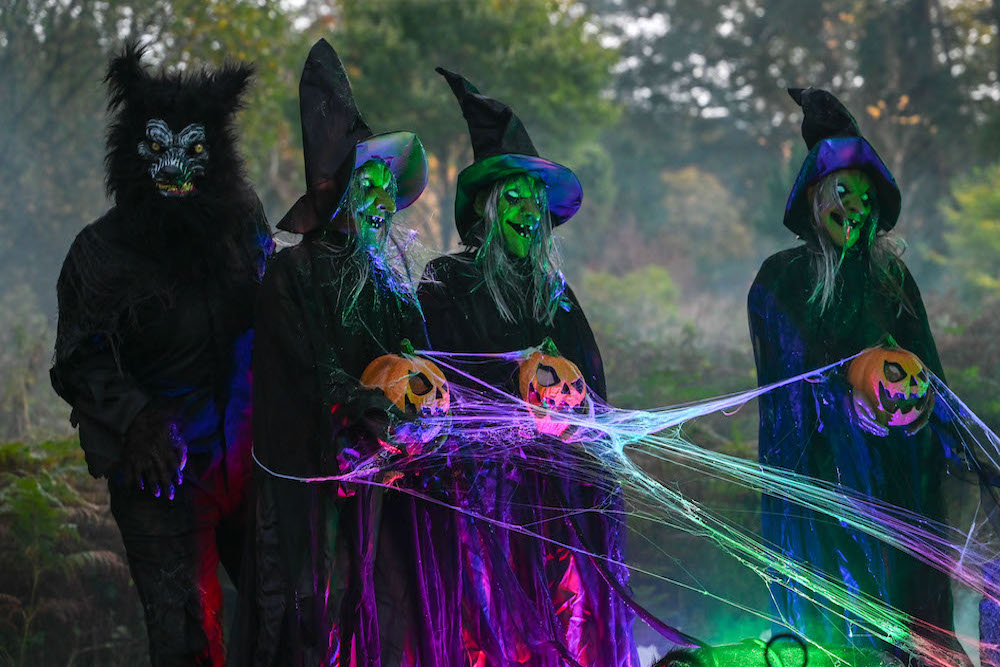
Whether they’re knocking at your door trick or treating, or hung as decorations in shop windows, witches are rife at this time of year.
They’re easy to recognise, wearing tall, pointed hats, carrying broomsticks, or peering into a cauldron – but where did these stereotypes associated with witches come from?
1. Broomsticks
Much like brooms today, in the 1500s the broomstick was a household tool used to sweep hearths and floors. In rural villages, broomsticks were also often used as a form of signage by alewives, who would place them outside their cottages to show that ale was for sale within.
Somehow, this innocuous object found its way into stories of witchcraft.
The first image of women flying on broomsticks is believed to be in the manuscript of French poet Martin Le Franc’s Le Champion des Dames (The Defender of Ladies), published in 1485. Women sat astride broomsticks are drawn alongside the text, in the margins of the pages, much as accused witches were often maligned women on the margins of society.
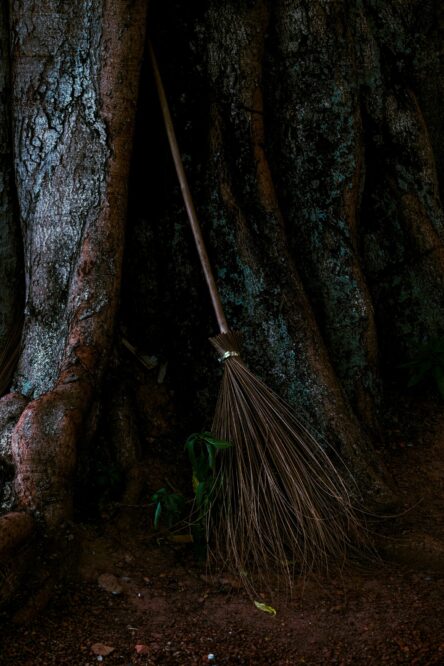
One of the most influential pieces of writing on witchcraft was the Malleus Maleficarum published in 1486 by German clergyman Heinrich Kramer. Kramer’s anti-witchcraft tract alluded to witches flying on anointed broomsticks with the aid of the devil.
Given that the work is firmly rooted in misogyny, and depicts witches as a direct threat to the domestic sphere, it’s fitting that such a mundane household item became an object of malice.
2. Cauldrons
Another domestic item, the cauldron, has also become synonymous with witchcraft.
Instead of stews and broths, witches are often shown using cauldrons to stir up potions and spells. Again, it’s likely that this is rooted in ideas of women subverting their usual household duties, as well as a connection to healing practices.
In the 16th and 17th century, people relied on lay healers, people who learned their craft through experience and knowledge passed down through the generations. These healers were usually women who had knowledge of herbal remedies and salves that would claim to cure ailments and heal people and sick animals.
As the reformation drew in and the church became more powerful, lay healing practices and unlicensed healing was pushed aside in favour of trained physicians. With this shift, lay healers boiling herbs in their cauldrons were looked on with increasing suspicion.
3. Tall black hats
Depictions of witches vary across Europe, but there’s no doubt that a tall, black hat has become associated with witches, especially in the UK and the US.
There’s no definitive source for this strange stereotype, but speculation about where it came from is rife, ranging from ideas about Quaker hats to general medieval dress.
Women in early modern (1500 to 1780) Wales typically dressed in long, heavy woollen skirts, aprons, blouses and a large woollen shawl, and a traditional tall, black hat, so there is speculation among some researchers that this served as inspiration for the wide-brimmed hat of the fairy tale witch.
This is fitting given that Wales, along with Cornwall, was seen by Protestant reformers of the early modern period as a land rife with magic and sorcery.
Outside of Europe, tall black hats have also been found on mummies from 200BC unearthed in Subeshi, China, leading scientists to name them the “the witches of Subeshi”.
4. Long, scraggly hair
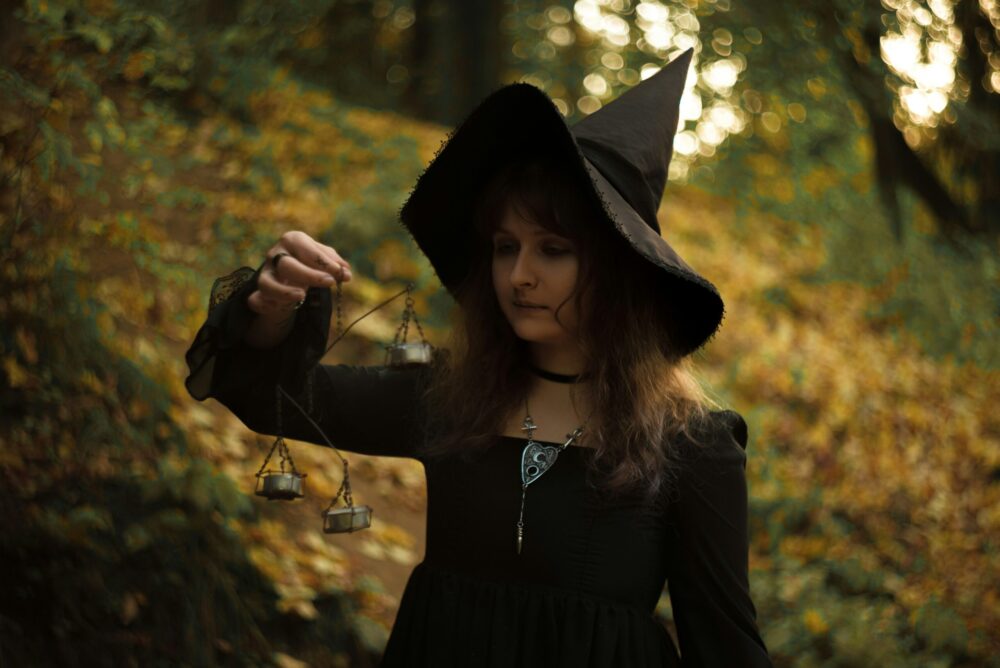
Depictions of witches usually involve women with long, scraggly hair, often trailing behind them as they ride their broomsticks.
It’s likely that this conception of witches comes from the dichotomy between “good” Christian women and their “bad” witch counterparts that was established during the reformation.
In the post-medieval period, married women ordinarily covered their hair beneath a cap, and loose hair was generally regarded as an improper attribute of temptresses and the dissolute.
Agnes Griffiths, a Welsh woman accused of witchcraft in 1618, was reportedly seen through the window of her home using something sharp to prick a wax figure, and was described as doing this “with her heare aboute her eares”. The accusation suggests disdain for women who refused to conform to expectations of their gender. In an extension of this, witches were also suspected of hiding wax, which they would use for their sorcery, in their hair, contributing to the stereotype of witches as having greasy locks.
5. Black cats
Women accused of witchcraft between the 14th and 17th centuries were often accused of keeping a familiar – an animal that was actually the devil or a demon in disguise.
Familiar spirits were said to come in any number of guises, from frogs and rats to dogs, small horses and even badgers. In a perverse parody of breastfeeding an infant, witches were believed to feed the familiars from their own bodies, and were often consequently stripped and searched for a “witch’s teat”.
The cleric Robert Holland’s witchcraft treatise, which presents some colourful ideas about witchcraft, recounts a story about a witch who would always have a docile rat feeding in her lap.
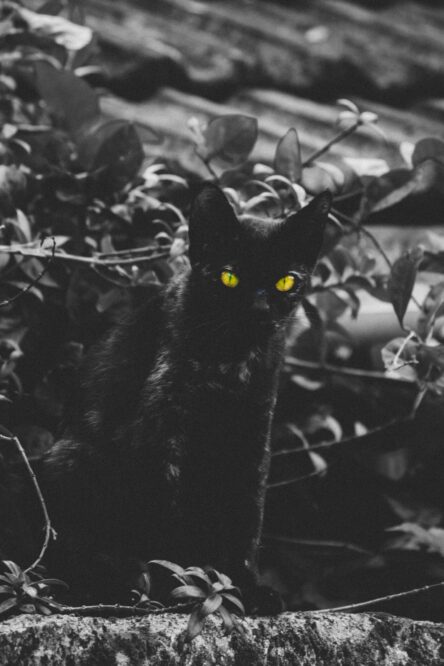
It goes on to claim that demons would appear in the form that was easiest to keep as a pet, such as cats, mice and frogs, and tells of an old woman and her daughter who were known to have kept the devil for a long time in various animal guises. Supposedly, the older woman fed the animals with blood from her own breasts.
In one particularly famous case of witchcraft, that of Elizabeth Clarke of Manningtree, Clarke admitted to keeping several familiar spirits, and the most well remembered of these was her cat, Vinegar Tom.
This article was first published on The Conversation

Support our Nation today
For the price of a cup of coffee a month you can help us create an independent, not-for-profit, national news service for the people of Wales, by the people of Wales.



Marginalia,
Capital: Aberystwyth
Think Bronglais and Polanski
Good Luck by the way…