


Calennig: the Welsh New Year tradition few still celebrate
Amelia Jones
Calennig is one of the most widely recognised New Year traditions in Wales, and yet one of the least commonly practised.
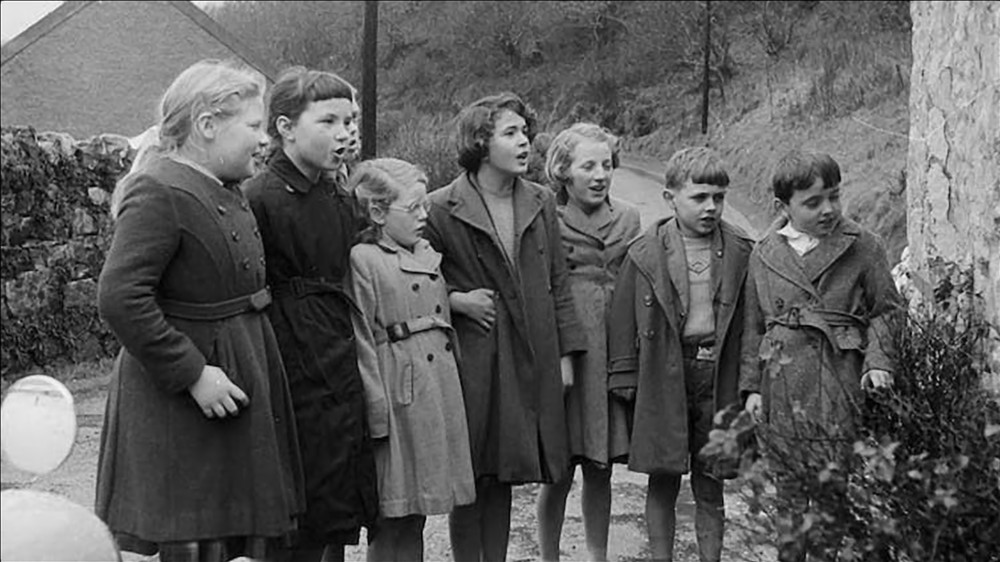
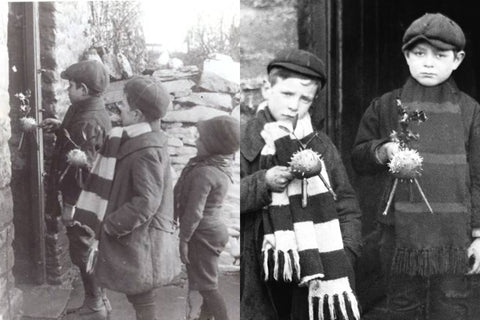
The custom, where children carry decorated apples fixed on sticks, going from door to door to sing verses in Welsh and offer good wishes for the year ahead, once marked New Year’s Day.
In return, children were given sweets, pennies, or food. This was all referred to simply as Calennig.
For generations, the practice was a vibrant, informal part of Welsh village and town life, much like a Welsh version of Halloween.
Every village has its own version of verses and melodies, full of local flavour and improvisation.
It required no organisation beyond the shared understanding that doors would open and voices were heard. Calennig depended on community, proximity and familiarity.
Yet this form of Calennig has been quietly dying for almost a century.
Calennig apple
In as early as the 1930s, observers noted that the decorated apple, which was once carried by children on a stick with cloves and ribbons had largely disappeared.
Children’s visits to houses continued, but the practice devolved into reciting verses and collecting pennies.
By the 1980s, the tradition had nearly vanished in many parts of Wales and very few children still took part.
For example, in Carmarthenshire, it was said that many were simply not told about the custom by their parents. The motivation to go out and greet neighbours had all but disappeared, overtaken by modern consumer habits and changing childhood expectations.
A faint echo
Today, Calennig survives only as a faint echo, barely heard outside a handful of rural pockets like the Gwaun Valley, Pembrokeshire.
The Gwaun Valley is one of the few places that also continues to mark New Year according to the old Julian calendar, which had been in use since the days of Julius Caesar and the Roman Empire.
Here, New Year is celebrated on January 13 as Hen Galan (Old New Year), a date and set of customs that, like Calennig, fell out of widespread practice across Wales during the 19th century.
On Hen Galan, children in the valley still go door to door and are given Calennig. These gifts remain faithful to tradition, usually in the form of sweets or small sums of money.
The Gwaun Valley’s determination to hold onto these customs is striking because it is so rare. What survives here is not because the tradition lives on naturally elsewhere, but because it is consciously maintained in a place resistant to lose Welsh traditions.
But even here, this sense of continuity is fragile. The community usually gathers on this say at the historic Dyffryn Arms pub, known as Bessie’s. However, in 2023 the pub’s longstanding landlady Bessie, passed away, marking the end of an era. Last year, many worried it would not be the same.
Loss
The loss of Calennig is a symptom of wider cultural shifts. Urbanisation, changing neighbourhoods, safety concerns, and the dominance of Christmas celebrations have gradually pushed many Welsh customs out of the picture.
Calennig’s decline has not been dramatic or sudden but slow and quiet, a gradual fading as the social conditions that sustained it disappeared. It was not banned, forgotten overnight, or replaced by something else.
Instead, it stopped being necessary. What remains now is recognition without practice, a tradition explained rather than a tradition lived.
Support our Nation today
For the price of a cup of coffee a month you can help us create an independent, not-for-profit, national news service for the people of Wales, by the people of Wales.



Great article, diolch!!!!
Born and Bread in Wales and English was my second language and we used to go and sing around people’s doors at New Years in the Sixties But never Heard of Calenning is this tradition from North Wales
Calennig was still a big thing for us as a community, growing up in rural Ceredigion in the 1980s/very early 90s. People were ready and glad to see us and we received a lot of money! Even the English incomers were aware and ready to give. But it did peter out by the mid 2000s, much to the lament of the elder generations, who encouraged children to call. Considering the very many first language Welsh families still about, I’m surprised it’s not ongoing. It could be down to the modern era but, I suspect it’s now also a class thing.… Read more »
I remember going round people’s houses just after midnight and before noon on NYD. Singing “Blwyddyn Newydd Dda i chi ac i bawb sydd yn y tŷ… etc” in Rhosaman/Brynaman. I had to take my cousin with me as he had black hair to my red, and it would never do to have the first footer a ginger! The folks would give us a shilling or whatever. Lovely tradition sadly lost. Too many outsiders moved in that didn’t understand or appreciate our traditions. Also fewer kids prepared to go round to see neighbours. Families becoming more isolated. Chapels empty. Not… Read more »
Can anyone explain the symbolism of the apple, sticks, holly, cloves etc? Thanks!