
Carpenter and Cloth: Welsh company at the forefront of slow, well-crafted fashion
Stephen Price
Carpenter and Cloth is a Welsh company that was founded by a shared love of the natural materials in abundance in our country, and the slower skills of bygone eras over today’s throwaway culture.
The company has built a solid fan base who are as bowled over by their timeless designs as they are their manufacturing processes – many of their items featuring material woven at Melin Teifi, one of the last flannel mills in Wales.
With more and more of us opting for ‘slow fashion’, timeless pieces and second hand, the tide is, and has to turn, on the destruction caused by cheap, environmentally damaging clothing – and Carpenter and Cloth stand alongside a growing number of other Welsh companies spearheading the joy of all things soulful, tactile, built to last – and built for our climate.
The makers of ‘modern indigenous clothing, describe themselves as “makers, sharing our space, skills and creativity, with a passion for enduring design and soulful craftsmanship, inspired by the qualities of the materials we source and a connection to our environment.”
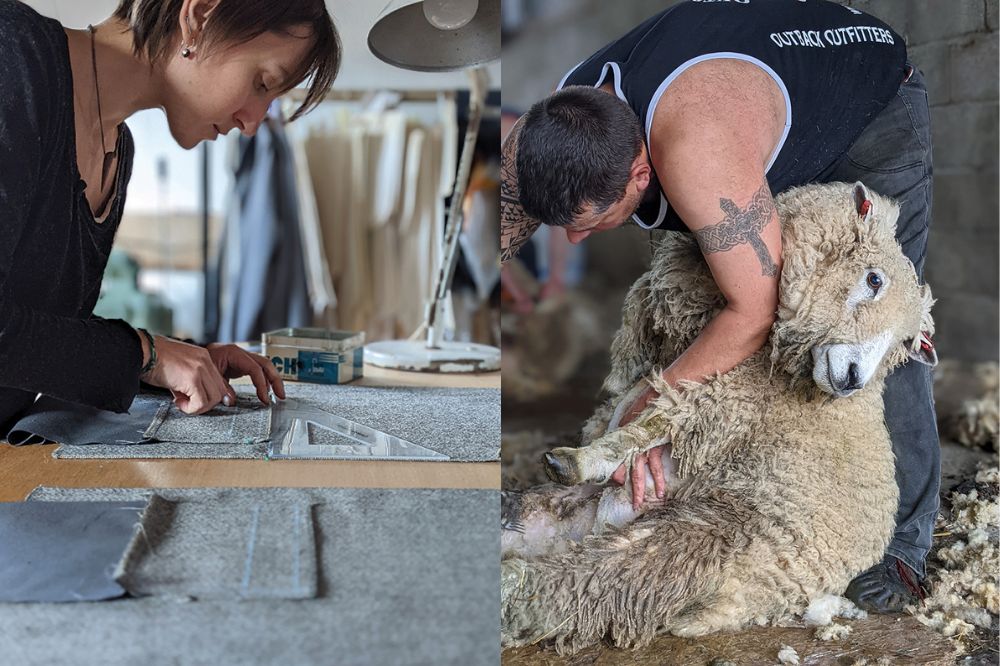
Brought together by a shared passion for the materials of the Welsh landscape – namely wood and wool – they have, between them, professional capabilities in clothing – pattern cutting, design and production, timber framing and milling, fine joinery and large and small scale metalwork.
It’s their clothing that has captured many an eye of late, though, as their pieces which are made in limited runs consistently find willing homes, with buyers keen to do better with their wardrobe choices, and benefit from classic and practical designs that can not only turn heads, but don’t get lost in the ever-changing tide of what’s in or not this season and next.
The small team have skills and passions overlap each other, often informing and inspiring each others’ work, and it’s their passion for design, design history, for makers, and for Wales itself, that make their clothing some of the most special on the market at the moment.
Nation.Cymru spoke to Emily from Carpenter and Cloth ahead of the company’s appearance at Craft Festival Wales, where we discussed the re-awakening Welsh textile industry, the value of buying homegrown clothes built to last, and the ‘end of excess’.
Tell us what led you to go it alone and create your own clothing company?
I came to clothing through a craft rather than design route. For me, it has always been about the making, the purpose and the story.
I grew up watching my mother spin and knit, learnt basic dressmaking skills from her and then submersed myself in antique and tribal textiles. When I left college, intending to study fashion at university, I found that when I got there, I actually could not ratify a career in the fashion industry. The colossal scale of it, the who’s-who, the fickle trends and the brutal competition; all in the service of run-away consumerism… I legged it!
Instead I studied Surface Pattern Design BA at Swansea Metropolitan – mostly because this course had open access workshops and I could explore a really diverse approach to making. But still my work swung back to the exploration of textiles as clothing, second skin and ancient social companion.
I think some people have a drive to ‘make’ that is deeply linked to their ability to access contentment. I knew that if I was going to justify making more of anything in a world that was already over-saturated, I had to be sure that it was really worth it.
So, I started small. I needed to be involved in every step and know that there was a need for the things I was going to produce. I wanted to offer the option of clothing as craft, to find meaning through clothing in a way that the scale of industrialisation has made impossible.
So many of us are turning away from fast fashion now, and waking up to the hidden impacts of paying less from places where clothes are manufactured out of sight out of mind – was there a particular issue that made you first take notice and want to do things better and slower?
It is very hard to pick out one thing, but I remember researching Uzbek textile traditions for a college project and learning of the ecological catastrophe of the Aral Sea. I think this was one of my first glimpses into understanding how the competition for economic success through global trade generates a total disregard for traditional, slower ways of living which, alternatively, so often nurture a people’s connection and therefore safeguarding of the land.
And on that note, doing things in Wales… Wales has lost much of its once thriving weaving industry, with mills dotted across much of the country at one point, do you think it’s possible to turn the tide?
There is currently more demand for the small Welsh mills that we have left than they can easily handle. I know that there are plans in motion to try and expand capacity, so perhaps the tide is already starting to turn…
However, we did hit pretty much rock bottom last year so it’s been a bit nail biting!
The challenge is making Welsh produced textiles competitive in the global market; all the time that there is competition from cheap imports and synthetic fibres, it will be hard to convince the masses that it’s worth paying 4 times the price for something produced on shore and small scale. That said, Wales is small, and we don’t need everyone to buy Welsh textiles for it to work – we just need enough.
Flannel feautures heavily in your designs, was this a natural choice for you to run with?
I wanted to tell the story of our textile history and traditions through my clothing, but also wanted to nurture an ongoing connection to our landscape. I don’t think its possible to really embrace the wild Welsh winter without a good layer of wool, so yes, flannel was absolutely a natural choice!
These days, the term ‘flannel’ is used pretty broadly. The fabric I use under the term ‘flannel’ is not as dense as it would have been historically as we have become used to lighter weight, more supple and comfortable clothing.
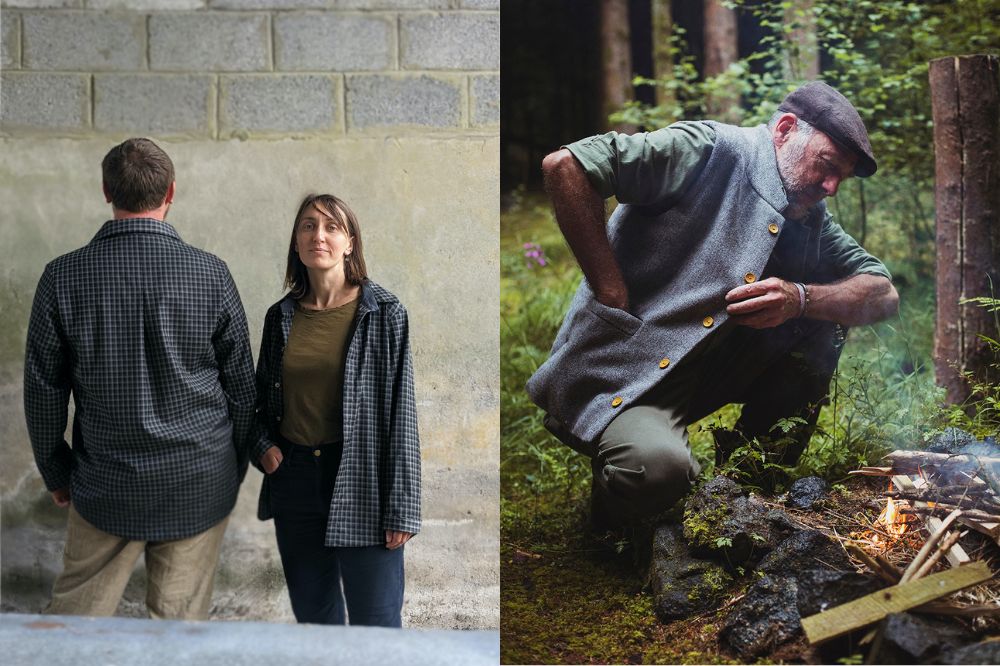
The original flannel cloth was woven in the South West of Wales from worsted yarns to create a dense weave and then brushed to raise a nap for softness and extra warmth. If you’ve ever seen an old army shirt from WW2 you’ll know the stuff. It was extremely popular, being very warm, breathable, and durable. Unlike the heavy linen or the finer imported cottons, it kept you warm even when it was wet – a vital characteristic working outdoors in Britain.
Your pieces are timeless and versatile, and made with the most techincal properties imaginable as designed by nature – what guides your making process? And who is involved in the design and creation stages?
Design time for me is incredibly precious and hard to come by! I don’t change our designs often as its a huge investment. There is a limit to how many designs I can offer at a time and I want to keep things available for as long as possible to give people time to save up for things they really want.
I want my garments to be worn often and for a long time! They have to look good even when they’re old, which means top quality materials that develop character. I keep construction simple, partly to try and keep cost down but also to make it easy to adapt sizes for particular requests as well as keeping them easy to mend. Once I feel happy with an idea, I sample it and gather opinions from friends and family – sometimes giving sample garments as gifts in return for feedback! I like to see how they wear and how different people use them, but before all of that, I ask myself, ‘would owning this garment actually make my life better?’
I’ve personally written about my take on not only the processes behind how we get our clothes, but also on the ‘cheapening’ look they give us as people, as our identity. Of course, I own tracksuits, hoodies and the like, they’re comfortable as can be, but I look back on old photos of our ancestors and everyone looks so wholesome, even the dirtiest of workers turned out smart and with pride – for me your clothes offer an answer to that – they look the part, but they’re designed to last and to be mended.. And taking it a step further, when you think of a nation, you think of national dress.. I often wonder what our current dress says about us as a people (interject here, it’s an indirect question haha)…
I’m not sure that modern clothing does say much about us as a nation. Fashion is now such a massive global industry that we have homogenised into one big consumer nation; the biggest retailers sell across most of the world, with the excess spilling over into countries with low GDP until we all look the same with no idea how our clothing was created!
The photographs of our ancestors that you mention show people that owned probably only two or three sets of clothes and they had to look after them because they were so costly to produce. Having ones photograph taken was a special occasion so they would certainly have made a special effort to wear their better set clothes.
Although wealthy people were able to have clothes made for them, poorer people – making up the majority – would have had to find the time to make their own. Materials were very expensive because the machinery was slower and the many processes involved in using natural fibers required a great deal more hand work. You would rightly feel proud of the good clothes that, in precious snatches of time, you had cut and crafted to fit from fabric that you had saved up to buy.
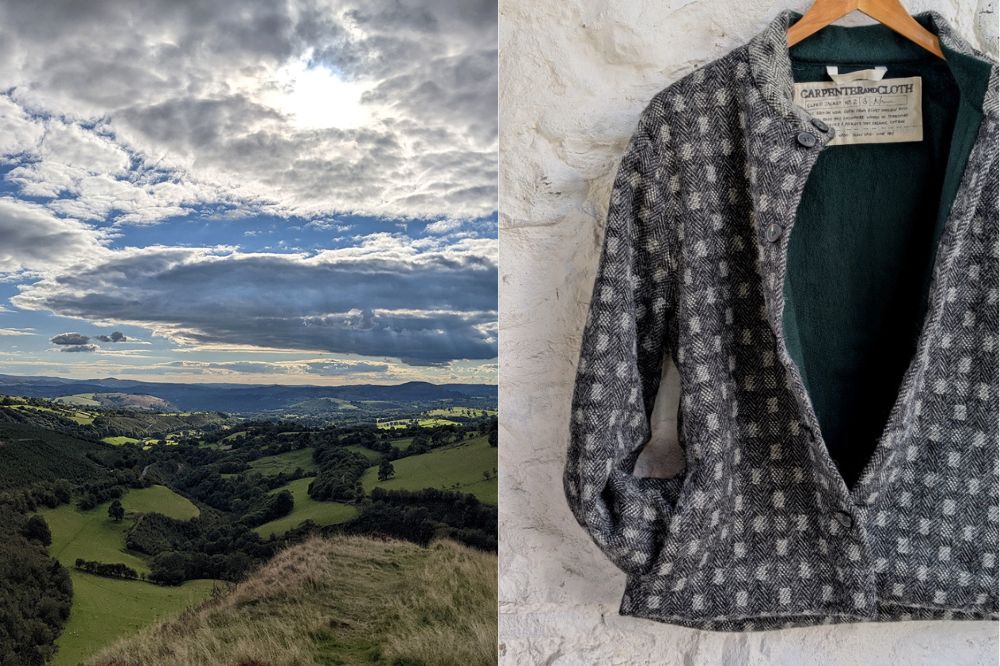
Clothing has become relatively cheaper and cheaper, to the point where it has lost its value – who cares about a £3 t-shirt from Tesco? If the materials we use to present ourselves to our communities and the world hold such little value, how does that impact how we feel about ourselves and our-self worth in the eyes of others?
I think that in the past, there was more formality generally in social conduct, which we feel was very much reflected in peoples clothing when compared to today. Class structures have blurred and so too has the language of clothing. We still dress up in fancy clothes for special occasions that mark cultural milestones like weddings, funerals and graduations as an aid in giving the event greater significance. As our day to day interactions have become increasingly informal, so too has our clothing. Perhaps our access to cheap clothing and more comfortable materials has played its own part in this social shift.
As well as your clothing, you write a blog with background information on the mills, the materials, the inspirations, you can feel your passion.. where did this love of clothing, of ‘indigenous’ fashion come from?
Food, clothing and shelter are fundamental human needs. The shape of these needs evolves from the various constraints and abundance offered by a particular climate and geography, forming the foundations of culture. I have always taken comfort in a sense of belonging to the landscape I live in. The fibre that is produced and processed in these hills is a tangible connection to the land, the seasons and the story of our place within it. These things give meaning to my being here. Working with and wearing the textiles of this landscape nurtures my connection to it.
It’s not just textiles you work with either, the company is a true marriage of your passions with hand made wooden pieces for sale alongside mittens, scarves, and more -was this a natural decision for you both, to combine your skills and passions?
I conceived of ‘Carpenter & Cloth’ long before I was able to scratch together any time to actually put into it! When
I had my first daughter I stepped away from the womenswear collaboration I had been involved in, but by the time she was 2 years old I needed something to work on – even at a snails pace! I needed my work to fit around family life rather than the other way around and I wanted to create something that was really honest; true to us.
I was initially quite unsure about whether it would work at all to try and promote carpentry alongside clothing – it didn’t seem an obvious pairing at all! But when I started to whittle down to what was fundamentally important to both of us in our practice, I saw the common ground: using traditional skills to create clothing and shelter from the materials of our landscape.
We both hold a reverence for the materials we gather and design pieces with a simplicity that allows those materials the centre stage. We both endeavor to craft pieces that will endure, both technically and in the hearts and lives of the people who experience them. Being able trace the journey of our materials allows us to offer a real connection to the land, which, ultimately connects all natural materials. So, wood and wool became clothing and shelter became Carpenter & Cloth.
You have a limited run of clothing at first glance, but the textiles work across the seasons and are ideal for ‘capsule wardrobes’ – we just have too much stuff don’t we!!! Do you have plans to introduce any other pieces though? (Can you reword that maybe…)
I think there is great sense and satisfaction in doing one thing well and I want our local Welsh wool to be the star of the show! This means designing pieces that make the most of the intrinsic properties of our tweed and demonstrate its value in everyday life. I want our clothing to be practical, versatile and really well loved! It would not only be hypocritical to change our collection every season, but also, as a single designer and maker, completely impossible!
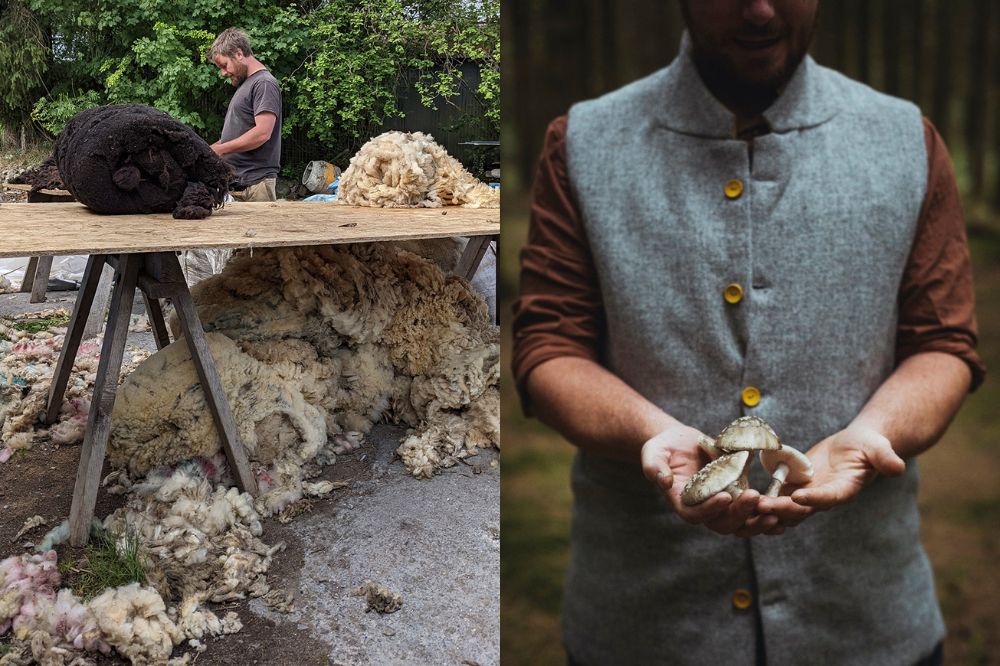
That said, there is a gradual evolution of pieces as fabrics come to an end and designs are tweaked to accommodate new ones. Along with our absolute staple, the Cambrian Gilet, I always try and offer an over-shirt in wool or Irish linen, a jacket and the essential winter mittens and scarf.
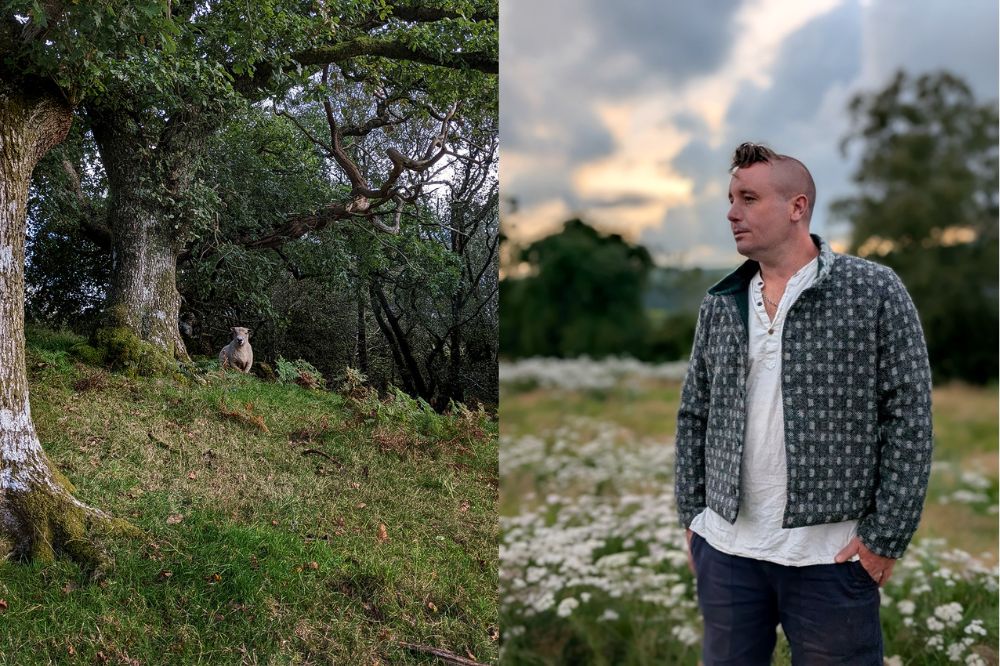
Our current flannel-lined linen jacket is now almost gone, so I have been working on a new wool jacket, which I am excited to say will be available this autumn! It is a really warm, easy fitting jacket that, like all of our designs, straddles the camps of smart and casual. The Elvet Jacket, as you might guess, uses a British wool fabric from Elvet Woolen Mill, which is currently undergoing massive restoration. It is so exciting to see the energy and investment being poured into this old mill and the potential for producing more textiles again in Wales. The purchase of the cloth for these jackets is directly helping to fund the installation of a very old Pemberton loom, which will at some point, be perfect for producing some shirt flannel…
What would you say to people who have yet to be convinced by Vivienne Westwood’s call to buy less, buy better?
I think this period of excess is coming to an end, whether people choose it or not. If we are going to move towards a more sustainable future, we need to alter our value structures as a society, prioritizing experience and balance rather than using quantity and acquisition as a measure of success. We need to challenge perceived entitlements, but it takes time to shift ingrained ideas like these. We need to teach our children to question, to be able to think processes through right from start to finish and know that their choices are their power.
If we stop and think about why something is cheap, the answer is never good. Those polyester leggings and dish sponges are cheap because they are made from a by-product of the fossil fuel industry. They are dyed with chemicals that harm the natural environment, and every time you wash them, micro plastics enter the water system for you and billions of other organisms to consume. Would you choose to eat your dish cloth? That cotton t’shirt, that is not certified organic, means that it was definitely grown with synthetic fertilizers on ruined soil and sprayed with neuro-toxic pesticides. If the insects are gone, everything else will follow. These are facts. This is what your purchase power means.
I have a strong urge to keep this light and positive because I don’t want people to turn away, but if we don’t face the hard things, how can we expect change?
Craft Festival Wales
Carpenter and Cloth will be taking part in Craft Festival Wales, which returns to Cardigan Castle next month, following the success of the inaugural show last year, which saw over 3,500 people flock to the event over three days, picking up Ceredigion’s Event of the Year.
Backed this year by the Welsh government, the festival will showcase 100 professional makers from across Wales and the rest of the UK , all selected by an independent selection panel based on the quality and originality of their work.
They will show their wares alongside other makers from across the UK will be exhibiting handmade fine jewellery, silver, wood and metal, ceramics, glass, furniture, paper and print and textiles.
Other features of the event this year include a programme of craft workshops for adults to pre-book online, ‘The Capital of Craft’ talks by accomplished makers, authors and broadcasters, a sculpture trail through the Castle gardens, live music and delicious local food and drink, plus, a free children’s craft tent which returns with an action-packed programme.
Visitors can pre-book a craft workshop from a programme lead by ‘Make it in Wales’ including printing, marbling and macrame. Full details online.
Throughout the three-day event, the eclectic live music programme highlights the wealth of great talent in the area including Mari Mathias, Bwca, Dewin, young singer songwriters Chwaer, Lowri Evans and the Disclaimers featuring Brychan Llyr and Gareth Davies.

Other entertainment features live theatre from Hijinx, pioneers in promoting opportunities for actors with learning disabilities and autism, street entertainers, and storytelling from contemporary to the Mabinogi tradition in both Welsh and English.
Craft Festival Wales also extends out across Cardigan town with the Craft Trail at six venues where original work commissioned by Oriel Myrddin from Carmarthen will be exhibited.
The Craft Trail, inspired by Welsh Folklore will feature emerging new talent at Mwldan, Awen Teifi, Crwst, Albion, Walden Arts and Studio 3. Also, a free-entry exhibition of fine textiles and willow, entitled Woven will be hosted at Canfas Gallery.
And for fans of Carpenter and Cloth, the new Elvet jacket is set to make its first appearance in the wilds. And believe us, it’s very, very special.
Tickets to Craft Festival Wales are now on sale. Buy tickets online in advance and save. Adult tickets £8, children enter for free with an adult ticket holder. Three-day weekend ticket £15.
For information and full details of exhibitors, workshops and other features, visit https://www.craftfestival.co.uk/Wales and in Welsh https://www.craftfestival.co.uk/cymru
Find out more about Carpenter and Cloth here.
Support our Nation today
For the price of a cup of coffee a month you can help us create an independent, not-for-profit, national news service for the people of Wales, by the people of Wales.


