


Cast and creatives discuss ‘devastating’ Welsh short film, Something Pointless
Stephen Price
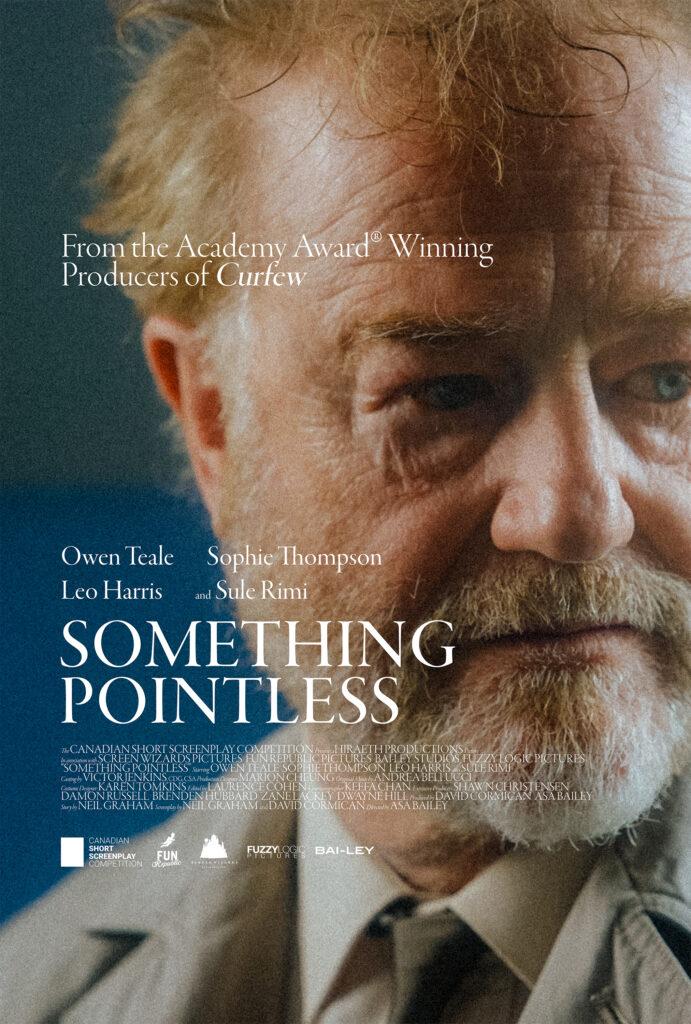
The cast and crew behind a Wales-shot short film starring Game of Thrones’ Owen Teale which receives its UK premiere this month have come together to discuss the ‘quietly devastating’ production.
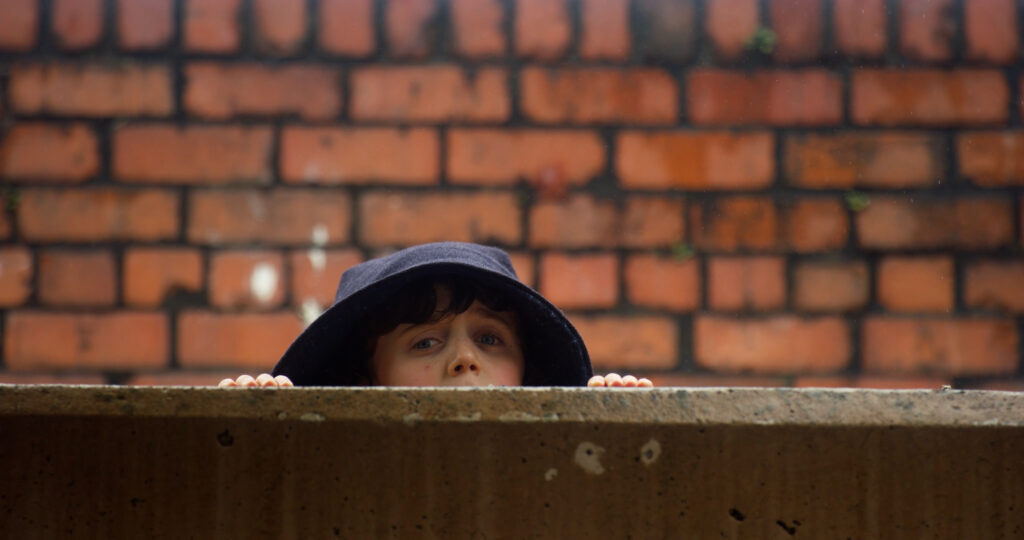
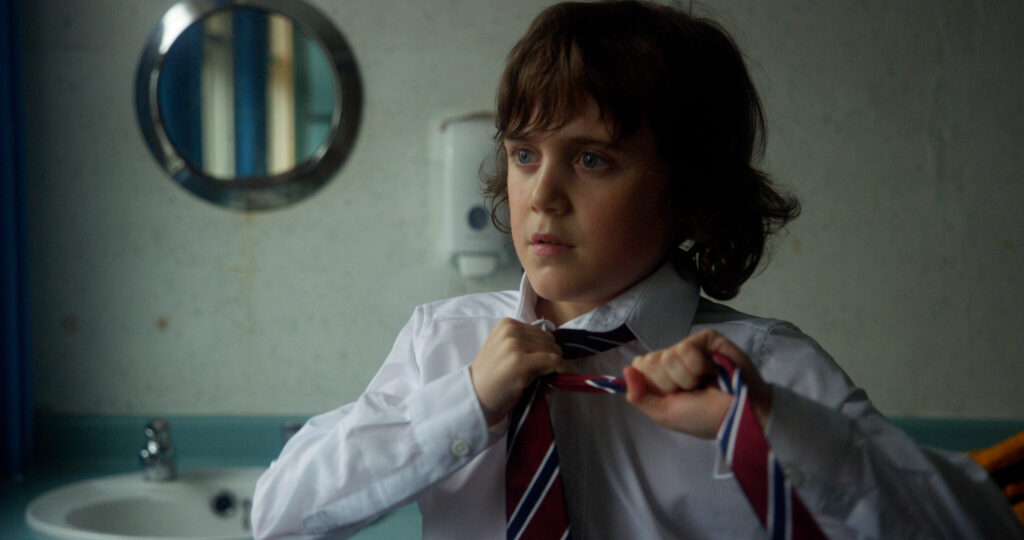
Something Pointless follows an intergenerational bond that forms between a lonely, bullied boy and an elderly man whose quiet, pointless daily ritual becomes an unlikely act of defiance against insignificance.
From the Academy Award-winning producers of Curfew comes a moving Welsh short that has already begun turning heads on the international circuit.
The film world-premiered at the USA Film Festival in Dallas this spring, and American critic Jeff York — who’s covered the Academy Award shorts for 15 years came out of that screening calling it “a genuine contender for such accolades.”
Ahead of its Carmarthen Bay Film Festival screening, the cast and key creatives behind Something Pointless — a film about an old man, a lonely boy, a desolate wall, and a handful of painted eggshells — for a conversation that is, in every way, the opposite of its title.
For those who haven’t encountered the story yet, can you give us the heart of it?
Asa Bailey (Director, Producer): I came across the script thanks to my producing partner David (Cormican), who runs a short film competition in Canada. He came to me with it and said he’d like me to have a look at it. When I read it, I was first struck by the kind of raw nature of it — the sincerity. The very unapologetic sentimentality. And the kind of human nature of it. It was almost like a story you’d heard before, because it was kind of so human. A redemption story in a way — how small actions can have massive implications that you just don’t know about.
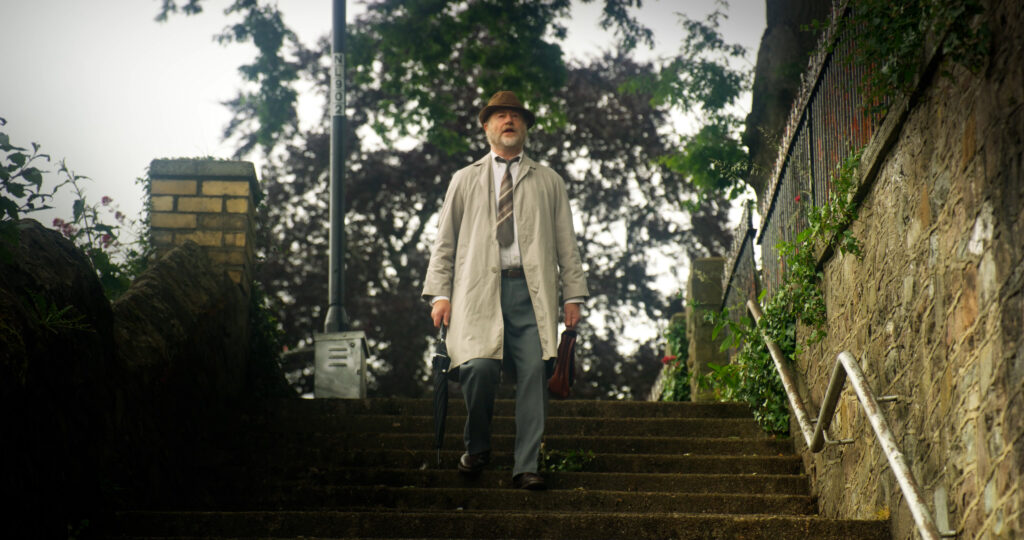
Owen Teale (Aldous Evans): It is, at the heart of it, a great idea. You know why it’s there. What the point is. Something Pointless, which might fulfil — in your life — to become something point-full. Our lives are messes of grey, and we sort of anchor for a bit of black and white at times. And the script — this is a little idea of how you might do that. It’s a very wise, beautiful, touching script.
Sophie Thompson (Eleri Evans): I just liked the fact that the old man is doing something he doesn’t really understand. And yet it unlocks something for the little boy — through what seems like a subconscious act between them. That’s what art is very much about, isn’t it? You don’t always understand it. It doesn’t always have to have a point. And I think we’re raised in a society where things always have to have a reason, a value, a purpose. That’s exactly what this film pushes back against.
The script began its life winning the Canadian Short Screenplay Competition over a decade ago. David, how did it eventually find its way to Wales?
David Cormican (Producer, Co-Writer): The script for Something Pointless came to me via the Canadian Short Screenplay Competition, which is a script contest I originated, fifteen or so years ago — to find the best short screenplays around the world. And Neil’s script ended up winning first place. I want to say it was 2011. I could be wrong — might have been 2010 (it was). The idea behind the competition is we make one of the winners each year. It’s taken us a few years to get to this one. We came close several years ago — it would have been a much different project because we would have shot it in Canada with a different team and setting. I’m really glad and grateful that we’re actually shooting it here in Wales. The characters, the cadence, the dialogue, the settings — it just brings a richness to the material that I don’t think could have ever been achieved having it shot in North America.
Usually, it always comes down to money. Do you have it? Is there enough? Even if you have it, it’s never enough. My career also shot off at that point — I was really busy across a bunch of feature films and TV series and just did not have the bandwidth to go back to the short films. Then, over the last year or so, I was in conversations with a new investor who wasn’t quite ready to step into feature films but asked naively — ‘is there anything else I can do on a smaller scale, that I can sort of see the whole model from soup to nuts?’ And
I was like, oh well, I’ve got a great short film I’ve been dying to make for years. And it was always in the back of my head that this script could go the distance and be something really remarkable.
He stepped up, and then something rather serendipitous happened: his wife is also Welsh. Her family is from Newport. So what started as a practical decision to move production from Canada to Bala down to just outside Cardiff in Newport became something almost inevitable. One wonderful happenstance accident after another. I’d never heard of Newport prior to all of this. And now here we are, falling in love with it.
Asa, you’re known internationally for high-end virtual production and technology-driven work. What made this the project where you stripped all of that back?
Asa Bailey: The majority of what I get called to do for studios tends to be all about the technology and the advanced ways that we do things. My art is different to my job. Do you follow? And with this, I naturally sort of fall back on a time when the world was simpler. There was a comfort in things. The days when media was simple, when storytelling was much more simple. Because it is a simple story. It’s a very simplistic, human story. And I didn’t want to dress it up.
With Something Pointless, I wanted to try and really keep it crafted. Human. And honest to the script. Because that’s what the script was — a tremendously human sort of story. To try and hide that with too much style, or too much garnish around it, felt wrong.
I also have to be honest — there was a feeling I carried through the entire production. A worry that this might be one of the last chances I get to make a human, grounded film. The world I inhabit professionally is racing toward the technological. And working with real actors, in real locations, letting things breathe and be spontaneous — it reminded me that machines are never going to be able to replace that. Hopefully making this film has proven that to me.
Neil, Something Pointless is proof that patience pays off for a screenwriter. What would you say to writers who are waiting on their work?
Neil Graham (Writer): I think I’m living testament that you should just submit your work and get it out there.
I think one thing for screenwriters is — you have to be patient. The history of film is littered with short films and big films that have spent a long time in development or in production. So I think the fact that Something Pointless is going to make it to a cinema screen, having been written many, many years ago, is definitely something.
The standard advice that I kind of agree with myself on, and what I’m going to try to live by, is just write it down. And then — who knows — maybe one of these days you’ll have that finished script. And if you do, submit it. Because if you don’t put your stuff out into the world, you’re never going to know. There’s no downside to submitting. And if you don’t win, or if you win and then your film ends up in development for many, many years — don’t lose heart.
Owen and Sophie, how did the role land with each of you?
Owen Teale: I read it and I wanted to do it immediately. It’s a great idea at its heart. And then I found myself thinking about what was behind the writing of it in the first place. When I prepared for the character, I thought deeply about my own life — as I would with any part. I had to find the Aldous Evans in me, which I’ve loved doing. And I hope — when my own last few slugs at life come around — I can adopt a little bit of Aldous. I may have genuinely learned something from him.
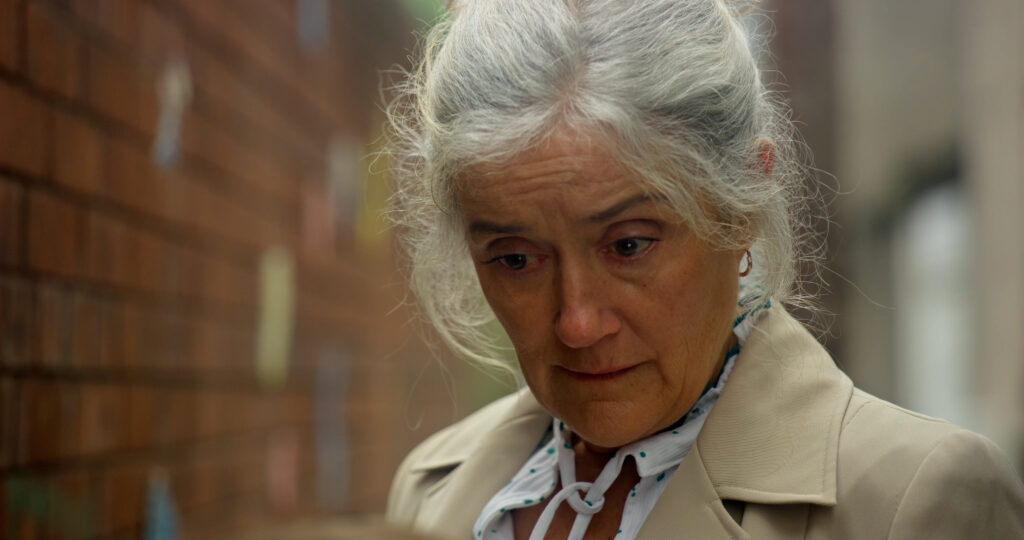
Sophie Thompson: I liked it because it was so odd. And to Eleri’s particular quality — she’s someone who just lets it all unfold. She allows the old man to be what he’s being, without questioning it in a restrictive way. And as it happens, she becomes part of passing the baton to the boy. That felt really special to me. Also — and I will say this — I’ve never had the opportunity to work in Wales like this before, and something about the language, the timbre, the cadence of it gets into me immediately. I think somewhere in a past life I must have been a bit Welsh.
What drew the production to Newport specifically, and how did it feel working on home soil?
Keefa Chan (Cinematographer): For me, Wales is home. And so there’s always something different about shooting here — a kind of responsibility, actually. These streets, these buildings, these communities. You want to do them justice. The locations we found in Newport had an authenticity that I don’t think you could have manufactured anywhere else.
Owen Teale: Newport isn’t a place that always gets the spotlight — but when you look at it properly, it has a real texture. And that texture is exactly what this story needed. For an old Welsh man like Aldous to exist believably, he needs a world around him that is believably Welsh. He couldn’t have come from anywhere else.
Amy Morris (Line Producer): The director had a very clear sense of what he wanted from the locations — original features, things you wouldn’t find in the average modern home. So we were looking at period properties, Victorian architecture, beautiful window shapes. We were fortunate enough to find a wonderful Victorian school that let us in to film, and the community there was just remarkable. Genuinely generous.
Marion Cheung (Production Designer): For me personally, working in Newport felt very grounding. The production was asking me to create something rooted in a place, and the place itself kept offering things. Objects at car boot sales. The school. The wall. I’d wander and find exactly what I needed. It had a spirit to it.
The eggshell mural is central to the film’s imagery. Marion, can you tell us what creating it actually involved?
Marion Cheung: When I first read the script description — “create an incredible, breathtaking piece of art” — I won’t lie, it struck fear into me. It’s the sort of instruction that could paralyse a creative person. But once Asa and I had worked through the mood boards and developed the visual language together, it became more manageable. Just about.
The challenge was how to make something that looked genuinely like painted eggshells on a wall at scale. You can’t collect enough actual eggshells. So we brainstormed with the art team, and eventually we landed on the idea of 3D-printed stencils — each one unique, each one shaped from moulds I’d made by hand to the right scale. Then we mixed a paint from acrylic and flour, thick enough that when you pushed it through the stencil, it had that raised, organic quality of a shell. After each pass, you had to wash the stencil thoroughly before moving it, or it would smudge. The drying time alone made the whole process extraordinary — it took myself and three others more than two weeks.
And then the plan changed about a week before filming. Originally we were going to drop a smaller version in digitally in post. Then: full-size mural, physical, on the actual wall. On set. The whole crew pitched in to install it. When it went up — honestly, it did look breathtaking. I say that with complete humility, because it was entirely a team effort.
Keefa, the film has a very particular visual feel — nostalgic, warm, slightly out of time. How did you and Asa arrive at that?
Keefa Chan: Asa and I had conversations early on. I showed him my showreel, and there was a particular shot he liked — a shot from a film I made in Italy, using a lens I made myself. He particularly liked it because it had a very natural and very shallow depth of field. That led us to conversations about shooting with a tilt shift lens. But Asa was also open to some level of experimentation because he wanted to capture something that has a nostalgic aesthetic. So we talked about films — references to the eighties, and particularly that period, the seventies. And that led us eventually to settle on the zoom — the Cooke, in the 19-to-40 and the 30-to-95.
We specifically chose the zoom because we wanted to use the style that was very prevalent in the seventies. To create a homage to that period.
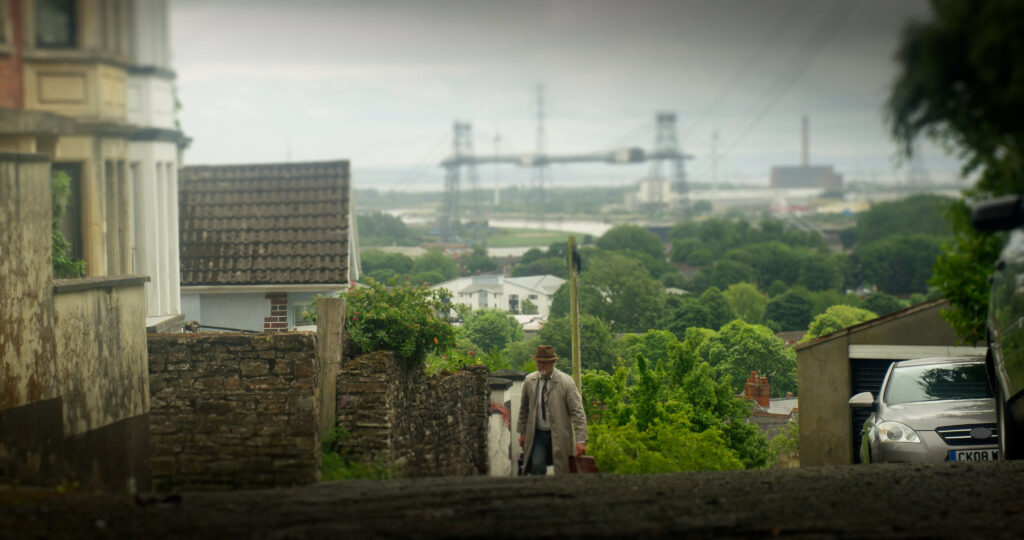
And then there was Owen’s costume — very conventional, traditional sixties, seventies type. One reference that came up for his character was Jacques Tati. When he does his sequence walking in a scene. That way of being slightly at odds with the world, but with such dignity.
We shot on the RED Helium, open gate at 8K full frame, because the objective is for this film to be seen on a cinema screen. We also had remarkable support from Godox with lighting and Cook Optics with the lens loan — without which, honestly, we couldn’t have achieved what we did.
The most technically demanding sequence was the dream scene in the boy’s bedroom. We built a water tank — about 140 litres of water taken up to the top floor of the house — and shone light through it to create a shimmering effect on the ceiling. The idea was that he imagines his room flooding, with shadow creatures on the walls and a galaxy of stars above him. We had to use an iris pull as the camera tilted from the water’s surface up to the bed, managing the exposure shift between what’s in the water and what’s above it. It took a lot of testing, but I think we got there.
Marion Cheung: I can tell you what the shadow monsters involved from my end. I made Indonesian-style puppets — plastic cutout shapes on sticks, even cereal packets on sticks — and we tried all sorts. None of it quite worked. Then I made tin foil hands and stuck them on an artist’s mannequin. Getting closer. In the end, we found a large glove with long fingers and that turned out to be the answer — because you could actually put your hand inside it and feel what you were doing. And for the starry sky, Keefa and I were quite literally rolling around on the floor of a studio with glittery dresses, moving them while he shone lights in different directions. Which is, I think, one of the more unusual things I’ve done professionally.
Amy, line producing is often the job that holds everything together when everything is trying to fall apart. What were the biggest battles on this one?
Amy Morris: How many do you want? The timescale — we got the green light and we had two months to make it all happen. We didn’t have enough in the budget for a location manager, so that was me. The railway station sequence — right up until the very last minute, we were all planning to shoot on a live platform. And then literally the day before, we were told by our insurance company that they’d changed their mind. So we had to pivot overnight and find another solution — hire a bench, film outside the station. So yes, lots of different things. But we worked together and we got there.
The happy accident was the extras. We needed about thirty for a classroom scene and were originally going the traditional route — drama schools, drama clubs. But in the end we worked with the school children at the school itself — children with no drama experience whatsoever. And they were fantastic. That for us was a happy accident.
What do you each hope an audience takes away?
Owen Teale: The story. I hope that I don’t get in the way too much of a great story — that they don’t dwell too much on the sense of performance, that they leave with the story in their mind. That’s my job. And the story is genuinely a beautiful antidote to the world. The noise, the constant news — people saying things for the sake of saying them just to get airtime. The transactional nature of life. This is a beautiful antidote to that world. It’s a tiny little idea that can be expanded upon and will improve the lives of people who watch this film.
Sophie Thompson: I hope they take what I took, which is that creativity is — well, it’s a healing and necessary and wonderful and inextricable and unexplainable part of life. And it should never be underestimated.
Asa Bailey: I want people to watch real actors, real people making a film. I think it’s really important that we still have this level of human storytelling. And I want it to make them think — and for them to realise that sometimes doing something pointless is the point. It’s really easy to just be pushed along on the routines of daily life and everything we’re bombarded with. So sometimes maybe people could just look around and think — I’m going to do something. It could be as simple as picking up a piece of litter and putting it in the bin. Don’t walk past it. Just do something that’s selfless and pointless. Just for no reason. Who knows? Maybe see what happens.
And also — the writer had something to say with this script. We have to be grateful for that. For the words on the page. Because that’s where it originates from. I’m just a simple vessel to bring it into a reality of some sort, to record it. What Neil put down was truly beautiful, sentimental — and nowadays very, very rare. It came from almost a sentimental time before where we are now, where everybody’s worried about their agenda, arguing about stance. This film has none of that. It’s just pure human sentimentality. Bullying is a problem. Family breakdown is something many people have had to face. Illness, love, loss. It had it all in such a small, compact, beautiful little form.
David Cormican: Neil’s original image — an old man affixes eggshells to a wall, and it inspires the confidence of a boy who’s been shattered — has been seared into my brain for fifteen years. I fought for it at every stage of development. And seeing it realised on screen, in Newport, Wales, with this cast and this crew — I think we’ve genuinely made something that resonates and will hopefully go the distance in peoples’ hearts.
Something Pointless premieres Tuesday, May 19 at 10:15am at The Main House cinema, Ffwrnes Theatre in Llanelli as part of the 15th Carmarthen Bay Film Festival.
Taking place 18-21 May, Carmarthen Bay Film Festival champions the very best in independent film making and film-makers in Wales and from around the world. Find out more here.
Support our Nation today
For the price of a cup of coffee a month you can help us create an independent, not-for-profit, national news service for the people of Wales, by the people of Wales.
Get more trusted Welsh news
Choose Nation.Cymru as a preferred source in Google News to see more of our journalism.


