
Champions as an era ended: Bridgend and the birth of regional rugby
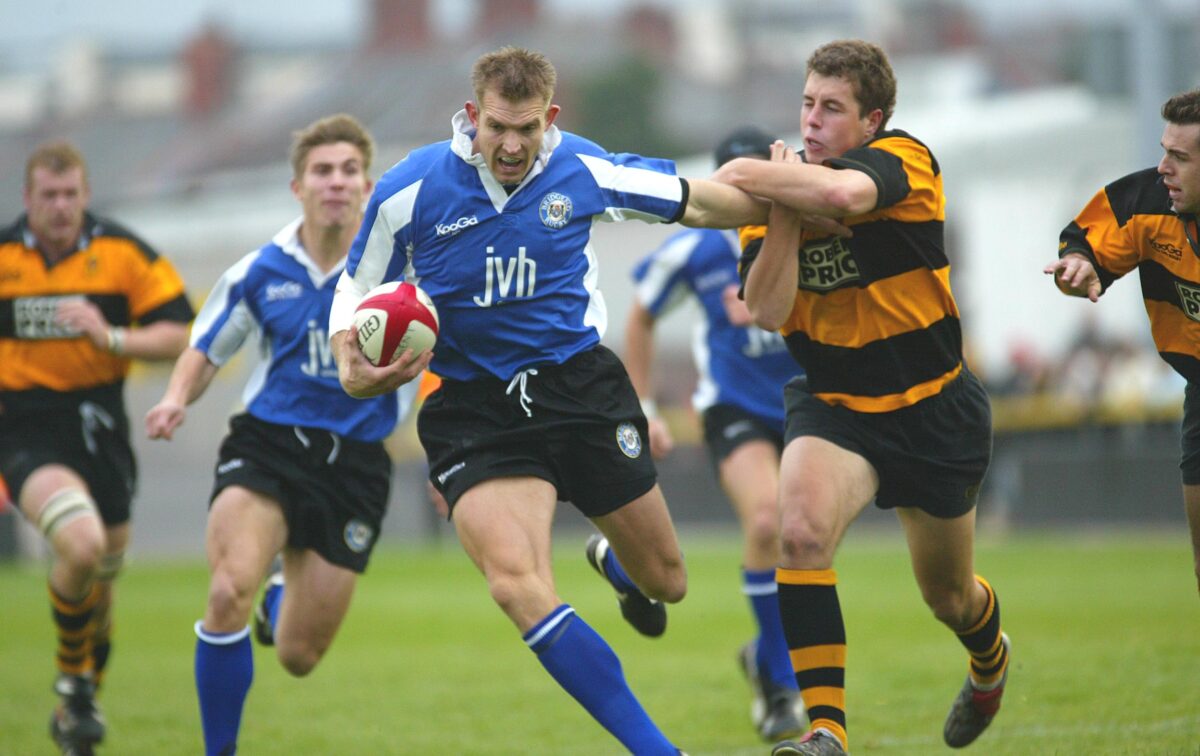
As Bridgend won the 2003 Welsh Premiership, Welsh rugby was preparing for regionalisation. With contributions from David Moffett and former Bridgend players Craig Warlow, Shawn van Rensburg, Cory Harris and Maama Molitika, Andrew Jones revisits the negotiations, uncertainty and memories of a changing game.
This is the first of three articles revisiting Welsh rugby between 2002 and 2005, from the birth of regional rugby and the closure of the Celtic Warriors to Wales’s Grand Slam.
In the 2002–03 season, Wales’s leading professional rugby players represented clubs such as Bridgend, Pontypridd, Cardiff, Neath, Caerphilly and Llanelli. These were established teams with their own grounds, supporters and rivalries. Financial pressures were forcing Welsh rugby to reconsider whether it could continue to sustain nine professional clubs.
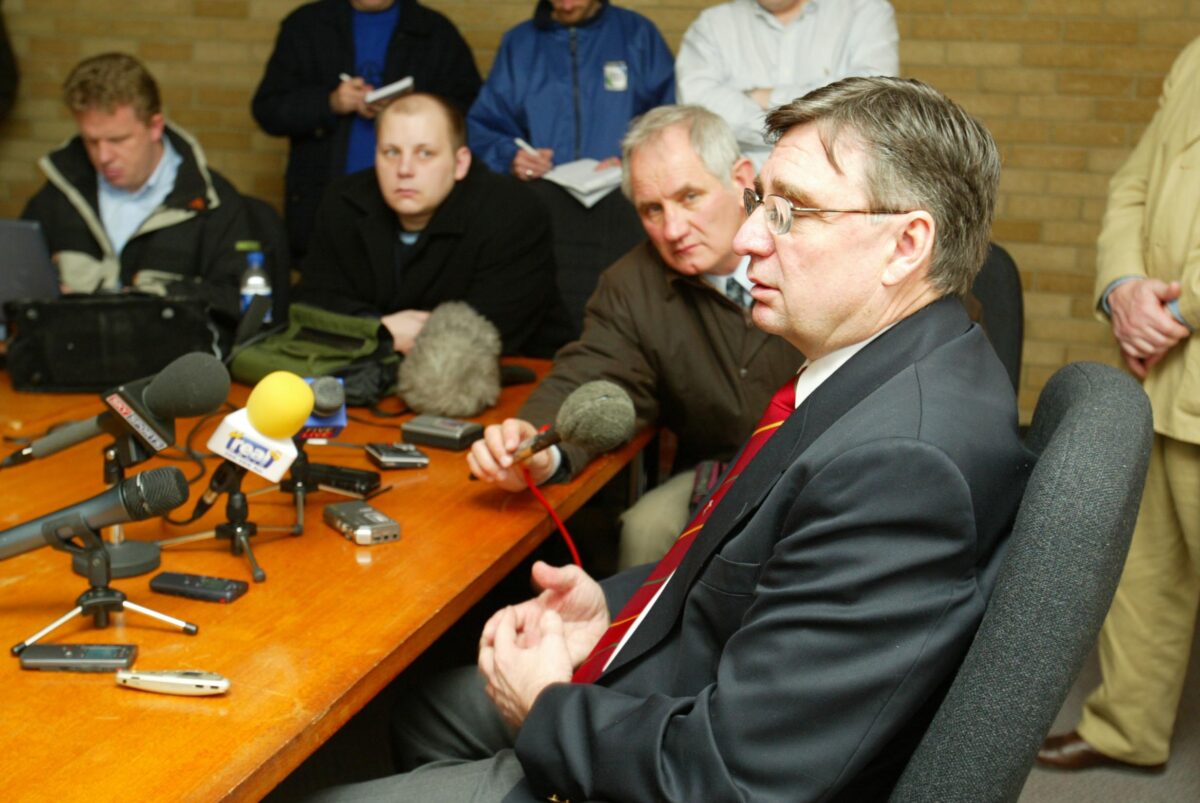
David Moffett, the Welsh Rugby Union’s then chief executive, recalled how urgent the situation had been when he arrived in December 2002. “It was beyond urgent. The whole game was in danger of collapse. Both on and off the field, especially off the field.” The WRU was carrying debts reported at around £60 million, largely linked to the construction of the Millennium Stadium, which had opened in 1999.
The answer would permanently reshape the game. From the following season, five professional regional teams would take their place, with some clubs retaining their independence and others joining forces. Bridgend would combine with Pontypridd to form the Celtic Warriors, for example. For players and supporters, the change meant uncertainty over contracts, teammates and loyalties built up over generations.
As those negotiations unfolded, Bridgend were pursuing the Welsh Premiership title. Their season would become both a sporting achievement and a farewell to their place in the existing professional structure.
Building a winning culture
Bridgend’s title challenge followed a ninth-place finish in the previous season’s Welsh–Scottish League, a competition involving leading clubs from both countries. Only Ebbw Vale and Caerphilly had finished below them. Outside-half Craig Warlow remembered Allan Lewis, who had taken over as head coach during that season, bringing “a real freshness” to the team. “There comes a change in perception of where the club’s going based on the people they’re signing.”
Alongside Gareth Thomas and Dafydd James, Bridgend’s backs included Sililo Martens, Huw Harries, Josh Taumalolo, Gareth Cull and David Bishop. The forwards included Andy Moore, Phil Booth, Jon Thiel, Chris Horsman, Christian Loader, Andrew Joy and Gareth Williams, with Richard Bryan, Shawn van Rensburg, Maama Molitika and new signing Cory Harris among the back-row options.
Lewis’s preparations extended beyond the players. Before the season, he brought them and their families together for a barbecue. “His philosophy was that if you’re happy at home, you’re a happy player, and you’re happy on the field,” Harris recalled.
Van Rensburg remembered the respect Lewis commanded and the trust he earned, even when selection decisions were difficult to accept. “When he spoke, you listened,” he said. “So we bought into his plan.” Lewis’s preparation and emphasis on putting the team first would later shape van Rensburg’s own approach to coaching.
“The team culture was great,” Molitika recalled. “We all got on.” He credited Lewis with getting the best out of players individually and as a group and making them want to play for each other and for him. He also praised forwards coach Richard Webster, describing him as “hard-nosed” and crediting him with preparing the forwards physically and mentally for matches.
Warlow recalled the momentum they began to build: “It just felt like we hit the ground running, we had a decent work ethic, and before you knew it, we were seven, eight games in, we were pretty much either unbeaten or almost unbeaten.”
Negotiating a new game
Researching that period brought back proposals I had forgotten and others I had never known about. Cardiff were linked with Caerphilly at one stage and Llanelli with Swansea, while Neath and Bridgend announced an alliance around the time Moffett took office.
Asked which partnerships might have worked better than those Wales eventually got, he pointed to Cardiff and Pontypridd. “I think if Cardiff had gone together with Pontypridd, that was the obvious one.” His preferred geographical spread, however, included a professional team in the north. “The four teams that I wanted were three along the M4 corridor, and one in North Wales.”
His inspiration came from Australia. The ACT Brumbies, based in Canberra, entered the Super 12 in 1996 under Rod Macqueen, who would lead Australia to World Cup glory three years later in Cardiff. The Brumbies combined local talent with players overlooked by Australia’s established rugby powers. Within two seasons, they had reached the final. Moffett recalled Macqueen assembling “all these misfits from all around the place” and creating “an incredible team with an incredible record”. It was a model he wanted to replicate in North Wales.
Warlow remembers facing the uncertainty during that last club season. There were “articles in the paper all the time. One week I was supposedly going up to North Wales, and then the next week I was playing for the Bridgend Neath.”
Bridgend’s success came against a backdrop of uncertainty about where those players would be working the following season.
“You don’t realise how stressful it potentially is when you’re in the middle of the fire. How did we concentrate on getting fit, staying fit, performing, whilst, potentially, your place of work is going to be somewhere different?”
The original proposal, presented by Moffett and WRU director of rugby Terry Cobner on 5 December 2002, envisaged four provincial teams based at Llanelli, Cardiff, Newport and Wrexham, with the existing clubs supplying their players.
The leading clubs rejected that model, preferring five “super clubs” built around partnerships between existing sides. They could not, however, agree on those partnerships.
By January 2003, the proposed professional team in North Wales had fallen out of the plans under discussion. Attention shifted towards four combinations in the south, but the same questions remained: who would join forces, and who would retain their independence?
One proposal would have brought Bridgend, Neath and Pontypridd together while Cardiff and Llanelli stood alone. Bridgend owner Leighton Samuel objected to three clubs being asked to merge so that two others could remain independent.
Cardiff and Llanelli had both been reported as prepared to challenge the WRU in court. Llanelli brought proceedings on 19 March, arguing that the restructuring breached its ten-year loyalty agreement with the Union, signed in 1997, which protected its status and financial security.
Moffett recalled the threat as a major constraint on his plans. “There’s no way that I could have got the money to fight them in court,” he said. “And we most likely would have lost anyway.”
By March, agreement was emerging around five teams: Cardiff and Llanelli would stand alone, while Neath would join Swansea, Bridgend would partner Pontypridd, and Newport would combine with Ebbw Vale. Funding remained an obstacle. The clubs proposed that the three combined sides should each receive £1.8 million annually, with Cardiff and Llanelli each receiving £1.35 million. Agreement over the partnerships therefore did not settle how much money they would receive.
Moffett remembers negotiations stretching over “meeting after meeting”, with everyone trying to protect their position. He mostly dealt with chief executives, but said “the instructions were coming from the benefactors.” Agreements could unravel when those representatives returned: “Sometimes they would agree, and then come back and say, well, no, we can’t do that.” He recalled setting a deadline: “You’ve got until six o’clock tonight to come up with the five teams that you want.”
On 1 April, the clubs and WRU reached a funding agreement, with £7.5 million to be shared between the five professional teams for the following season.
Champions amid uncertainty
Warlow recalled Gareth Thomas returning from Six Nations duty and joining Bridgend training on the Monday. For his club teammates, it was an example of the standards their captain set. “That was a full-on session, and he’d take part.”
At Sardis Road in May, Warlow called a move to take the ball wide. Thomas had another idea. “Just give it to me,” he told his outside-half, before taking the pass and scoring under the posts. For Warlow, it captured his captain’s confidence and leadership. “I just thought, that’s why we’re winning up in Pontypridd, and that’s why he’s coming back from Twickenham and training with us on the Monday, and that’s why we’re potentially champions.”
On 20 May, Bridgend secured the title with a 22–13 victory over Neath at the Brewery Field. Gareth Cull’s drop goal in the 79th minute sealed the result, and players and supporters celebrated to Queen’s “We Are the Champions.”
“We did the lap of honour. It was just amazing,” van Rensburg recalled. “That was the end of an era… we cried.” He remembered some Bridgend supporters making the trip to European away games and catching up with the players afterwards. He felt the side’s performances had won them over.
The celebrations continued in the clubrooms. “We just enjoyed the moment and what we achieved,” Harris recalled. Yet uncertainty about the following season remained. “The sheen was taken off a little bit,” Warlow said, “because we were all concentrating on regional stuff.”
For those involved with Wales, attention was also turning towards the summer tour of Australia and New Zealand, and the World Cup later that year.
Finding a place in the new era
Alongside the title challenge, players were learning whether they had a place in the new professional structure. Harris was offered a Warriors contract after meeting Lynn Howells and Allan Lewis, two coaches who already knew him. His relief was mixed with sadness for teammates who had missed out. “I was excited, but I felt sad,” he recalled. “Especially for myself, not being a local, I felt a wee bit guilty.”
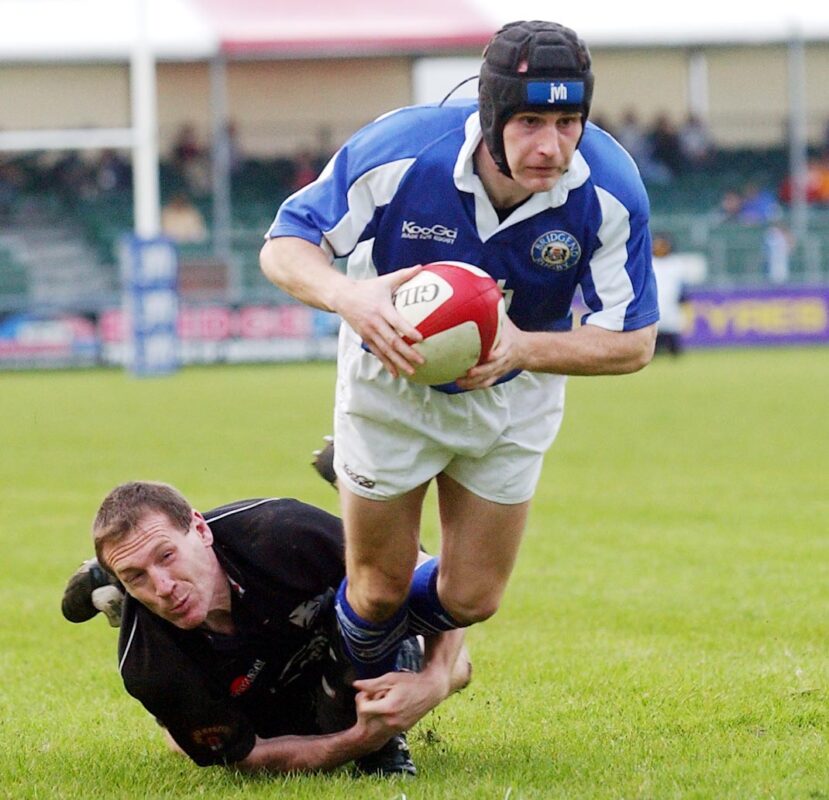
For Warlow, the uncertainty became personal when Bridgend’s players queued to learn whether they would be offered a place with the Warriors. He remembered waiting outside Allan Lewis’s office, watching teammates emerge and trying to read their expressions. After his performances for Bridgend that season, he felt he had reason to be confident. Instead, he was told there would be no contract.
He recalled struggling to hold his composure before telling his partner, Lisa. With a wedding to plan, he was suddenly contemplating a move to England or France to continue his career.
Warlow remembered Gareth Thomas stepping in. With some players receiving good news and others facing uncertain futures, their captain told the coaches they would not train that day. The squad would go out together instead. It was another example of Thomas recognising what his teammates needed.
Van Rensburg remembered the same uncertainty. “Do I have a contract? Do I not? Am I going home to South Africa? Do I need to look for another club?” An offer from Mike Ruddock to join the Dragons brought relief. “I’m safe. I’m safe,” he remembered thinking.
Warlow recalled being beside van Rensburg in a taxi on their way to meet the rest of the squad when his teammate passed him the phone. On the other end was Ruddock. The conversation opened the way to a three-year deal with the new region.
In the space of a day, Warlow had gone from being told he had no place at the Warriors to discussing his future with another coach in the back of a taxi. It captured the uncertainty players faced as Welsh rugby’s new structure took shape.
“It was worrying,” Molitika recalled. Some players still had no contracts, while others were negotiating with other clubs. To him, it was a strange way for that era of Welsh club rugby to end.
Moffett remains convinced that fewer professional teams were necessary. His regret concerns the model Wales adopted. Although the WRU’s original proposal was provincial, he now argues that clubs were a better fit for Welsh rugby’s loyalties.
Looking back, Moffett wondered whether he should instead have allowed financial pressures to determine which clubs survived in the professional game. “In hindsight, that’s most likely what I should have done, let the market forces decide.” But he immediately qualified that reflection: “I’m not like that. I’m always looking to find rugby solutions.”
The WRU had to find a structure it could afford, but asking clubs to merge also meant asking supporters to rethink loyalties built up over generations. As Moffett put it: “Rugby’s too much of a business to be a sport, and too much of a sport to be a business.”
An era ends
Welsh rugby emerged from those negotiations with five professional regional teams, rather than the four Moffett had sought. Cardiff and Llanelli retained their independence, while elsewhere players and coaches began building new partnerships and identities.
Bridgend were deserving champions, losing only two league games throughout the campaign. Through a season dominated by uncertainty about the future of Welsh rugby, the players and coaches had built a title-winning team. Yet regional rugby was already taking shape, and the players were preparing for very different futures.
The next pre-season would look very different. Craig Warlow and Shawn van Rensburg would join the Dragons, while Cory Harris and Maama Molitika would become Celtic Warriors. The championship-winning squad would go its separate ways.
The friendships, however, lasted. More than two decades later, players from that Bridgend team remain in contact through a WhatsApp group. Towards the end of our conversation, Warlow reflected on what had stayed with him.
“What I remember the most is just spending time with good people.”
Author Bio
Andrew Jones is a former professional rugby performance analyst with more than 16 years’ experience, including work with the Welsh Rugby Union in North Wales and England Sevens, and at the 2015 Rugby World Cup. He spent six seasons in France: one with FC Grenoble and five with Section Paloise in the Top 14. He writes about player development, coaching and the structures that shape professional rugby.
Support our Nation today
For the price of a cup of coffee a month you can help us create an independent, not-for-profit, national news service for the people of Wales, by the people of Wales.
Get more trusted Welsh news
Choose Nation.Cymru as a preferred source in Google News to see more of our journalism.