


Changing the image of public transport could reduce road congestion
Professor Stuart Cole CBE, Emeritus Professor of Transport Economics and Policy, Prifysgol de Cymru / University of South Wales
For many people the bus is not for them as a means of travel – to work, leisure or business. Its image is probably against it as a means of relieving urban congestion.
Road congestion isn’t caused by lorries, buses, white vans or couriers. What many drivers don’t appear to want to hear is the uncomfortable truth that cars cause most of the congestion and so delay vans and lorries which service the economy. Those who moan most about traffic congestion and poor air quality are partly the cause of it.
As we progressed into this millennium, extrapolation of traffic data showed how we were getting to a congestion level where driving freedom may have to be restricted. ‘Heaven forfend!!’ I hear the cry.
Public reaction in Wales to such restrictions is likely to exceed the response initially to the 20-mph speed limit. Consequently, there began a move to persuade car users that it might be quicker to walk or cycle than to drive. This has clearly not worked, so how can car users be persuaded to use public transport some of the time?
The suggested solution to congestion was capital expenditure on relieving pinch points, more urban bypasses (e.g. the new M4 around Newport) and allowing cars to use bus lanes in peak periods. The very reason bus lanes were created was to make bus travel faster and more efficient.
Traffic
The last of those has an ironic story. Many readers may be familiar with Marylebone Road which forms the northern border of central London from Paddington via Regent’s Park to Euston. It has a sequence of coordinated traffic-light-controlled junctions to enable each sector to empty before the lights change.
This is at a certain level of traffic flow. Where traffic levels (demand) exceed capacity (supply), there are vehicles left at each set of lights. Over several changes this leftover traffic mounts up until the junction becomes saturated, and traffic comes to a standstill.
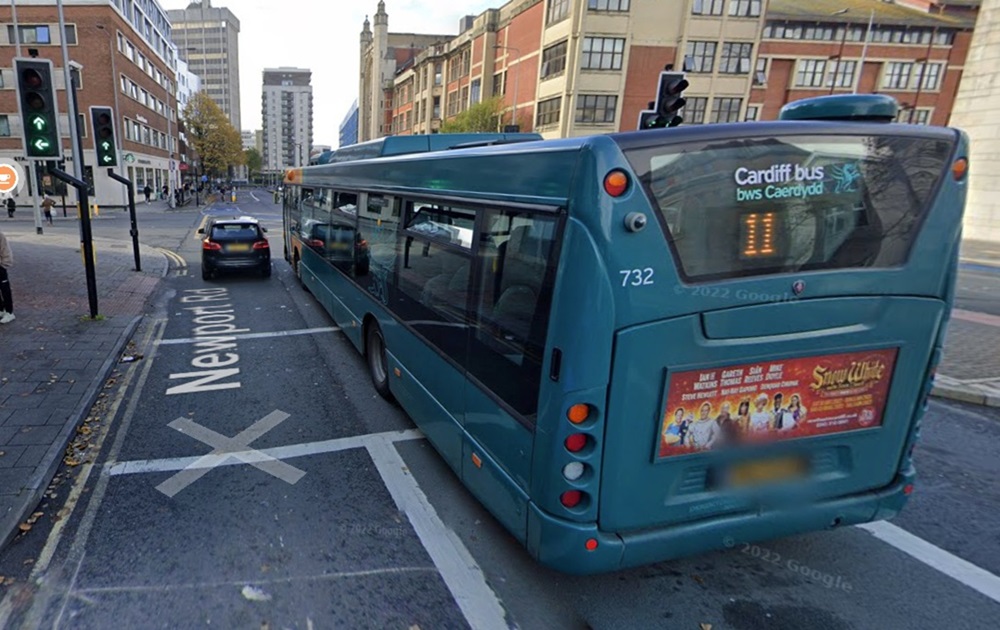
Removing bus lanes has been suggested by some. The controversy in Newport almost twenty years ago comes to mind. They do reduce car space but, conversely, they enable buses to move faster than cars.
Prior to the construction of the Dublin Luas (‘speed’ in Gaeilge) tram system, the creation of bus lanes into Dublin city centre proved that modal split could be changed through park and ride for car users, or walking or cycling to the bus stop, with new comfortable buses and reduced journey times into the city centre.
For many, bus lanes are an anathema and the bus is merely an unfortunate alternative for those with no car. They are big, throw out dirty fumes and get in the way. Modern low-emission buses have shown that is not the case.
Roads
Demands for inner-urban motorways were the inevitable, if incredible, conclusion. The A40 Westway came so far but was eventually repelled, though that process continued in the demands for the M4 south of Newport. This lack of logic has to be countered before we persuade more car users to transfer to public passenger transport.
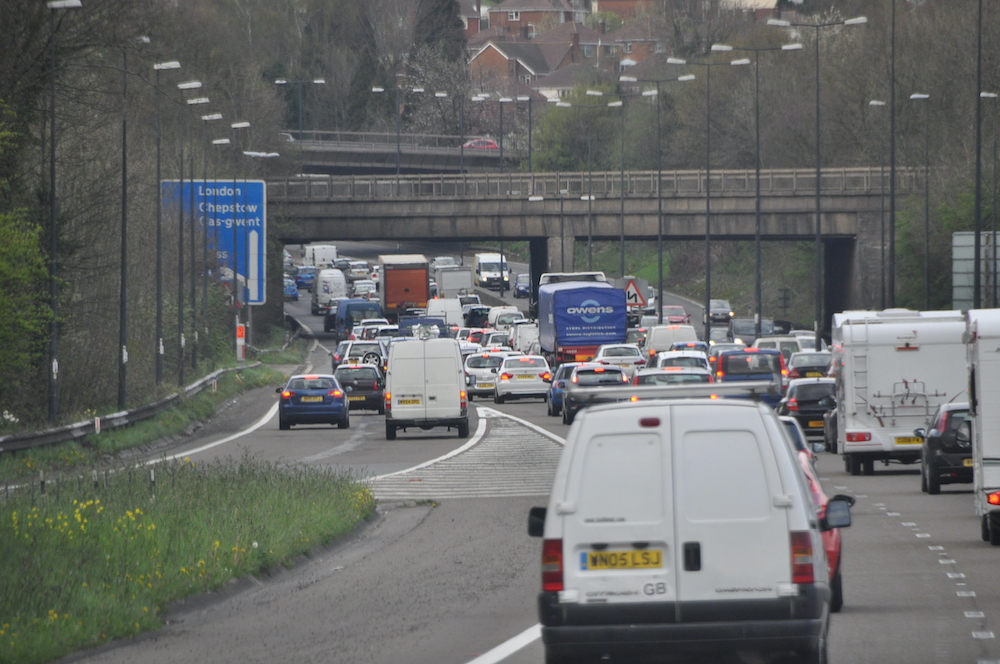
Road widening and by-passes will not magically remove traffic. Indeed, research since the 1970s indicates that such investments attract more traffic as it appears to car users that traffic is moving efficiently.
That would have been the consequence of an M4 relief road, though the lower-cost ‘Blue route’ would have had a lesser effect than the full-blown new six-lane motorway ‘Black route’. In the longer term the congestion would return.
Perception
Persuading people that the bus is a solution is an uphill struggle. Unlike trains and trams which move faster, buses are often seen as the transport of last resort.
Coach services are seen by some as providers of old people’s excursions, though the new-style coaches with all the facilities and very low emissions appear to be making a return to popularity.
Lothian Buses, the municipally owned operator in Edinburgh, has become one of the most successful public transport systems in the UK with a young and environmentally sustainable fleet.
“Sustained investment and a basic ethos of customer care have achieved a high-performing integrated network with passenger growth, a high level of customer satisfaction and operational performance” is the view of Sarah Bond, Lothian Buses Chief Executive.
This column has repeatedly concluded from experience and published research that to deliver passenger growth and make public transport viable in the long term requires an acceptable fare (or free, capped or discounted), reliability (buses turning up), timekeeping, frequency and helpful friendly staff.
Changing car users’ perception of public transport can achieve modal shift, reduced car dependency and reduced congestion. Expanding bus priority measures and increasing network capacity can contribute. Cutting services or maintaining the status quo will not.
Campaign
Consider the message. Smoking was a habit; it has now almost disappeared through a combination of health warnings and legal constraints on sales. The seat-belt wearing campaign has made their use a habit over decades – again by persuasion and legislation. This column is not suggesting legislation – yet.
What we do need, however, is a much larger and wider campaign to persuade people to change from their car. The amount of expenditure on car use and its advantages far outweighs that spent by public transport operators.
We have seen some campaigns from GWR and the Famous Five; LNER and TfW despite negative media reports whenever anything goes wrong.

It also requires increased public transport investment in advance of closing parking spaces, banning cars from city centres (as in Amsterdam), creating out-of-town park-and-ride car parks and not building new multi-storey car parks.
Beginning in our big urban areas – Cardiff, Swansea, Newport – by restoring the cuts in frequency, for example from five to three buses each hour between Swansea and Llanelli. That isn’t the way forward and one would hope for more than is currently promised in the first of the new franchised bus plans for south-west Wales.
But who is going to have the courage to do it first? Perhaps our senior politicians and business leaders, at least in those big urban centres, could set an example, as some do, and travel to and from work by bus and train.
Modal change on a big scale is no easy task but to achieve it there must be an improved (frequency, comfort, reliability and value for money/price) public transport service first before restricting car usage.
Support our Nation today
For the price of a cup of coffee a month you can help us create an independent, not-for-profit, national news service for the people of Wales, by the people of Wales.
Get more trusted Welsh news
Choose Nation.Cymru as a preferred source in Google News to see more of our journalism.



I agree with you. However, the proposal to build a mammoth data centre on the Cardiff East park and ride would appear to be a double step backwards environmentally as well as for travel.
That stopped being a park and ride for the city centre three years ago.
It’s more than congestion which isn’t worse than driving. Flat fares and integrating buses into the TfW metro payg system will help eliminate boarding delays and confusion. More double deckers will reduce the dreaded “bus full” de facto cancellations. Live times at bus stops will give folks the info they need to plan their journey. Better a/c will sort the grim winter stuffiness problem.
It’s not perception, it’s substance. Rail travel in the UK is hugely expensive and painfully slow. Going down to local level then the bus services in our capital city are not great (going from West to East is hugely slow) and late nights and sundays are non existent.
I recall asking on here a few years back how many of our councillors, MPs and Senedd members regularly use buses and not cars? I suspect the answer now is the same as it was then….zero (or at least pretty close to zero). And afraid to say that until our political class in Wales starts leading by example, and dump cars in favour of public transport, nothing much will change with regards to buses in Wales continuing to be the poor relation in terms of travel (even though buses are essential to reducing our carbon emissions).
Frequency and convenience are the two issues holding back buses. Most of Wales can only dream of 3 buses an hour, let alone 5. And huge areas have no buses after 6pm or on Sundays. Saturdays as well in some places. It needs carrot and stick – it’s starting to feel that the stick of high-cost motoring (fuel, maintenance, parking etc) could see some people ditch the car – but only if the carrot of the bus alternative is available and practical