


Coaches fear for future of football as heavy rain causes string of cancellations for junior league
Debbie Luxon
Coaches have expressed fear for the future of football in Wales as heavy rain causes a string of cancellations for local youth leagues.
Eight Saturdays have been cancelled this season across the Aberystwyth Junior League due to weather, with players dropping out as a result.
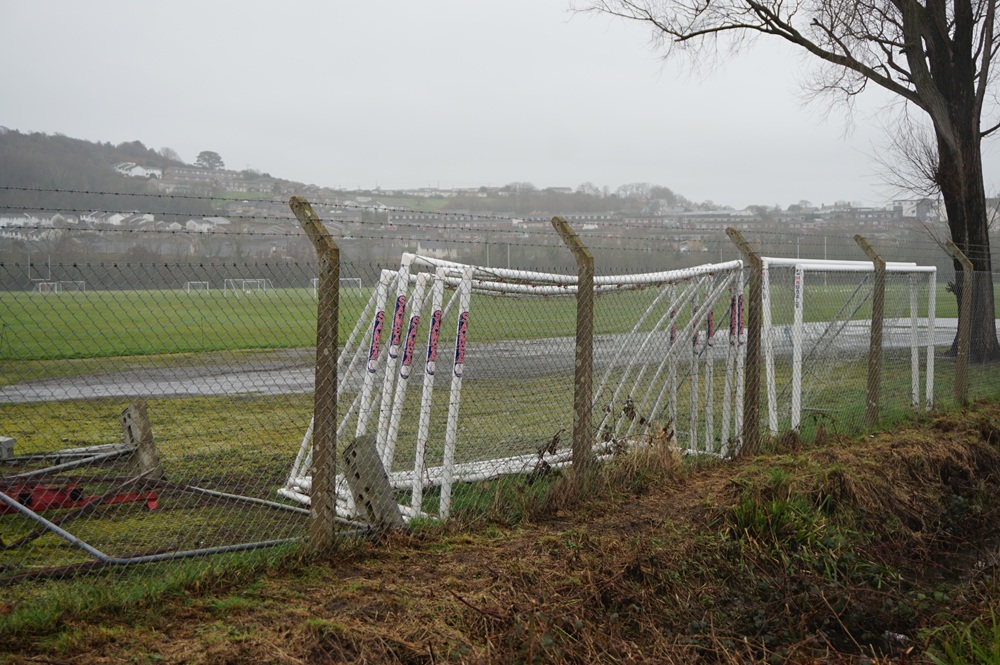
Players at the waterlogged Blaendolau Playing Fields described the ball getting “stuck” in mud, making play impossible – the under-13s now haven’t played in five consecutive weeks.
Darren Thomas, head coach for the under-14s, said: “It’s very frustrating, we should’ve finished in early February and have four games still to play.
“More games get cancelled, kids lose interest.
“This year has been terrible, my average has gone from 16-18 to 12-14 players a session.”
Aberystwyth’s astroturf pitches are heavily oversubscribed with adult teams taking priority, meaning the junior leagues play their matches on the river and stream-adjacent fields at Blaendolau and Penweddig School.
Tom Robson grew up playing in Aberystwyth and now coaches the under-13s: “As a kid, it was never this bad. It flooded once or twice, but this type of rain I’ve not seen before.”

One in five matches is now cancelled every season in Wales due to increasing rainfall and flooding.
Aberystwyth Junior League supports play for 750 young people – chair Russell Hughes-Pickering says they do all they can for the teams who can “catch up in spring”, but “we can’t change the weather” – eight Saturdays were also cancelled last year.
The players, meanwhile, are becoming “visibly upset” by the cancellations.
Thirteen-year-old Jonas is one of many who join with aspirations of going further in the sport: “The weather’s been bad before, but this season has been horrible.
“It just brings the mood down because we always look forward to playing, seeing other teams, seeing our friends. It lets our hopes down.”
Robson said matches are the only time his teams play on a full-sized pitch: “We’ve got some children with separate parents who plan handovers at matches, some teams travel over an hour away – [the cancellations] create a growing nervousness. It’s a lot harder to keep track of how they’re developing; you can’t replicate the intensity of a game in training.”
He described this season as an “eye-opener” for the changing weather patterns: “If the rain continues to increase, then it won’t just impact west Wales; there are lots of rural places that don’t have all-weather facilities. We’ll struggle to develop the quality that Welsh football needs. I am quite worried.”
Thomas said it feels like “more games are cancelled than ever before”: “My boys go all over Wales to play, they’re all on all-weather pitches. It feels like Ceredigion is the worst for accessible pitches.”
The season began wet – in November rural communities flooded and Storm Claudia brought 159% the average rainfall.
In January, Wales saw 113% average rainfall, with Storm Goretti bringing ice and snow.
According to the Met Office, one third of grassroots pitches lose six to eight weeks a year from flooding due to severe weather linked to climate change, and predict one quarter of football grounds will be underwater by 2050.
Concerned parent Sarah Jenkinson said the games aren’t just important to keep the kids happy: “Living rurally in the Dyfi Valley, when we get out we connect with each other. Parents and children come away feeling better about the weekend ahead.”
The league involves 130 volunteers making play possible, from coordinators organising matches across five age groups between teams across the region, to coaches maintaining motivation, to the at-home support of parents.
Jenkinson added that “everyone works really hard” to take care of the fields, but it currently feels like “a losing battle” against rain: “If wetter, more extreme winters are becoming the norm, we should consider moving the season into early spring – it would be the cheaper, easier option, and might mean children actually get to play.”
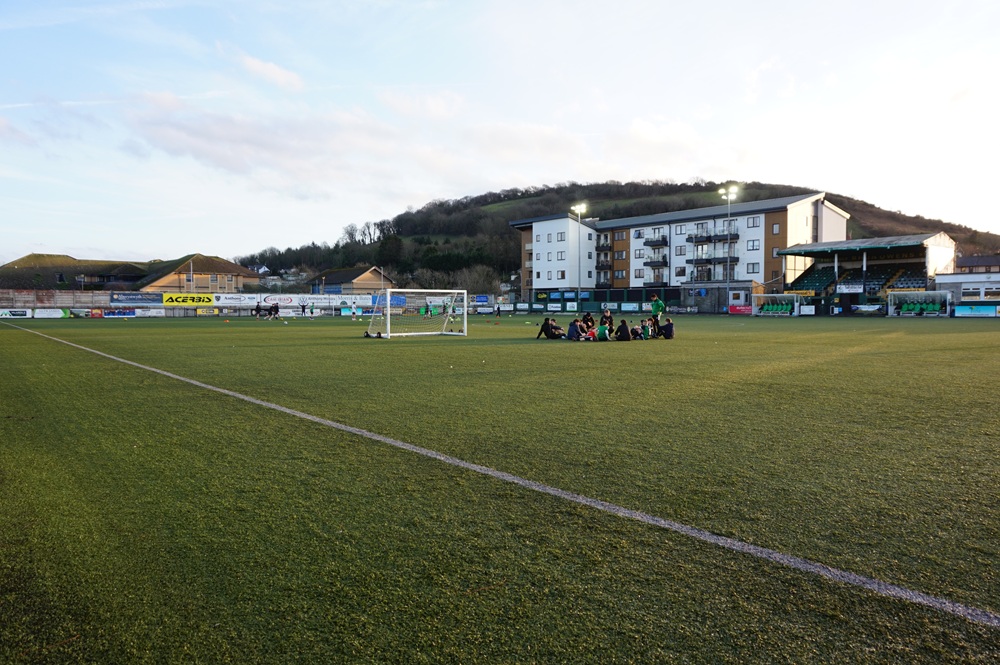
Despite recent years’ cancellations, Hughes-Pickering said that access to all-weather pitches has actually improved in recent years, via Aberystwyth Town Football Club and Plascrug Leisure Centre’s new pitch.
Instead, Hughes-Pickering called for investment to upgrade facilities in rural clubs like Penrhyncoch and Llanilar so they can host.
Aberystwyth University, which owns Blaendolau Playing Fields, said it was one of many facilities impacted by the heavy rainfall, and was proud to have supported the junior league for over 30 years.
A spokesperson said: “Our staff work very hard to avoid cancellations by preparing the pitches thoroughly; rotating their use, spiking, and sanding the ground.”
Though cancellations haven’t been above average this season, the recent weather has “inevitably had an impact”.
Eighteen months ago, a “game-changing” Grounds Management Association initiative funded by FAW launched to transform grass pitches, so far supporting the improvement of over 200 playing surfaces after finding only 20 per cent were rated “good” or above.
Cymru Football Foundation (CFF), FAW’s charitable arm, invested £840,000 in the last three years in Ceredigion alone, and is currently working with local authorities to plan for future needs, “directly supporting access to quality football facilities where they’re needed most”.
Support our Nation today
For the price of a cup of coffee a month you can help us create an independent, not-for-profit, national news service for the people of Wales, by the people of Wales.


