

Could Andrew Mountbatten-Windsor be compelled to testify in US Epstein investigation?
Caleb H. Wheeler, Senior Lecturer in Law, Cardiff University
The release of more Jeffrey Epstein files has again brought Andrew Mountbatten-Windsor and his friendship with the convicted paedophile sex offender back into the spotlight.
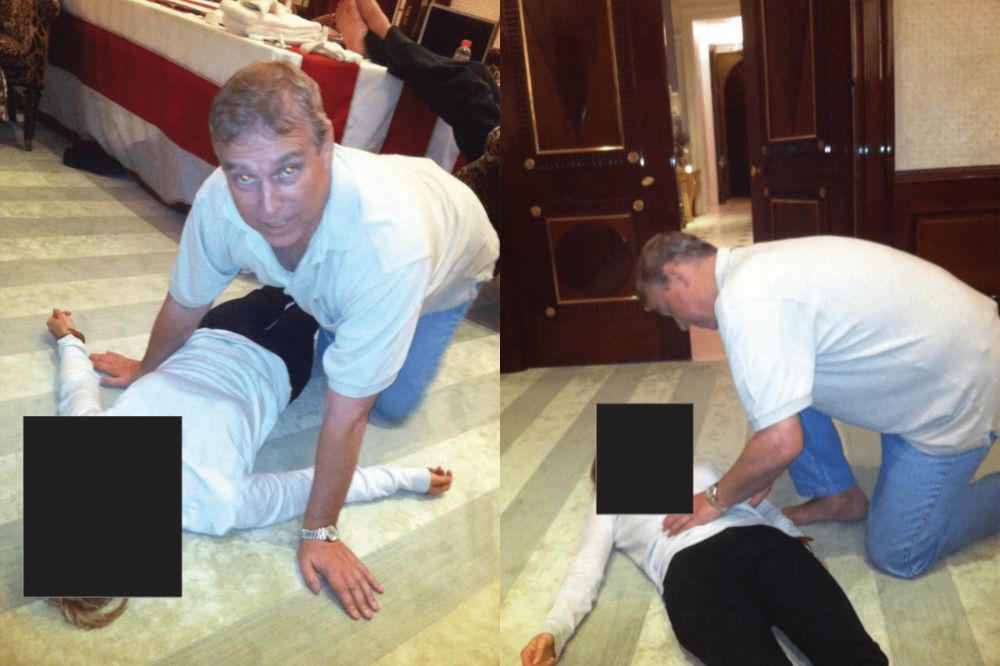
The tranche of files contains emails between the former prince, his wife Sarah Ferguson, and Epstein, including after the latter’s house arrest for soliciting a minor for prostitution. Also included is a photo of Mountbatten-Windsor kneeling over an unidentified woman on the ground.
A second woman, said to be in her 20s at the time, has now come forward with allegations that Epstein sent her to the UK for a sexual encounter with Mountbatten-Windsor. The first, Virginia Giuffre, died by suicide in early 2025.
Mountbatten-Windsor continues to deny any allegations of wrongdoing related to Giuffre and Epstein. He was stripped of all his official titles in October 2025.
The latest developments have prompted calls for the former prince to testify in front of the US Congress as part of their investigation into Epstein’s crimes. Last year, a congressional panel wrote to Mountbatten-Windsor to ask him to submit to questioning. Now, ministers including Keir Starmer have suggested that he should voluntarily testify.
This is unlikely to happen, for several reasons.
The first, and most straightforward reason, is that Mountbatten-Windsor can’t be compelled to testify in the US. Typically, when potential witnesses refuse to appear voluntarily, the US Congress or a court can issue a subpoena for their testimony.
This is essentially a demand that a person come testify even if they don’t want to, and if they don’t then they can be subject to some form of punishment (being held in contempt of Congress or court, and possible civil penalties).
However, under US federal law, subpoena power only extends to US citizens or residents, not foreign nationals.
One possible option might be found in the application of a mutual legal assistance in criminal matters treaty that exists between the UK and the US. It calls for one state to assist the other when the latter state is conducting a domestic criminal investigation or prosecution.
The sort of assistance required can include the taking of testimony or a statement from a witness located in the country assisting with the investigation. Should the witness refuse to testify, they would then face punishment under the law of the country providing assistance.
Under this treaty, the US could request that the UK government compel Mountbatten-Windsor’s testimony so that it might then be shared with Congress. The difficulty with this approach is that the UK is permitted to refuse the request for various reasons, including national security interests or other public policy concerns. Past practice regarding secrecy about the monarchy would suggest that either or both bases for refusal could be exercised in this case.
If he testifies
If Mountbatten-Windsor were to voluntarily testify in the US Congressional investigation, could it spell trouble for the rest of the royals?
He is accused of actions that were allegedly done in his private capacity and not as a representative of the crown, so it’s unlikely they could be attributed back to monarchy. In any case, the king is likely more concerned about embarrassment to the institution of the monarchy than to any tangible negative repercussions.
He would likely object to Mountbatten-Windsor testifying, but those objections would more probably revolve around the monarchy’s traditional desire for privacy and not wanting their dirty laundry aired in public (any more than it already has been).

Theoretically, the king may want to reserve the possibility of his brother testifying as a future bargaining chip, should the UK want some form of concession from the US. However, there is no evidence of that happening.
Whether the former prince himself is more exposed, legally, now that he is no longer a royal is a slightly complicated question. Some state officials are protected from prosecution for crimes by personal immunity (immunity ratione personae).
This essentially means they can’t be prosecuted by a foreign court during the time they hold office (but can be prosecuted after leaving office). This principle is applicable in both the UK and the US as customary international law, which means it is binding due to consistent state practice.
Whether this applies with regard to Mountbatten-Windsor really turns on whether his role as prince made him a government official eligible for this sort of immunity. It is usually reserved for very senior members of government and heads of state, so it is highly unlikely that being a “working royal” would qualify.
He might attempt to claim diplomatic immunity under the Vienna convention on diplomatic relations. It could be argued that he is entitled to immunity, either in his capacity as UK special trade envoy between 2001-11, or as a “working royal” representing the UK while abroad.
However, there is no precedent for finding that a member of the monarchy is the functional equivalent of a diplomat – particularly where they lack power to negotiate and make deals with foreign governments.
Other legal possibilities
The real danger to Mountbatten-Windsor is that if he were to voluntarily travel to the US to testify as a witness, he could accidentally incriminate himself and end up getting arrested. Such a case, however, seems unlikely. Presumably, he would obtain legal advice before testifying, giving him a clear idea of what he should or should not say.
The most immediate legal peril he could face is the possibility of prosecution in the UK. Police have announced that they intend to investigate a woman’s claims that she was trafficked to the UK for the purpose of having sex with Mountbatten-Windsor. Should they find sufficient evidence that a crime took place, Mountbatten-Windsor could find himself in the dock.
Despite that, under UK law he still cannot be compelled to testify. However, refusing to do so could be seen by a judge or jury as a mark against him when considering all of the evidence.
This article was first published on The Conversation 
Support our Nation today
For the price of a cup of coffee a month you can help us create an independent, not-for-profit, national news service for the people of Wales, by the people of Wales.



As a proud rogue state with no respect for international law couldn’t they just do what they did to Maduro?
Good point.
My guess is that this would only apply in a context where Trump wants it to apply. Given the number of times that his own name seems to crop up in the Epstein files, I somehow doubt that he’s likely to be keen on giving their contents more attention than is otherwise inevitable.
There seems to be an excessive interest in Andrew likely because of the American misapprehension of his significance. So far from what I have heard most of what he is alleged to have done is tacky more than anything although a full clear summary of everything is still awaited. Very likely a whole lot of other people including Trump are more likely to be involved. The Polish suggestion that it is funded by Russia had occurred to me and sounds quite probable. Epstein’s death sounds more like a murder than a suicide but the events were berry obscure.
Epstein trafficked and raped children. Maxwell was convicted as his accomplice. Andy was in their roladex.
this is ignoring the victims. Virginia Guiffre was a victim.
The author is correct; but there is no reason why Mountbatten Windsor can’t be prosecuted here. It’s likely that these “activities” took place on both sides of the Atlantic. Moreover, if Mandelson is prosecuted for abuse of public office, then so can the former prince. He held numerous positions in public life, notably as a trade representative. Whether it actually happens is, however, another matter. The establishment’s commitment to justice and transparency only goes so (and not very) far.