

Cultural highlights 2025: Transition and reclaiming our stories
Freya Blyth
This year has been one of transitions. Nearly everyone I know has gone through major life changes, moving house, country, job, and this includes me.
Evolving is not an easy process. Full of stretching out of an old skin, the Chinese year of the snake has meant releasing what is no longer relevant in moving forward and, and winning a place in Literature Wales’ writer development scheme ‘Representing Wales’ has refocused my zeal and creative voice towards highlighting the unheard women’s voices through history.
There has been a similar shift in the writing and theatre I have seen being produced.
We can see this movement towards reclaiming voices, with retellings of Greek mythology, in Pandora, Medea and Jason and the Argonauts, reframed with a focus on the female characters in these stories.
Perhaps we as a culture are looking back to our history in order to be able to collectively shed what we no longer value in the suppression of certain voices, and raise these voices to the forefront of move forward without the old snake skin.
After all, our stories are our history as Natalie Haynes says in ‘Pandora’s Jar’ (Picador, 2020), “Which version of a story we choose to tell, which characters we place in the foreground, which ones we allow to fade into the shadows.
It was a discovery of revisioned history that fascinated me during the process of my own academic studies and development as a writer.
So naturally, I was gripped by the August publication of Elodie Harper’s latest book, Bodiccia’s Daughter (Bloomsbury). The book follows Solina, the daughter of the fearsome warrior, as she navigates political intrigues from rural Britain to Emperor Nero’s Rome.
The Celtic queen of the Iceni tribe, who led a revolution against Rome with her two daughters, is a legend and yet many of us, and I include myself in this, prior to reading this book, know very little of her other than her punishment for the failed rebellion, for which she was flogged and her daughters raped by Roman generals. After all, history is written by the victors, but to explore the force of wild women behind the Iceni tribe was extraordinary and gave me a fresh understanding of the lineage of wildness my ancestors stem from.
This wild cry of female rage is something I am further developing in my own creative practices..
Elodie Harper was featured at this year’s Southbank Literary Festival.
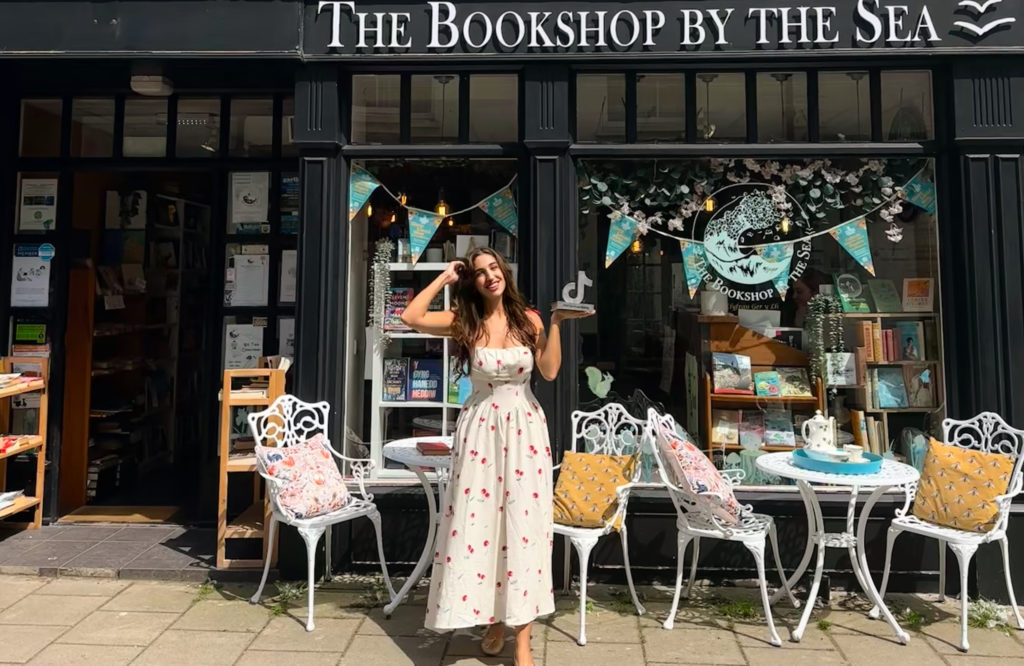
Hearing her ferocious intellect was electric, and I mentally redoubled my efforts to invite her as a reader at my own feminist fiction-loving bookshop in Aberystwyth, The Bookshop by the Sea.
Continuing the theme of women unleashing their wild roots, Indu Rubasingham opened her September programme as the director of the National Theatre with a retelling of the classic Euripides, Bacchae.
Actor turned writer Nima Taleghani rewrote the story in startling rap-prose-poetry as an indefinable interdisciplinary play.
Here, the focus was primarily on the women, with an ensemble cast of 15 plus women, all muscles and mud-smeared faces.
The loudness of their violent joy at being released on the world by their god Dionysus, here portrayed as a benevolent lover of women and supporter of their right to freedom, stampeded the stage with electric choreography.
They grinned and screamed in defiance at this freeing of women from subjugation in the ancient Greek city of Thebes. This was a fabulous, if confusing premise, given that the majority of the plot focused on the women’s capture and the psychological torture of the mortal mother’s journey, cross-dressing in magnificent golden fabrics throughout the play, all part of the revenge for Dionysus’s mortal mother, who was not believed by her sister Agave to have beentricked by Zeus.
This twisted family drama boils down to two remarkably modern themes in this performance: do we believe our loved ones about their sexuality, and can we offer those fluid in their gender identities the freedom to express themselves without restraint.
I also loved the engaging lighting design, which featured a circular suspended ring above an almost bare stage, rotating as the set design changed. Lights were programmed with fantastic storytelling, beaming down rays to portray prison bars in one scene and changing to rays of god, like sun showing Dionysus true nature in the next.
The National excels at staging the classics, but this new take of Bacchae at the Olivier (the National’s main stage) leapt above the very traditionally staged Hamlet running simultaneously at their smaller adjacent Lyttleton theatre.
This in itself came across as a clear message about what Rubasingham’s future focus as director would be. The show was electrifying. As a British Cypriot woman, I felt fully represented in a cast of diverse women filling the stage, each with a presence refusing to be dimmed.
I sat in the theatre, eyes stinging with pride, scanning the audience, revealing a full auditorium as diverse as the cast, eyes lit up with acknowledgement of how theatre has truly become inclusive. We screamed along with the Bacchae souls alight with a freedom of being alive and living in a country, and during a time, that allows such freedom that remains in so many ways still unheard of around the world.
The issue of representation within the National Theatre also highlighted the lack of Welsh representation.
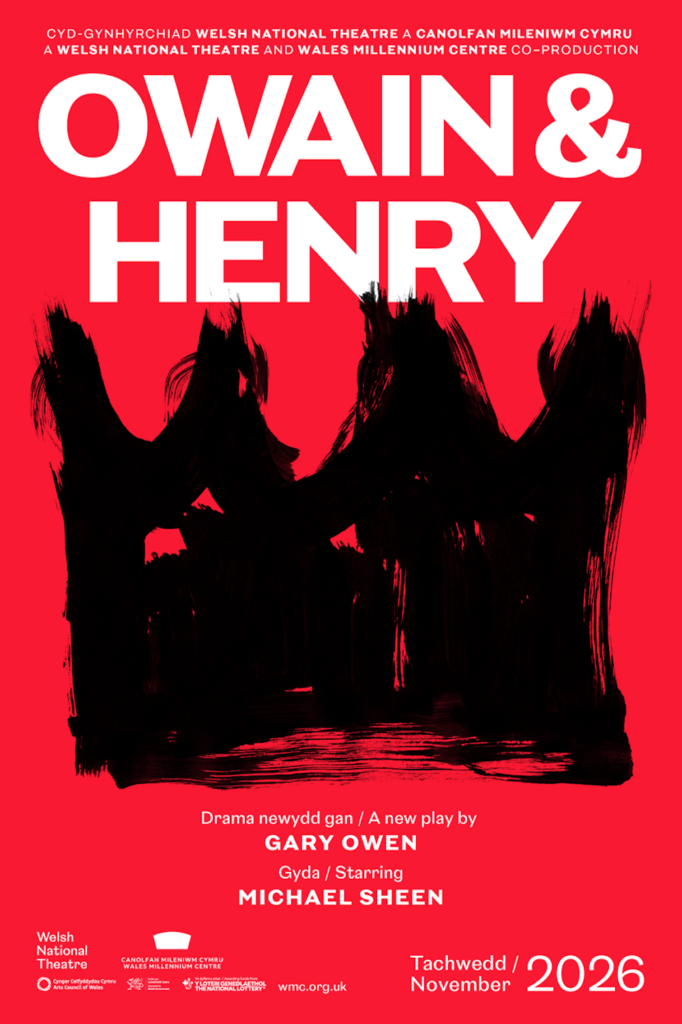
The Welsh National Theatre started the process of its own reestablishment this year, utilising new funding streams by Welsh actor Michael Sheen.
Sheen trained at the Royal Academy of Dramatic Arts (RADA), where I had also spent a summer studying Shakespeare.
My time at RADA, working under some of the top dramatic tutors in the country, realigned my concerns about underrepresented voices.
My hope would be that a Welsh National theatre might also serve to inspire generations to come, and continue the shedding of cultural cannons we no longer need.
Instead, allowing us to focus on the next year on a continuation of the reclamation of our stories, as women, and within Wales.
However, it is a stark admission that funding cuts curtail the ambition and possibilities in all theatre, especially when it comes to inclusivity and unrepresented voices.
Freya Blyth is a British Greek Cypriot author based in Aberystwyth, selected as a writer Representing Wales by Literature Wales 2025. Pre-covid, she was a librarian in the Middle-east. Freya is the owner of the multi-award-winning Bookshop by the Sea.
She established The Aberystwyth Poetry Festival in 2023, and last year completed her Masters in Creative Writing at Aberystwyth University. Freya is interested in exploring themes of feminine spirituality whilst developing her poetry collection. She has recently completed her first novel and signed with Eve White Literary Agency.
Support our Nation today
For the price of a cup of coffee a month you can help us create an independent, not-for-profit, national news service for the people of Wales, by the people of Wales.


