


Cultural highlights 2025: “What I read” – unputdownable old and new
Jane Fraser
It is lying there on the bedside table as I write: my little, purple note book, titled “what I read” given to me as Christmas gift back in 2019. The book, now faded, is a nostalgic summary of my thoughts on books I have encountered ever since.
What follows are my musings on books I have read during 2025 – many for the first time, others fondly revisited. One page in the notebook is headed “stories and facts I want to share” inviting me to “share great insights, fun facts and the interesting things learned in recent books…”
It seems fitting therefore that I start with a ‘fun fact’ that as I write on 17th December, it is Jane Austen’s birthday, and the 250th anniversary of her birth.
It was this big celebratory year that prompted me to begin 2025 with a re-reading of ‘Pride and Prejudice’ last read for A levels back in 1972.
I suffered it back then, feeling it of no relevance to an eighteen-year-old who thought she knew the world.
The text is just the same so I wonder what else has changed in the interim? To read anew enabled me to see an author of fine wit with an understanding of character that is second to none.
As a writer myself now, as well as a reader, (who has been taught that I should ‘show’ not ‘tell’) I felt comfortable and guilt-free (relatively) in the hands of an author who ‘tells’ not ‘shows’ her characters’ exterior and interior behaviours and thoughts.
A ‘fun fact’ which might be of added interest to Welsh readers is that ‘Pride and Prejudice’ is currently in production for Netflix, being directed by the wonderful Welsh BAFTA-winning Film and TV Director, Euros Lyn, and as a recent convert to the works of Jane Austen I look forward to writer, Dolly Alderton’s adaptation for this hotly-awaited screen production in 2026.
Readers might find the link between Jane Austen and Elizabeth Strout a strange one, but despite the obvious differences between late 18th/early 19th century England and late 20th New England, Maine, I found parallels between the two writers.
On a re-reading of Strout’s debut (1998) ‘Amy and Isabelle’ (book of the month for the lovely Llangennith book club I’m now a member of) I noticed that Strout, like Austen, has an incredible understanding of the interior lives of females as well as understanding of the larger social contexts and expectations that govern the routes we take in life. And both do gossip deliciously.
Like Austen, Strout’s third person narration slips effortlessly into a character, allowing this reader, at least, intimate access to a character’s specific perspectives and feelings. Perhaps my mother (an avid reader herself to the last) had it right when she told me years ago, that both Austen and Strout were ‘what you’d call very knowing women.’
Recently, I read on some social media platform or other, that as you get older, the more you feel the need to connect with the past.
I don’t know whether this is a sound-bite but I do feel myself delving into literature I loved in my so-called formative years (though I maintain that my years are still formative).
One such novel I took from the shelf this year, the cover now passé in terms of design, the pages yellow and smelling of the past, but the story still riveting was Graham Greene’s ‘The End of the Affair’ (published 1951).
If you love a story of an adulterous and obsessive love affair, set in the London Blitz, that also explores the contradictions of the Catholic church, written by one of the finest writers of the 20th century, I urge you (as I’m urging the book club) to dive into this in 2026.
On the theme of the Catholic church, leads me to another re-read. This time to Irish writer, Claire Keegan’s ‘Small Things Like These’ which, promoted by the release of the film of the same name starring Cillian Murphy, I devoured for the third time.
I love Keegan’s work and have had the pleasure of taking part in her fiction workshops over the years (not for the faint-hearted and there were often tears!) where I learned so much about what makes for the quality writing that is exemplified in this novel: quiet and understated, rising tension rather than high drama, the power of the unsaid, and that fiction, like life, doesn’t have tied up endings.
So, to go back to my opening paragraph and that books give ‘great insights’ into the human condition and how we, as humans, navigate life’s challenges and power structures that often seem insurmountable, this novel encapsulates it all.
In the seemingly simple story of Bill Furlong, a family man and coalman just going about his business in Ireland’s County Wexford of the 1980’s, a discovery of far more than coal is made while unloading his sacks in the coalhouse in a local convent.
The shock discovery sets him on a journey of self-discovery and all the likely consequences that come with it, for himself and his family. That ending is unforgettable!
So, my reading ramble then took me automatically to more works of Keegan. As a practising short story writer myself, I am in awe of Keegan’s command of the genre – and the endless possibilities of form as evidenced in her first collection ‘Antarctica’, her second collection, ‘Walk the Blue Fields’, her novella, ‘Foster’ (now an award-winning film, The Quiet Girl’, and her latest work of genius, ‘So Late in the Day’.
I hold my hand up that I’m a Keegan fan-girl and I’m on a mission to keep spreading the word about someone who is such a sensational storyteller who can create such powerful emotion with such quiet restraint.
Which leads me conveniently to SALT Publishing’s ‘Best British Short Stories 2025’. Now in its fifteenth year, this anthology edited by Nicholas Royle, showcases the most exciting and diverse voices in contemporary British fiction.
I have this on my bedside table at the moment and am enjoying ‘Dwr’, a story by former Wales Book of the Year winner, Catrin Kean, as well as stories by Alison Moore, David Bevan and a perfectly formed offering by the wonderful Naomi Wood.
Going slightly off-piste, the introduction to this anthology is a work of art in its own right and will be of interest to anyone reading – or writing – short stories.
As this little foray into my reading year is for Nation Cymru, it might be apt that I conclude with books that are close to home and close to my heart here in Wales.
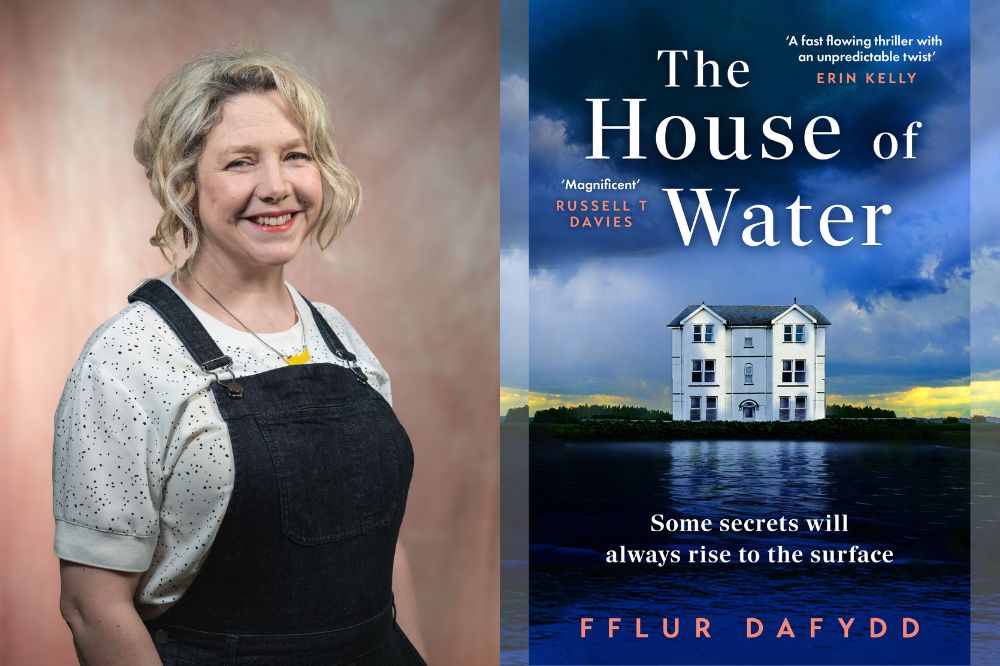
Lucky enough to be an early reader of ‘The House of Water’ by all-round superstar Fflur Dafydd, I have recently reread this literary thriller that is so much more than its genre: deeper, more immersive, exploring belonging, family identity and what it means to be Welsh through a cleverly structured narrative.
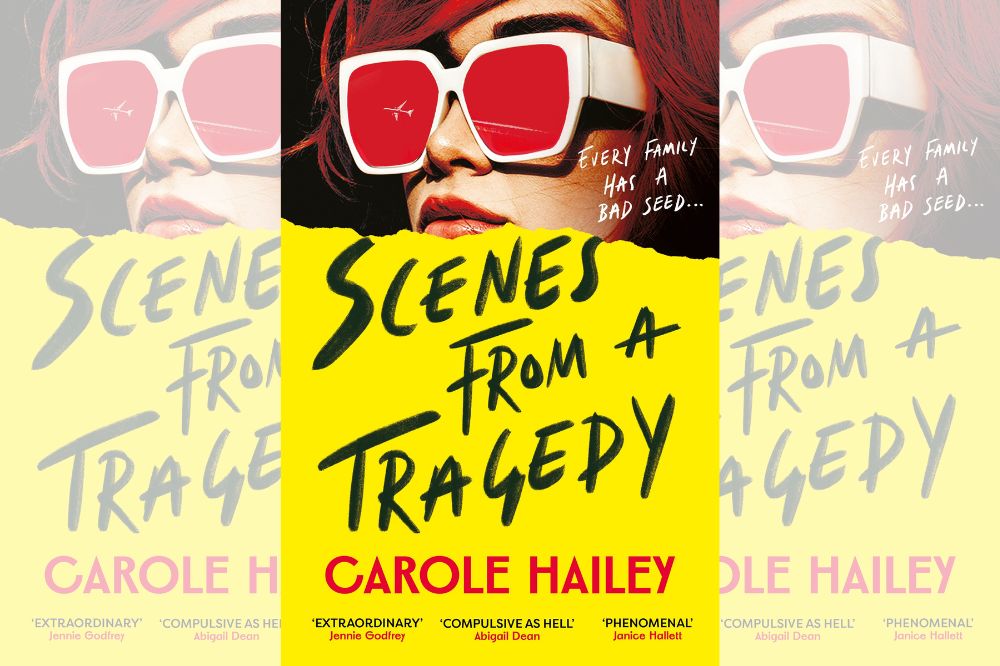
And then there’ is ‘Scenes from a Tragedy’ by Welsh adoptee, Carole Hailey. This story, is a fast-paced ‘whydunit’, meticulously researched and innovatively executed, probing deep into the mind of a psychopath after the mysterious crash of a ghost flight. Fascinating. Unputdownable.
And finally, ‘A Room Above a Shop’ by Anthony Shapland (recently published in Welsh as ‘Lan Stâr’ translated by Esyllt Angharad Lewis) is an incredible debut that has lingered with me long after I read the final sentence.
It’s a painful and tender novel that brings together moments in time in the relationship of two men during the 1980s in the tight knit community of a Welsh valley.
The writing is sublime and I hope this book published by Granta soars and is read by the hundreds of thousands.
So thanks to my little, purple ‘what I read’ note book for giving me a framework to record my thoughts and preserve my memories, and diolch to Nation Cymru for the space to share my musings.
Support our Nation today
For the price of a cup of coffee a month you can help us create an independent, not-for-profit, national news service for the people of Wales, by the people of Wales.


