


Do food additives cause symptoms of ADHD? It’s more complicated than you think
David Benton, Professor Emeritus (Human & Health Sciences), Medicine Health and Life Science, Swansea University
Robert F. Kennedy Jr has spent years railing against food additives, framing them as part of a broader threat to public health. Now, as the US health secretary, his views have taken on new weight.
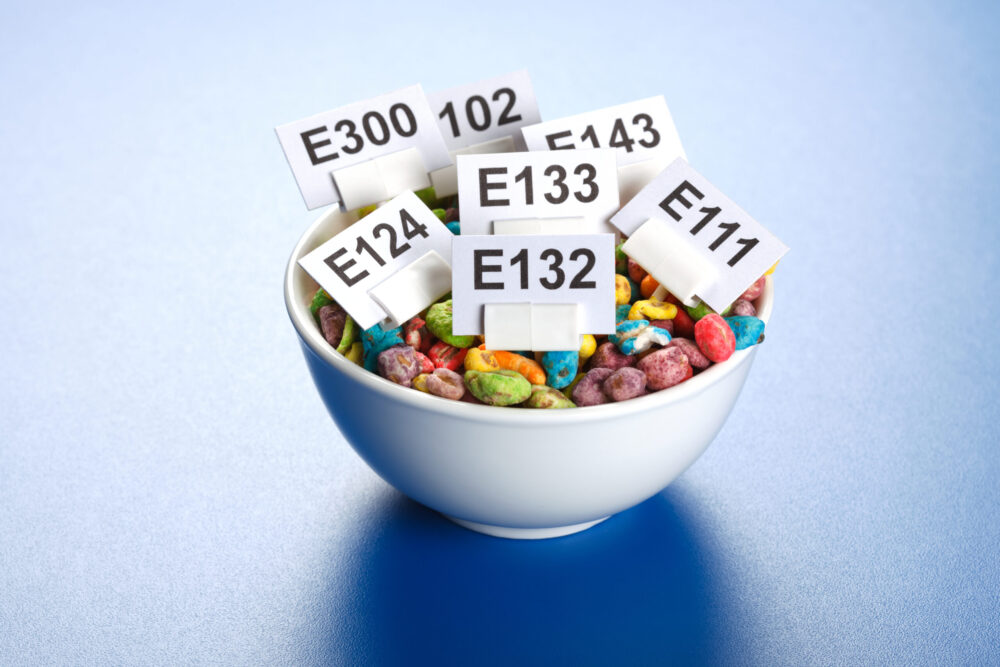
Plans are now afoot to start phasing out eight synthetic food dyes in the American food supply, with claims they are harmful and are linked to ADHD (attention deficit hyperactivity disorder). This has reignited a long-running debate around this subject.
Food additives have been treated with suspicion for years. Nearly 20 years ago in the UK, the Daily Mail ran a “ban the food additives” campaign. In 2017, research by the Food Standards Agency found that 29% of people in the UK thought that synthetic chemicals posed a risk to health.
Earlier this year, Arizona and New York state already went as far as removing additives from school meals. But is there convincing evidence to support this, or should we be looking elsewhere?
ADHD is a developmental condition whose symptoms include inattention, hyperactivity and impulsivity. There’s no single cause of ADHD. Risk factors include genetics, prenatal substance exposure, toxins like lead, low birth weight and early neglect.
Hyperactivity
Hyperactivity itself isn’t exclusive to ADHD. It can also be a response to anxiety, excitement, sleep problems or sensory overload. In 2021 the Californian Office of Environmental Health Hazard Assessment concluded that food dyes can also stimulate hyperactivity in sensitive children. That is, not all children were affected, but it may aggravate symptoms in those with a pre-existing problem or biological predisposition.
The effects tend to be small, often only observed through subjective reporting (such as observations by parents), rather than more objective measures. Some experts question whether these findings are clinically significant.
Having a high intake of additives correlates with a high intake of ultra-processed food – usually a diet high in sugar and fat, while low in fibre, protein, vitamins and minerals. So, why assume that additives are the problem, and not the rest of the diet?
Eating ultra-processed food – and therefore additives – is more common among low-income families, who are also at greater risk of ADHD. To some extent ADHD may be an indication of poverty, and a generally poor diet, reflecting the financial need to eat cheaper ultra-processed foods.
Studying people with ADHD also tells us little about the rest of the population. One of the largest UK studies to look at children more broadly was carried out in 2007, on the Isle of Wight off the south coast of England. Researchers gave a mix of additives to a range of children.
‘Limited evidence’
The European Food Safety Authority examined the findings and concluded there was only “limited evidence of a small effect on activity and attention in some children” from eating additives. The effects were inconsistent, and individual additives couldn’t be identified as harmful.
An Irish study in 2009 found that the doses of additives used in the Isle of Wight study had been much greater than are consumed in normal diets. This was an important observation, as consuming some substances in too high a dose can have an adverse reaction. Water and oxygen are examples of this.
Some experts argue that there is sufficient evidence to justify regulation of some additives, or at least adding details to food labels to help children with ADHD, although other experts disagree.
Out of precaution, since 2010 any food or drink in both the UK and EU containing any of the colour additives has had to carry a warning. Even though there was no scientific justification, it was considered better to be safe than sorry – especially when the colours have no nutritional value.
Natural = good?
There’s a common assumption that natural chemicals are good, while synthetic ones are bad. But what matters isn’t how a chemical is made but how the body responds.
Morphine and cocaine come from plants, for instance, and their dangers are well known. Recently in Australia, three people were fatally poisoned by death cap mushrooms that had been added to their meal. It’s estimated that 5% to 20% of all plants are toxic to humans. So, while “natural” sounds wholesome, it’s no guarantee of safety.
The total number of unique chemicals in the human diet exceeds 26,000, but our present understanding of how diet influences health reflects only 150 of these. The remainder are “nutritional dark matter” which have unknown effects.

To better understand the link between diet and hyperactivity, researchers have experimented with what’s known as the oligoantigenic diet (or a “few foods” diet). Children are given a very limited menu, then foods are gradually reintroduced to see what triggers a reaction.
The first study using this method was carried out in London in 1985. It found that at least one of the children reacted adversely to 48 of the foods in their diet with signs of hyperactivity.
With cows’ milk this was true for 64% of children in the study. For grapes it was 49%, hens’ eggs 29%, fish 23%, apples 13% and tea 10%. These are not ultra-processed foods, but we need to explore whether they contain chemicals that influence the biology of some individuals.
As many as 79% of children reacted to a preservative and a colouring, although the doses used were greater than would be normally consumed. And as no child reacted only to these additives, and different children reacted to different foods, only removing additives wouldn’t eliminate symptoms.
All the children in the study also had a history of allergic reactions, so their responses to food may reflect a biological predisposition. This is important, as it has been found consistently that a reaction to an additive occurs in a minority of children.
A 2017 review concluded “there is convincing evidence for the beneficial effect of a few-foods diet on ADHD”. It suggested the diet offered a “treatment for those with ADHD not responding to, or too young for, medication”.
For parents concerned about their child’s ADHD, it’s worth remembering that food additives are unlikely to be the sole cause. If a child’s behaviour seems linked to diet, keeping a food diary can help identify patterns. But any elimination diet should be approached with care and expert advice, to avoid doing more harm than good. Ultimately, every child is different, and what works for one may not work for another.
This article was first published on The Conversation

Support our Nation today
For the price of a cup of coffee a month you can help us create an independent, not-for-profit, national news service for the people of Wales, by the people of Wales.



Have there been any studies of people with conditions that may be linked to diet when they are forced to completely change their diet for an extended period, for example when they are incarcerated.
additive free prison food? Are they getting better fed than me lmao.
It may not be fine dining but hopefully they’re not getting food that makes them ill, but that may not help if they can still feed a 2 litres of diet cola per day habit
No no, it’s the E’s. They’re synthetic and unnatural, go away with your ‘experts’ and your ‘science’ and ’empirical evidence’. I knows what I sees and I sees fake things that disturb the natural order of the almighty…. yak yak yak yak yak…. For me the evidence is clear enough, there is scant evidence that additives alone cause hyperactivity at all let alone ADHD. We had a bit of a crisis at our school way back when, so with the consent of volunteer parents and children we ran a bit of a study (it was an end of year science… Read more »