


Economist writer sees Wales’ independence happening through ‘mixture of neglect, mild contempt and mockery taking its toll’
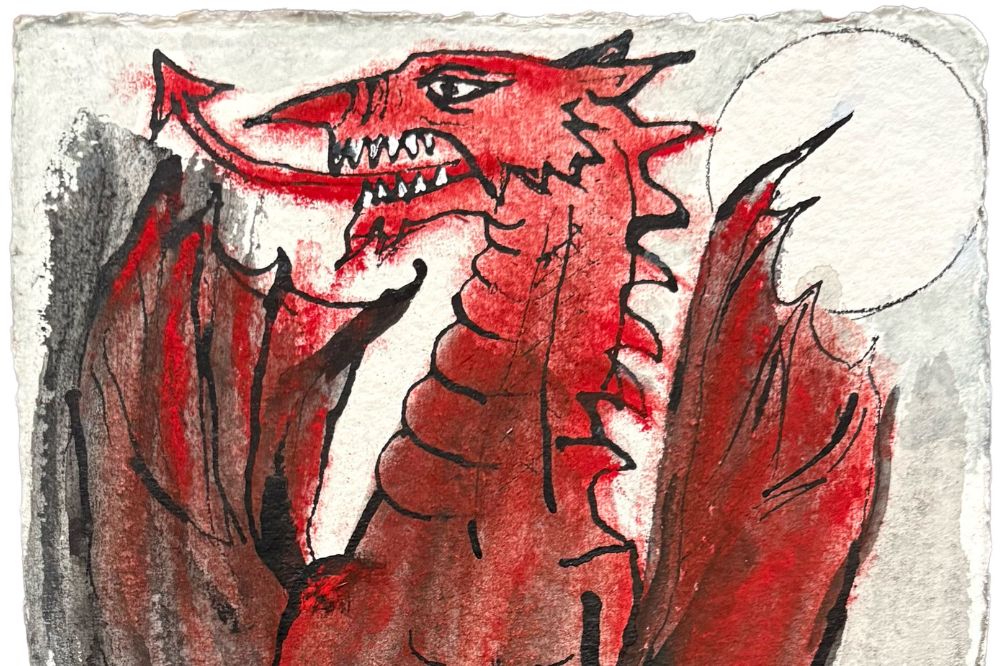
Written by the Economist’s columnist, Bagehot, who ‘offers astute commentary and analysis on British politics, policies, and societal trends’, the article titled ‘The Invention of Wales‘ begins by discussing Jan morris, who “became a fervent Welsh nationalist in her dotage”.
He shares: “In one of her lesser-known works, she imagined an independent Wales in the mists of the 21st century. Its capital was Machynlleth, a small town of 2,163 people in the middle of Wales. For it was here that Owain Glyndŵr, a 15th-century Welsh soldier, set up shop after rebelling against the English and briefly achieving the “fulfilment of Wales”.
“Even in the hands of a writer like Morris, an imagined tale of Welsh independence was a tough sell. Her publishers had warned her: a Scottish figure would have a “larger sales potential”, they said. It was the only work she published that failed to elicit a single letter from readers. In Machynlleth today, the site of Owain’s parliament hosts a small museum dedicated to the Welsh prince and “Caffi Glyndŵr”, a coffee shop with a logo of Prince Owain holding a sausage triumphantly aloft.
“Come May, however, an idea that was once Morris’s most fevered imagining will take a step towards reality.”
Polls expect Plaid Cymru to emerge as the largest party in Senedd elections, with 32% of the Welsh population would support independence, according to More In Common.
Bagehot writes: “For an ancient place, Wales is a modern beast. Its trappings of statehood are young. Cardiff was made its capital in 1955. Its flag was recognised in 1959. The border did not reach its current form until 1974. Its parliament, introduced in 1999, has enjoyed full lawmaking powers only since 2011.
“What powers the Welsh government does wield are the soft edges of statehood. It controls education and health and (some) transport. The sharp parts—sending people to prison, for instance—are kept in London. Scottish independence would be a matter of institutional archaeology, digging out what has always been there. When it melded with England, Scotland clung to its symbols of statehood: its church, its legal system and its education system. In Wales, independence is a matter of institutional invention, building something that has not—Prince Owain’s efforts aside—really existed before.
Maintaining that Welsh people stood in the way of Welsh independence until relatively recently, the Welsh, he adds “were not big on separatism. For much of its existence, Plaid Cymru avoided the “I” word. Keeping Welsh civilisation—particularly its rich language—alive and free was far more important than vulgar political power, argued Saunders Lewis, one of the party’s co-founders.”
He writes: “Despite the surge in support for it, independence is incidental to Plaid Cymru’s rise. The party is a Schelling point around which progressive voters who hate the idea of Nigel Farage’s Reform uk in power in either Wales or Westminster can form. An independent Wales is, however, the preferred destination of any country run by Plaid Cymru. Ignoring that is the political equivalent of reading Playboy for the articles and being surprised to discover a naked woman on the next page. Harri Webb, a Welsh nationalist and poet, declared—a touch prematurely—in the 1970s: “Wales is marching backwards into independence, everybody desperately pretending that we are going somewhere else.””Such inertia is a powerful force in politics. Not that many in Westminster appreciate it. The idea of Scottish independence furrows brows; the idea of Welsh independence triggers giggles. “I think it is far more likely that Wales will leave the union before Scotland does,” argues Lauren McEvatt, a former Tory special adviser to the Wales Office, in comments gleefully circulated by independence campaigners. Not due to any colossal constitutional fight, but a mixture of neglect, mild contempt and mockery taking its toll, eventually.”
The break-up of Britain (again)”
Arguing that “British politics has entered a centrifugal period”, he shares that: “In Wales a once-strange literary dream slowly turns into an even weirder reality.”
 Plaid Cymru leader Rhun ap Iorwerth – Image: Rob Norman/ HayMan Media[/caption]
The leader of Plaid Cymru has said his party would use time in government to make the case for Welsh independence, but ruled out any referendum in its first term should the party come to power.
The party has positioned itself as a government-in-waiting ahead of the Senedd election in May, emboldened by its victory in the Caerphilly by-election in October.
Speaking at a press conference in January, leader Rhun ap Iorwerth said he hoped to move Wales on to the “road to independence”.
He said: “Everybody in Wales knows that I support Wales being an independent nation.
“The manifesto will spell out how we will want to use our time in government to make the case for how we could do things differently in Wales, how we can set a different trajectory for us by taking more levers of power into our hands.
“You can call that independence now, you can call it the road to independence, whatever, but we have business to do right now, on health, education, on families, on jobs, on the environment, on farming.”
The party leader has already ruled out a referendum in the first term of a Plaid government.
“It is in the hands of the people of Wales,” Mr ap Iorwerth added.
“My job is to try to show leadership and bring people with us… But we do that at the same time as getting to grips with those other issues.”
Read Bagehot’s The Invention of Wales in full here.
Support our Nation today
For the price of a cup of coffee a month you can help us create an independent, not-for-profit, national news service for the people of Wales, by the people of Wales.
Get more trusted Welsh news
Choose Nation.Cymru as a preferred source in Google News to see more of our journalism.



Plaid need to keep the annibyniaeth conversation to as little as possible in the first term imo (if they are successful in May and able to govern).
Let the SNP agitate in Scotland and concentrate on doing a good job in the areas that need it in Cymru.
Build a foundation and party in government that people trust and believe in, get elected a second time and then start making the case.
Cymru Rydd.
I agree. Let Scotland set the precedent. In Wales the priority should be proving we can govern well, earn trust, build an economy and deliver for people. Strong, competent government is the best foundation for any future constitutional case.
What’s so revealing is the writers clinical, super hygienic cleaning of English establishments hands. The author has used the literary equivalent of an autoclave to wash their hands of any part in our subjugation, so our reticence to fight for the normality of independence is all down to us! The constant imperialist propaganda didn’t exist throughout my schooldays and heaven forfend if they had tried to persuade any Welsh person to the idea that we were too small ,too poor! Bagehot holds up their collective hands & screams ‘not me governor!’ as if the conquering murdering & attempts to eradicate… Read more »
I don’t care how or why we achieve independence, as long as we achieve it, sooner rather than later.
Scotland had independence until they blew it all on the Darien scheme and bankrupted themselves, forcing England to bail them out with union. There’s a lesson there somewhere.
A Plaid government will struggle with a stubborn, dismissive Westminster – but that will be to it’s advantage. So long as it clearly shows the Welsh public the obstacles faced. This can then be the foundations of independence. As the article states – neglect, contempt and mockery – will be the main reasons why independence will happen here. Westminster believes Cymru will never leave the Union – it’s so complacent and cocky in this regard. When Cymru does go, it will be a shock. I can’t wait for that day, just to see the look on any PM’s face.
Now then, to grow an economy first of all you look at an underperforming organisation and help it to grow. My uncle in Pembrokeshire consistently complains about the lack of jobs in that region. So in 2025 I asked him to look at the Lobster industry – Wales / UK catering organisations buy zero products from Wales only Lobster fishery, so they have to export all their products. Next week I am having a call with Wales Fishery lead to discuss why Wales fishery industry is so much smaller than Scotland’s, then suggest they join forces with NFU Cymru and… Read more »
Need an Instagram-friendly celebrity chef Welsh Lobster restaurant that gets American tourists arranging their holiday around a visit to sample the rare treat and brag about on their socials. Like Rick Stein does for Cornwall. Restaurants in London will soon follow suit.
The lack of introspection is fascinating. Normal undamaged people would wonder what they’re doing wrong when a long-standing partner expresses an interest in leaving. Aren’t they enjoying the exploitation, ritual humiliation and gaslighting? It’s just banter.
And of course a magazine that calls itself “The Economist” should be especially curious about the role of an economy that only works for London in that relationship.
Look at England – No telecoms major telecoms firms leading AI / pharmaceutical industry’s Astra Zeneca and GSK are critical of UK govt / media is on crisis with few films made and Sky registering to a tax haven / Nuclear may grow / transport is HS2; which sector is expanding to grow their economy? Wales / Scotland / Northern Ireland have better networks so may grow and leave England to bankrupt itself. However if Englands economy keeps declining, Iceland Foods / Gocompare / small organisations in Cardiffs fintech hub will continue to expand in England as they have lower… Read more »