

Event to celebrate 20yrs of PhDs through medium of Welsh
At this year’s National Eisteddfod, Coleg Cymraeg Cenedlaethol will host an event to celebrate 20 years since it began offering scholarships for students to undertake PhDs through the medium of Welsh.
Around 10 students receive funding to complete their doctorates in Welsh each year, and about 180 have taken part in the scheme since it was established in 2005.
The fields of research vary from the future of TB in farming, and the female voice in the literary curriculum, to treating prion diseases and developing artificial intelligence in education.
Many of the students have gone on to lecture, continue with innovative research, and coin new terminology in highly specialised fields – all through the medium of Welsh.
One of the first to receive a scholarship 20 years ago was Dr Hywel Griffiths, who is now a Reader in the Department of Geography and Earth Sciences at Aberystwyth University.
“Inconsistent”
He said: “I remember the time before the Research Scholarship Scheme was established, when opportunities to study through the medium of Welsh were inconsistent across Wales and often depended on the goodwill of individual lecturers. I remember being part of the protests calling for the establishment of a ‘Welsh Federal College’, which eventually took shape as the Coleg Cymraeg Cenedlaethol.
“Things have moved on astoundingly since then, and I’ve had opportunities to conduct interesting research into rivers and the environment through the medium of Welsh, thanks to the Coleg Cymraeg. I’ve also, as a result, been able to develop modules to teach students about these subjects in Welsh.”
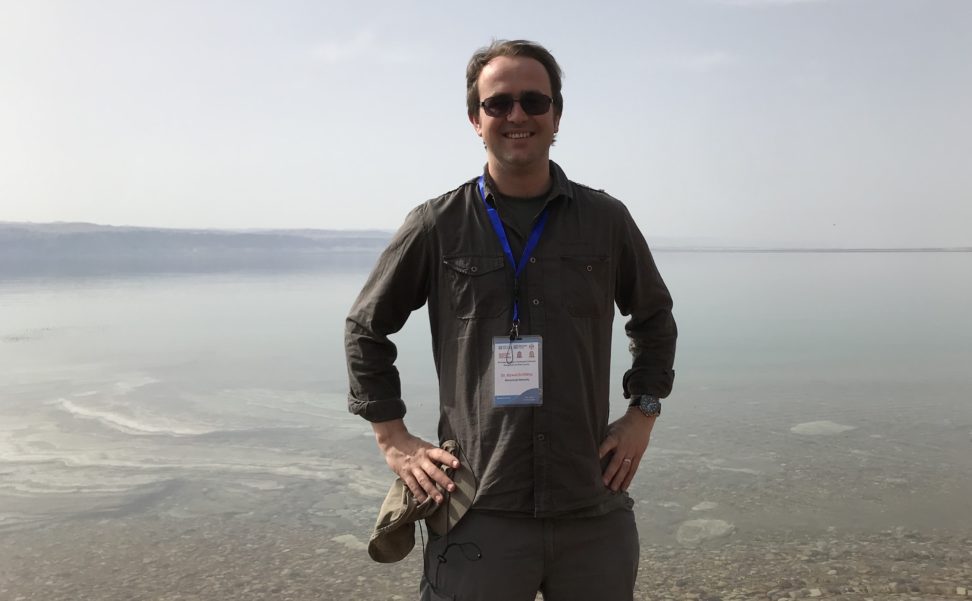
Another scholarship recipient was Dr Bedwyr ab Ion, who completed a PhD looking at ways of developing therapies to treat prion diseases. Bedwyr returned to Wales to do his doctorate at Cardiff University’s Medicines Discovery Institute after studying for an integrated master’s degree in Chemistry at St Edmund’s Hall, Oxford University.
He said: “A few people questioned my choice to do a doctorate through the medium of Welsh. They couldn’t see the point as ‘English is the international language of science’.
“And I would answer by saying that there will always be a place for English as a common language to share ideas and opinions but that it is important that people have the opportunity to study in their mother tongue in their own country.”
“Additionally, imagine the potential if there was freedom to express and discuss ideas in languages other than English – the discoveries and creativity could be astonishing from being able to express ideas, concepts and feelings in their first language.”
Importance
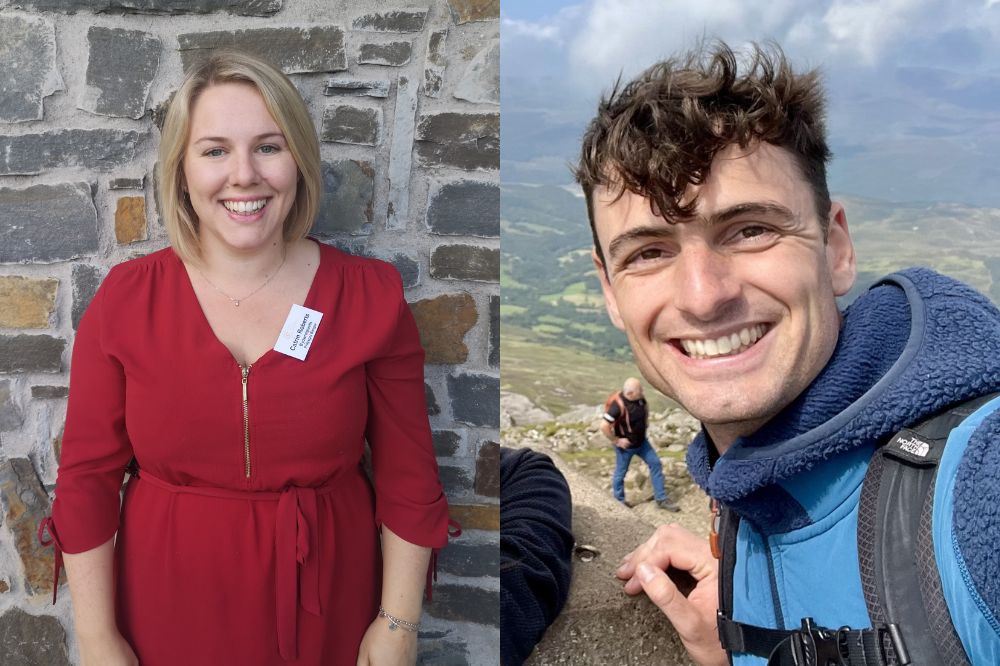
Joining Bedwyr and Hywel to discuss her experience of doing a PhD through the medium of Welsh will be Catrin Roberts, who is a clinical worker at Betsi Cadwaladr Health Board.
Catrin’s research topic is “Mother tongue in the birthing room: the experience of women and midwives” and she is undertaking her research later in life, after working and gaining experience as a midwife.
She said, “I’ve been working as a midwife for 15 years and have seen time and again how important it is for mothers to be able to speak Welsh during childbirth.
“During my career, I’ve had to translate for other non-Welsh-speaking professionals so that the mother could speak in her mother tongue, and I’ve supported mothers to make informed decisions while giving birth in Welsh.
“I hope that the evidence in my research will highlight the importance of speaking your first language in maternity care, especially during labour and birth. I believe that language choice should be considered as a factor equal to pain relief options, choice of birthing location, and feeding preferences during childbirth.”
Hywel, Bedwyr, and Catrin will take part in a discussion at Pabell y Cymdeithasau on the Eisteddfod field on Thursday, August 7 at 11:30am. The session will be chaired by Dr Dylan Phillips, Director of Higher Education and Secretary of the Coleg Cymraeg.
Dr Dylan said, “The aim of establishing the scheme was to develop top-quality researchers who can work through the medium of Welsh.
“It’s great to see that the scheme has been so successful, and that we now have an enthusiastic group of new Welsh-medium academics working in universities across Wales, carrying out pioneering work and expanding and developing Welsh-medium provision for students.
“This discussion at the Eisteddfod will be an opportunity to talk about the successes, challenges, and opportunities for the future.”
Support our Nation today
For the price of a cup of coffee a month you can help us create an independent, not-for-profit, national news service for the people of Wales, by the people of Wales.



Congrats all! Exactly what this country needs to get back on its feet ! Is there anyway they can get this initiative started in Newport !