


Everything you need to know about Wales’ new NHS dental system
Nation.Cymru staff
Thousands of people across Wales struggle to access NHS dentistry, and major changes introduced this year have left many wondering how the system now works.
A new briefing by Rebekah James for Senedd Research explains how the new NHS General Dental Services contract is changing the way patients access NHS care, how dentists are paid and what people can expect when they visit the dentist.
Here’s what you need to know
The Welsh Government introduced a new NHS dental contract on 1 April 2026 following years of concerns about access to NHS dentistry.
The reforms are intended to improve access to NHS appointments, place greater emphasis on preventing dental disease and ensure patients are treated according to their clinical need rather than the number of procedures carried out.
The Government also hopes the changes will make better use of the limited NHS dental workforce by focusing resources on those who need treatment most.
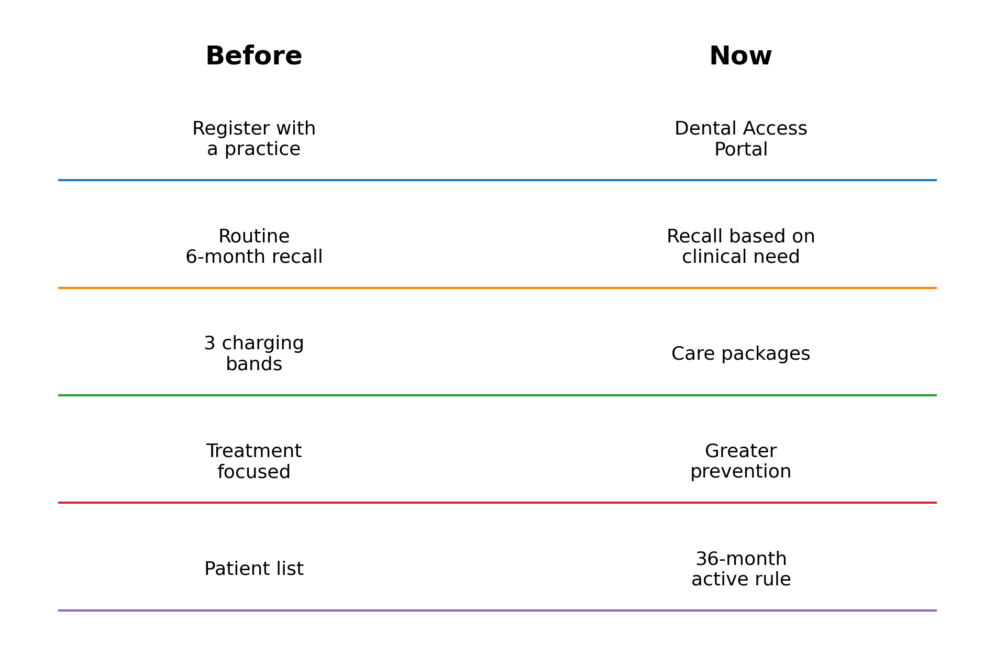
The new contract also replaces the old three-band charging system with a new approach based on individual care packages.
How do I find an NHS dentist?
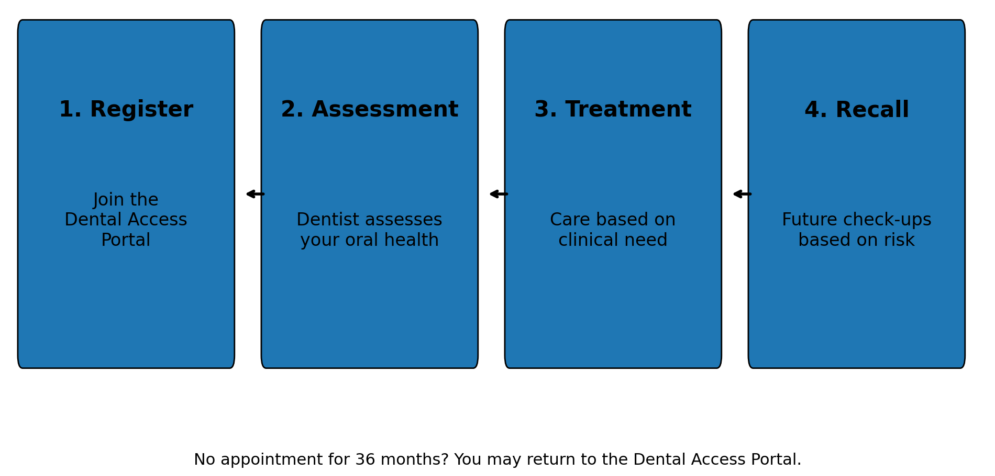
One of the biggest changes is the introduction of the Dental Access Portal.
Previously, many patients had to contact practices individually to find out whether they were accepting new NHS patients. Under the new system, people seeking routine NHS dental care register through the portal instead.
Patients are then allocated to a participating dental practice for an initial assessment when capacity becomes available.
People who need urgent dental treatment will continue to access emergency services through arrangements run by their local health board.
What happens at my first appointment?
Your dentist will carry out a full assessment of your oral health.
Rather than simply booking everyone onto the same treatment pathway, they will assess your overall dental health, identify any problems and consider your risk of developing future disease.
Some patients may only need preventative advice and routine monitoring, while others will receive treatment through one of the new NHS care packages.
The aim is to tailor care to individual need rather than providing the same service to every patient.
Will I still have six-month check-ups?
Not necessarily.
Routine six-month check-ups are no longer the default.
Instead, dentists will decide when you should return using nationally recognised clinical guidance based on your oral health and risk of future problems.
Someone with healthy teeth and gums may not need to be seen every six months, while patients with gum disease, extensive dental work or other ongoing problems may still be recalled every six months or even sooner.
Can I lose my NHS dentist?
Potentially.
Under the new arrangements, patients remain “active” if they have attended for treatment or a recall appointment within the previous 36 months.
If you have not attended during that period, or repeatedly fail to attend appointments, you may be removed from your practice’s active patient list.
Patients who are no longer active would normally need to re-enter the system through the Dental Access Portal rather than automatically returning to their previous practice.
How much will NHS treatment cost?
The previous three-band charging system has been replaced with individual treatment fees.
Examples include:
New patient assessment £27.21
Recall appointment £25.00
Urgent treatment £37.50
Simple fillings and extractions £36.03
Periodontal (gum disease) treatment £48.53
Dentures £86.40*
Front tooth root canal £91.18
Back tooth root canal £182.72
*Laboratory fees may apply to some treatments such as dentures.
The maximum NHS patient charge for a course of treatment is £384.
As before, some people remain exempt from NHS dental charges, including children and those who qualify under existing exemption rules.
What information should my dentist provide?
Dental practices are now expected to provide clearer and more consistent information for patients.
That includes details of NHS charges, complaints procedures, privacy information, Welsh language services and how patients can access urgent care or register through the Dental Access Portal.
The aim is to make it easier for patients to understand both the treatment they are receiving and what they will be charged.
Will these changes solve the shortage of NHS dentists?
Not on their own.
The reforms are intended to make better use of existing NHS dental capacity, improve prevention and make access to appointments fairer.
However, they do not increase the number of dentists working within the NHS.
That means availability of NHS appointments is likely to remain one of the biggest challenges facing dental services across Wales, particularly in areas where practices are already heavily oversubscribed.
For many patients, joining the Dental Access Portal may still involve a wait before they are allocated to a practice.
The bottom line
The new contract represents the biggest overhaul of NHS dentistry in Wales for many years.
For patients, the most noticeable changes are likely to be the introduction of the Dental Access Portal, more personalised recall intervals, a new charging system and the requirement to remain an active patient by attending appointments at least once every 36 months.
While the reforms aim to make NHS dentistry more preventative and easier to access, they are unlikely to solve the long-standing shortage of NHS dental appointments on their own.
This explainer is based on a Senedd Research briefing by Rebekah James examining Wales’ new NHS General Dental Services contract. Senedd Research provides impartial research and analysis to Members of the Senedd.
Support our Nation today
For the price of a cup of coffee a month you can help us create an independent, not-for-profit, national news service for the people of Wales, by the people of Wales.
Get more trusted Welsh news
Choose Nation.Cymru as a preferred source in Google News to see more of our journalism.




People are getting bumped down the list and serious problems missed already.
It’s still broken.
Imagine you’re right what’s your evidence
My experience is that our dental practice is doing just what has been described so thank you for the information. Although the dental practice I go to in Cardiff is definitely trying to get you to go private if you will, but is willing to try out the new system for a period.
Hopefully things will improve for NHS dentistry, at least the issue is being addressed. That said, the current situation is genuinely broken. Dentist practices can stop all NHS services, removing *existing* patients from their rolls, without ensuring any continuity of care to another provider. Patients are then thrown on the lottery of NHS provision – routinely described as “patchy” but the reality is there are huge areas of Wales with no practices taking on NHS patients. I wonder what percentage of patients registering on the new portal are actually being allocated an NHS dentist – and how far they need… Read more »
My dentist went private after a lifetime of NHS service and blamed the new contract. I now await another available NHS dentist but will probably be forced to go private due to an utter lack of availability.
From how I understand it, I think it will work well for people who didn’t have an NHS dentist at all but have oral or dental issues that need addressing but can’t afford private treatment. Those people were being failed by the system and this change should address this.
However, if those of us with relatively better dental health get less checkups, then that gives more time between checkups for minor problems to become major which could make the system perform worse in the long run.
Exactly. If it’s been clinically accepted for decades that 6-monthly check-ups are a good thing then why are they suddenly saying that’s no longer the case? My partner’s dentist tried to move her to 2-yearly check-ups when she’s always had 6-monthly ones – her teeth haven’t magically renewed themselves since the last visit!
Ignoring that most dentists are for-profit businesses and six monthly checks are four times the income than 24-month checks, this is back to the blanket vs default debate. A two year default that dentists can increase where they see clinical benefit is a very sensible compromise. It doesn’t make sense that healthy folks who have flawless teeth are taking up slots that could be used to save someone else from losing their teeth entirely. Especially when x-rays if appropriate can identify most hidden issues likely to cause problems before the next 2 year checkup.