

Fighting for justice at the heart of the Welsh building safety crisis
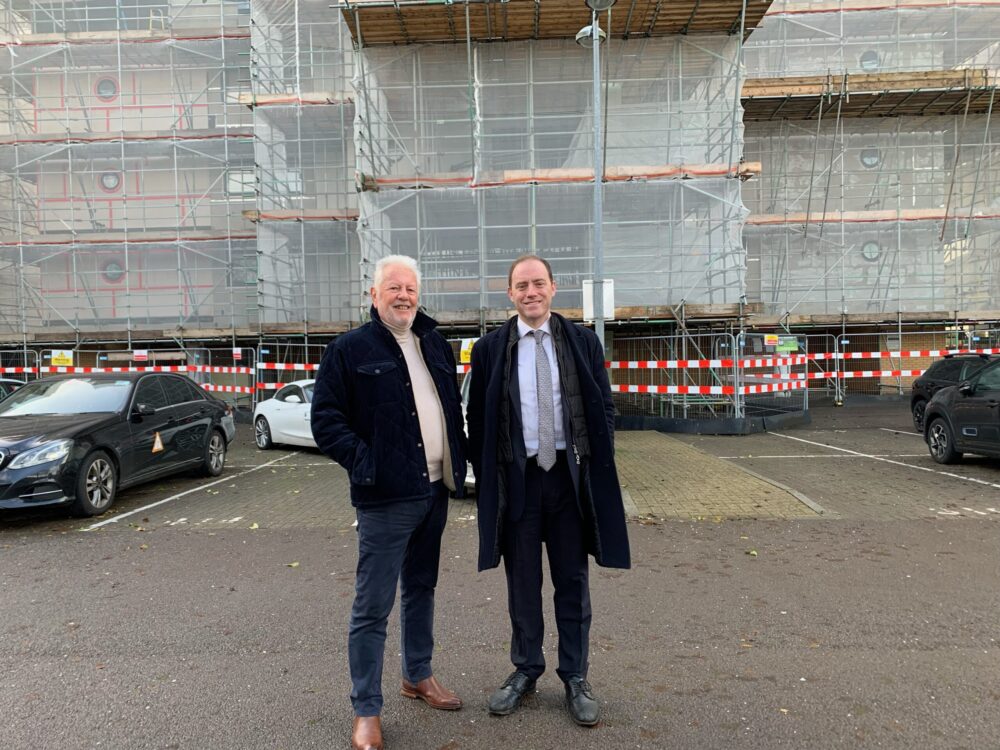
Mark Thomas
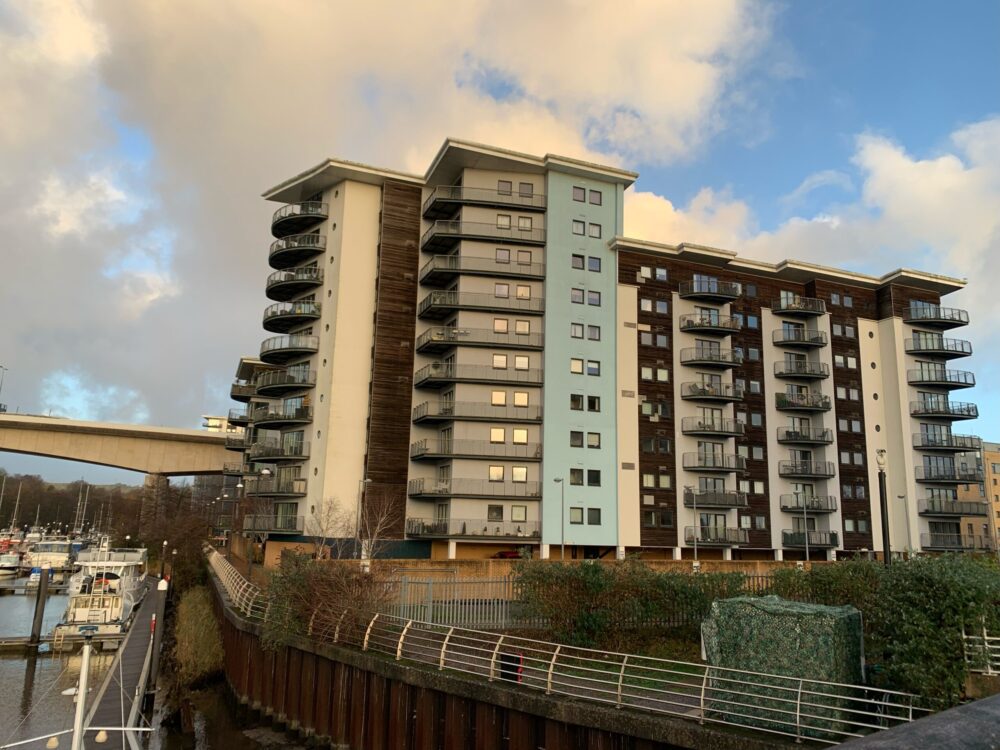
Nestled on the edge of Cardiff Bay, the Victoria Wharf development was once the embodiment of modern, waterside living. With its gleaming glass façades and panoramic views, it promised a tranquil retirement for many, including Peter Larwood.
But for Peter, what should have been a well-deserved haven swiftly has become a battleground, as he found himself at the heart of a harrowing fight for safety, justice, and peace of mind.
Hopes of a serene retirement
When Peter Larwood first set foot in Victoria Wharf, he was newly retired after a long and successful career investigating corporate fraud. His days of unravelling complex financial and contractual webs for both private firms and public bodies had instilled in him a sharp eye for detail and a profound sense of right and wrong.
Wales was not new to him; he had lived and worked in large part of the country before, and the presence of family in Cardiff made the city the ideal place to settle. Victoria Wharf’s promise of stylish, community-centric living by the water was irresistible.
As Peter saw it, this was to be his final home—a well-earned reward after decades of hard work.
But the peace he sought proved fleeting. The development, comprising seven buildings and 458 apartments, was popular with professionals and retirees alike. Its carefully curated image masked deeper problems, which would only come to light in the wake of a national tragedy.
The shocking discovery
The Grenfell Tower fire on 14 June 2017 served as a shocking turning point for residents of high-rise buildings across the UK.
For Peter, it was the catalyst for a long running nightmare he could never have anticipated. Like millions of others, he watched the footage of Grenfell with horror, unable to fathom how such a catastrophe could occur in modern Britain. But it was the subsequent building surveys—ordered in the aftermath of Grenfell—that would truly upend his world.
Intrusive inspections at Victoria Wharf, like so many other high-rise developments in Cardiff Bay revealed a host of life-critical fire and building defects: combustible cladding clung to the exterior walls, vital fire breaks were missing, and insulation had been shoddily installed.
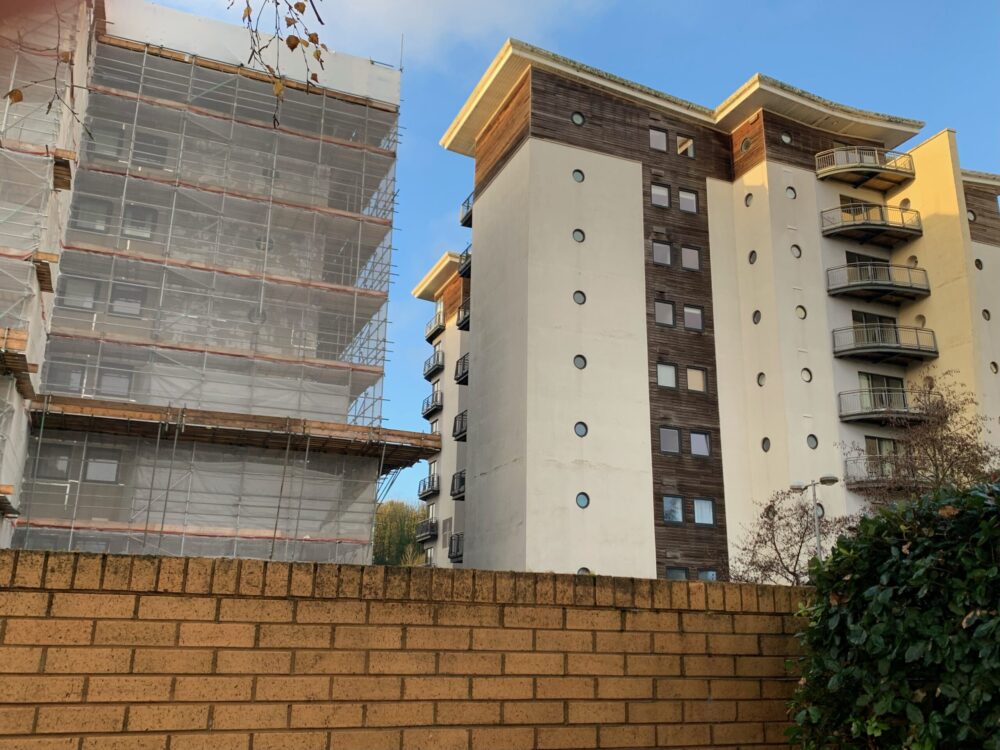
The building Peter had trusted to protect him was, in effect, a potential fire trap. The sense of betrayal was acute. “We trusted that our new homes were built to keep us safe. Instead, we found ourselves living in a potential ticking time bomb,” Peter recalls.
Refusing to remain silent
For many, such a revelation would have led to despair or resignation. But Peter’s background in corporate crime had taught him not to accept things at face value. Instead of burying his head in the sand, he channelled his outrage into action.
He quickly became a leading voice of his fellow residents, determined to uncover how such catastrophic failings could have occurred and to hold those responsible to account.
Peter’s tenacity was evident from the outset. He began by gathering every available document relating to Victoria Wharf’s design and construction by Taylor Wimpey. He has poured over fire safety reports, and the development’s commercial and technical history. Familiar patterns soon emerged: corners cut, regulations inadequately enforced, critical details overlooked. An all-too-common problem across Wales and England. The more he learned, the more determined he has become to expose the truth and tackle the injustice.
The emotional toll
Like many other campaigning victims in Wales and England Peter’s journey is anything but easy. As the scale of the problems became apparent, so too did its ramifications. Residents were told that until the defects were remediated, the building would remain unsafe. Insurance costs have soared. The need for waking watches and round-the-clock fire marshals has seriously emptied the pockets of innocent leaseholders and residents.
Most devastating of all, the flats—once prized investments and cherished homes—like so many others in England and Wales have become unsellable unless to cash buying speculators at enormous price discounts.
For Peter, the emotional impact has been profound. The financial uncertainty has obviously gnawed at him, but it is the erosion of trust and security that has hurt most. “It’s the constant anxiety,” he said. “You can’t relax. Every letter from the management company brings a new worry—more costs, more delays, more uncertainty.” Nights were spent poring over emails and legal documents, days chasing updates and rallying neighbours. What should have been a peaceful retirement has become an exhausting, all-consuming campaign.
Rallying the community
Peter’s fight has often been a solitary one. From the beginning, he sought to bring his neighbours together, understanding that collective action was their best hope. However, many leaseholders have been overwhelmed by the complexity and what with the current cost of living pressures many have had little time to assist.
“Too busy just getting on with their normal already stressed lives,” says Peter. Nonetheless, he has organised meetings in the development’s communal lounge, drafted letters to developers and freeholders, and liaised with local councillors and Senedd MSs and Welsh Westminster MPs.
Peter is also currently engaged in a lengthy struggle to dislodge the development’s Managing Agent: the highly controversial and much criticised FirstPort. The company has in recent years been hauled before Westminster MPs and castigated for their poor service levels and opaque operating style.
To replace FirstPort, Victoria Wharf leaseholders need to obtain a 75% majority. A notoriously difficult challenge in a very large development. But Peter and his colleagues are getting there. “It’s sadly another shocking aspect of what is now called cynically “fleecehold” (leasehold). A feudal relic of a legal system that today only exists in Wales and England.
In discussing the fall out of the crisis Peter lists the stories of young families, single professionals, and fellow retirees—all equally trapped, equally fearful. Some have invested their life savings in their homes; others have started families, only to find themselves facing financial ruin. Peter has become their advocate and their confidant.
Confronting the developers
As is common the initial reaction from the developer, Taylor Wimpey, was disheartening. They pointed to legal technicalities, citing the former Defective Premises Act, (DPA) which initially absolved them of liability for any defects discovered more than six years after construction.
For Peter and his neighbours, this was an infuriating injustice. Many defects were hidden, only surfacing years later, and yet the law offered no protection. “We had more consumer rights on a toaster than on our homes,” Peter quips bitterly.
Undeterred, he pressed on. He established connections with other affected buildings and campaign groups across Wales, sharing strategies and offering support. The media began to take notice, and Peter found himself giving media interviews and speaking at the Welsh Government’s Senedd Housing Committee. Through it all, he has not lost sight of his ultimate goal: a safe home for himself and his neighbours.
Under the former UK Conservative Government’s Housing Minister, Michael Gove, the DPA was amended to allow victims to pursue responsible developers. But it comes with huge legal risk and equally large legal fees. This has resulted in most victims like Peter to rely on the Welsh Government’s Developers Contract (DBC).
Peter like many other Welsh victims is however highly critical of a contract that does not include the increasingly large and costly non-fire life critical defects that are emerging from developments undergoing invasive investigations. “The WG’s contract is too narrowly focused on fire defects and leaves many of us on the hook for other huge costs – it a dire situation.”
Peter goes on to say, “The very people we relied upon to protect us and keep us safe, seem more inclined to protect the offenders rather than the victims.” He is scathing about the responses many innocent Welsh victims have received from the Welsh Government.
The personal cost
Peter’s campaign has exacted a heavy price. Friends and family worry about his health, urging him to take breaks and look after himself. But for Peter, the thought of walking away is unthinkable. He has already invested too much—emotionally, mentally, and financially—to stop now. The battle has become a key personal mission, a crusade for justice in retirement.
Many moments of doubt, of course remain. Bureaucratic WG delays, developers and Managing Agents legal stonewalling, and the ever-present threat of spiralling costs often make the mountain seem insurmountable. But Peter’s resilience never wavers. He currently takes solace in small victories: a supportive media article, a neighbour’s heartfelt thanks. These moments kept him going, fuelling his belief that change, and justice is possible, even in the face of overwhelming odds.
Finding purpose amidst the struggle
Over this time, Peter’s campaign has also transformed from a personal fight into a broader movement for change. He has become a mentor to other development residents in Cardiff and Swansea Bays facing similar crises, offering advice and encouragement through the Welsh Cladiators Campaign Group.
The skills honed during his investigative career are invaluable: navigating the labyrinthine and closed insider world of developers, freeholders and property management companies.
Yet for all the wider advocacy and activism, the heart of Peter’s struggle remained deeply personal. His apartment, once a symbol of hard-earned security, had become a daily reminder of vulnerability.
The sound of fire alarms in the corridor still sent a jolt of adrenaline through him. But Peter has refused to be cowed by fear. Instead, he’s channelled it into action—writing, speaking, and fighting for urgent reform. Now in his mid-seventies, he shows no signs of giving up. He remains a fixture at residents’ meetings and Welsh Cladiators campaign events, his energy undimmed by the passing years
When asked what keeps him going, Peter’s answer is simple: “It’s a matter of principle. No one should be left to feel unsafe in their own home. If I can do something to change that—for myself, for my neighbours, for anyone else trapped in this situation—then that’s what I’ll do. I’m not finished yet.”
Currently Peter is a leading figure in the Welsh Cladiators Campaigning Group looking to get the Welsh Government Housing Minister to enact English laws to protect people like himself having to pursue developers through the High Court – with all the attendant costs and risk.
English victims have for years been able to go to the courts and seek enforceable orders against accountable developers and landlords (freeholders). Incredibly these same laws were voted down by Welsh Government and then housing Minister Julie James in November 2022.
It was a catastrophic mistake that we strongly advised against” says Peter. “It has caused significant financial harm and damage to the lives of many innocent Welsh citizens”
He hopes along with fellow very tired but ever determined and resilient Welsh Cladiators, that the new Housing Minister, Jayne Bryant will now support the same laws in a Senedd vote, on the 3 March.
Peter reports that “Much of the heavy lifting in the Senedd has been done by the magnificent MS Rhys ab Owen who has been a powerful and long-term advocate for us.”
Peter is far less complimentary about the exiting Bay Senedd MS and former Welsh First Minister Vaughan Gething.
It is well known that he has been subject to years of fierce victims’ criticism for his failure to publicly speak out on the crisis, condemn responsible developers and support victims in the Bay
Peter Larwood’s story is a testament to the power of resilience, community, and the refusal to accept systemic injustice. His determination has forced the attention of those in power in Wales to listen. The 2 March Senedd vote on the new laws will be an acid test, but whatever happens next Peter’s unwavering spirit remains a beacon for all who seek justice in the face of adversity.
Mark Thomas is lead of the Welsh Cladiators
Support our Nation today
For the price of a cup of coffee a month you can help us create an independent, not-for-profit, national news service for the people of Wales, by the people of Wales.


