


First use of chemical-free method to eradicate Japanese knotweed for Wales
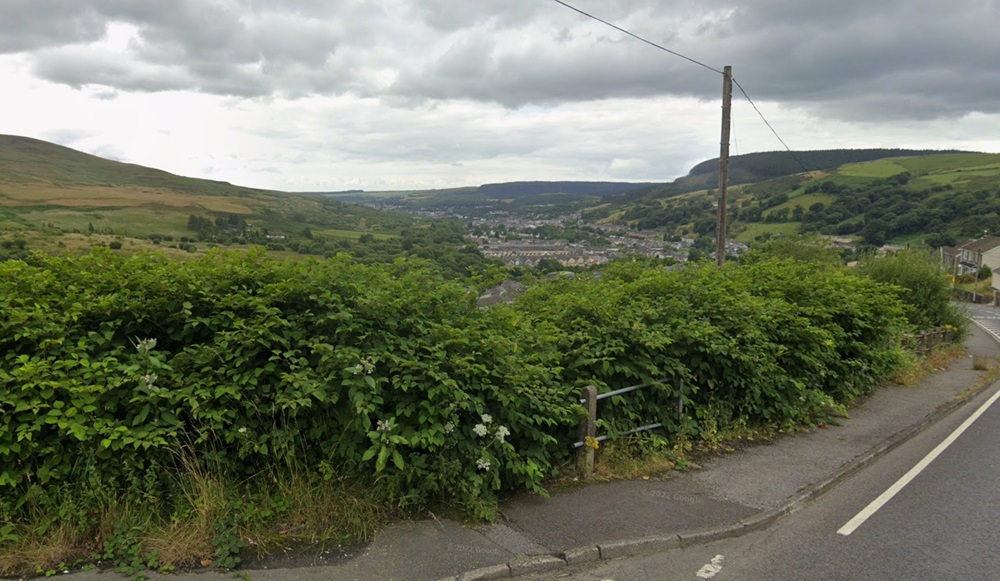
A Welsh Wildlife Trust is launching a pioneering trial of a new chemical-free method to eradicate Japanese knotweed, one of the UK’s most damaging invasive species.
North Wales Wildlife Trust’s trial, taking place at Stori Brymbo, Wrexham from July 14, 2025, marks the first use in Wales of the Roots Reset technique.
Wildlife Trusts in Wales are calling for the end or reduction of the use of pesticides, and as such, North Wales is leading the way with innovative management methods for managing Japanese knotweed, an invasive non-native species which is damaging to biodiversity, housing and infrastructure across the United Kingdom.
North Wales Wildlife Trust (NWWT) has initiated a new management approach for a Japanese knotweed eradication trial in Wales as part of the Wales Resilient Ecological Network Project (WaREN). WaREN supports organisations, Local Action Groups, and communities in their efforts to address invasive non-native species (INNS) across Wales.
The trial began at Stori Brymbo, Wrexham on July 14, 2025, and lasted for just five days, although the overall process will take 12 months to complete. A report will then be published and made available on the Trust’s website.
Threat
As invasive species rank among the top five threats to global biodiversity, finding an innovative, chemical-free approach enables NWWT to lead efforts in restoring nature. This new approach uses the Roots Reset method to control Japanese knotweed without pesticides or chemicals and promotes quicker natural regeneration and allows replanting to take place within 5 days.
The Roots Reset technique does not involve pesticides and has been demonstrated to eradicate Japanese knotweed within a year. Traditional methods using pesticides may take up to five years to achieve the same result. Roots Reset was previously deployed in the United Kingdom (Scotland), but this will be the first time the method is utilised in Wales.
This trial was developed following funding from Dŵr Cymru Welsh Water to discover innovative ways to manage invasive non-native species. NWWT consulted Soilwise about Roots Reset, a method designed to remove Japanese knotweed, while benefiting the environment. After the trial, NWWT will release a report comparing the effectiveness of the Roots Reset method with the traditional
method of foliar spraying, as well as outlining the costs and timeframes for each approach.
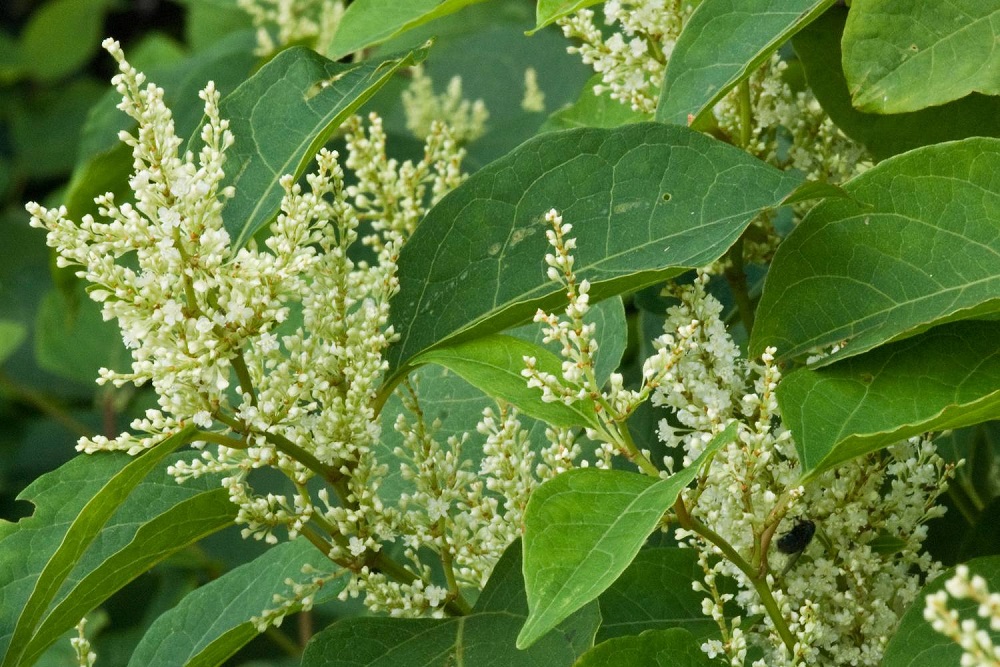
Additionally, a validation report will be produced by Dr. Daniel Jones, a leading UK expert on Japanese knotweed.
The Roots Reset method was originally developed by the Dutch company Soilwise. This technique has been successfully implemented at over 325 sites across north-western Europe, achieving full elimination of Japanese knotweed in more than 95% of cases. Once the method is completed, native species can be planted in the treated area after just five days. This is a significant improvement compared to current best practices, which recommend waiting until the end of treatment—typically a minimum of five years—before planting. This delay is primarily due to concerns that soil disturbances could relocate rhizomes of any remaining Japanese knotweed.
If the trial of this method in north Wales proves successful, it will be validated by Dr. Daniel Jones, the UK lead on Japanese knotweed. Following validation, there is hope for broader implementation across the United Kingdom.
Benefits of using Roots Reset
• Proven complete control of Japanese knotweed in one treatment
• No use of pesticides or chemicals,
• Environmentally friendly,
• Recovery of soil health and biodiversity above and below ground
• Low cost compared to other methods
• Applicable both in-situ and on excavated soil in-depot
Frances. CEO of NWWT, said: “We at North Wales Wildlife Trust are always striving for new and innovative ways of helping nature and tackling Invasive Non-Native Species (INNS). Roots Reset enables us to be at the forefront of INNS management without the use of pesticides. Allowing nature to recover without pesticides enhances biodiversity and natural regeneration more efficiently than
conventional practices”
Matthijs Varekamp (Soilwise Japanese knotweed specialist, shared: “The solution is already in the soil. We developed a proprietary method to deploy microorganisms already present in the soil against invasive species.
“To do so, the soil is first enriched with a 100% plant-based granulate called CleaRoot, after which the soil is sealed oxygen-tight. CleaRoot feeds specific microbes already present in the soil. As a result, these grow rapidly and consume all available oxygen in the soil.
“In the absence of oxygen, further fermentation of the knotweed’s roots takes place. As a rule, 100% of knotweed is killed in one treatment, and that without the use of chemicals or excavating the soil. We apply Roots Reset in close collaboration with contractors throughout North-West Europe.
“We look forward to deploying Roots Reset in Wales for the first time and introducing people in Wales and the surrounding areas to our innovative and effective control technique.”
With invasive species being one of the top five threats to biodiversity across the planet, finding an innovative way of tackling this issue without pesticides or chemicals allows NWWT to lead the way for nature recovery.
Support our Nation today
For the price of a cup of coffee a month you can help us create an independent, not-for-profit, national news service for the people of Wales, by the people of Wales.



Fantastic, hopefully this means an acceleration in removal of this species. If this is successful (and cost-effective), I hope to see this utilised by my local council.
The main infestation of Japanese Knotweed in Wales is that along railway embankments, the propagation routes. As this presentation explains, such type of site is difficult to establish the oxygen proof barrier.
https://www.youtube.com/watch?v=87PIHjt9P5Q
Interesting that Nederlandse Spoorwegen (Dutch Railways) is involved in this project and it would be wise for the Welsh Government to engage this expertise to implement on core valley lines in the south where ministers have administrative control.
So, simple eh? – deprive the soil of oxygen, with the help of this already present bacterium! It would be necessary to reliably exclude the smallest chance of re-oxygenation. How on earth do they do that? – and wouldn’t it effectively sterilise the soil? – so how does soil health and biodiversity recover from that? How long does it take? What is meant by ‘roots’? – It’s the massive, hugely resilient deep rhizome that is the problem with this beast. I would love this to work, but …! I’ve been involved in combatting knotweed for years, on and off. Yes,… Read more »
There seems to be an inaccuracy in the article, probably due to a translation error. Looking at the information present on their website the process is about using natural decay. There are bacteria in the soil that already goes after plant roots and such, it helps with the decomposition process. The idea is that you clear and destroy the present Japanese Knotweed (which typically will remove anything else along side it anyway). The bare land is then sprayed/irrigated with much more of this bacteria and then fed more oxygen to promote it’s growth. This is probably what is meant by… Read more »
It is not the bacteria (needs oxygen) that kills the roots but a fungus (needs no oxygen) hence the need for an oxygen proof barrier.
Glyphosate as the name suggests is a sugar-chain toxin which inhibits the production of cell proteins, hence killing any plant that uses photosynthesis to grow. This gives it herbicide qualities. It, in itself, is a sugar based compound so broken down by soil bacteria, so becomes an inactive toxin in the soil. The problem is that retail products containing Glyphosate also contains a surfactant. It is this that causes environmental damage. For this reason professional application of Glyphosate does not spray it upon the foliage but injected into the hollow stems (no surfactant required) when used on Japanese Knotweed. Inhibiting… Read more »
I have resided near to a site ex BR -where the plant infests the area, over 8 years the site has been cleared thrice , yet i noticed ,”its back” , so whatever ideas you have this piece of land might be of use to try out the experiment..(rough ground ajacent to a fast flowing small river behind a chapel -unused overgrown plot- with knotweed re occurring Dyfed/Ceredigion border
Fire!
I’m wondering if anyone’s come up with a similarly effective (or at any rate hopefully effective!) method of suppressing that other alien plant pest himalayan balsam? There were large tracts of land, especially adjacent to streams, that were absolutely infested with the stuff in the area where I used to live. No other plant life survives alongside it once it becomes dominant.