

Four Celtic Nations: Three Leaders, One Follower
NHU, votre média breton
Cymru, Scotland and Ireland are moving forward with independence-minded leaders in line with the wider direction of European history.
Administrative Brittany remains under an outdated form of political control from Paris.
While other Celtic nations govern themselves, administrative Brittany merely follows
The contrast has become impossible to ignore.
In just a few years, three Celtic nations have placed at their head leaders openly embracing a national vision for their country. In Wales / Cymru, Scotland and Ireland, political debates now revolve around institutional futures, energy sovereignty, language, economic development and local democratic control.
Meanwhile, in Brittany, regional power remains limited to a territorial administration dependent on Paris. No Breton parliament. No meaningful fiscal powers. No control over major economic, energy or linguistic decisions.
As a result, while several Celtic nations already think and act like countries, Brittany continues to function as little more than a French administrative subdivision.
And this gap keeps widening.
A new generation of Celtic leaders
This is no longer anecdotal.
For several years, national parties have been gaining ground across the Celtic world. However, recent elections have accelerated the trend considerably.
In Wales, Rhun ap Iorwerth now leads Plaid Cymru with a clear objective: more powers for Cymru and, ultimately, the possibility of fully recognised Welsh independence. Once dismissed by London as marginal, Welsh nationalism now appears as a credible governing force.
In Scotland, John Swinney has taken over the leadership of the Scottish National Party. Despite recent turbulence within the SNP, the idea of Scottish independence remains deeply rooted in society. Above all, Scottish political life now takes place within a Scottish national framework. Major issues are debated in Edinburgh / Dùn Èideann, not in London.
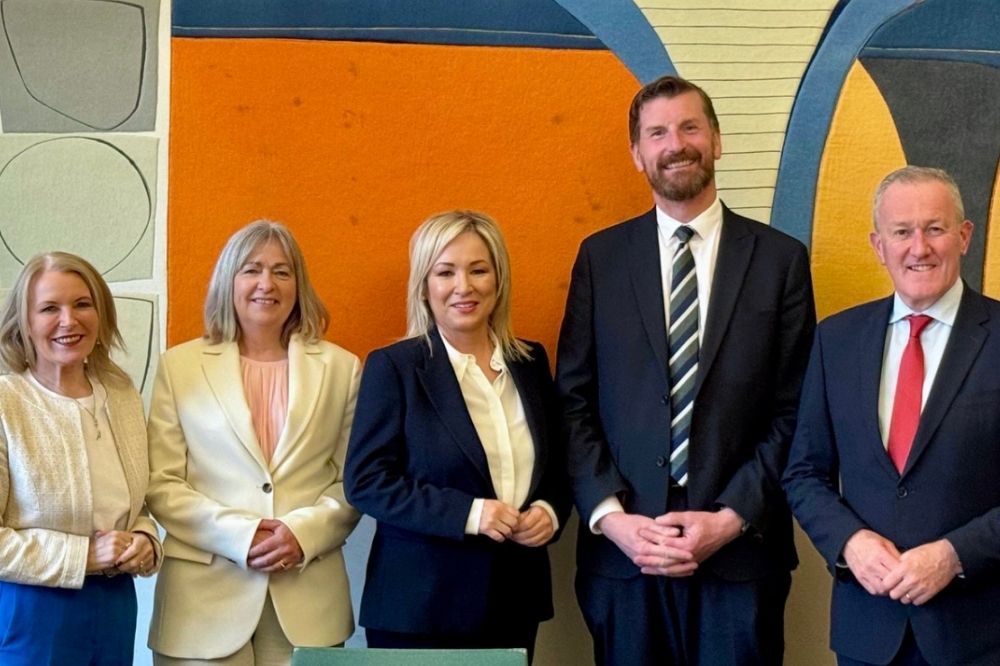
In Ireland, Michelle O’Neill represents another historic turning point. For the first time, a Sinn Féin figure leads the government of the north of Ireland. Once again, Irish reunification is no longer viewed as a distant political fantasy. On the contrary, it is increasingly becoming a serious and publicly debated possibility.
In all three cases, these leaders speak in the name of a country.
They possess national institutions.
They govern with real powers.
And above all, they think about the future of their nation over decades, not election cycles.
Powerful national parties across the Celtic islands… but none in Brittany
Another contrast becomes immediately obvious when comparing the Celtic nations.
In Wales, Scotland and Ireland, national political parties now shape public life. They influence governments, run institutions and dominate everyday political debate.
In Brittany, no comparable force currently exists.
Plaid Cymru: a Welsh national party that became credible
Founded in 1925, Plaid Cymru gradually established itself as a major Welsh political force. Once regarded as marginal, the party gained credibility as the Welsh parliament obtained greater powers.
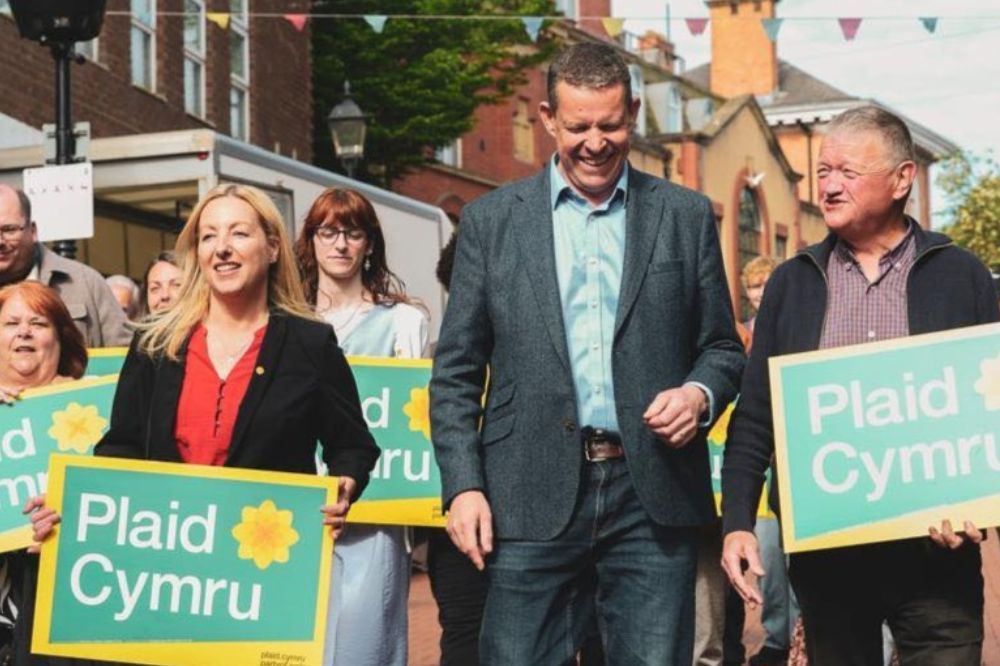
Today, Plaid Cymru governs important local authorities and heavily influences political debate across Cymru. The defence of the Welsh language, local economic development and institutional autonomy all occupy a central place in its programme.
Most importantly, a growing share of Welsh youth now sees the party as a serious governing alternative.
The SNP: Scotland’s political machine
In Scotland, the Scottish National Party has dominated political life for nearly two decades.
The SNP fundamentally transformed the Scottish political landscape.
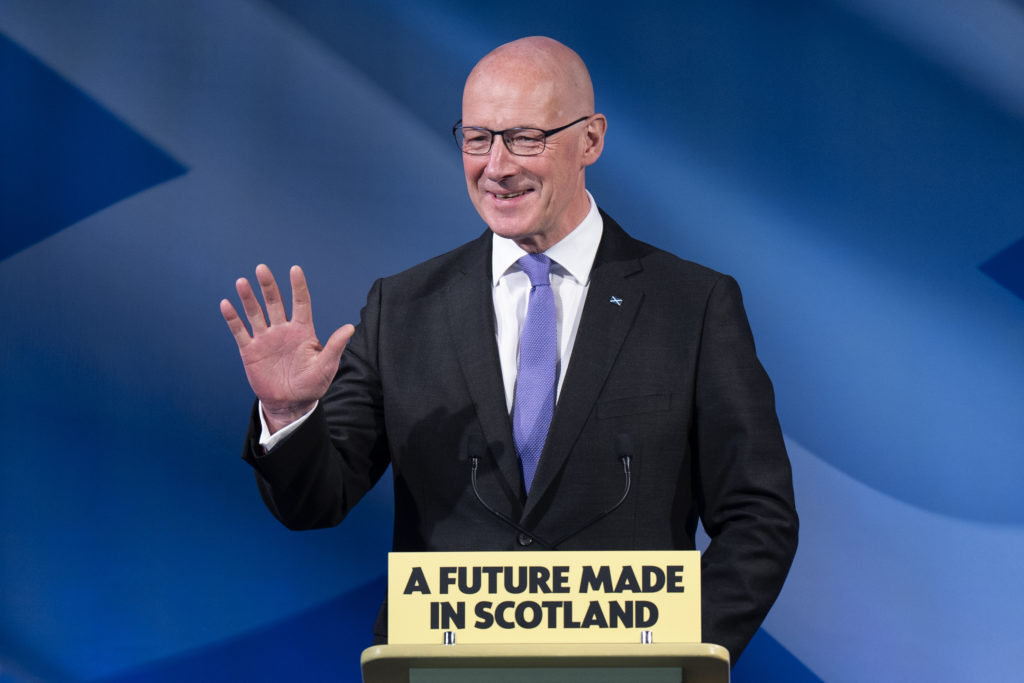
Thanks to the party, Scottish independence moved from the realm of activist dreams into the territory of credible political possibility. The 2014 referendum marked a historic rupture. Since then, the national question has shaped almost all Scottish public life.
Even its opponents are now forced to think within a Scottish national framework.
Sinn Féin: from activism to power
Sinn Féin followed an even more spectacular trajectory.
Long demonised, the party became unavoidable on both sides of the Irish border.
Today, it leads the government of the north of Ireland and openly aims to govern in Dublin / Baile Átha Cliath as well. Irish reunification, once considered unrealistic, is now part of mainstream political discussion.
Once again, a national party succeeded in imposing its political vision across an entire country.
Why does Brittany not have a major Breton political party?
The question now deserves to be asked openly.
Why do the three insular Celtic nations possess strong national political parties while Brittany never succeeded in building a comparable force?
Several explanations probably exist.
First, French centralisation long suffocated any strong regional political expression. Furthermore, the French institutional system heavily favours large Paris-based parties. In addition, national French media occupy an overwhelming place in public debate.
However, these elements may not explain everything.
Wales also experienced linguistic decline. Scotland likewise endured strong British centralisation. Ireland’s political history was even more violent and complex.
Yet all three nations eventually produced powerful national movements capable of reaching government.
So why not Brittany?
This political absence probably constitutes one of the greatest differences between Brittany and the other contemporary Celtic nations. Without a structured political force, transforming cultural or historical consciousness into a genuine national project becomes extremely difficult.
Certainly, Breton political parties do exist. However, none has managed to grow significantly.
Too many egos?
Lack of resources?
Lack of long-term vision?
These are questions worth examining in a future article.
In recent months, inspired by the Welsh Yes Cymru movement, Scotland’s Yes Scotland and Cornwall’s Yes Kernow, a new movement called Yes Breizh emerged and is becoming increasingly visible in public debate. Yet Yes Breizh is not a political party.
Real powers, not symbolic ones
This is where the fundamental difference lies.
The Welsh First Minister possesses important powers across several essential areas: health, transport, education, culture and economic development. The Welsh Government can also adapt certain fiscal and legislative policies.
In Scotland, powers are even broader. The Scottish Parliament passes laws, controls part of taxation and manages many strategic sectors. Even without independence, Scotland already functions as a quasi-political nation.
In the north of Ireland, the local government also holds significant powers. Despite recurring institutional blockages, Irish political leaders directly shape a large share of public policy.
And Brittany?
Administrative Brittany possesses neither a parliament, nor an autonomous government, nor meaningful legislative authority. The president of the regional council mainly administers budgets controlled by the French central state. His room for manoeuvre remains extremely limited.
Even the language issue illustrates this weakness.
Wales grants official status to the Welsh language. Scotland actively supports Gaelic and Scots. Ireland constitutionally protects the Irish language.
In Brittany, neither Breton nor Gallo enjoys genuine official recognition.
The contrast therefore becomes brutal.

In Scotland, Cymru and Ireland — including the north of Ireland — political leaders have spent decades thinking first and foremost about their country, their people and their future.
In Brittany, the current regional “President”, who possesses very limited powers, essentially implements policies decided in Paris by the central state. He never speaks of a “Breton people” or a “Breton nation”.
A Brittany kept in a subordinate role
For decades, the French central state presented decentralisation as a major democratic advance. Yet reality remains far more limited.
The regions of the French Republic — whose borders were imposed by Paris without consultation — mostly administer policies decided elsewhere. They depend financially on the central state. They possess almost no constitutional autonomy. Above all, they remain under permanent supervision and control from Paris.
In this framework, the “President” of administrative Brittany obviously cannot act like a Scottish or Welsh First Minister. The powers are simply incomparable.
Yet many French media outlets still maintain the opposite illusion.
They regularly present regional presidents as genuine territorial leaders. In reality, their role remains largely administrative.
The difference becomes immediately visible when comparing the four situations side by side.
On one side:
heads of national governments,
debates about sovereignty,
openly national political strategies.
On the other:
a regional presidency with no authority over all five Breton departments,
limited powers,
permanent dependence on central government.
Administrative Brittany therefore appears as the only Celtic country deprived of real political instruments.
Why the other Celtic nations are moving forward
This difference is not accidental.
Wales, Scotland and Ireland all possess politically recognised national institutions. Even while remaining within the United Kingdom, the Welsh and Scottish peoples benefit from their own political frameworks.
As a result, Welsh citizens see Welsh elections as national elections. The same applies in Scotland. National media cover Welsh and Scottish political debates daily. Political parties think at the scale of the country itself.
Gradually, this dynamic produces a strong collective consciousness.
In Brittany, the situation remains entirely different.
Most major political decisions are taken in Paris. The principal media remain French national media. Breton debates often remain secondary within public discussion.
Consequently, Brittany still struggles to exist politically as a distinct country within the collective imagination.
And yet, culturally, historically and geographically, Brittany fully belongs to the wider Celtic European world.
A political divide likely to deepen
Perhaps the most striking aspect concerns the future.
Cymru is gradually moving towards greater autonomy. Support for independence is growing strongly among younger generations. In Scotland, independence now structures almost the entire political landscape. In Ireland, reunification is becoming one of the central issues of coming decades.
Meanwhile, administrative Brittany continues asking for minor institutional adjustments and symbolic resolutions.
The gap may therefore widen even further.
Across the other Celtic nations, political leaders already speak openly about sovereignty, national institutions, energy strategy, economic control and the future of their country.
In Brittany, public debate still often revolves around secondary powers usually refused by Paris.
This situation raises profound questions.
How can one of Europe’s largest Celtic countries remain the only one deprived of national political institutions? Why do the Welsh, Scottish and Irish peoples possess democratic tools that Brittany still lacks?
And above all: how long will this difference remain acceptable for a growing number of Bretons?
Three nations look towards the future. Brittany still looks towards Paris.
The image has become striking.
Rhun ap Iorwerth, Michelle O’Neill and John Swinney embody three nations thinking about their future through their own institutions. Whether one agrees with their politics or not, they lead genuine national governments.
Facing them, Loïg Chesnais-Girard appears trapped within a centralised political model from another century.
The issue now goes far beyond identity alone.
It directly concerns democracy, decision-making power, economic development, cultural survival and public control over Breton affairs.
Across the Celtic world, nations are moving forward.
Brittany, meanwhile, remains under political supervision.
And with every passing year, the difference becomes more visible.
This article first appeared in French at NHU.Bzh
Support our Nation today
For the price of a cup of coffee a month you can help us create an independent, not-for-profit, national news service for the people of Wales, by the people of Wales.
Get more trusted Welsh news
Choose Nation.Cymru as a preferred source in Google News to see more of our journalism.



The difference is the French Revolution,England did not have one.
England may self-destruct soon.
Supporting Russia over Ukraine is a strange choice https://www.theguardian.com/politics/2026/may/20/uk-relaxes-strict-sanctions-on-russian-crude-oil
Sacked respected railway adviser is pushing for a connected railway,
https://www.linkedin.com/posts/chris-gibb-34554a45_more-seats-and-faster-journeys-on-all-routes-activity-7462437952107950080-iWzj?utm_source=share&utm_medium=member_ios&rcm=ACoAAApoW8cBAVj0ZEwKFV-a_1dvxGOWgf6CFL8
yet having a co-ordinated plan is not a UK Govt focus.
The best option for Wales is to turn off tv / social media and watch https://www.hatads.org.uk/catalogue/record/5146861f-879f-407f-be49-ca00ddad629d
Hopefully https://www.business-live.co.uk/manufacturing/defence-firm-moving-wales-plans-33970127.amp will happen.
why do you suppose sinn fein was demonised?
Sinn Fein are an integral part of the Peace Process in The North of Ireland.
Yes we all knew the politics of SF during the troubles but to move forward for a long term peace sometimes you have to swallow your pride and talk to your enemies.