

From Pagan fires to chapel songs (Part 2): 14 DIY rituals to bring magic to your Welsh Yuletide
Del Hughes
And we’re back, with another bundle of simple rituals to add a dash of spice and sparkle to your festivities. We’re dialling up the magic now, so bring on the good times, good cheer, and good booze. Woohoo.
December 29: Ancestor Candle (Pagan/Celtic/Christian, with folk continuity)
Origin: Midwinter is a liminal time, when the veil between past and present is thinner than the wrapping paper you panic-bought from Home Bargains. In Celtic tradition, fire linked these worlds, and lighting a candle for an ancestor kept their memory warm and close.
(Though, if tradition is to be believed, and our ancestors really are still lurking in the ether, they’re no doubt watching all our questionable life choices and passing silent judgment. Mum must be fuming about my tattoo – Hehe.)
Ritual: Once it’s dark, pick a quiet moment to light your candle – a church pillar is ideal, but any will do, even a tealight. As you do, think of someone you miss who has passed, and say their name aloud, which anchors the moment and makes the connection feel real.
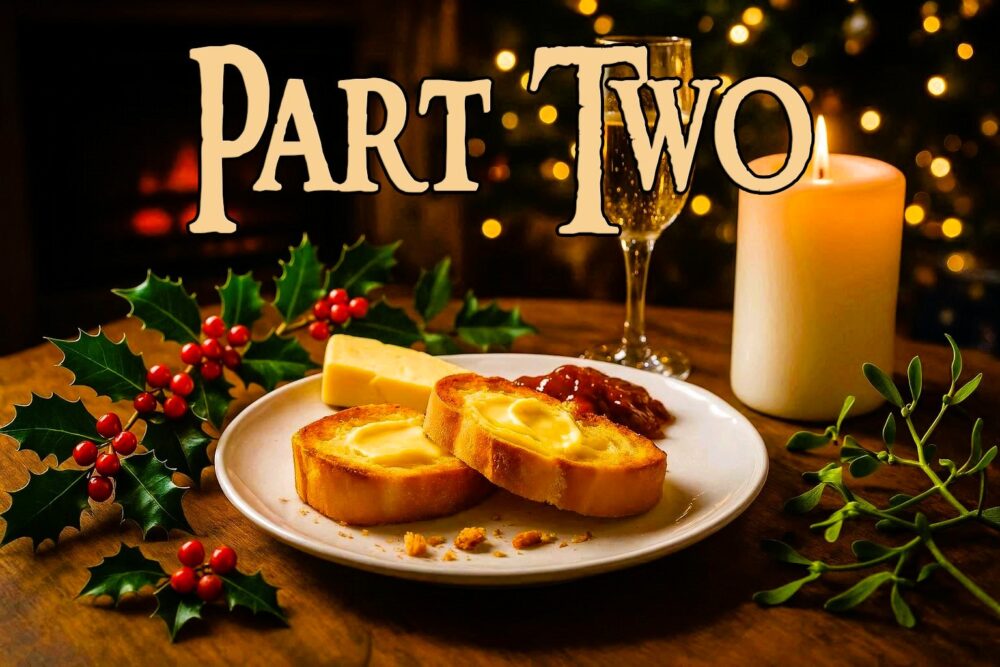
Also place a piece of bread beside the candle as an offering – a nubbin from a French stick or slice of Warburtons works well. (Though I’ll be adding butter, cheese, and a couple of Silverskins, because in our house, the ancestors get a proper Ploughman’s.)
Then let the flame symbolise memory and presence. If you feel moved to, speak to your dearly departed, or simply hold them in your thoughts. Keep the candle alight until you’re done talking.
I’ll be chatting to Mum, but if she opens with ‘DELYTH CATHERINE MARY HUGHES,’ that flame’s out quicker than you can say, ‘uh‑oh.’ Full‑naming. ‘Nuff said.
Tip: Feel free to name-check anyone you miss – one person or a whole crowd. And when you’re finished catching up, say diolch, snuff the candle, and eat the bread.
Tipple: Hopefully you’ve got a drop of mead left (Lol! No, me neither). Otherwise, a glass of Welsh Cream Liqueur is rich, comforting, and perfect for the moment. If you can’t find a Welsh brand, no matter – I’ll wager you’ve got a Baileys knocking around somewhere. And anyway, it’s the shared Celtic spirit that matters most.
December 30: Seed of the Oak (Druidic/Pagan)
Origin: The Druids adored the oak – the wise old man of the forest, bestowing strength, patience, and the odd acorn to the head. Its seeds symbolised continuity, hinting at life’s return after winter’s chill, and were carried as little charms for resilience.
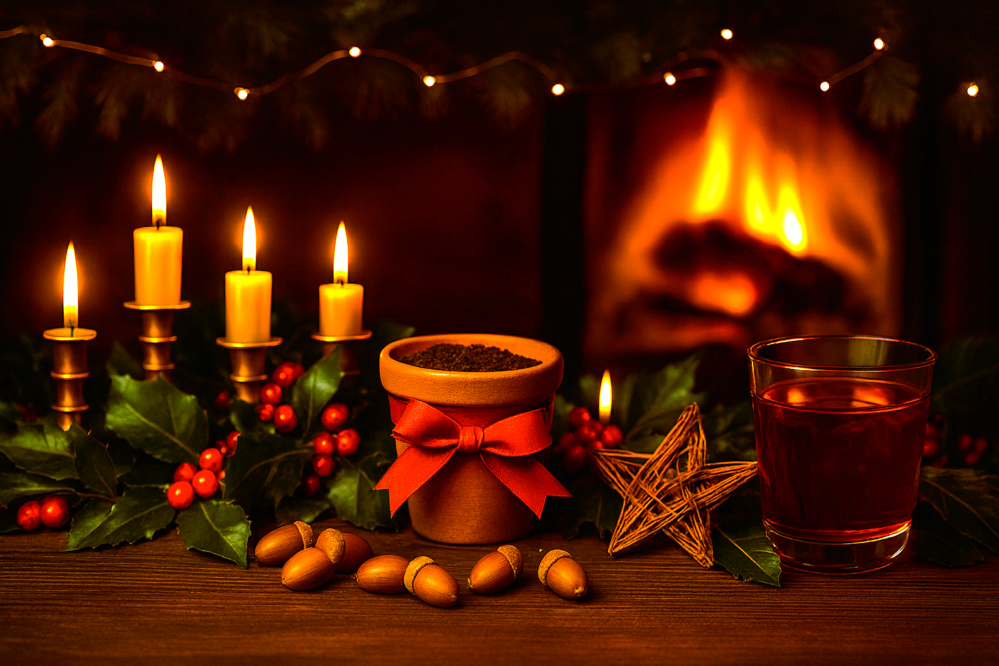
Ritual: Plant an acorn in a pot, a simple gesture that grounds you in nature’s rhythm. As you do, name a personal quality you’d like to ‘grow’ over the coming year (strength, patience, the stamina to endure a meeting that should definitely have been an email, etcetera, etcetera, ad infinitum). Touch the earth and say:
Plannaf hwn fel y gallaf dyfu
(PLAN‑nav hoon vel uh GAL‑lav DUH‑vee)
I plant this so I may grow
Tip: Walk off the Christmas excess with an acorn hunt in your nearest woodland. If the squirrels haven’t nabbed the lot, keep a few for planting – and tuck one in your pocket as a good‑luck charm.
But if acorns elude, chestnuts, beech nuts, or even a sprig of ivy can be planted instead – anything that will take root and carry your intentions forward.
Tipple: It’s got to be a peaty whisky, earthy and strong, a dram worthy of the druids. Sip slowly, with reverence. Lush.
December 31: Fire and Fortune (Pagan/Celtic)
Origin: It’s New Year’s Eve, so the perfect time for a bit of primal magic. Historically, anyone not being side-eyed for witchcraft or heresy was always up for a good bonfire – flames to cleanse, salt to protect, and bells to mark some serious sacred time.
Burning away the old year’s burdens was a symbolic spring clean for the soul – a big, dramatic ‘release’ to make space for new beginnings.
Ritual: On small slips of paper, write down three things from the old year that you’re ready to release. Now, feel the burn: set your slips alight using a candle, the hearth, a wood burner, or even a gas hob. Once ash, toss a pinch of salt into the flame to banish bad vibes.
Then ring a small bell three times, and open a window – wide enough to evict the ghosts of daft decisions past, and to usher in fresh starts.
Tip: No bell? No problem. Grab a glass and – very gently – tap it with a teaspoon to make it ‘ring’. And I mean very, very gently; I tried this last week and lost my only remaining champagne coupe, and a Stella schooner. My advice on glassware: choose solid over slender.
Tipple: It’s NYE, so naturally Champagne, but if, like me, you’re watching the pennies, a Prosecco will still hit the spot. The bursting bubbles are your cue to let the old year go, and ring in the new with pep and positivity. Iechyd!
January 1: Calennig Apple Blessing (Welsh folk tradition)
Origin: New Year’s Day – a time for burrowing in bed, cold flannel on your forehead, and seriously wondering if 999 might get a paramedic to pop round with a morphine drip. What you absolutely don’t want is kids rocking up and thrusting spice-spiked Braeburns under your nose. Welcome to Calennig. Sigh.
On this day, children once roamed from house to house, offering a decorated apple and a good luck blessing in return for a coin. This Welsh blend of first‑footing, wassailing, and trick‑or‑treating, grew from Celtic New Year blessings, and the tradition of giving tokens for luck.
Each apple – packed with cloves, greenery, and whatever else tiny fingers could cram in there – became a charm for the months ahead, and a cheerful burst of doorstep magic to kick off the new year.
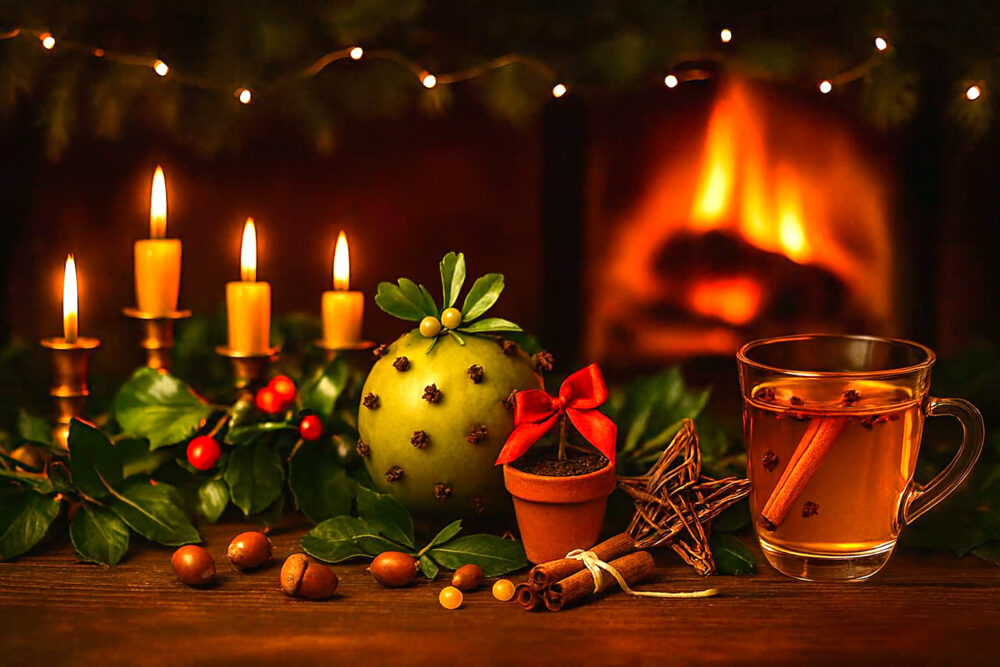
Ritual: Decorate an apple, keeping it scented but simple – one apple, a few cloves, and a sprig of greenery (or whatever spices and foliage you have to hand). Place it at the centre of your table and say a prosperity wish for your household…
Blwyddyn Newydd dda i chi
(BLUY‑thin NEH‑with THA ee KHEE)
A happy new year to you
Ac i bawb sydd yn y tŷ
(Ack ee BOWB seeth un uh TEE)
And to everyone in the house
Dyma fy nymuniad i
(DUH‑ma vuh nuh‑MUN‑yad ee)
This is my wish
Blwyddyn Newydd dda i chi
(BLUY‑thin NEH‑with THA ee KHEE)
A happy new year to you
Tip: Grumbles aside, if there are kiddies in your life, it’s a lovely idea to let them decorate a few, to give as gifts to neighbours. (Might even make up for the early Plygain warbling on Christmas Day?)
And be sure to tell recipients to return apples to the earth, right after Twelfth Night. (Mind, I wouldn’t be surprised if some found their way back there a little sooner.)
Tipple: Well, it’s gotta be a spiced apple punch – non‑alcoholic or with a splash of brandy. A cup rich with cinnamon warmth and golden hue, it’s a Calennig blessing in a glass.
January 2: Bardic Reflections (Celtic/Welsh cultural practice)
Origin: This tradition harks back to the ancient bards – a medieval mix of poets, historians, and enthusiastic embellishers. Winter nights were ideal for sharing ghostly, funny, or suspiciously heroic tales. It kept communities close and the lore alive. Writing, then reading a verse by candlelight, is a small salute to those wordsmiths who shaped Welsh identity.
Ritual: Light a candle, gather biros and paper, and start scribbling. If you fancy penning your own creation, fab. Remember: rhyme is optional, limericks count, and enthusiasm beats talent every time. Or, if you’d rather borrow someone else’s brilliance, pick a poem – or a few verses from a favourite song – and write them down.
Read your offering aloud, then tuck your stanzas under the candle. If you’re doing this with family, take turns – it’s a lovely thing to share, and the stories behind everyone’s lines are often the sweetest part.
Finish by naming the ancestors and/or places that shaped you, offer a diolch to each, and snuff the candle.
Tip: Don’t panic or overthink it. It’s the act of telling that’s the ritual, not the quality of the creations.
Home alone? Read it aloud anyway – the candle and cosmos are your audience, and the ancestors are always listening.
Tipple: It’s clearly a red wine kinda night. Mellow, contemplative, and ideally suited to poetry, prose, and reflection. Sip slowly and let the words linger. Slurp!
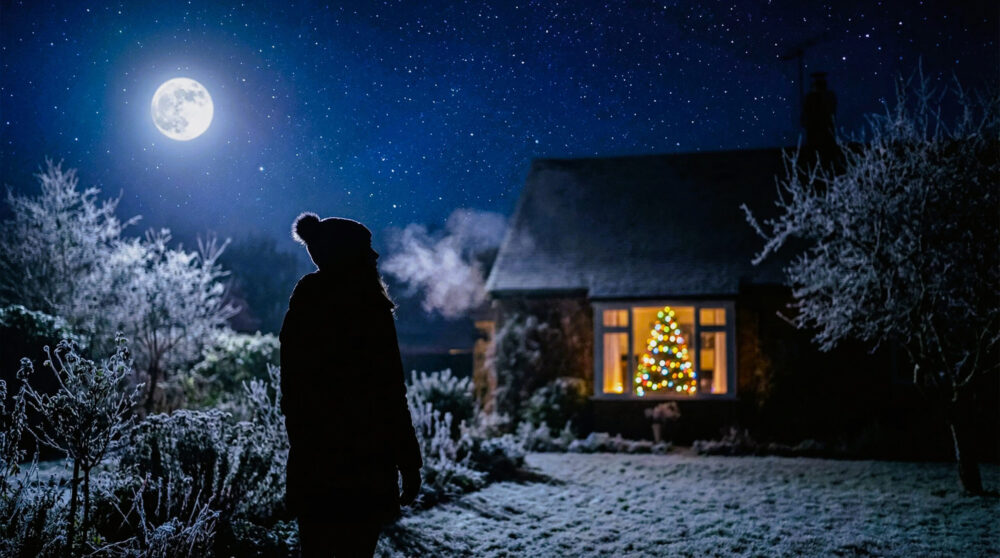
January 3: Full Moon Magic (Druidic sky-lore, with pagan resonance)
Origin: Druids were big believers in watching the skies, seeking meaning, or finding omens in the heavens. In midwinter, looking up at the night sky reconnects us with that ancient practice.
And the more you think about space (the firmament, not square footage), the more you realise how small you are – which is oddly great for putting problems into perspective, even if it does trigger the occasional bout of existential dread.
January helps too, with chilly air, frost‑clear nights, and the freedom to indulge in our al fresco hobbies, without raising too many eyebrows.
(Vicky next door already thinks our interests stray beyond the night sky – granted, the binoculars and telescope didn’t help. But to be fair, it was a genuine mistake and only happened the once.)
Ritual: Tonight’s evocatively named Wolf Moon – the first full moon of January – settles over you with a calm, steadying pull, sharpening intuition and clearing the way for deeper insight in the new year.
So, wrap up warm and take a magical moonlit stroll to honour the clarity it brings. Pause, breathe deep, and listen. If silence surrounds you, hum a single note three times, to seal the moon’s blessing.
Tip: If, like me, walking’s off the table, stand on your doorstep, look up, breathe, and ask the heavens to have your back in 2026. (And don’t forget to hum.)
Tipple: Sorry in advance because tonight’s drink is… hot water. Blergh. If that feels too tragic, you may briefly baptise a herbal teabag – one dip only – to ‘ground the moonlight’. Honestly, I don’t make the rules.
Jan 4: Winter’s Breath Blessing (Welsh folk-inspired, modern twist)
Origin: In Welsh folklore, breath and air were seen as carriers of spirit and intention. The crisp air of midwinter was believed to refresh the soul and clear away any lingering negativity.
This ritual draws on the idea of cynefin – a sense of belonging and connection to place – by using the winter air to set your intentions for the year ahead.
Ritual: Step outside at dawn or dusk when the air feels at its freshest. If you’re up for it, go barefoot, so the cold ground reminds you where you belong. (Hmm? I’ll be sticking with my fluffy mules, but you do you.)
Take three deep breaths, letting the chill fill your lungs. With each, feel yourself more anchored in your cynefin – the land, the air, the moment. On the final exhale, whisper a word that links you to this place, imagining it carried across the landscape on Welsh winds.
Tip: If you can, do this in a favourite outdoor spot – garden, park, beach… But, if you can’t get out, an open window will work as well. The key is simply to feel the touch of the outside world.
Tipple: Whether you’re greeting the dawn, or settling into dusk, choose your companion accordingly: Welsh tea with honey for the morning, spiced cider for the evening. Let their warmth carry the spirit of belonging and cynefin.
January 5: Alban Arthan Closing Candle (Druidic/Pagan)
Origin: Alban Arthan (The Light of Arthur) links the winter solstice to the legendary king, with him symbolically reborn as the Sun Child. Popularised in modern Welsh Druidic circles, it offers a gentle reminder that winter will pass and brightness will return. (And unless we’re getting big snow, the sooner the sodding better. Humpf.)
Ritual: At dusk, light a final candle and let it burn as a nod to the shifting season. Sit for nine breaths (a Celtic number of completion), then whisper, ‘Golau Arthur – returning light,’ before gently extinguishing the flame with a diolch.
Tip: As you breathe, focus on the flame and carry its glow into the days ahead. Place your ancestor stone (from Dec 28) beside the candle as it burns, to tie both to the ending of the cycle.
Tipple: Ooh, a fab one to end our festive fortnight – the lush blend of whisky, lemon, honey, cloves, and cinnamon stick that is the hot toddy. Sunny in colour, celebratory in spirit, this is the consummate toast to the sun’s return. Plus, since it’s flu season, best get ahead of the game. Atishoo!
So, we end our midwinter journey, connected anew to the spirit of Wales. By embracing these small rituals, perhaps we can carry the magic of the season through to Twelfth Night, and beyond.
And remember, you’re not only celebrating Christmas, but Welsh heritage – and by keeping the old ways alive, your festivities will glow with an authentic, ancient sparkle.
We don’t need grand altars or stone circles. A moment of intention, a cheeky tipple, and a willingness to let a little enchantment into our lives is more than good enough.
Nadolig Llawen, a heddwch wrth i chi symud i’r Flwyddyn Newydd.
Merry Christmas, and peace as you move into the New Year.
If this season feels heavy, or you’re spending it on your own, remember there are people you can reach out to – from the Samaritans, who are open day and night, to Age UK and Mind’s online community. Just as these little rituals remind us we’re part of something bigger, these organisations are there to offer connection when you need it. You’re not on your own.
Samaritans
Open 24/7, including Christmas Day
Phone: 116 123
Website: https://www.samaritans.org/
Mind – Side by Side Online Community
A moderated online space open 24/7
Website: https://sidebyside.mind.org.uk
Age UK
Support for older people, especially around loneliness
Advice Line: 0800 678 1602
Website: https://www.ageuk.org.uk
Support our Nation today
For the price of a cup of coffee a month you can help us create an independent, not-for-profit, national news service for the people of Wales, by the people of Wales.


