Gareth Jones told the world about Ukraine. But who is telling the world about Wales today?
Yuliia Bond
Last night, I discovered just how much Wales means to me, and the circumstances were actually quite funny.
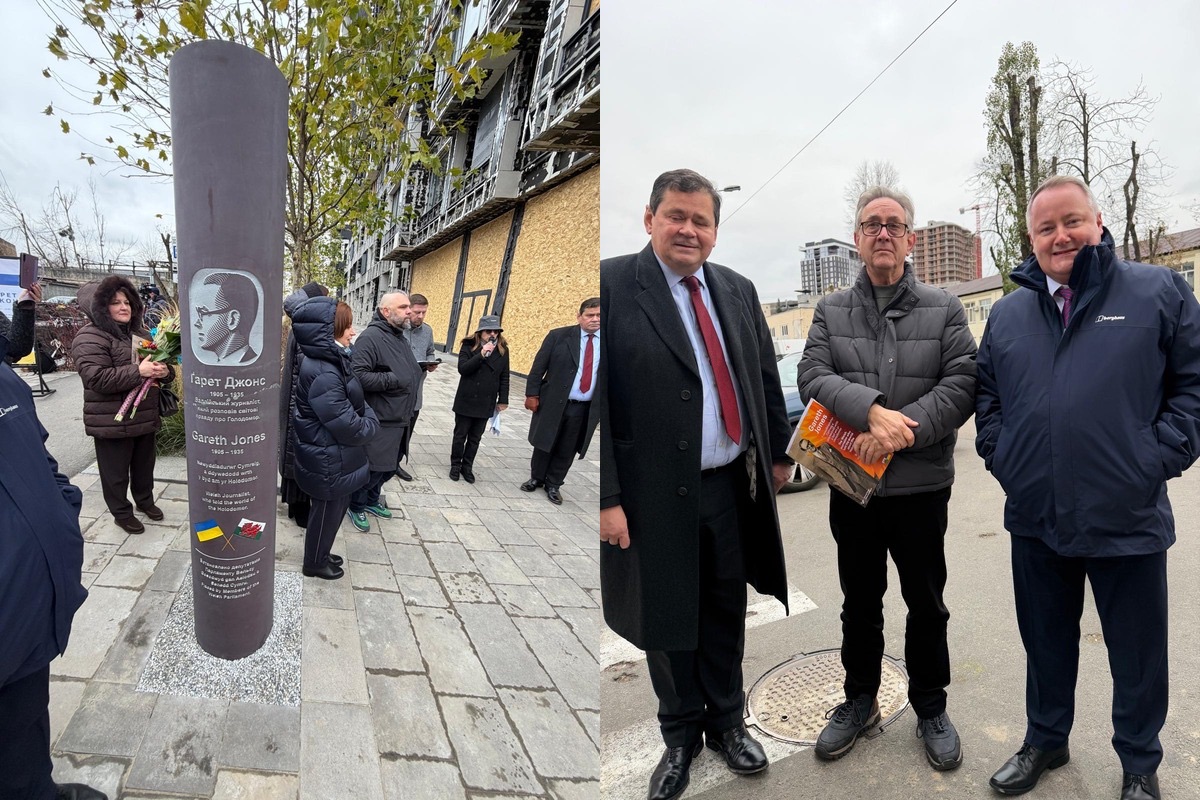
I was going through Ukrainian media, looking at photographs of Mick Antoniw, Alun Davies and Darren Millar in Kyiv, and found myself becoming ridiculously protective of them.
I hope they’re being properly looked after. Have they received the welcome they deserve? Do people there actually understand how much these guys have done for Ukraine? And who organised that photograph? Surely we could have positioned Mick and Alun a little better?!
And then I came across a Ukrainian article that hadn’t properly explained where the memorial came from.
Oh, for God’s sake. IT’S WELSH SLATE!
From the actual mountains of Wales! These people have transported nearly a tonne of Wales across Europe into a country at war, and you’ve somehow managed to leave out one of the most beautiful parts of the story?!
So there I was, a Ukrainian woman, spending half the night getting offended by Ukrainian media on behalf of Wales.
At some point, I had to remind myself that nobody had actually appointed me Wales’s international press officer.
But it made me realise something rather beautiful.
Perhaps this is how you discover that somewhere has truly become your home. You start getting offended on its behalf.
Yesterday, a little piece of Wales became a permanent part of Kyiv.
On 27 November, the Mayor of Kyiv unveiled a two-metre memorial to Gareth Jones on a street already named in honour of the Welsh journalist.
Made from natural slate from North Wales, weighing almost a tonne, with inscriptions in Welsh, Ukrainian and English, it now stands in the capital of Ukraine.
And, according to reports, Hen Wlad Fy Nhadau was played at a public civic event in Kyiv for the first time.
The Welsh national anthem. In Kyiv.
Oh, Wales. I wish you could experience this through our eyes.
Today, Ukraine remembers the victims of the Holodomor.
For those unfamiliar with this part of our history, in 1932-1933, millions of Ukrainians were deliberately starved under Stalin’s regime. Demographic research estimates that nearly four million people died, while some Ukrainian official estimates put the death toll at seven million or more.
For me, these are not just numbers in a history book.
I grew up listening to my great-grandmother’s stories about her childhood. She survived the Holodomor because her mother sent her away to work for a wealthy family. Her brothers and sisters starved to death.
I often think about what it must have taken for a mother to send her little girl away, hoping that someone else could feed her when she could no longer feed her own children.
Genocide
The true scale of this genocide may never be fully known. But behind every number was somebody’s child, somebody’s brother or sister, somebody’s entire world.
Food was confiscated and people were prevented from leaving famine-stricken areas. The Soviet authorities went to extraordinary lengths to conceal what was happening.
Entire families disappeared. Children died of starvation. For decades, even speaking openly about what had happened was dangerous.
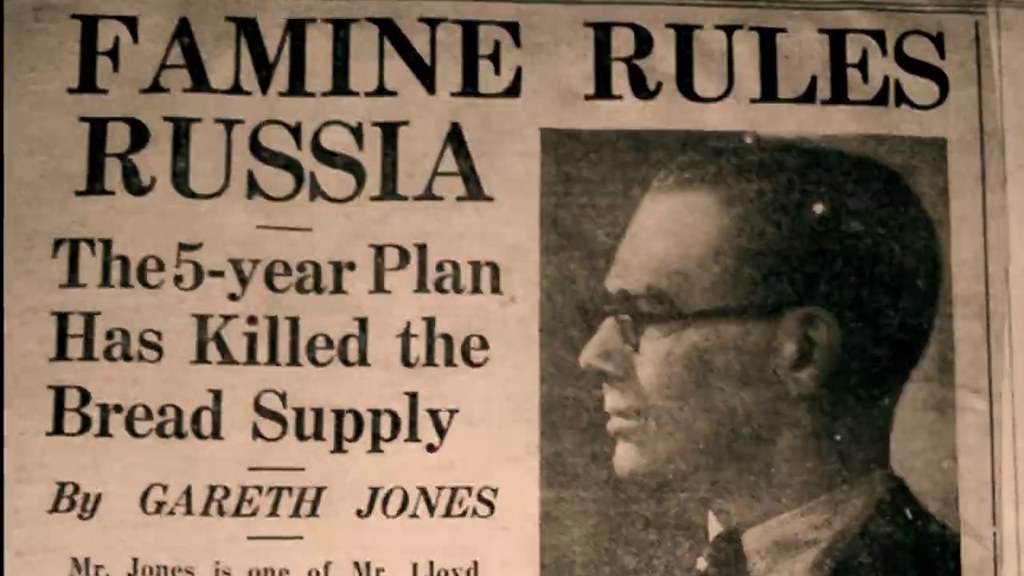
In 1933, a 27-year-old journalist from Barry travelled into famine-stricken Ukraine to find out what was really happening.
He wasn’t Ukrainian. Nobody could reasonably have expected him to risk his career, reputation or personal safety for our people. He could have done what many other journalists were doing at the time and simply repeated the official Soviet narrative.
Instead, Gareth Jones told the truth.
He was publicly discredited for doing so. Two years later, shortly before his 30th birthday, he was murdered in Inner Mongolia. The precise circumstances surrounding his death remain disputed.
And yet, ninety-three years after he told the world what he had witnessed in Ukraine, we are still speaking his name.
On 25 October 2023, the Welsh Parliament officially recognised the Holodomor as an act of genocide.
And here is something every Welsh person should know. Nearly a century after a Welsh journalist had the courage to tell the truth, the Welsh Parliament took a clear, cross-party position, formally acknowledging the genocide despite the UK Government’s longstanding reluctance to do so.
Why does that matter so much to Ukrainians?
Imagine knowing that members of your family were deliberately starved to death and then living for generations in a world where the crime itself was denied.
Recognition cannot bring those people back, but it acknowledges their suffering, restores their rightful place in history and challenges the lies that accompanied their deaths.
And today, as Ukraine once again fights for its existence, that recognition carries even greater meaning.
But there is another story here that I desperately want people to hear.
Gareth Jones told the world about Ukraine.
But who has spent years making sure the world knows about Gareth Jones, what he did and the country that produced him?
Who is telling the world about Wales today?
Mick Antoniw. Alun Davies. Carwyn Donovan. Darren Millar. Wayne Thomas. Huw Thomas. The people behind Senedd4Ukraine and the Senedd’s cross-party Friends of Ukraine group. The Welsh Government, trade unions, journalists, volunteers and so many people whose names rarely appear in the headlines.
I have developed so much affection for Mick and Alun over the years that when I look at them now, I genuinely struggle to think of them simply as former politicians.
I see two bloody wonderful human beings who never stopped showing up.
And I’m not sure everyone in Wales appreciates the scale of what these people have been doing.

By July 2024, the Senedd4Ukraine initiative had already reached the milestone of 25 vehicles and over £1 million in aid. The initiative has reported 15 humanitarian trips and more than £1 million raised and spent on vehicles and supplies. According to the latest figures shared with me by the team, the number of vehicles delivered has now reached 70.
Seventy vehicles!
Behind those figures are countless hours of fundraising, preparation, organisation, driving, cooperation and, frankly, a level of determination that deserves considerably more public attention.
There is a difference between supporting a country when the whole world is watching and continuing to support it when the cameras have gone. The second tells you considerably more about someone’s character.
For Ukrainians, the war didn’t end when it disappeared from the front pages. Our families didn’t suddenly become safer because people became tired of hearing about them.
These guys understood that.
I also have enormous respect for Darren Millar’s involvement and for Huw Thomas’s work alongside him. They are joint chairs of the cross-party Friends of Ukraine group.
Seeing people from different political backgrounds working together on something that matters is genuinely refreshing.
Politicians cooperating despite their differences and actually getting something done. Good heavens. More of this, please.
And Martin Shipton! I am incredibly proud of Martin, not only for writing Mr Jones – The Man Who Knew Too Much: The Life and Death of Gareth Jones, but also for his longstanding support for our community and his commitment to telling stories that deserve to be heard.
Then there are all the people we don’t necessarily see.
The retired miner who contributed towards a vehicle. The person who donated £10 when they didn’t have much themselves. The people collecting medical supplies, repairing vehicles, packing boxes, organising fundraisers and giving up their weekends.
Some of you will never travel to Kyiv or meet the people you helped. Nobody may ever interview you about what you did.
But when you look at these photographs, please understand that you are part of this story too.
Now, what does all this mean for Wales itself?
Since arriving in 2022, I have had countless conversations with people around the world that go approximately like this:
“Where do you live now?”
“Wales.”
“Oh, England?”
“No. WALES.”
“Is that near London?”
Right. Get the map. Get the dragon. We’ve got work to do.
Congratulations, Wales. You have accidentally recruited thousands of international ambassadors.
By February 2026, almost 8,000 Ukrainians had found sanctuary in Wales.
But those 8,000 people didn’t arrive without connections to the rest of the world. We have families, friends, former colleagues, professional networks and communities scattered across different countries.
Every time somebody asks us about our lives, Wales becomes part of that conversation. We talk about your language, history, mountains, culture and extraordinary hospitality. We explain that Wales is a nation in its own right, sometimes with considerably more enthusiasm than the person who originally asked the question was prepared for.
Wales
Suspilne, Ukraine’s national public broadcaster. Ukrinform, the national news agency. Interfax-Ukraine. The New Voice of Ukraine. Detector Media. Kyiv Post. National, regional and English-language publications.
Wales, Wales, WALES! People who may previously have known very little about Wales are learning about a Welsh journalist, Welsh politicians, Welsh craftsmanship, the Welsh Parliament and the friendship between our nations.
And they are discovering Wales through one of the most emotionally significant chapters of Ukrainian history.
In international relations, it’s called soft power. It sounds terribly academic, but, essentially, it is the influence a nation gains through its reputation, culture, values and relationships.
People remember how you made them feel. Nations do too.
Wales is a country of just over three million people. It doesn’t have the resources of a global superpower, but that doesn’t mean it cannot have a meaningful international presence.
And yesterday, a piece of Welsh slate was doing rather remarkable diplomatic work in Eastern Europe.
Nearly a tonne of Welsh diplomacy, actually.
The Welsh Government committed £16,000 towards establishing this memorial following a request from the Senedd’s cross-party Friends of Ukraine group.
Landmark
Consider what that contribution helped achieve: a permanent Welsh landmark in a European capital, international media coverage, recognition of Welsh history, language and craftsmanship, and a stronger relationship between two nations.
And something that no advertising agency can simply manufacture: genuine affection for Wales.
The beautiful thing is that this relationship has never been entirely one-sided.
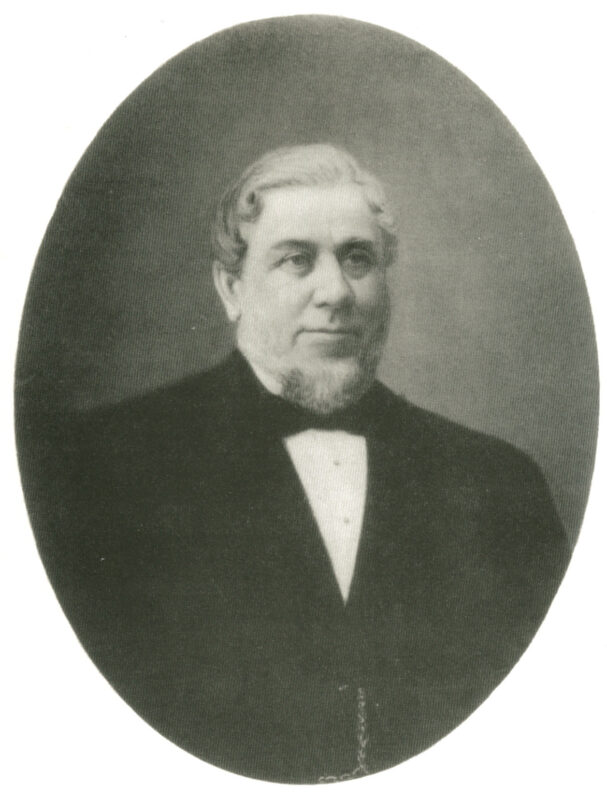
John Hughes, an industrialist from Merthyr Tydfil, helped establish the industrial city that became modern-day Donetsk. Welsh miners and engineers travelled to Ukraine. Gareth Jones’s mother worked for the Hughes family.
During the miners’ strike of 1984, Ukrainian miners raised money to support Welsh mining communities. Decades later, Welsh miners have been delivering vehicles and assistance to their Ukrainian counterparts.
And people like Wayne Thomas and Carwyn Donovan, a former miner and now a trade union official, are keeping that extraordinary friendship alive. They haven’t simply spoken about solidarity. They’ve driven thousands of miles to deliver it. If that doesn’t make you proud of the Welsh trade union movement, I don’t know what will.
Imagine being a retired miner in the Welsh Valleys and discovering that the friendships established by generations of people like you are still alive today.
This relationship wasn’t invented by politicians sitting around a conference table. It grew out of the lives of ordinary working people.
And there is enormous potential for its future.
Ukraine’s reconstruction will require expertise in engineering, construction, renewable energy, healthcare, education and industrial development. Wales has expertise in many of these areas.
Imagine a small engineering company in the Valleys finding a Ukrainian business partner. A Welsh university developing an international research programme. A student from Caerphilly gaining professional experience abroad. Welsh companies contributing to rebuilding Ukrainian infrastructure.
These are real possibilities worth exploring.
Of course, a memorial does not automatically produce a business contract, and nobody can calculate its precise economic return. But international partnerships don’t suddenly appear when somebody decides they need one. They grow through years of trust and cooperation.
That is precisely what these people have been building.
And yes, I know. “What about our own people?”
I have lost count of how many times I’ve seen this comment beneath posts about Welsh support for Ukraine or the Nation of Sanctuary.
And before somebody tells me that Wales has problems of its own, yes, I know.
I live here. My children live here. I work here. I speak to people struggling with housing, poverty, employment and access to services. I want those problems addressed as much as anyone else.
These are my communities too.
People are absolutely entitled to scrutinise public expenditure and question whether government policies are effective. That is a necessary part of democracy.
But scrutiny means looking at the whole picture.
During this year’s Senedd election, Reform UK campaigned to abolish the Nation of Sanctuary policy. On 1 July, its representatives argued in the Senedd that support for Ukraine could continue through other mechanisms without retaining the policy itself. Shortly afterwards, the party’s Blaenau Gwent, Caerphilly and Rhymney branch publicly called for funding for Ukrainian refugees to end.
There is a legitimate distinction between questioning a government framework and opposing support for displaced people altogether. But both positions need to be examined against the evidence and their practical consequences.
According to the Welsh Government, between April 2019 and March 2025, expenditure on the entire Nation of Sanctuary approach represented approximately 0.05% of the Welsh Government’s overall budget. And 91% of that expenditure went towards the Ukraine response.
So what has happened to the people who received that support?
This month, the University of Birmingham published its Beyond Sanctuary policy report, based on responses from 5,454 displaced Ukrainians across the UK.
The findings are worth reading.
- 90% of respondents had worked in the UK, and 89.2% of those were currently working.
- 6% held at least a bachelor’s degree.
- 2% held a master’s degree or equivalent.
- 5% had sought further qualifications in the UK.
- 9% owned an active business or were self-employed.
- 6% wanted to remain in the UK even if returning to Ukraine became safe.
These are UK-wide survey findings, rather than statistics exclusively about Wales, but they provide a valuable insight into the people rebuilding their lives alongside us.
What concerns me enormously is how much of their potential is still being wasted.
Nearly half of the respondents reported working outside their original professional sector because they couldn’t find employment in their own field.
Imagine an entrepreneur who could open a business and employ local people but cannot confidently invest because of uncertainty surrounding their immigration status.
During the July Senedd debate, Coffi Kava in Caerphilly was mentioned as an example of a business bringing Welsh and Ukrainian influences together, providing employment and creating a welcoming space for the wider community.
There you have it. International cooperation in the form of a local café.
It doesn’t always require a diplomatic summit.
And then there are the children growing up here. Children who will understand two cultures, speak multiple languages and potentially develop professional relationships in both countries.
Some of the most valuable connections between Wales and Ukraine haven’t even been formed yet. The people who will build them are currently sitting in Welsh classrooms.
Of course, nobody should have to produce a university degree or demonstrate their economic usefulness to deserve safety. Human dignity is not conditional on productivity.
But if we’re going to have a conversation about economics, let’s have a proper conversation about economics. Expenditure, contribution, challenges, opportunities and the potential we are currently failing to use.
All of it.
And what exactly does putting Wales first mean?
For me, it means wanting Wales to prosper. Wanting its businesses to succeed, its communities to thrive, its young people to have opportunities and its history, culture and language to be recognised internationally.
There are difficult decisions to be made about public spending, and reasonable people can disagree about them. But I cannot accept the idea, so often found in exclusionary and far-right rhetoric, that people born elsewhere can never truly belong here, or that caring about another nation necessarily means caring less about your own.
And I find that particularly strange in the context of Gareth Jones.
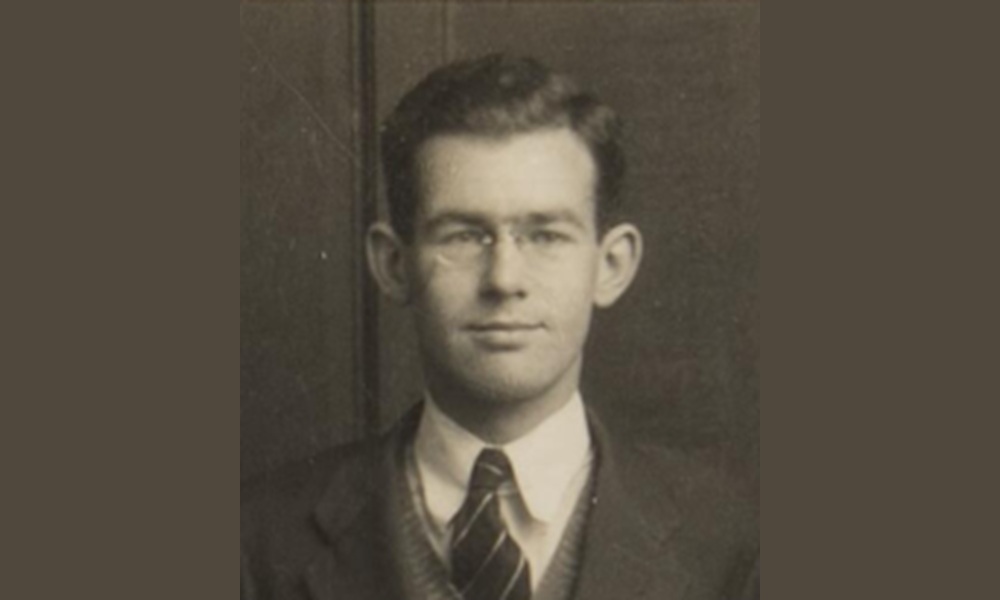
One of Wales’s greatest internationally recognised journalists earned that recognition precisely because he cared about people who were not Welsh.
Imagine somebody telling him in 1933:
“Gareth, what are you doing worrying about Ukrainians? Haven’t we got enough problems of our own?”
What an extraordinary loss that would have been, not only for Ukraine but for Wales too.
His compassion for another nation did not make him any less Welsh. It made Wales part of another nation’s history.
Recently, I discussed with one of my friends the philosopher Peter Singer and a relatively simple moral argument: if we can prevent something terrible from happening without sacrificing something of comparable moral importance, we have a moral obligation to act.
I kept thinking about that yesterday.
Gareth Jones couldn’t stop Stalin, but he could tell the truth. A Welsh family in 2022 couldn’t stop Putin’s invasion, but they could open their front door. Mick and Alun cannot end the war in Ukraine, but they can deliver another vehicle, help another community and make somebody’s circumstances a little more bearable.
The fact that we cannot do everything has never struck me as a particularly good reason to do nothing.
And I am so grateful that these people seem to feel the same way.
There is something particularly personal about Mick’s story for me.
His father came to Britain as a Ukrainian refugee after the Second World War and passed the Ukrainian language and heritage on to his son.
Decades later, that son served in the Welsh Parliament, became Counsel General for Wales and helped build an extraordinary relationship between Wales and his father’s country.
Nobody welcoming Mick’s father all those years ago could possibly have predicted everything his son would eventually contribute to Wales.
I wonder how many equally remarkable stories will emerge from the children Wales welcomed in 2022.
Mick’s Ukrainian heritage did not prevent him from serving Wales. It became one of the things that enabled him to do something meaningful for both countries.
I understand this increasingly through my own life.
I don’t love Ukraine any less because I have fallen in love with Wales. There is no competition between the two.
Wales is where I rebuilt my life, where my children have grown up, where I work, study, contribute and make plans for the future.
And somewhere along the way, without even noticing it, I started saying “we” when talking about Wales.
Our communities. Our Parliament. Our future.
And apparently, our bloody slate.
I know what it means to be grateful to Wales. I have felt that gratitude since the day I arrived.
But when I see the Welsh dragon in another country now, I feel something different.
I feel proud.
There is a very big difference between feeling grateful to a country and feeling proud of it as your own.
One more thing. And I really mean this.
I believe the people behind Senedd4Ukraine deserve formal national and international recognition for their collective contribution over the years.
Nominations for the 2027 Gwobr Dewi Sant, the National Award of Wales, are open until 4 December.
Groups are eligible, and I believe their sustained humanitarian commitment deserves serious consideration, including under the Bravery category.
I would also love to see Ukrainian institutions formally recognise their contribution to the friendship between our countries.
Their stories deserve to be documented. Their work deserves to be known internationally. I want future generations to learn about the people who kept Gareth Jones’s legacy alive and continued standing beside Ukraine during another devastating chapter of our history.
History often remembers the monument but forgets the people who carried the stone.
Let’s not allow that to happen here.
Thank you to the Welsh Government and the Senedd for supporting this project, to Mossfords for designing and sculpting the memorial, to the Temerty Foundation for funding the commemorative booklet, to Adrian Price, the Senedd’s Welsh translation team, Nick Wall, the Ukrainian partners and everyone who worked behind the scenes.
Mick, Alun, Carwyn, Darren, Wayne, Martin, Huw and everyone involved, I hope you know how loved and appreciated you are. And I sincerely hope you received the warmest possible welcome in Kyiv. Otherwise, frankly, I’ll have some emails to write.
And to every Welsh person reading this, please look at these photographs. Look at the Ukrainian headlines.
Your national anthem has been played in Kyiv. Your language is engraved in Welsh stone in our capital. Your history is being shared across Ukraine, and the kindness of your people is being remembered far beyond your borders.
Doesn’t that make you happy?
Because, my God, it makes me happy.
Emotional
As a Ukrainian who found a home in Wales, seeing my two worlds come together like this has made me more emotional than I ever expected to feel about a piece of slate.
Especially now, when Ukrainians are so exhausted, when the war has continued for years and when so much of the world has become accustomed to our suffering.
We notice who is still there.
Believe me, we notice.
Wales, your name is everywhere in Ukrainian media today, and I hope you know just how much that means to a nation that will never forget Gareth Jones.
Thank you for giving us Gareth Jones.
Thank you for giving so many of us a home.
And thank you for never forgetting where we came from.
Diolch o galon. Дякую від усього серця.
Support our Nation today
For the price of a cup of coffee a month you can help us create an independent, not-for-profit, national news service for the people of Wales, by the people of Wales.
Get more trusted Welsh news
Choose Nation.Cymru as a preferred source in Google News to see more of our journalism.