


How private investment could fund Wales’ transport future
Professor Stuart Cole, CBE. Emeritus Professor of Transport Economics and Policy, Prifysgol de Cymru / University of South Wales
In market-orientated economies such as Wales, or the wider UK economy, commercial businesses can derive financial benefits (e.g. better market access, lower costs) from the construction of new or improved transport infrastructure.
Arguably they should contribute to the cost of that infrastructure as a payment for what is called ‘development gain’. It can take several forms.
Development gain from new infrastructure
There are those rare occasions where high value sites no longer needed for railway or bus purposes have been sold for private development. The sale of development rights above public transport facilities or relaxation of land use planning regulations has also been a means of funding new stations or new lines.
This is not a new process. In the 1890’s the Metropolitan Railway Limited procured the land required to construct the 41-mile railway between London and the open countryside. The company had also bought farm land surplus to train operations at agricultural land prices.
By the 1920’s a parallel business, the Metropolitan Country Estates Company, with largely the same directors created new-style commuting by fast train advertised as being from ‘your country home to your London office’. The railway company , it seems only paid a dividend twice. Metropolitan Country Estates made a substantial development gain from selling houses at a substantial profit per acre.
Washington Metro
The Washington Metro was partly funded from selling development rights land above underground stations whose positioning in the central business district had increased their value.
In New York the refurbishment of the subway and the provision of a multi-million-dollar fleet of new buses was funded from profits on toll-bridges owned by the Port Authority of New York and New Jersey.
In many European countries local business taxes are imposed on companies to provide a specific funding source for public transport based on company turnover, profitability or in the case of the French tax versement transport, employees’ salaries. In 2013 a BBC Wales Week In Week Out programme, on which I advised, compared the Valley Lines proposed electrification with the construction of the tram system in Bordeaux.

In the French case, the funding came from what the Maire referred to as a ‘war chest’ of investment Euro derived from a tax on business, local funding and a grant from the French Government. These forms of taxation have been used extensively in for example the Portland, Oregon tram system and Vienna’s underground railway. Such tax provisions are not used in the UK.
Central areas of cities such as London can only function with high-capacity public transport which can result in high land values. In individual schemes, high-density commercially-valuable property has been developed close to or even above main line railway stations – Montparnasse (Paris), Victoria (London), New Street (Birmingham) are three examples.
Does improved transport infrastructure bring financial or economic success?
If such transport infrastructure had a positive impact on the success of, for example, a factory, housing estate , or commercial development, then a development gain payment to transport authorities could be justified.
Transport investment can play its part in attracting investment, serving more peripheral areas and encouraging economic development of countries such as Wales in relation to a much larger England or the European Union (EU). Good quality transport links has an effect on competitiveness and can reduce costs by reduced road (or rail) congestion.
The relative weight that companies put on the level of transport costs and the predictability of delivery times will determine how new infrastructure affect business decisions and the link between traffic growth, transport investment and economic growth.
Surveys of companies consistently show transport as one of the top four factors in determining the location of their developments which would suggest that development gain is prevalent in some decisions. On this basis there might be a rationale for charging private companies who benefit from the investment.
The south and north Wales primary road routes were improved to enhance inward investment and attract tourists. However, research in EU member states has shown that transport is a ‘secondary consideration in company strategy when deciding where to locate their activities’. This weakens the argument to ask private companies to pay a share of the capital cost.
However companies moving into regeneration areas could argue they would have gone there anyway and proving the link is difficult. In any event neither Welsh Government nor local councils would want to deter any inward investors into Wales’ old industrial regions where new employment is essential.
Joint public / private developments
There is another way in which the private sector can become directly involved in what might traditionally be seen as a public sector responsibility. This is not a case of the public sector borrowing from commercial banks but one of the private sector directly becoming involved in the infrastructure itself.
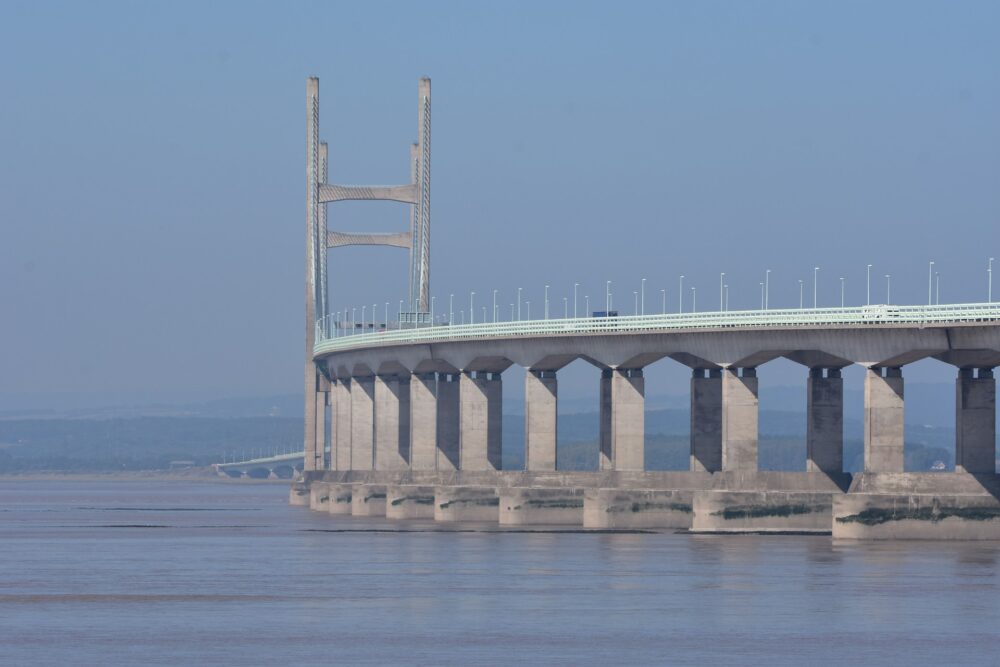
The Prince of Wales Severn Crossing was exclusively a private sector project (so keeping the investment off the UK government balance sheet) charging tolls. The A55 across Ynys Mon was a ‘Build-Own-Operate-Transfer (BOOT) scheme enabling the 4-lane dual carriageway road to be built sooner and charging shadow tolls paid by Welsh Government. Both structures would transfer to government ownership at the end of a financial / contractual period.
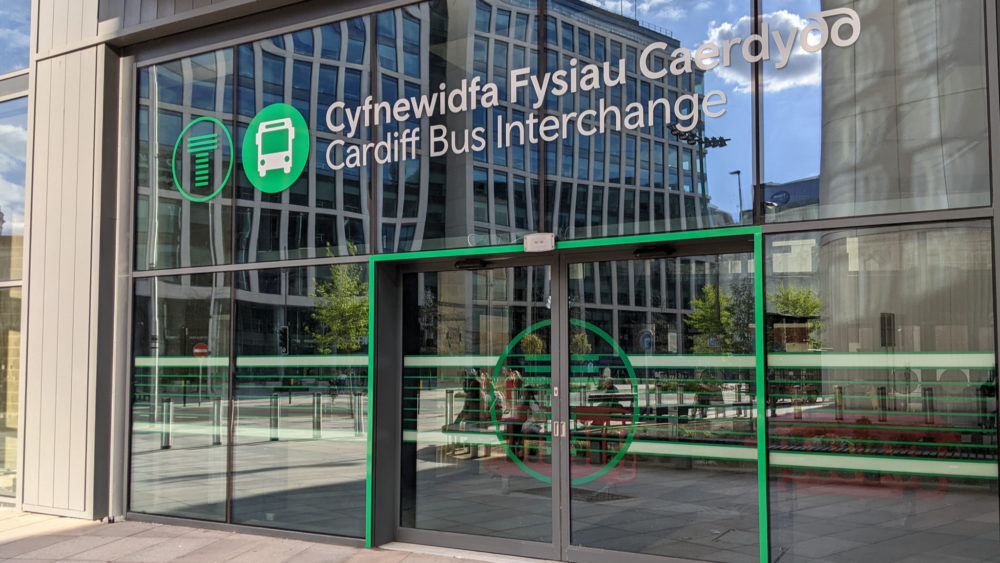
The Cardiff Bus Interchange is part of the wider Welsh Government and private sector-led building project involving Rightacres Property and the financial company Legal & General. The land was purchased by Welsh Government which fitted out the bus area. This provided a positive partnership of commercial and public uses – the bus services operating area, ground floor retail units, residential apartments and the Legal & General headquarters.
In Great Britain very little of the necessary finance for public transport infrastructure has been raised through development gain. Electrifying 170 miles of the Cardiff commuter network (Valley Lines) required funding of £1.1 bn. This was primarily from Welsh Government, along with UK government and EU Regional Development Fund
To maximise public service development gain from transport infrastructure investment requires a commercially savvy team representing the government or its agencies – who mostly own the land involved.
Commercial partners will, of course, look to gain a profitable return on any investment whether directly from a building or a financial contribution to a railway / road development.
Support our Nation today
For the price of a cup of coffee a month you can help us create an independent, not-for-profit, national news service for the people of Wales, by the people of Wales.



Well one thing is for certain WASTEMINTER GOVERNMENT Tory or Liebour is not going to give Wales anything they just deny us any money like H S 2 and other Railway Projects
Stuart – I applaud your focus, but that is not shared by Westminster / general public. Amazon has tax breaks and so is at a competitive advantage over Royal Mail (cancelled mail trains after 200 years). Frances fiscal economic policies focus on SNCF who has offered plane train tickets with Air France for over 30 years; now certain short flights are banned if a customer can use a train. Canada focuses on Air Canada over WestJet as has minimum flight pricing. UK and Cardiff Airport focuses on growing the network of Malta registered Ryanair, and I note that the Loganair… Read more »
The bordeaux/Lyon system really show how good tram/transport investment can generate positive outcomes (better access to jobs, regeneration, better environment). The city centre is buzzing most evenings as well, never feels quiet. The private sector was important but it also shows transport investment needs centralised and higher-value corridors most to make projects worse (which in my view sums up why Wales gets lower levels of railway investment generally). Bordeaux (like may European cities) benefits from higher pop. density and reasonably steady flows along such corridors to reach good revenuerecovery; Valleys towns are smaller and trips far more more dispersed than… Read more »
TfW needs to do far more to monetise its assets. Every square foot of land should be examined for opportunities to build, sublet or advertise. It’s astonishing that the second busiest station in Wales doesn’t have a cafe and the busiest has no “airside” retail, while the shiny new trains aren’t bombarding the bored captive audience with adverts. This is free money down the drain that could be invested to improve services and reduce ticket prices. And why is no-one proposing a second Severn crossing funding model for a Newport bypass built as a tunnel to avoid all the environmental… Read more »
I have been impressed with TfW since its’ creation – more trains, linked to a University, App to book tickets / days out and delivered Core Valley Lines.
These initiatives will generate the revenue to grow.
I agree with your points on adverts etc, and I’m sure TfW will grow steadily and maximise these opportunities.
I personally do not wish to be bombarded with advertising. The vast majority of it is promoting the purchase of products that are not needed with money that isn’t already in the possession of those purchasing, and is environmentally unsustainable.
Newport, nor anywhere else for that matter needs a bypass, (except perhaps for safety reasons) just a reduction in the need to commute in the first place. The majority of office jobs can be done through home working that leads to a better life/work balance, less traffic derived pollution and less traffic congestion.
Are you opting to pay £2.99 per month for ad-free Facebook? Because most people now prefer ads to paying or paying more for anything these days even if you don’t agree. No-one is forcing you to look at them. And why should Newport put up with Cardiff’s event traffic, Bridgend’s freight lorries, Swansea’s football hoards and Pembrokeshire’s holiday traffic in queuing in their back yard. Office commuters are only a part of the story and while there is plenty that can and should be nudged onto rail with investment in stations and services, the headroom this creates on the roads… Read more »
And one more thing. Ads don’t need to be for burgers, booze and betting. These can and should be blocked. But ads for local events, upcoming films, gigs and theatre shows, government and community messages, education opportunities, new shops and restaurants opening or having sales, ads for new housing developments, flights or holidays, beds and furniture promos, ads promoting alternative energy or banking suppliers, new bus routes or ticketing offers, Cadw castle promotions, Visit Conwy ads, ferries to Ireland, and so on, are inoffensive or even useful and interesting to most people.