


Hwyliaith: A new Welsh learning method made fun

Stephen Price
A new Welsh learning method has launched which aims to inspire the confidence to start conversations with Welsh speakers from the outset, doing away with long lists of vocabulary and complicated grammar rules.
Hwyliaith is a vibrant new family-focused Welsh learning scheme which aims to inspire confidence and bring everyday Welsh into homes and communities.
The project, founded by a father and daughter from Ceredigion, aims to attract a fresh audience to the language through a lively and accessible approach.
At the heart of Hwyliaith is the Do and Say technique, an engaging method that brings language to life and helps learners communicate more quickly than in traditional classroom settings.
Hwyliaith focuses on understanding spoken Welsh — the natural, everyday language used by Welsh speakers.
The idea began when Nia Llywelyn encouraged her father to write a series of books and songs with Ryland Teifi.
Building on this foundation, she has recently expanded the concept into a wider Welsh learning resource.
Her experience supporting learners through Say Something in Welsh, a company that has had a significant impact on Welsh language learning, has been invaluable in shaping the scheme.
Hwyliaith is particularly well suited to families, creating a learning triangle between parents, children and the tutor.
Nation Cymru spoke with its creator, Nia Llywelyn about Hwyliaith’s founding, and what made her roll up her sleeves to bring Welsh learning to a wider audience.
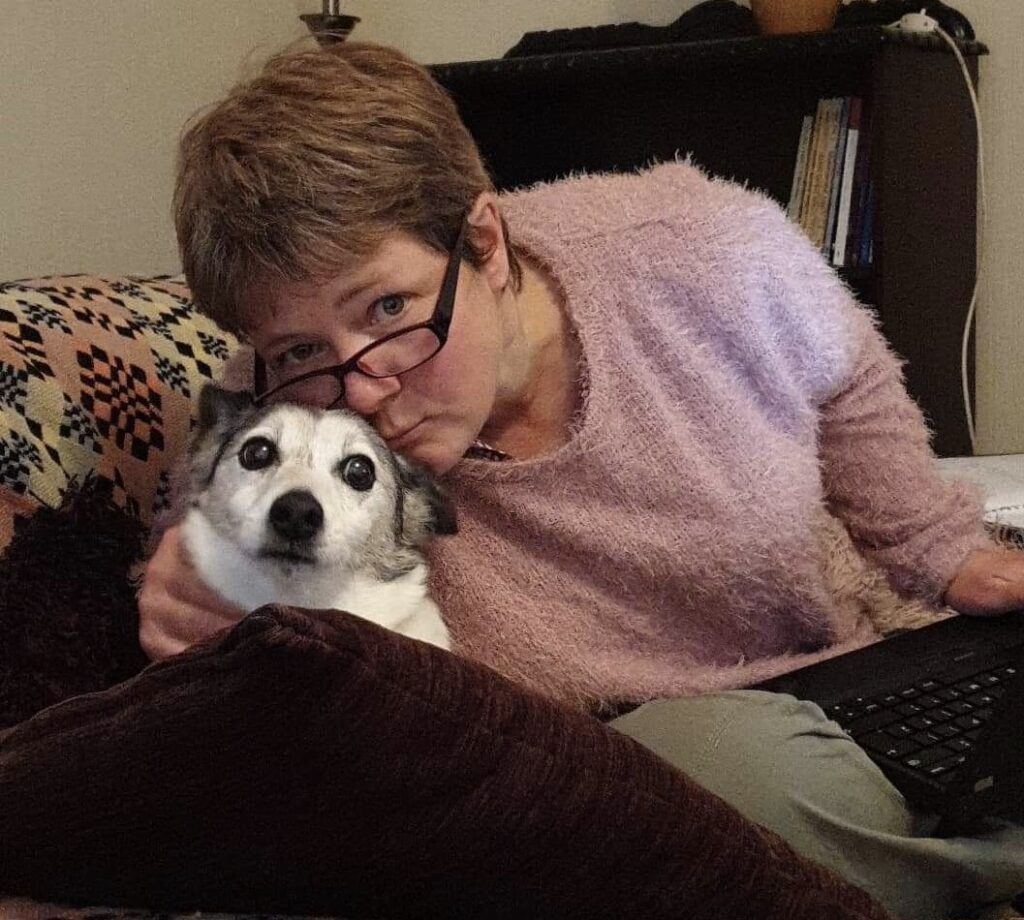
Explaining why she decided to launch Hwyliaith, she shared: “I kept coming back to a few questions: Why aren’t we making enough progress towards the Welsh Government’s ambition of a million Welsh speakers by 2050?
“Why do so many new learners find it difficult to move from learning Welsh to actually having conversations with native speakers?
“And why are there still so few opportunities for parents who choose Welsh-medium education for their children to learn Welsh themselves and support their children’s learning?
“For me, there’s a missing piece in the strategy for creating a million Welsh speakers — and I wanted to address it.
“That’s why I developed Hwyliaith: a simple, accessible and enjoyable way to learn Welsh – Hwyliaith – a ‘fun’ way to learn Welsh. It doesn’t depend on having the time, money or opportunity to attend formal classes. It’s particularly aimed at people who want to start using Welsh in everyday life, but don’t know where to begin.”
“The approach is deliberately different. There’s no long list of vocabulary to memorise and no starting with complicated grammar rules.
“Instead, learners are given the tools and confidence to start conversations with Welsh speakers from the outset. The aim is to get people speaking Welsh sooner, and gradually building their confidence through real conversations.
She said: “Ultimately, I want to make Welsh feel less daunting and more achievable — because if we want to reach a million speakers, we need more people not just learning Welsh, but actually using it.”
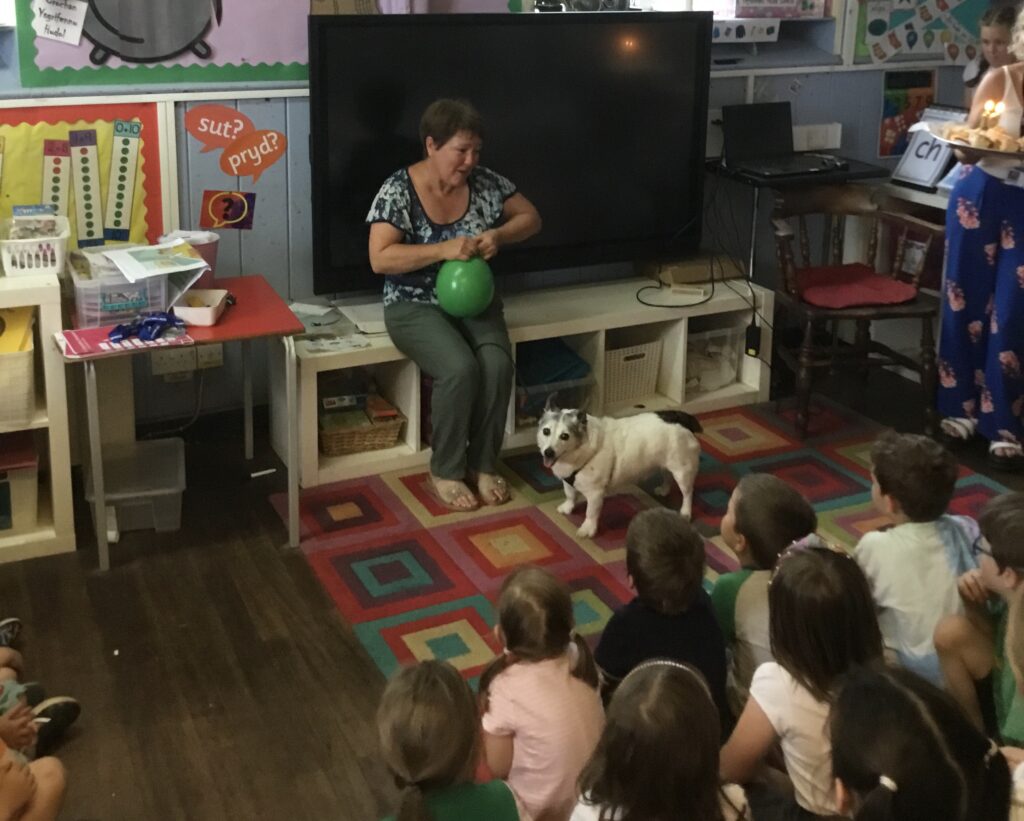
Nia’s experience with language learning and teaching is extensive. She told Nation.Cymru: “I began my career as a junior school teacher and have since worked as a Welsh tutor for Dysgu Cymraeg and as an online support tutor for SaySomethinginWelsh.
“I have also played an active role in developing activities and supporting learners at Garth Newydd, a Welsh-language centre in Lampeter established to help learners build the confidence to use Welsh in their everyday lives and communities.
“What particularly struck me from this work was the difference between knowing Welsh and having the confidence to use it. Through practical activities, learners were encouraged to take part in local life and use every day Welsh in real situations — including speaking Welsh in shops and cafés for the first time.
“Seeing that transformation in confidence reinforced my belief that language learning needs to move beyond the classroom and into real-life communication.”
Even in its early stages, the success of Hwyliaith is undeniable, having been successfully trialled in a number of different settings.
Nia said: “In schools in Powys and Swansea, the programme was trialled with parents and children, creating what we described as a the ‘triangle of learning’ between the child, the parent and the school. Rather than Welsh being something that happened only in the classroom, parents were given the confidence and tools to become part of their children’s Welsh-language journey at home.
“We also trialled the approach in a café in Blaenau Ffestiniog, where staff spoke to the learners in simple sentences giving the learners confidence to practise the Welsh they had already learned.
“We’ve now taken the next step by developing a completely new online resource for families, building on the original materials and making the approach much more accessible to learners.”
And what sets Hwyliaith apart from other platforms? Hwyliaith is based on a fundamentally different approach to language learning. Instead of beginning with vocabulary lists, grammar rules and memorisation, it focuses on how we naturally acquire language — how a child acquires language – through listening, watching, movement, expression and interaction.
The course is based on research on how the brain processes and retains language, as well as the work of Oliver Sacks and William James. Meaning is reinforced through facial expression, gesture, body movement, tone of voice, mime, drama and song. In other words, learners aren’t simply told what something means — they experience it.
Nia shared: “William James expressed this principle as: “No impression without expression. No reception without reaction.” That idea lies at the heart of Hwyliaith and has inspired our core principle: Dim dweud heb wneud — No saying without doing.
“The ultimate goal isn’t simply to pass a test, remember a list of words or structured textbook sentences; it’s to use Welsh confidently with other people.
“Hwyliaith is a simple, enjoyable and highly interactive way to learn and use Welsh. Learners listen, watch, respond and take part, engaging their attention in a way that helps language stick. Resources include audio units, videos and songs, all designed to bring Welsh to life and demonstrate that it is not just a language to be studied but a living, social and enjoyable language.
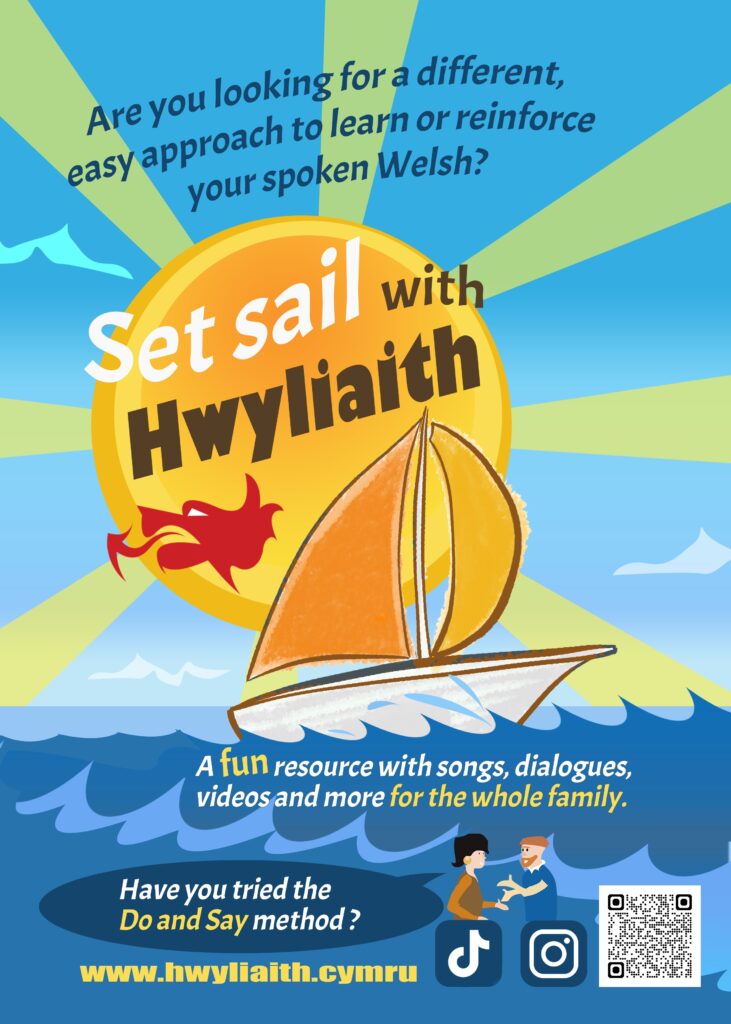
Nia’s advice for new Welsh learners is simple. She said: “My advice is simple: use your Welsh as soon as you can. Don’t wait until you feel you’re ‘good enough’. Take the plunge and use whatever Welsh you have in your local community. You will make mistakes — and that’s absolutely fine. The more Welsh you hear and the more conversations you have, the more naturally they start to make sense. You don’t need to understand everything before you start speaking.
“Basically, what sets Hwyliaith apart is its focus on getting people using ever day Welsh from the very beginning. We want to remove the fear of getting it wrong, build confidence through participation, and help learners make Welsh a natural part of their everyday lives.
“Go to the deep end. Start speaking now. Become one of the million!”
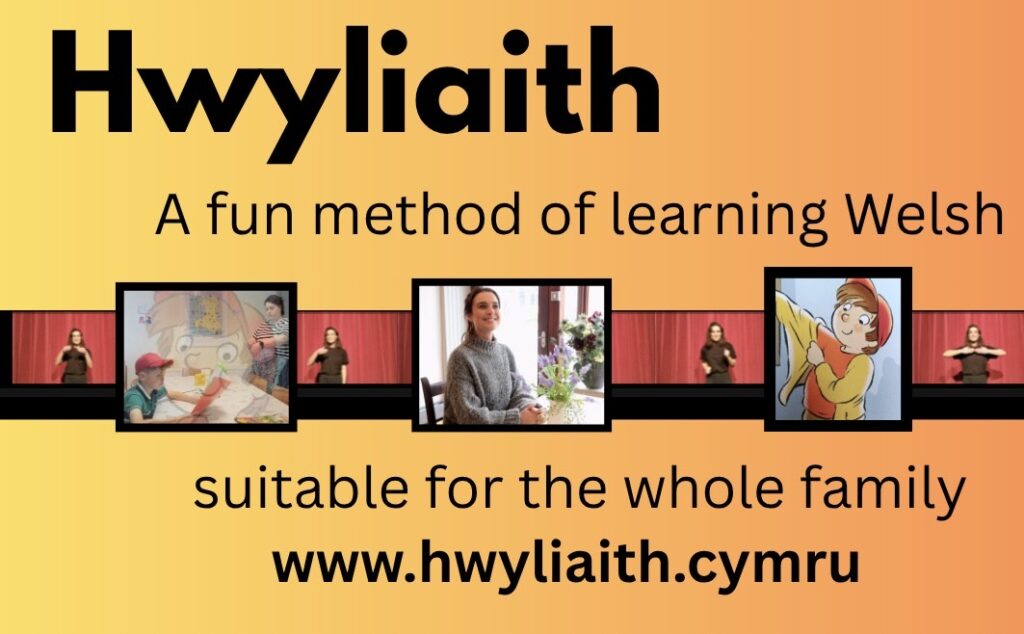
The Hwyliaith website is now live at www.hwyliaith.cymru
A special Hwyliaith Family Show will take place in the Tipi on Maes D at the Garreg Las Eisteddfod at 11am on Saturday 8 August.
Support our Nation today
For the price of a cup of coffee a month you can help us create an independent, not-for-profit, national news service for the people of Wales, by the people of Wales.
Get more trusted Welsh news
Choose Nation.Cymru as a preferred source in Google News to see more of our journalism.


