Iconic language campaigner returns to site of London protest with same message 50 years later
Stephen Price
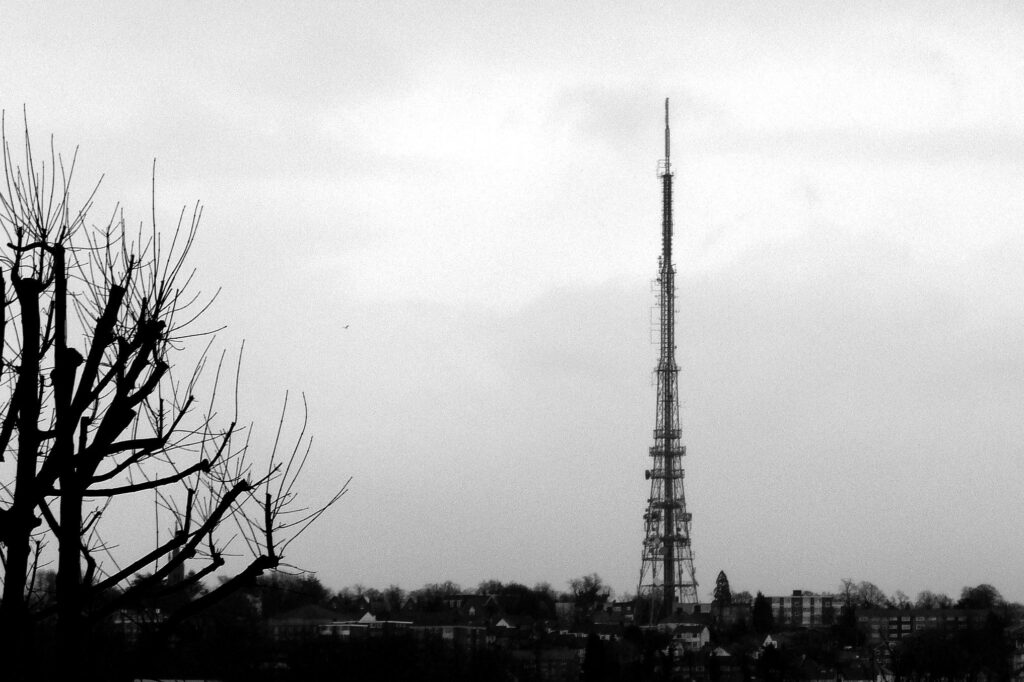
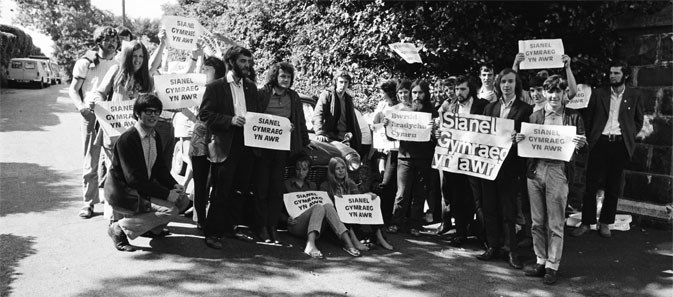
One of the campaigners who climbed the Crystal Palace mast 50 years ago as part of the campaign to establish a Welsh-language television channel will return to the mast today with the same message.
In 1976, campaigners Angharad Tomos, Gareth (Parc) Dafydd, Siôn Aled Owen and Teresa Pierce climbed the mast of the Independent Broadcasting Authority at Crystal Palace.
Speaking via a digital broadcast, one of the original protesters, Dr Siôn Aled Owen, will address a meeting entitled “Broadcasting: Yesterday, Today and Tomorrow”, organised by Cymdeithas yr Iaith (the Welsh Language Society) in Aberystwyth.
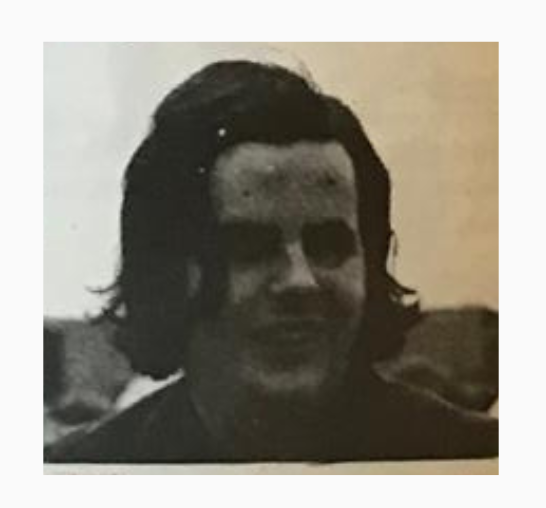
Dr Siôn Aled Owen said: “When we climbed the Crystal Palace broadcasting mast 50 years ago, the four of us who took part could hardly have imagined the revolutionary changes that would have taken place in broadcasting by 2026.
“At the time, ‘A Welsh Channel Now’ was the call, and, as far as I remember, those were the words on the banner we took with us to that platform high above Crystal Palace Park in south London on that October night in 1976.
“Back then, of course, Wales had no devolved government, only a fairly weak administrative Welsh Office. That changed, of course, more than a quarter of a century ago now, but broadcasting has still not been devolved. And in the face of the extraordinary – and sometimes alarming – expansion in the media available to us, the need for this is growing every day.
“If I were to climb the mast again (and no, I’m not going to risk it, sorry!), that is what I would be calling for as a priority. So I’m very pleased to be able to contribute in some small way, from distant London, at this historic location, to Cymdeithas yr Iaith’s discussion of the subject at this year’s Annual General Meeting.”
Following this, a panel will discuss the position of the Welsh language in broadcasting and communications, as well as the Society’s demands.
Owain Meirion, Chair of Cymdeithas yr Iaith, said: “Fifty years ago, the battle was to establish a Welsh-language channel as a medium of communication, and we had to take that demand to London.
“To this day, our Welsh-language media are still controlled by politicians and major broadcasters in London. It is long overdue for things to change.”
The event is taking place a few weeks after the BBC announced numerous cuts to Welsh-language programmes and jobs.
Plaid ambitions
The Welsh Government is to begin setting up a Shadow Broadcasting and Communications Authority as it presses for greater control over broadcasting and seeks to strengthen Wales’ media landscape.
The plans, announced in a written statement by Cabinet Minister for Culture and Sport Heledd Fychan, fulfil a Plaid Cymru commitment to publish proposals within the government’s first 100 days in office.
Rather than immediately creating the new body, ministers will first establish a Shadow Broadcasting and Communications Authority Working Group to advise on how it should operate.
The group will make recommendations on the authority’s structure, remit, legal status and future programme of work, as well as identifying research and engagement needed before the body is formally established.
The Welsh Government has allocated £45,000 from Creative Wales’ budget this financial year to support the work.
A recruitment campaign for members of the working group will begin in September, with appointments expected to be completed by the end of the year. Ministers expect the group’s first meeting to take place early in 2027.
The working group is due to report back with detailed recommendations in early 2028, with the Welsh Government aiming to confirm arrangements for the authority in a formal statement later that spring.
The proposal follows recommendations made by the Expert Panel on Broadcasting, which argued Wales needed a stronger voice in broadcasting policy despite the sector remaining largely reserved to Westminster.
In her statement, Ms Fychan said the plans reflected concerns that the UK’s broadcasting framework did not adequately reflect the realities of devolution.
She argued recent developments, including the UK Government’s Local Media Fund, had highlighted the limited influence Wales has over decisions affecting its media sector.
“The UK Government Local Media Fund is the latest example of plans agreed for and about us, where we have no role in how those plans are shaped and implemented,” she said.
The minister acknowledged that some Members of the Senedd had questioned the need for a new body but said the plans were based on recommendations from independent experts and backed calls from organisations including the Institute of Welsh Affairs and the Independent Commission on the Constitutional Future of Wales.
She said the phased approach would ensure any future authority was based on evidence, addressed gaps in the current system and delivered “positive change and better outcomes for Wales”.
The Welsh Government said the creation of the shadow authority would represent the first step towards its longer-term ambition of securing the devolution of broadcasting powers from Westminster.
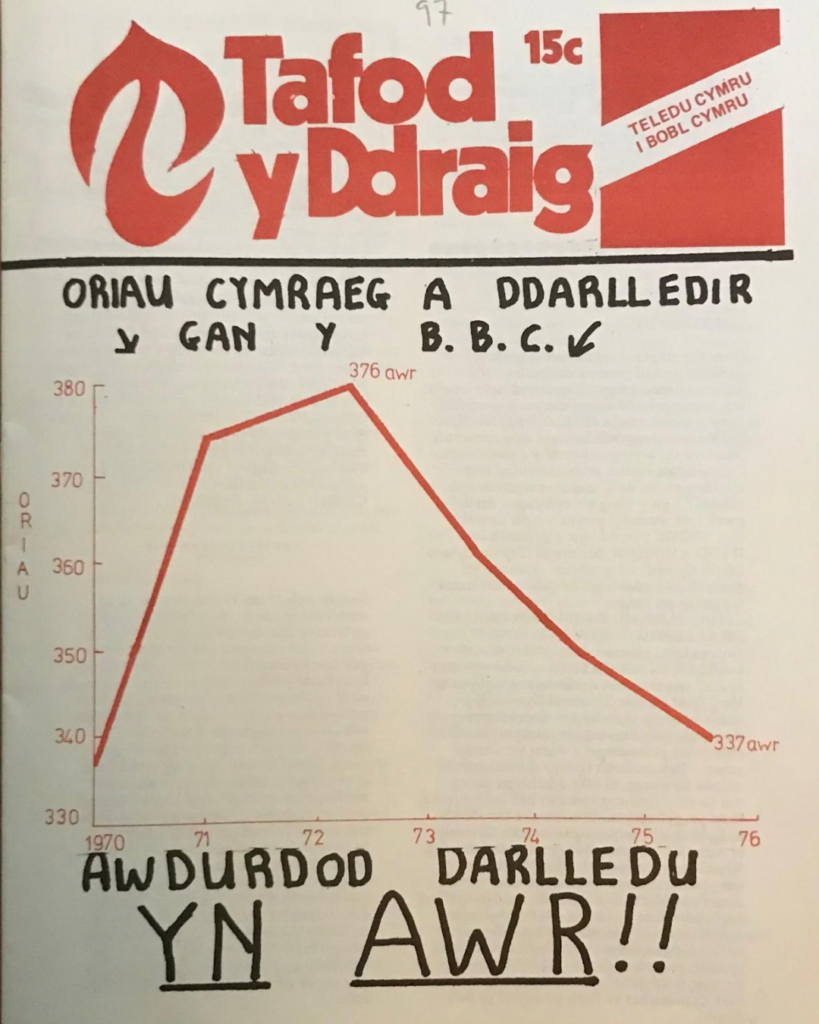
Owain Meirion added: “As well as cutting Radio Cymru programmes, the BBC is cutting the statutory minimum of 10 hours of Welsh-language programming per week supplied to S4C as the price of securing better ‘prominence’ on iPlayer.
“We must turn the tide and change the future of the Welsh language in broadcasting and communications.
“We have welcomed the fact that the Welsh Government has finally committed to establishing a Shadow Broadcasting and Communications Authority for Wales.
“We call on them to speed up the process urgently, so that local and national public service media platforms are protected.”
The event will take place following Cymdeithas yr Iaith’s Annual General Meeting, at Arad Goch Centre in Aberystwyth, at 2:45 pm.
Cymdeithas yr Iaith has launched the petition ‘Protect Broadcasting in Wales’, calling for Welsh broadcasting to be protected, for the future of the Welsh language to be secured across every platform, screen and wavelength, and for broadcasting powers to be devolved as a matter of urgency
Support our Nation today
For the price of a cup of coffee a month you can help us create an independent, not-for-profit, national news service for the people of Wales, by the people of Wales.
Get more trusted Welsh news
Choose Nation.Cymru as a preferred source in Google News to see more of our journalism.