


Illegal grassland burns: Why is Wales the ‘wildfire capital of the UK’?
Abby Neve
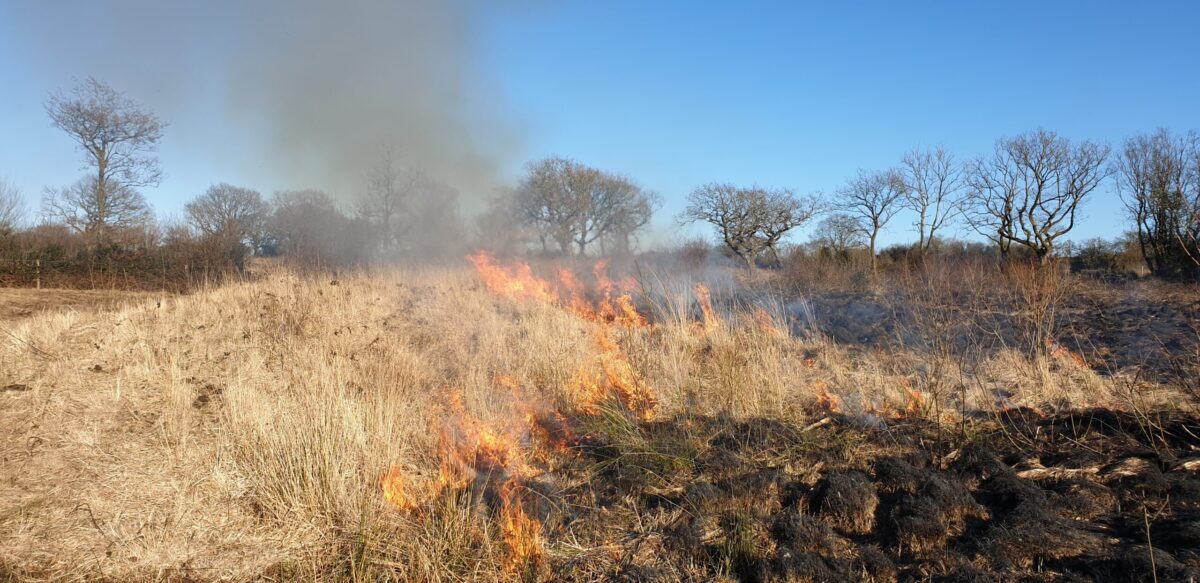
A quad bike with burning tyres chained to the back and ripping through fields sounds like a scene from a Mad Max movie. But this is no blockbuster fantasy – this is what firefighters saw in Wales one night.
The mountain was burning, they recalled, and it was no accident.
Firefighter Andy, whose name has been changed, said his crew witnessed this scene a few years ago in Bannau Brycheiniog. He understood that the goal of the person he saw deliberately lighting up the fields at night was to make space for grazing.
“When it happens late at night, it’s not discarded glass or cigarette ends like the rubbish they tend to say in the media. That simply does not happen. All these wildfires are deliberate.”
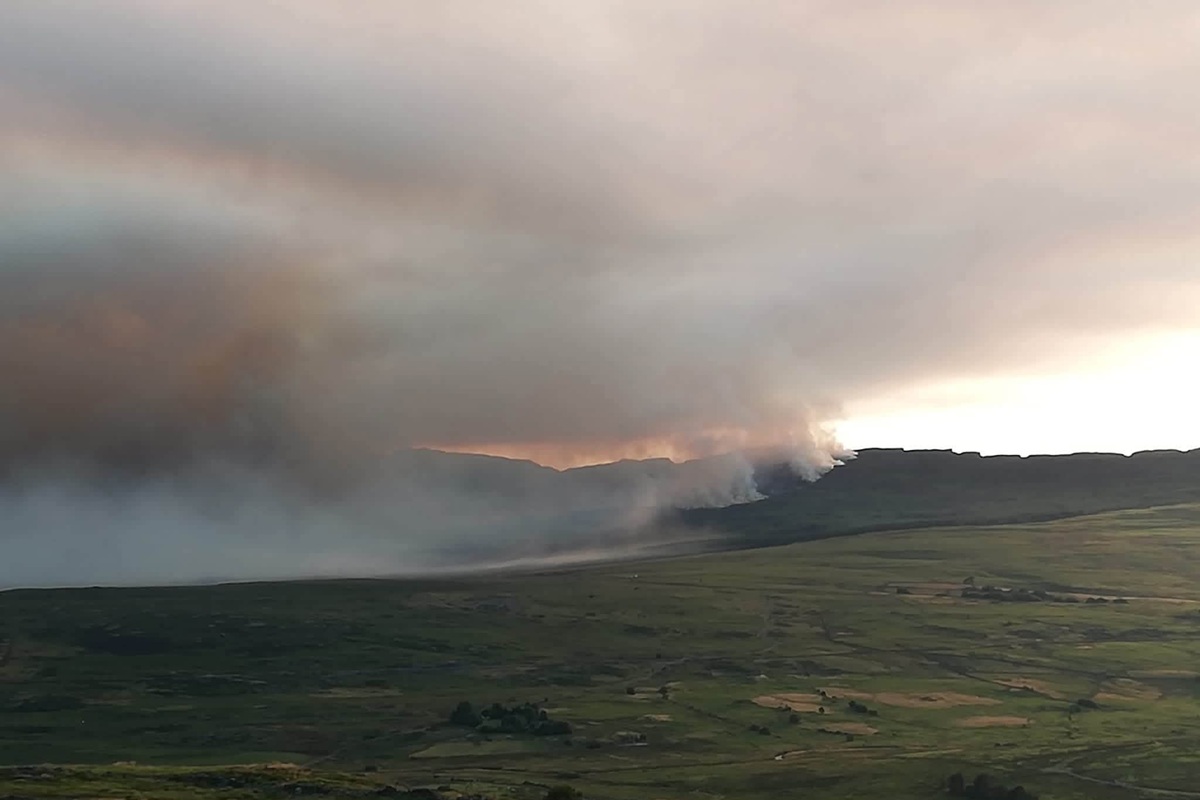
Harrowing images of the devastating effects of wildfires have been everywhere this summer. The heatwaves and drought have created the perfect storm for these fires to occur.
But when we talk about the causes of these fires, it can conjure up images of a campfire or a barbecue that has escalated into a fire, or a crazed arsonist. Sometimes there are natural causes, like a lightning strike, and even reflective objects have been known to cause fires.
A new report by Wild Cymru, however, suggests that there’s another, less-often-cited cause: illegal grassland burns.
What are grassland burns?
Grassland burns are an ancient practice that have been used around the world.
Also known as prescribed or controlled burns, these are deliberate actions taken to manage vegetation.
They are legal for part of the year: ‘burn season’ takes place in the autumn, from November to 15 March outside designated upland areas, and 1 October to 31 March within upland areas, after which controlled burns are illegal.
They can be useful to reduce vegetative fuel, suppress undesirable woody plants and brush, maintain open grassland, and improve the nutritional value of the land. The burns can be used in specific circumstances to help protect endangered flora and fauna.
Controlled burns can even have some benefits, and can be useful in preventing wildfires, ensuring that they are less intense and easier to manage because they interrupt the path of a wildfire.
During the permitted time, farmers and landowners can burn heather, grass, bracken, and gorse, and they must have a ‘burn plan’ in place.
This burn plan must include notifying the fire and rescue services, ensuring you have sufficient people to control the fire, and checking wind direction to ensure there is no risk to surrounding areas. It is illegal to leave a fire unattended, or to have too few people attending the fire.
However, while you must legally make a burn plan, there is no legal requirement to send that burn plan to anyone.
The Wales Wildfire Board urges land managers to carry out controlled burns during the autumn months. They say it’s important in maintaining the land.
Their advice is: “Burning your land responsibly is crucial in protecting your assets, guaranteeing the safety of your family and maintaining the productivity of your land whilst also ensuring you respect our countryside and play your part in safeguarding our environment and keeping our communities safe.”
But when burns are carried out illegally without the right training, management, and conditions, they can easily get out of control and have devastating consequences.
‘The law isn’t functioning properly’
The firefighter, who chose to remain anonymous because of fears he could lose his job, said that the police ‘never investigate or catch those responsible’ for these illegal grassland burns.
There is also some confusion as to who is actually responsible for enforcing these rules. The Welsh Government, when asked, said that Natural Resources Wales was responsible, and Natural Resources Wales said the Welsh Government was responsible.
Natural Resources Wales said: “Responsibility for enforcing breaches of the Heather and Grass etc. Burning (Wales) Regulations 2008 rests with the Welsh Government.”
The Welsh Government, in contrast, said: “Investigation and enforcement decisions are operational matters for NRW, and where relevant, the police and local authorities.”
‘Enforcement’ from the Welsh Government can look like a ‘burning notice’ , which requires a landowner to notify the Welsh Government of any plans to burn for a period up to 2 years from date of notice. But how that is enforced is unclear.
Journalist Helen Callaghan, who produced the report for Wild Cymru, felt that the system wasn’t working. “The law isn’t functioning properly if it can’t hold people to account for their actions, ensure protections, or act as a deterrent.”
Andy the firefighter agrees. He thinks that there are structural issues at play, and that firefighters are not equipped for what is to come: “You suggest options, but it falls on deaf ears… The whole thing is laughable, and God forbid we get Spain or France type events: we wouldn’t cope.”
‘Burnt evidence’
It’s hard to know the extent of this problem, and a lot of the evidence of illegal burns is anecdotal.
Helen Callaghan said: “We were told of multiple instances of illegal grassland burning. We talked with community groups, fire and rescue services, farmers and their families, conservationists, academics and the police. We knew that the police were investigating some incidents. And we also talked to people who said, off the record, that their relatives carried out illegal burning every year.”
Wild Cymru also sent freedom of information requests which showed that Mid and West Wales Fire and Rescue Service were notified of controlled burns 2,117 times between April and September (inclusive) in 2025, all outside of the permitted controlled burning dates.
However, they also note that these figures are hard to verify.
“It should be said that the figure could include someone ringing the control room to notify them of a bonfire, or a yard burn. But, having talked to people who have worked in control, I understand that it’s not common for people to ring in to warn of a planned garden bonfire.
“So, though the data we looked are far from perfect (since there is no category dedicated to controlled burning for land management purposes), never the less, they do give us a good indication that illegal grassland burns are happening, in a sizeable area of Wales.”
For Helen, prevention should be the focus. She notes that “enforcement, after the fact, without witnesses and burnt evidence is notoriously difficult.”
Helen Callaghan said alongside the lack of data, there are many reasons why the issue is underreported. She said:
“Perhaps it is because we lack a clear and accurate picture of the extent of the problem. Maybe because under the current legal framework, enforcement is an issue. Or, it could be because it’s a complicated and sensitive area.”
‘Too accepting’
Rob Parry, Chief Executive of Wild Cymru, thinks that the government are ‘too accepting’ of wildfires, because they are a yearly occurrence.
He said: “I don’t think Welsh Government have taken wildfires as seriously as they should have… there doesn’t seem to be a body suitably resourced, with the funding and remit to monitor and bring perpetrators of bad practice to account.”
The Welsh Government maintains that they are on top of the problem. A representative said:
“We take illegal burning seriously and work closely with Natural Resources Wales, Fire and Rescue Services and local authorities through the All Wales Wildfire Board to reduce the risk of damaging wildfires.
Why are people doing this?
Helen Callaghan, the journalist leading the investigation, said: “Illegal grassland burns happen for lots of different reasons. Some people aren’t aware of the law. They might have always done things a certain way and even regard it as part of their tradition… And then we were also told about people who pay no attention to the rules and will “light it and leave it”.”
PC Chadwick told Wild Cymru it could also be as simple as the weather. He said: “This year’s been particularly bad. Because we had so much bad weather in March, the burns were put off until later on in the year, until April and May.”
It’s also important to note that it is not just farmers perpetuating this problem, and that various pressures can lead to the decision to conduct illegal burnings.
Helen Callaghan said: “Farmers and land managers are not one homogenous group, but they have in common that they are all dealing with various difficult pressures and being asked to make big changes to working practices at the moment.”
‘Bird nests destroyed’
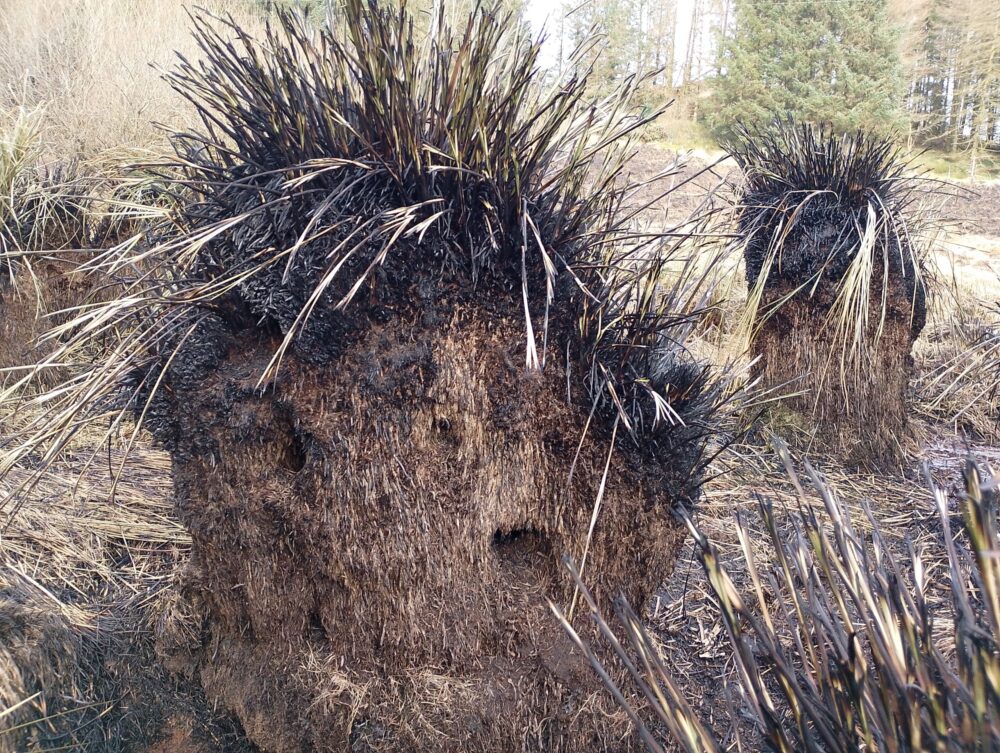
The fires have an impact on wildlife caught in the crossfire like insects, small mammals, and ground nesting birds. In all controlled burns, wildlife are often killed as collateral damage. But if illegal burns happen outside of the allowed season, it can be detrimental for wildlife who are nesting.
PC Simon Chadwick, of South Wales Police, told Wild Cymru: “The birds start nesting in spring… You see nests burnt. They’re not targeted as such, but obviously they do spread to these areas as well. And we have animals being killed, nesting birds… When you speak to the fire service when they’re putting out the fire, they come across… snakes, foxes, birds… That’s really what’s at the aftermath.”
Firefighter Andy said he has witnessed the devastation himself: “I’ve seen dead adders, slow worms, lizards and ground nesting bird nests destroyed. Cover for future nesting is also then lost too.”
Natural Resources Wales maintains they are working to support wildlife. “We continue to work with partners to protect habitats, biodiversity and air quality while supporting responsible land management,” they stated.
‘Common ground’
Gareth Parry, Head of Policy at the farmers union of Wales, emphasised that wildfires harm farmers and land managers themselves, and highlighted that farmers themselves have been working to prevent the wildfires.
He said: “Farmers in Wales are very aware of the impacts wildfires have on their businesses, livestock and local communities…
Whilst illegal fires are unacceptable and can cause significant disruption, there is a need to fully understand the causes of such fires as there is no current data available that shows that the increase in grassland wildfires is attributed to land managers…
The FUW would stress that wildfire policy cannot be viewed in isolation from wider agricultural, climate and land use policy.”
Rob Parry, Chief Executive of Wild Cymru, has some suggestions for solutions to this problem. Rob believes that farmers are not being supported with alternatives to burning.
He said: “We need to promote and make it easier for land mangers to take up practices such as rewetting the uplands, peatland restoration, cattle grazing and cutting firebreaks. We don’t talk about, promote or support these practices enough.
Helen, too believes that working with rather than against farmers will help put an end to the problem. She said:
“It needs clever governance and nuanced, deliverable policy that makes life easier not harder for those who are compliant with the law, while also ensuring a robust, workable legal system that will stop illegal grassland burns.”
She went on to say: “At the end of the day, everyone wants to reduce the number and spread of wildfires. There is common ground in a complicated debate, and most agree that there’s no place for illegal grassland burning in Wales.”
Support our Nation today
For the price of a cup of coffee a month you can help us create an independent, not-for-profit, national news service for the people of Wales, by the people of Wales.
Get more trusted Welsh news
Choose Nation.Cymru as a preferred source in Google News to see more of our journalism.




NRW abdicating all responsibility, I am shocked
It’s baffling that so many regulators roll over and shrug. The only thing worse than no regulation is unenforced regulation that adds expense to honest businesses who lose their business to the unchallenged fly-by-night operators that can undercut them.
Fantastic article