


In a more devolved UK, should London still be in charge of broadcasting?
Jamie Medhurst, Professor of Film and Media, Aberystwyth University
What we watch on television, hear on the radio and see on our screens is shaped by decisions that are still largely made in Westminster. That includes the rules governing broadcasters, how public service media are funded and regulated and how the UK’s nations and regions are represented.
In Wales, there is now a growing argument that those decisions shouldn’t be made without Wales having a much stronger say.
Following Plaid Cymru’s victory in May’s Senedd (Welsh parliament) election, the Welsh government has announced plans to establish a shadow broadcasting and communications authority for Wales, akin to the UK-wide regulatory body Ofcom.
It’s intended as the first step towards seeking the devolution of broadcasting powers. The authority would advise the Welsh government on matters relating to media and communication in Wales and would provide a focal point for public debate and engagement. It could also gather data and provide insight on media and communications in Wales, beyond what is currently offered by Ofcom.
The new UK government under Andy Burnham’s leadership has spoken positively about devolving power more generally. However, its initial response to the Welsh government’s announcement has given little indication that broadcasting is likely to be high on its list of constitutional reforms. As things stand, broadcasting and media policy won’t be leaving Whitehall any time soon.
But the Welsh government’s move comes at a time when Scotland also has a nationalist government. Devolving broadcasting powers was not part of the SNP’s 2026 election manifesto. But its 2024 document argued that it wanted “to develop a broadcasting strategy that better reflects and prioritises the specific needs and interests of Scottish audiences and our creative economy”.
Meanwhile, Sinn Féin remains the largest party in Northern Ireland, while Burnham has promised greater devolution within England.
Together, these developments raise certain constitutional questions: should decisions about broadcasting continue to be made almost exclusively in London? Or is it time for the UK’s nations to have a greater say?
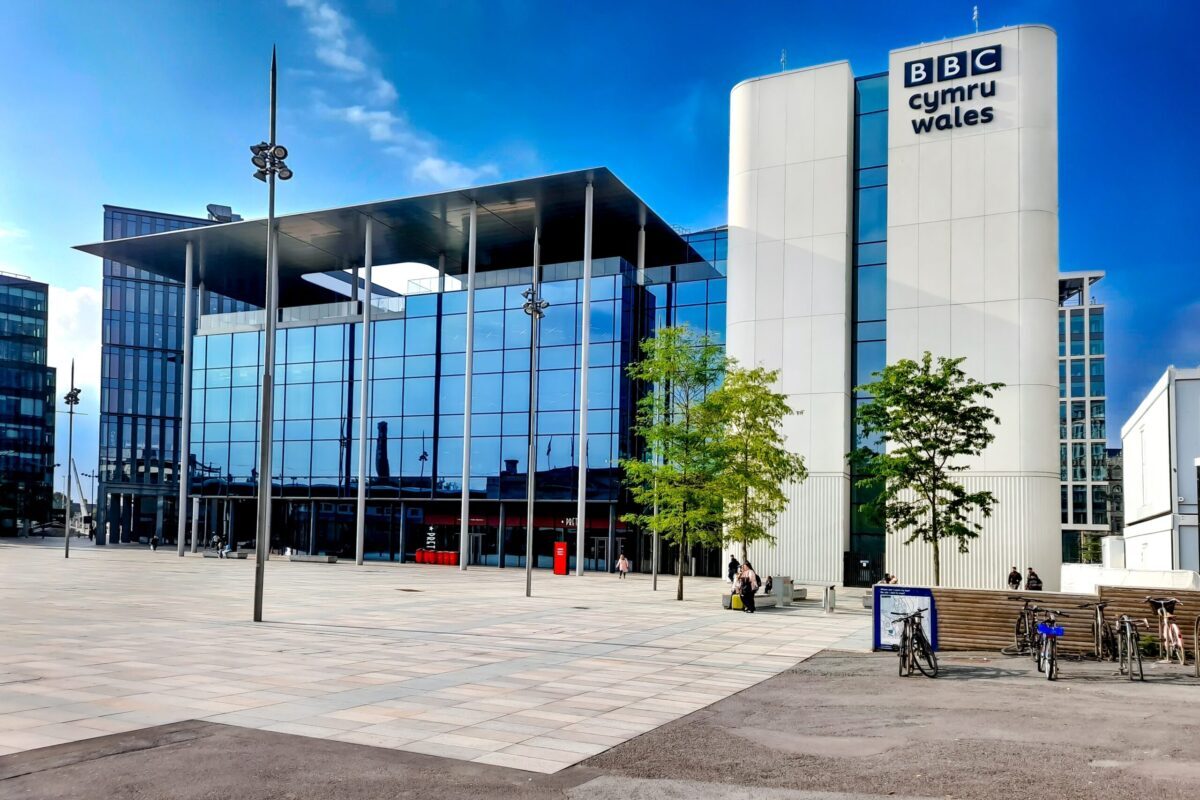
Currently, Westminster decides the legislative framework of broadcasting while Ofcom regulates broadcasting across the UK. The BBC’s royal charter is negotiated with ministers in London. Although broadcasters produce programmes for audiences across the UK, the rules under which they operate remain largely centralised.
Whether that model still reflects the political reality of today’s UK is the question colleagues and I are exploring through an ongoing research project on broadcasting policy in a devolved UK. There are two main reasons why Wales, in particular, has argued for a stronger voice.
The first is broadcasting’s place in Welsh history and public life. Historian John Davies argued that broadcasting has played an unusually important role in shaping modern Welsh identity. For a nation with its own language and distinct cultural traditions, television and radio have never simply been about just entertainment. They have helped sustain national conversations, reflected Welsh life back to audiences and supported the Welsh language.
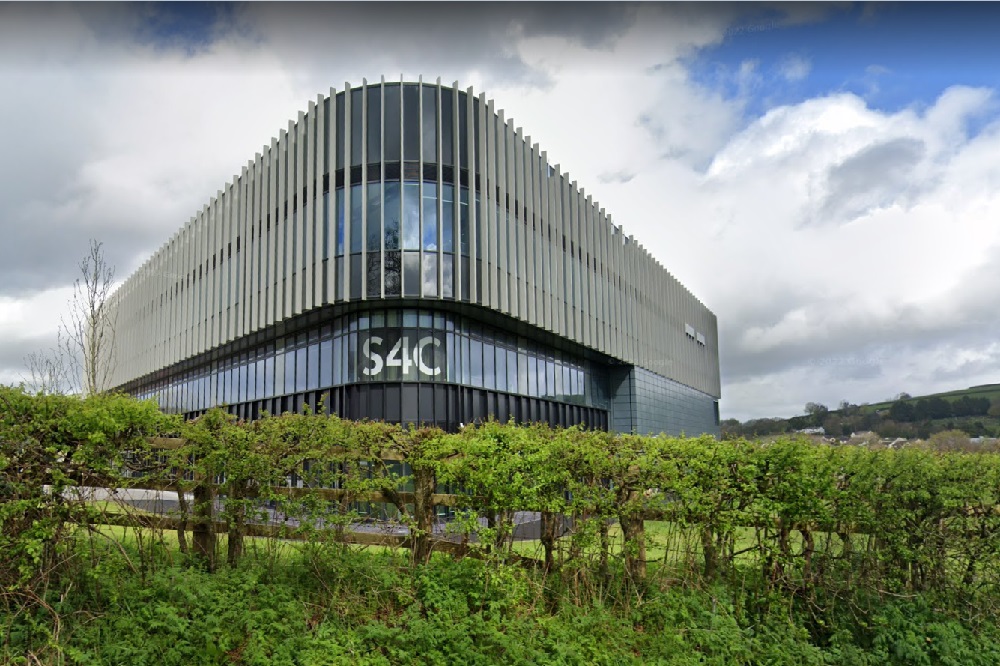
The second reason is concern about the future of public service broadcasting itself. Public service broadcasters such as the BBC and S4C have a responsibility to inform, educate and entertain. But they also provide trusted news and programmes that reflect the lives of people across the UK’s nations and regions.
Those responsibilities are becoming harder to fulfil in an increasingly crowded media landscape dominated by international technology companies and changing audience habits. For the Welsh government, this is about more than preserving the Welsh language, now spoken by around 800,000 people. It is also about ensuring that Welsh stories, communities and democratic institutions continue to be properly represented in both Welsh- and English-language broadcasting.
There are also serious concerns regarding the recent announcements from the BBC about job cuts and the likely effects of these on production in the regions and nations.
This concern is not new. In 2023, an independent expert panel recommended establishing a shadow broadcasting authority to strengthen Wales’s influence over broadcasting policy. The previous Labour-led Welsh government did not take the proposal forward, but the new Plaid Cymru administration has now revived it.
Potential reforms
Some reforms could be introduced relatively easily. The Senedd, for example, could play a greater role in appointments to bodies such as the S4C Authority, the independent body which oversees the management of the channel. This may give Wales a stronger voice over institutions that primarily serve Welsh audiences.
More ambitious changes would be more complicated. One possibility would be separate BBC charters for each nation of the UK. This could allow for greater accountability to audiences in Wales, Scotland, Northern Ireland and England while maintaining the BBC as a UK-wide institution. Other proposals would require a more fundamental rethink of where broadcasting powers should sit within the UK’s constitutional arrangements.
That is where the politics become much more difficult. Any meaningful transfer of broadcasting powers would require cooperation between Westminster and the devolved governments. The UK government has already said the Welsh government should “focus on better running the services they have”.
This debate is unlikely to disappear. As political power becomes increasingly dispersed across the UK, questions about who controls broadcasting, how national identities are represented and who is accountable for public service media will only become more pressing.
Broadcasting has long been treated as something that should be governed from the centre. But in a UK where political authority is becoming steadily more devolved, that assumption looks less secure than it once did.
This article was first published on The Conversation
Support our Nation today
For the price of a cup of coffee a month you can help us create an independent, not-for-profit, national news service for the people of Wales, by the people of Wales.
Get more trusted Welsh news
Choose Nation.Cymru as a preferred source in Google News to see more of our journalism.




Well done N.C, ‘the before and after’ twinning of those two images…unescapable!
London ENGLAND government should not be in charge of anything in Wales no country England should rule another country WALES for the benifit of a country ENGLAND
Then we should vote for independence. Until then, we are part of the UK. Only 20% or so of Welsh adults voted for PC at the election. I would suggest that the number that want independence is even less.
Yes, as it offers arms length oversight. The Welsh media landscape is small and thoroughly incestuous. A senior PC exec went to a senior role at BBC Wales, despite having no media experience whatsoever. This is not good for anyone, regardless of your political hue. Also, why spend money on this when they’ve already had to drastically cut their flagship childcare offer?
I read this article – and like policing, I can really see no impact that devolving will have on every day life. 99% of people would see no difference. This article convinces me of that.
The best the author comes up with we could ‘play a greater role in appointments to bodies such as the S4C Authority’ and ‘create a separate BBC charters for each nation of the UK. This could allow for greater accountability to audiences in Wales.’ Is that really worth all the hassle of duplicating structures in england and wales?
Good piece which highlights the issues involved. One thing that needs mentioning is the prospect of “broadcasting” itself disappearing, in that Freeview TV as disseminated via TV masts will be gone in less than a decade. Programmes will reach us via internet connectivity, not via TV broadcast over the air. This is the biggest change to broadcasting since the 1950s. The argument central Westminster control over broadcasting has relied on the limited bandwidth available and how the TV signal literally “broadcasts” over the UK. I well remember in the 1980s, living in Gower, the TV signal from Devon was stronger… Read more »
I’m really over the BBC to be honest. I can’t ignore how English it is anymore. I’m kind of over TV and films altogether. It’s either English or American which is fine as a choice, but it shouldn’t be the dominant thing on offer if you’re in a country that is neither England or America. Politics aside, different countries have different cultures, humours, interests etc. Wales has its own style and it simply isn’t represented. Our own broadcasting outlets are either lack luster (maybe due to lack of funding, maybe because we’re not natural showboaters. I don’t know) or so… Read more »
Sorry my last comment was supposed to be in the main section not a reply to you specifically Hywel (assuming it get’s approved. If not, please disregard this message).
Broadcasting defines a nation. The answer for Welsh control of its news and entertainment is hell yes. Ch’mod.
The most important thing is of course how to get a separate Eurovision entry. Since the EBC rules are so strict one reasonable compromise is to rotate responsibility for the UK entrant between the four nations every four years. It can’t be any worse than the current arrangements.
Hopefully this is sarcasm…
Obviously there are more important things like oxygen but Eurovision isn’t just a naff song contest. It’s a celebration of Europe which is why so many have tried so hard to diminish and ridicule it. Having Wales compete separately would raise the national profile which is why the beeb insist on making sure that doesn’t happen.
Plus we would win every time like we do in the National Eisteddfod…
Now look what you have done Frank…