

In defence of pigeons
Stephen Price
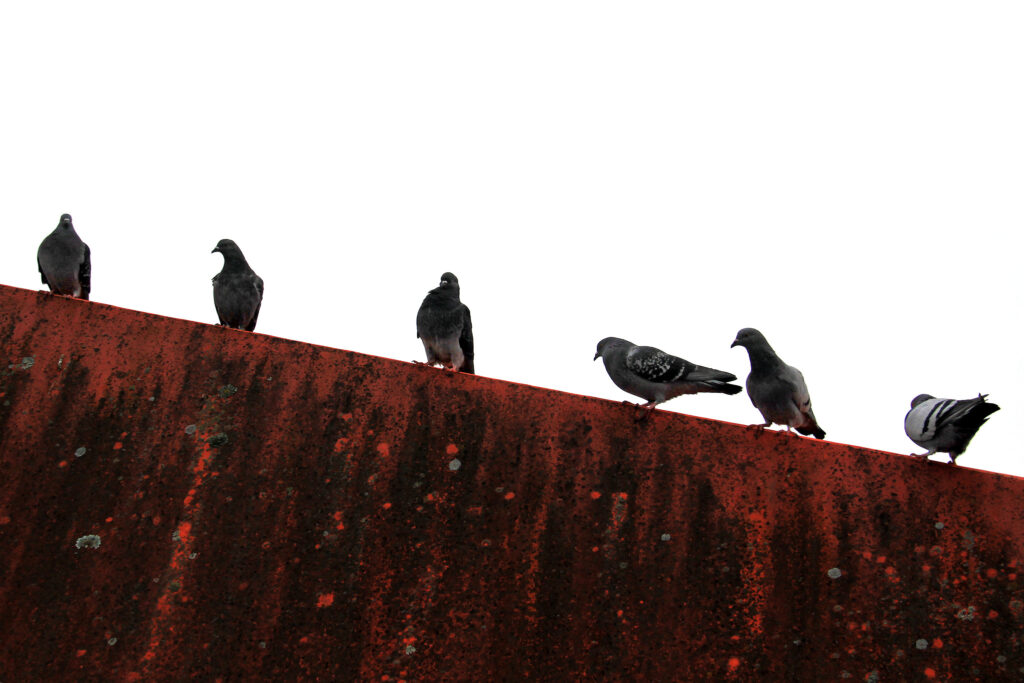
Walk through any busy high street in Wales today (there are a few left, I promise), and you’re bound to witness evidence of pigeons.
From gathering in search of flakes of Greggs pastries, to signs forbidding their feeding, or hostile deterrents such as spikes on signage and windowsills, pigeons are a permanent fixture in our urban spaces.
Passing through a few of my local-ish high streets ‘on the reg’ with the hounds, I make a habit of giving any pigeon distance, letting them be, letting them have their space, but I notice I’m very far from the norm there, as people and cars invariably shoo them away or walk ahead with no regard for their care or vulnerability.
And then, of course, there are children (and their onlooking families) who I’ve lost count of chasing them, aiming to stamp on them – all in the name of a gross take on fun.
Not fancying a street brawl, we’re all led to having to bite our tongues when witnessing dickhead behaviour day in day out, so it’s over to parents to parent, but I can’t help but feel that these ‘micro’ acts of animal cruelty point toward something deeper in us as people, and in our relationship with all other species on this earth.
You’re in our space, you’re there for our entertainment, your torment is our fun.
Nothing, I feel, represents humans and their disregard for nature, and their lack of empathy, than the plight of the much-maligned pigeon (or does the plight of every other animal present in the UK illustrate it quite well too, come to think of it?)
Hanes
Pigeons and doves have lived alongside humans long before they gained their reputation as ‘dirty’, as ‘pests’ as ‘rats with wings’ – a term made popular by none other than Woody Allen – yes, he of the Epstein files.
A symbol of peace, humans have domesticated and bred pigeons for their feathers, eggs, meat and navigation skills for thousands of years.
The first written evidence of their domestication is from over 5,000 years ago and these birds have become firmly rooted in our culture since. The image of a pure white dove represents peace and tranquillity, while pigeon post has been a favoured form of communication for thousands of years.
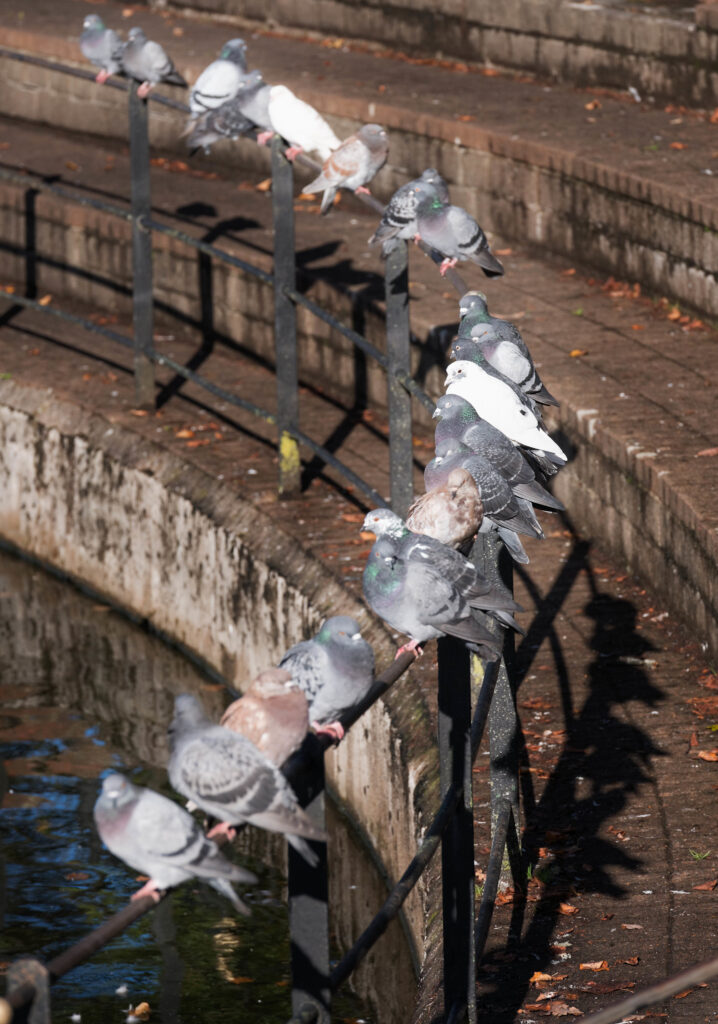
The feral Pigeons you see in our towns and cities are all descendants of domesticated pigeons which escaped or were released.
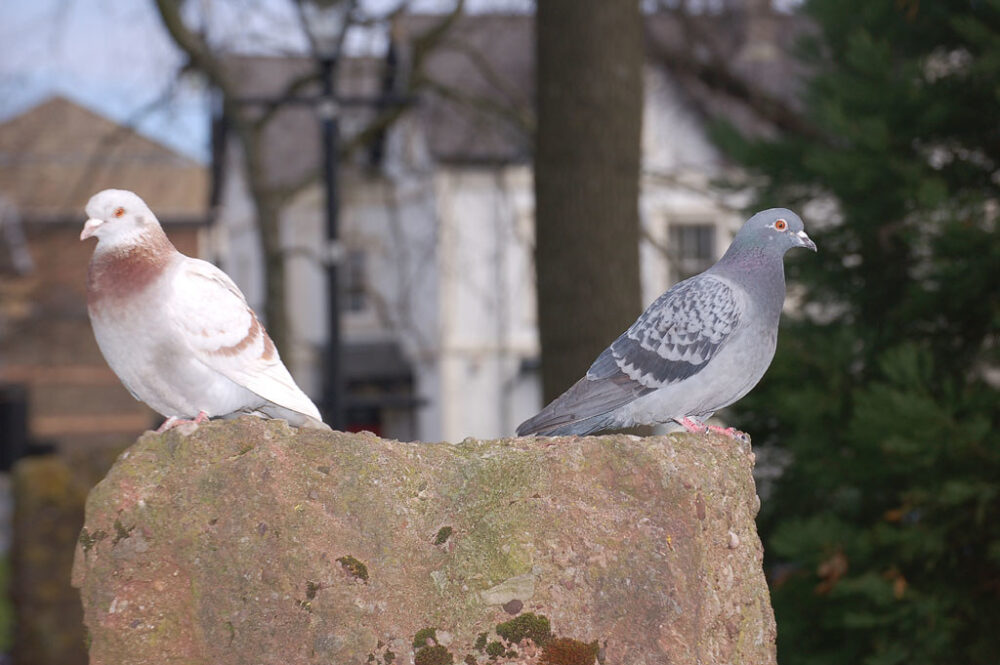
Despite their wide variation in colour, feral Pigeons are actually the same species as the plainer, wild Rock Dove. This breeding means they’re seen in a wide range of colours.
It’s pigeons’ domestic ancestry that has predisposed them to living near humans, and they subsequently became adapted to urban life, being abundant in towns and cities throughout much of the world.
In short, we adapted them, used them, benefitted from them and made them reliant upon us. And now we’ve abandoned them.
Heddiw
The picture of pigeons today is vastly different to the high regard, esteem and worth they once held in our eyes.
Just like dogs, the term ‘man’s best friend’ wouldn’t have felt out of place, yet now they are subject to abuse, exploitation and an undeserved reputation in stark contrast to the one their gentle, vulnerable personas deserve.
Writing in the latest edition of The Vegan magazine, pigeon advocate and former veterinary nurse Sue Joyce who lives in Carmarthenshire shared that she’d initially believed the stories of pigeons being dirty, but over time grew to love and admire the vastly misunderstood birds.
She told the publication: “It was the realisation all animals and insects are worthy of our care and love that helped me understand pigeons are intelligent social creatures and very complicated. They’re not designed to live on the streets and so they suffer more than garden birds.”
After setting up a dedicated pigeon sanctuary, financial and logistical complications led her to turn her attention to advocacy instead of rehabilitation, and she eventually founded a community interest company based in west Wales called Little Green Pigeon, which raises funds to help volunteers rehabilitate pigeons injured by people, predators or deterrents like spikes and nets, or birds suffering from ‘stringfoot’ – when debris from hair and fishing wire to dental floss tangles around their legs.
She shared: “People think they’re disease-ridden and they often get the term ‘winged rats’ because they’re everywhere and they are pooing everywhere and that’s what people see.
“What they don’t see is that we abandoned them there. But, because they’re not eating an appropriate diet, they have digestion issues and mess on buildings, and the assumption they’re dirty comes out.”
Her love for pigeons is endless, and one of her current campaigns aims to bring about an end to racing pigeons, owing to the distress and cruelty involved, with around 60% dying during their traumatic ‘races’ to return to their loved ones after being separated.
“Pigeons mate for life, they love very strongly. Both birds feed and sit on eggs and produce a hormone-based milk in their crop like a female mammal. They love their children. Pigeon racers use that to their advantage,” adds Sue.
She added: “If you live in a city and you’re born in that city, you will see pigeons everywhere and possibly no other wildlife. You’re going to come across them much more than farmed animals.
“If we can show everybody they deserve our love and respect, and help them understand the lives of a city pigeon, and they have compassion for that bird at that moment, we can open up their minds to have compassion for all animals.”
Across Wales, we’ve decimated our forests and woodlands, leaving nature very few places to turn. That we have a bird that wants to be around us is a miracle in itself.
That they need to be around us, means we have a responsibility to do better for them. Be it giving them space, sanctuary and appropriate food, or just leaving them alone. We are the reason these inquisitive, joyful birds live among us, after all.
Conversely, making their lives harder is what actually makes our towns and cities appear ugly and sterile – spikes on window sills and gutters and hostile signs serving no other purpose than to tell the younger among us that they are indeed, deserved of cruelty. That we live among pests, and not an animal we not only once adored, but one that once served us in ways that have helped change the course of history.
We, and they, deserve better.
Help support Little Green Pigeon here.
Visit the NPAA website to find out more about Sue’s mission and information on how to help your local pigeon flock
Support our Nation today
For the price of a cup of coffee a month you can help us create an independent, not-for-profit, national news service for the people of Wales, by the people of Wales.



Wonderful article. Thank you for writing it. I have a neighbour who loves ‘Being in Nature’ and ‘worships Mother Earth’, and they’ve sent numerous written complaints to me over the past year because of the pigeons that come into my garden, referring to them as vermin and pests. The birds themselves, meanwhile, have no idea why they’re so despised.
Not sure I subscribe to the “we abandoned” them thesis. They have been remarkably successful freed from their domestic chains. If their diet is unnatural and unhealthy why do they thrive in our cities? I totally agree that those who derive pleasure from chasing them deserve our scorn, but I’m afraid painting feral pigeons as victims when they are one of our most successful urban wild beasts is stretching reality.