

Interview: Cerys Hafana discusses new album Angel, Brittany and a denial of murder
Stephen Price
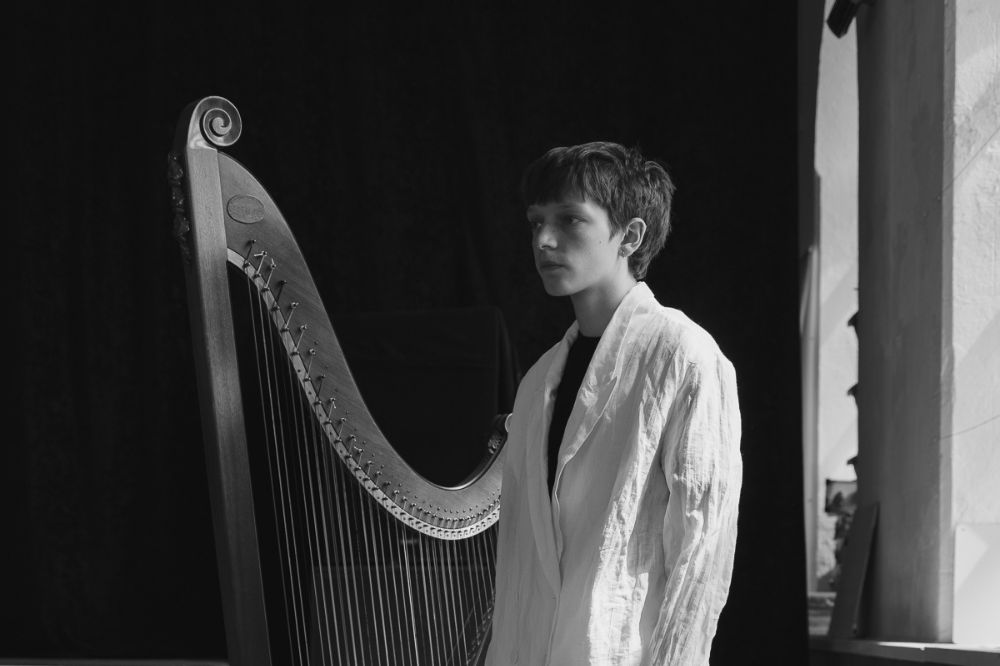
This Friday saw the release of Cerys Hafana’s latest album, Angel – a bold, moving suite of music, voice and soundscape shaped by Wales, Brittany, and an approach perhaps influenced by the freedom of jazz.
Angel, Hafana’s third full length proper, sees the acclaimed Welsh composer, singer and multi-instrumentalist take a deep exploration of minimalism, traditional and avant-folk music and Hafana’s primary instrument the Welsh triple harp.
The album alternates between vocal songs (all sung in the Welsh language) and instrumentals, often buoyed by a deft trio of sympathetic and exploratory musicians (drums, double bass, alto sax).
Hafana said: “I wanted to try to push the musical limits more than I have previously, and to swing between the extremes of dynamics and texture as much as is possible on the instruments at my disposal.
“Lots of the writing also draws from contemporary Breton folk music with its driving and repetitive dance rhythms, more sparse, contemporary styles of composing and improvising, and some brief moments of very Welsh and traditional harp playing and unaccompanied singing.”
The album captures a remarkable collection of songs with incredible intimacy and immediacy, with Hafana crediting producer Owain Fleetwood Jenkins for the ‘in the room’ quality of the sound.
Ahead of its release, and after repeated plays, Nation Cymru spoke with Cerys to gain further insight into this remarkable new work, and to ask their whereabouts one fateful day in 1979…
Angel marks a very different approach to your albums than those we’ve seen previously – most notably in the instruments used, but also the exploration and influence of Breton music on your own work. How did you approach the new work compared to previous albums and EPs?
This was my first experience of booking in studio time to record an album before having a finished album to record. In the past I’ve just collected compositions and arrangements and then gone to the studio once I had enough of them to turn into ‘an album’, whereas this time I was very conscious that I was writing an album throughout the compositional process.
It’s also the most conceptual project I’ve made so far, in that it’s all built around one song that I found in the Welsh National Library’s archive. Once I’d discovered that song and decided to split it into two songs which would bookend the album I had a framework / narrative on which to hang all the other pieces.
I worked with a percussionist and double bassist on Edyf too; percussion always feels like a natural choice because the way I work is so rhythmic and it helps draw attention to that, and the double bass feels like an extension of the harp when played pizzicato, which is always fun to work with.
If you told me two years ago that I was going to make an album with a saxophone I’d have thought you were joking, but for whatever reason I just woke up one day about a year ago and knew that this album needed sax. It probably was partly the Breton influence, because they’re big on their woodwinds and bagpipes, but I also wanted something that could mirror my voice in terms of timbre and pitch.
You’ve been part of a few visits to the Interceltic Fest – was this something that sowed the seeds, or does your interest in Breton music go back further?
The Interceltic festival in Lorient was definitely where those seeds were sown. I’ve played there 4 times now. It’s always a very intense experience – ten days of endless bagpipes and Breton folk dancing and I think about 1 million visitors – and I think I have quite visceral, nostalgic feelings towards Breton folk music as a result of that.
I was last there in 2023 and went to see Eben, a Breton folk band, perform on the last night of the festival. It was incredible to hear such complex arrangements and instrumentation being used to sustain the energy of thousands of people dancing around in circles for several hours.
I was lucky enough to see you live on the last tour, where you gave a fascinating introduction to one of the new tracks about a quite epic dream – how did you find this story and then bring it to life so spectacularly in music?
The story is from a song called Hanes Hen Ŵr o’r Coed (The Story of the Old Man from the Woods) by David Jones, which I found in the Welsh National Library’s ballads database.
It’s about an old man who goes for a walk in the forest and hears a bird singing so beautifully that he decides to sit under a tree and have a quick nap. But it later transpires that it was an angel, not a bird, singing in the forest, and that rather than have a nap he’d fallen asleep for 350 years.
I loved how strange and multi-layered the story felt. It starts off sounding like a fairly classic folk story, and then has this Christian stamp on it with the appearance of the angel, and then the final verse completely undermines everything by stating that it’s just a story the author of the song read about in a book and decided to turn into a song.
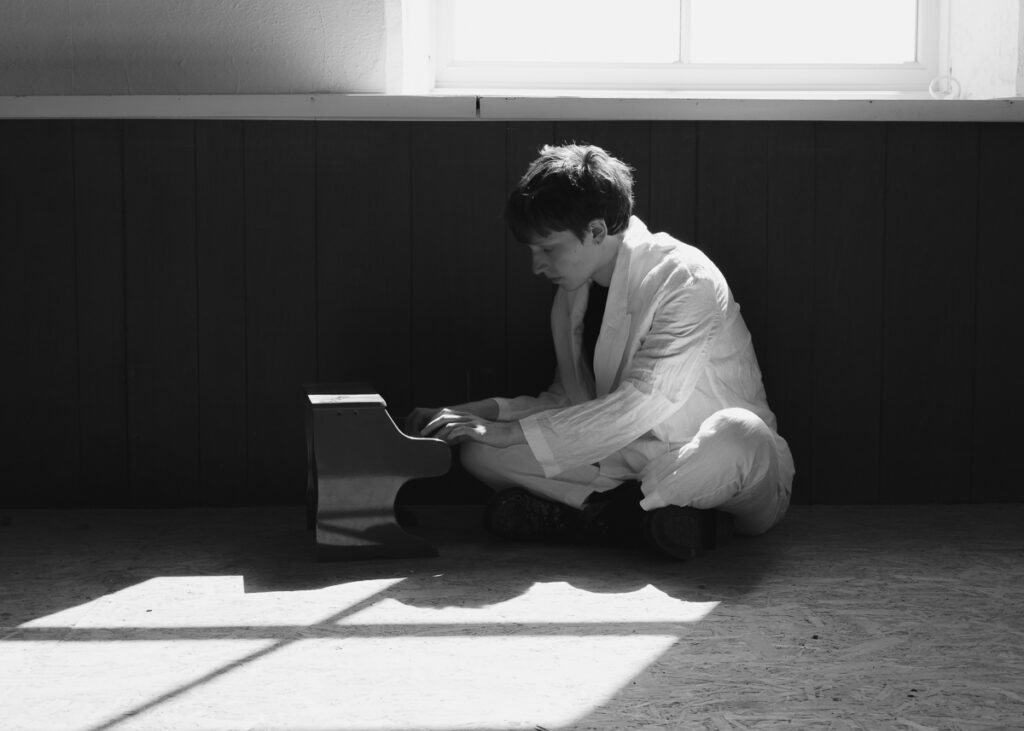
Your most recent work has been nominated for the Welsh Music Prize? Was this a surprise – especially considering it’s for a piano piece?
It was a huge surprise! I think it’s fair to say that the WMP usually tends to focus on more contemporary, rock/pop genres, so it’s always a huge honour (and slightly confusing) to make the shortlist with my strange instrumental or folk music.
And there are some huge names and albums on the list this year so it’s been making me very happy to see Difrsig listed alongside them.
There’s a definite touch of jazz permeating some of the newer work – Like Joni and Kate, this development usually comes later in a career, can you tell us more about this influence…
I think the way that I wrote a lot of the music for this album was quite jazzy (if only in method, rather than actual sound). There are certain parts that were very specifically scored, and then also lots of room for the other musicians to improvise and play around with the material.
I’m not from a jazz background at all but I’m always really jealous of jazz pianists and the way that they approach the instrument, and am always desperately trying to channel a bit of that in how I play the harp and piano.
I don’t listen to a lot of jazz but got kind of obsessed with an album called Danse by the jazz pianist Colin Vallon last year – he performs with a trio of piano, double bass and percussion and I think the textures and rhythmic language they use really influenced me in how I approached this album.
I also had Ursula Harrison, who won the BBC Young Jazz Musician last year, playing double bass on Angel, so she definitely brought a stronger ‘jazz’ feel than I’ve had in the past.
On that note, the whole album feels an elevation in your desire to experiment – was it difficult fusing disparate genres into a cohesive piece? To me, that’s the absolute wonder of it (and any other good album) in that it does feel like a whole, not a collection of singles.
That often stresses me out quite a lot when I’m in the writing process – it can feel like balancing a lot of very different plates and feeling like it will be impossible to make them all make sense together.
But then it’s always the most exciting moment in the whole process when suddenly everything makes sense and starts to feel like a whole.
Things started to fall into place in terms of the subject matter of the album when I found the song about the man from the trees, but Carol Mynyddog was the piece that musically helped me see what I was aiming for.
It was the piece that confirmed that I wanted to use the piano as well as the harp on the album, and also set out my intention of pushing the dynamic range more than I have on past releases, and trying to explore the extremes a little bit more.
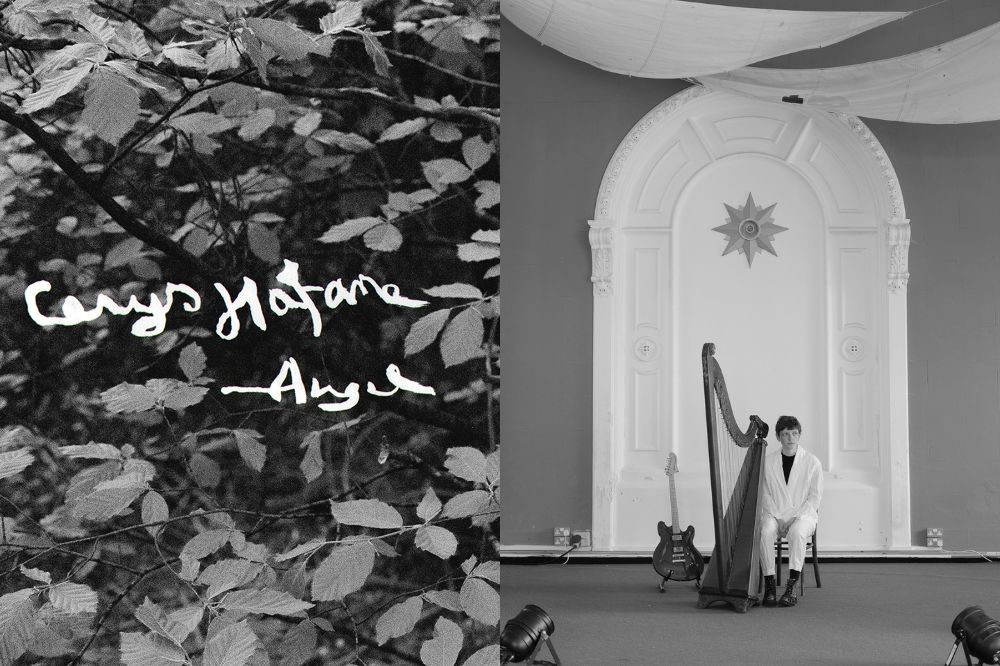
The new work seems to translate to a more complex, more involved touring style for you too – is this the case, or are you finding yourself having to reinterpret your own work to bring it to life on stage?
I’ve been playing some of the material on Angel live in a solo capacity since the beginning of the year, and that’s required a bit of reinterpretation.
It’s the first time I’ve ever written / released something in which the other instruments play such an integral role in the structure and feel of the music.
I’m really happy that at least one of the musicians from the album will be with me for every part of my upcoming tour, but even adapting the music from the quartet to a duo / trio has meant a fair bit of rearranging.
I’ve also been enjoying coming up with ways to incorporate these instruments into some of my back catalogue for the live performances.
And perhaps a random question for the casual reader, but purchasees of your music will be dying to know – did you, Cerys Hafana (D.O.B September 24th 2001) kill Nansi Richards (1888-1979)?
If I told you I’d have to kill you too.
Read our review of Angel on Nation Cymru this Sunday.
Listen to Angel on all streaming platforms or purchase from Cerys’ Bandcamp.
Cerys is also taking Angel on tour in the UK this October, and will be joined by musicians from the album for various parts of the tour.
2/10/25 – St George’s Bristol , Bristol
3/10/25 – Royal Liverpool Philharmonic, Liverpool
4/10/25 – The Gate, Caerdydd
5/10/25 – All Saints’ Church, Somerset
8/10/25 – Band on the Wall, Manchester
9/10/25 – Cobalt Studios, Newcastle
10/10/25 – The Glad Cafe, Glasgow
11/10/25 – Firth Hall, Sheffield
12/10/25 – St Matthias Church, London
16/10/25 – Church KCM, Falmouth
17/10/25 – The Barrel House Ballroom, Totnes
18/10/25 – Wiltshire Music Centre, Bradford on Avon
21/10/25 – Canolfan y Celfyddydau, Aberystwyth
24/10/25 – Ty Siamas, Dolgellau
25/10/25 – Neuadd Ogwen, Bethesda
Support our Nation today
For the price of a cup of coffee a month you can help us create an independent, not-for-profit, national news service for the people of Wales, by the people of Wales.


