


Interview: Michael Sheen talks the ‘scary’ process of exploring forever chemicals in new documentary
Nation Cymru staff
Ahead of Michael Sheen’s gripping two-part unscripted series hitting TV screens, the actor and activist discusses claims of chemical contamination across Wales, and how he helped bring to light a scandal that threatens to leave a catastrophic legacy across the UK.
For Michael, his new documentary, Buried, is personal: almost ten years ago he met farming consultant and whistleblower Douglas Gowan who claimed the people of Wales had been poisoned, not by a single criminal act, but by decades of exposure to toxic chemicals in the environment.
Douglas believed that thousands of tonnes of toxic industrial chemicals known as Polychlorinated Biphenyls (PCBs) had been dumped in sites across Wales and north west England. Often described as the “godfather of forever chemicals”, PCBs were regarded as a wonder chemical in the 1960s due to their resistance of breaking down, but are now officially designated as a Group 1 carcinogen and banned globally.
Douglas Gowan spent over 50 years trying to warn people about the dangers of the chemical dumping, but seemingly no one would listen. Unable to let go of the story, Michael tracked Douglas down and spent two days filming an interview with him.
Douglas described a lifetime battling corporations, government and local councils, claiming Monsanto – the world’s leading PCB producer – knowingly buried highly toxic waste in communities across Wales, with consequences still being felt today.
Two months after that interview, Douglas was dead, leaving Michael with his story.
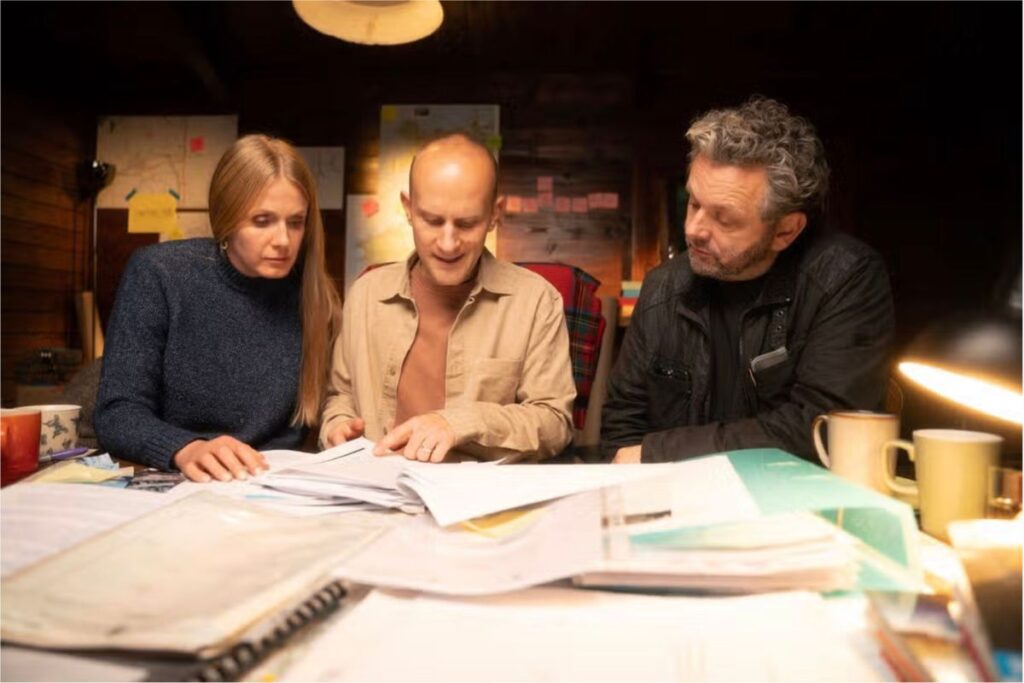
Across two episodes, Michael Sheen, alongside investigative journalists Dan Ashby and Lucy Taylor, retrace Douglas’ footsteps with environmental experts, forensic scientists and residents living near toxic dump sites. It’s a journey into alleged conspiracy and cover-ups, but also one of ordinary people speaking truth to power.
Q&A with Michael Sheen, Dan Ashby and Lucy Taylor:
Michael, can you tell us about when you met Douglas Gowan?
Michael: I was living in Los Angeles at the time and just completely randomly came across his story. I was scrolling down a Wikipedia page and there was one tiny sentence about environmental controversy that mentioned Brofiscin Quarry in south Wales. So I looked up Brofiscin Quarry and ended down a rabbit hole and eventually found this man called Douglas Gowan and the beginnings of his story, and I was completely intrigued.
So I decided that I would try and find out if he was still alive, and he was. I got in touch with him and he said, “Come and see me. Come quickly because I might not be around much longer.” So I went down to see him with my mate, Julian, and we filmed him for two days and got the story.
And as I say in the film, within two months he was dead.
At that point did you know what you were going to do with this material?
Michael: We asked ourselves what do we do with this now? Particularly once I found out that Douglas had died and it was just left with us. I felt like it was down to me in that moment. I didn’t know that anyone else was doing anything about it.
There were two bits of my brain working. One bit was going; this is a great drama, Douglas Gowan getting a phone call, turning up as a junior guy for the farmer’s union and investigating this farm, and then the story just reveals itself and that gets bigger and bigger and bigger. But then the other part of my brain was going, if he’s right, people might be in danger. Something has to be done about this now, and as we know, dramas can take a while. So the first point I could do something about it in 2016 was when I was asked to do the Raymond Williams Memorial Lecture. In that I mentioned Douglas Gowan and his story, and I brought up the dangers of living in a post-industrial area, desperate for employment, desperate for work, for people, and the danger in how that can lead to people maybe being a bit lax around dangers to the community and to health.
I mentioned Douglas Gowan and the story of Monsanto hoping that someone might hear that and then say, oh, we should investigate this further. Which they did… but it took seven or eight years for it to happen.
Before the documentary, this was a BBC Radio 4 podcast, Buried: The Last Witness. What initially drew you to this story?
Lucy: We did a previous podcast which was about waste, and after that somebody sent us an email saying my friend has Douglas died, but you should look at what he was doing. We somehow ended up inheriting all of his documents; CDs, DVDs of his, his documents, test results, diaries, just loads and loads of stuff. And I think from that moment we knew that it was a story we had to do because there was so much here and it dated back so far.
But it’s quite daunting trying to piece together someone’s life after they die like that. Are these decades of work? What’s the story now? How does this work? And then we came across this speech that Michael had made and we didn’t know at the time there was any tape, we didn’t know he had interviewed Douglas. But we contacted Michael and were surprised when he said, “Yeah, come see me. I know all about this.” So then to have Michael to tell us about Douglas and see Douglas on the videos, that completely transformed what we were doing. It was amazing.
How did you begin sorting through all of the information and deciding what goes into the documentary?
Dan: Douglas’ life wasn’t in any sort of order, but we had this responsibility where we had his diaries, we had his letters through the years, we had different Douglas’ arguing with Douglas’. It took months, it was the best part of a year, but we sorted it into what investigative journals like us call primary evidence and secondary evidence.
And primary was the goal for us, reports that we could verify. And a big breakthrough was obviously finding Michael and it was a really lovely moment because it was someone else who had been in Douglas’ world.
Michael, you are used to movie sets, scripts, knowing what’s going to happen. But we watch the three of you throughout the documentary as you’re making new discoveries. Was it scary not knowing how this was going to turn out?
Michael: Yes, and also it’s ongoing. The whole point of us making this is to push for something to happen. This isn’t just for its own sake, so it’s unravelling and unfolding in real time and yes, because of the chaotic nature of Douglas’ evidence, we – Dan and Lucy – were finding things, and letting me know about them in real time.
There was a moment when we’d been to Brofiscin, and I’d been in the field and I hadn’t been wearing the wellies at that point. I was wearing my own boots, and I remember going back in my car and stopping at the garage to get petrol and then taking my boots off and hosing them down in the garage because I got so paranoid that I might be taking this home. There’s moments like that where it is really daunting. It is scary.
There’s a real responsibility taking on something like this because there are communities at the heart of this. There are families at the heart of this who have suffered and don’t have any answers. How much were you aware of the responsibility that you had to get this right when making this?
Dan: That was a constant conversation because you have these two evils if you like, and one is scaremongering and the other one is naivety which is the opposite; a biasness towards thinking they wouldn’t let these chemicals out, they wouldn’t be in our blood. It’s a really hard job, particularly for journalists, the production team, everyone, because our job is to go to the communities and try fact check everything and scrutinise it. But also, as Michael says, to validate the moments that they’ve been let down when they do make credible claims. There’s a lot of sifting and there’s a lot of working with people. We ask for a huge amount of trust from people to go on that journey with us.
Hopefully this comes across in the documentary. These people in these communities are incredible in the amount they’ve discovered, the way they try to hold people to account, their scientific credentials, even though most of them aren’t scientists.
And that comes across even more in the second episode. One of the few bits of this whole journey I’m inspired by is by the people we have met, their agency, and also of course Douglas’ agency.
What surprised you the most throughout this process of discovery?
Lucy: I think right back to the beginning and the fact that these PCBs are everywhere. There’s something really dystopian about the idea of a manmade chemical being in all of our blood, in every inch of soil in the country and in our oceans. In doing this programme, we’ve come across really shocking things about what it’s doing to our oceans, marine species that are suffering and going extinct because of PCBs. The fact that it’s in our food and we all know it’s in our food. These aren’t actually revelations that we’re bringing out in the programme. This is known, but for some reason, it’s not really part of our conversation that this happened, and I just think there’s something very sinister about the idea of this.
What do you hope will come from doing this documentary?
Michael: I think it’s important to say that the biggest injustice here is that the people who are responsible for this have got away with not having to take responsibility. That’s the first thing. The people who dump this stuff should be made responsible, but what happens is the company mutates into a different company and a different company and suddenly the people who are responsible don’t exist anymore.
The next thing, in my opinion, is that local councils – where this potentially contaminated land is – are terrified that if they’re financially responsible for doing something about this, that it will bankrupt them. Because they don’t have the budgets available.
Somehow we have to make sure that we are able to move past that point because people like the two Jans who have been fighting for years to try and get their concerns taken seriously and the concerns of their community are being pushed back, and at times they’re potentially being sold disinformation about what’s going on.
We have to somehow make sure that the councils themselves, understandably, when they don’t have the budgets to deal with this, that they are not held responsible for it, but they are held responsible for not doing anything about it. So then what that means is you have to go beyond the councils. You go to Welsh Government, you go to the UK Government, you go international. This is beyond our country. There has to be a pool of resources in the absence of the people responsible for it.
We have to find some international response to this in order to take the pressure off the small communities and the individuals who are here who are giving their life to this. It can’t be on them. So personally that would be my push, to say we have to go bigger, beyond the councils and find a way to show that the actual responsibility for this lies with people who have managed to avoid being made accountable.
Dan: One of the BBC commissioners said he wanted to commission this partly because he was looking for the next Dark Waters. And I thought that was interesting because the depressing thing about this story is we wanted to tell it because it is a present story. Now, PCBs are banned, but there are between 10,000 and 7 million forever chemicals in production today. The forever chemical crisis is possibly on a scale to some of the other great environmental crises, like climate change, like biodiversity loss. We are pumping these chemicals into the environment and into our clothes and into our sofas, into our children’s school uniforms, into mascara… there are countless products. And each day there is more science coming out showing that they’re putting people at risk.
So those dumps in the communities, they’re not getting PCBs anymore, they’re getting PFAS, they’re getting new forever chemicals.
What I hope this documentary does at the very least is creates a national conversation about whether this should be happening and what is the best way forward.
Lucy: The testing that we’ve done is quite small scale. It’s quite indicative that we shouldn’t really have found anything. And I think the fact that we found so much in these small levels of tests really does warrant somebody else to pick this up.
It probably shouldn’t be for us to say what should happen next, but I think we need the authorities and the institutions to step up and look at this in a little bit more detail and try and work out what should happen next. It’s kind of scary for us looking at the US and actually in the US more is being done to remediate their sites. They have equivalent sites to us, but they’re beginning to clean them up. There are funds to do that, but we don’t have that here, which is alarming.
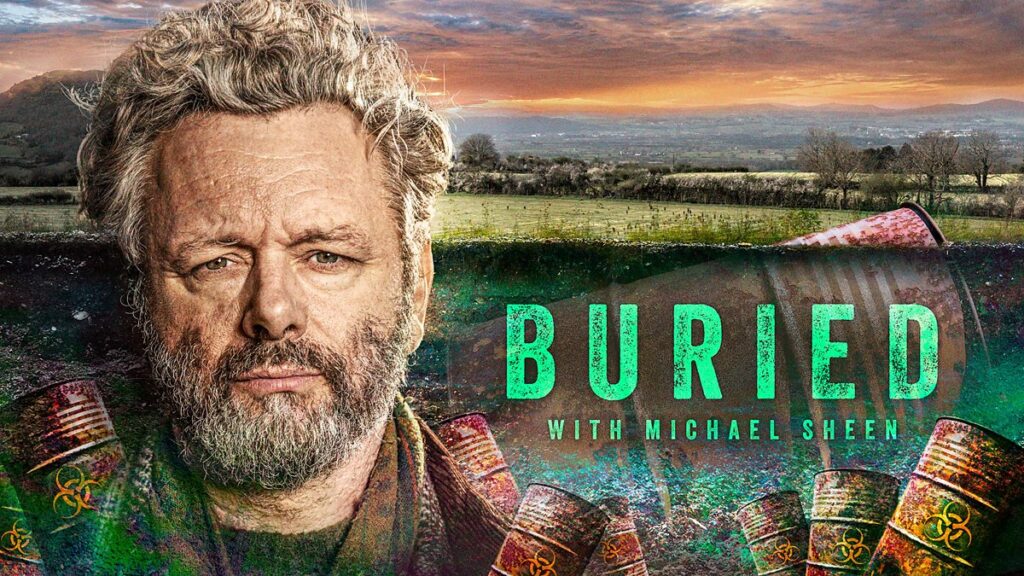
Buried with Michael Sheen comes to BBC Two, BBC One Wales and BBC iPlayer from Monday 17 August at 9pm
Support our Nation today
For the price of a cup of coffee a month you can help us create an independent, not-for-profit, national news service for the people of Wales, by the people of Wales.
Get more trusted Welsh news
Choose Nation.Cymru as a preferred source in Google News to see more of our journalism.



Well done Mr Sheen, you have earned your chair…you must encourage others to take things seriously…before brushing all aside in the Senedd…
Again, this is another fine example of Michael Sheen standing up for Wales. This revelation is truly shocking, although not surprising, given that Wales has for centuries been used and abused; in some cases, we’ve even self-harmed. A clear example of this self-harm is when Welsh Labour happily allowed the dumping of possibly irradiated mud from England’s Hinkley Point nuclear power plant off Cardiff Bay. And what about our former First Minister Vaughan Gething, who financially benefitted from a twice‑convicted criminal whose activities polluted the Welsh environment? I know the chemical company involved in dumping carcinogens is American, and they… Read more »
Yes i remember reading about it in the South Wales Echo could not believe what i was reading
Large multinational corporations with faceless executives at the top raking in their millions and destroying our lives to keep on making their millions. And for what? They too will be gone one day as the angel of death will come calling for all of us. But, do we need to suffer the pain of cancer and its treatment so these execs can live a life of luxury?
The BBC segment on this today seemed to imply it’s for the Welsh Gov to clean up another of Westminster’s toxic legacies.